Achi Shrine (Okayama Prefecture, Kurashiki City) Complete Guide | A Thorough Explanation of History, Goshuin (Shrine Seals), and Wisteria Viewing Season
Achi Shrine, located in the Bikan Historical Quarter of Kurashiki City, Okayama Prefecture, is an ancient shrine boasting a history of over 1700 years as the guardian shrine of Kurashiki. Situated on the summit of Tsurugata Mountain, it is also known as a scenic spot offering panoramic views of the Kurashiki Bikan Historical Quarter. This article comprehensively introduces all the information you need to know before visiting Achi Shrine, including its history, enshrined deities, highlights, and access information.
Overview and Basic Information of Achi Shrine
Basic Shrine Data
Achi Shrine is located at 12-1 Honmachi, Kurashiki City, Okayama Prefecture, on the summit of Tsurugata Mountain, north of the Kurashiki Bikan Historical Quarter.
Location: 12-1 Honmachi, Kurashiki City, Okayama Prefecture 710-0054
Telephone Number: 086-425-4898
FAX Number: 086-427-9230
Visiting Hours: Open all day
Shrine Office Hours: 9:00 AM – 5:00 PM
Prayer Service Start Times: 9:30 AM, 10:30 AM, 11:30 AM, 1:30 PM, 2:30 PM, 3:30 PM
Origin of Kurashiki’s Name and Achi Shrine
The old name for Kurashiki was “Achi,” and this name is the origin of the name of Achi Shrine. Achi Shrine has long been revered by the local people as the guardian shrine of Kurashiki. Because it is located on a small hill called Tsurugata-yama, you need to climb a long stone staircase, but at the top, a spectacular view overlooking the Bikan Historical Quarter and a historic shrine grounds await you.
History and Origins of Achi Shrine
Ancient History | Achi no Omi and Immigrant Culture
The history of Achi Shrine dates back to “Achi no Omi,” as recorded in the Nihon Shoki (Chronicles of Japan), specifically the section on Emperor Ojin (4th century). During the reign of Emperor Ojin, Achi no Omi is said to have immigrated from Korea, leading people from 17 provinces, and settled in this Kibi no Anami area (present-day Kurashiki).
The Achi no Omi family brought advanced technologies such as sericulture, silk weaving, sewing, and ironworking to this region, greatly contributing to the development of the ancient Kibi region. It is believed that Achi Shrine originated when this family enshrined Achi no Omi as the guardian deity of navigation. At that time, Kibi no Anami was an important shipping route in the Seto Inland Sea and flourished as a key point for maritime traffic.
Transition from the Medieval to the Early Modern Period
During the medieval period, the shrine was enshrined as Myoken-gu within a nearby temple. In 1594 (Bunroku 3), it was moved to its current location on Tsurugata-yama. Subsequently, starting with the construction of the shrine building in 1620 (Genna 6), the worship hall, gate, votive picture hall, and other buildings within the shrine grounds were successively developed.
During the Edo period, along with the development of Kurashiki, it attracted many worshippers as a center of local faith. During the time when Kurashiki prospered as a shogunate territory, Achi Shrine received fervent devotion from merchants and sailors.
Achi Shrine After the Meiji Era
Following the Shinto-Buddhist Separation Order of 1869 (Meiji 2), the shrine was renamed “Achi Shrine” from Myoken-gu. At this time, the Munakata Three Goddesses, who preside over safe voyages, were formally enshrined as the main deities, and the shrine was established in its current form. From the Meiji era through the Showa, Heisei, and Reiwa eras, it has continued to be cherished by the local people as the guardian shrine of Kurashiki.
Deities and Divine Virtues
About the Munakata Three Goddesses
The main deities enshrined at Achi Shrine are the Munakata Three Goddesses. The Munakata Three Goddesses refer to the following three goddesses:
- Tagirihime-no-Mikoto
- Tagitsuhime-no-Mikoto
- Ichikishimahime-no-Mikoto
These goddesses are deities born from the oath (ukei) between Amaterasu-Omikami and Susanoo-no-Mikoto, and have been revered since ancient times as guardian deities of maritime traffic. Ichikishimahime-no-Mikoto, in particular, is sometimes identified with Benzaiten and is known as the goddess who presides over beauty, wealth, and performing arts.
Divine Virtues of Achi Shrine
Achi Shrine is believed to offer the following divine blessings:
Safe Navigation and Traffic Safety: The three Munakata goddesses are deities of the sea and protect safe voyages. In modern times, they are believed to grant blessings for general traffic safety.
Business Prosperity and Success: Due to Kurashiki’s history as a commercial city, many visitors come to pray for business prosperity and success.
Beauty and Artistic Improvement: The three Munakata goddesses, especially Ichikishimahime-no-Mikoto, are deities of beauty and performing arts, and in recent years, the shrine has gained attention as a power spot for “improving feminine charm.”
Matchmaking and Successful Relationships: Because it enshrines three goddesses, it is popular with visitors praying for good relationships and harmonious interpersonal relationships.
Academic Success: Given Achi-no-Omi’s history of bringing advanced culture, the shrine is also suitable for those praying for improvement in academics and skills.
Highlights of the Shrine Grounds
View from Tsurugatayama
One of the greatest attractions of Achi Shrine is the view of the Kurashiki Bikan Historical Quarter from the shrine grounds. After climbing the long stone steps, you can enjoy a panoramic view of the white-walled townscape, the willow trees along the Kurashiki River, and the Ohara Museum of Art. The view at dusk is particularly spectacular; the time when the streetlights of the Bikan Historical Quarter begin to light up creates a magical atmosphere.
The name Tsurugatayama (Crane-shaped Mountain) is said to originate from the mountain’s shape resembling a crane. Although its elevation is low, the surrounding flat land provides excellent views from the shrine grounds.
Prefectural Designated Natural Monument “Achi Wisteria”
The most famous attraction at Achi Shrine is the “Achi Wisteria,” a prefectural designated natural monument. This wisteria, estimated to be 300 to 500 years old, blooms magnificently on the wisteria trellis within the shrine grounds.
Best Viewing Period: Typically late April to early May
Features: Characterized by beautiful clusters of pale pink flowers, the entire temple grounds are enveloped in a sweet fragrance when in full bloom.
During the wisteria blooming season, many worshippers and tourists visit, and events such as the “Wisteria Festival” are sometimes held. The long, drooping wisteria clusters are breathtaking and a popular photo spot. Achi’s wisteria is known as one of the most famous wisteria viewing spots in Okayama Prefecture and is one of the highlights of Kurashiki tourism.
Ancient Garden in the Crane and Turtle Style
Within the temple grounds is an ancient garden called the “Crane and Turtle Style,” based on the concept of Penglai. This garden is modeled after Mount Penglai, the ideal land of eternal youth and immortality, and is characterized by its arrangement featuring crane and turtle motifs.
The Crane and Turtle Style garden is rare in Japan and is a valuable cultural asset that conveys ancient beliefs and aesthetic sensibilities to the present day. The arrangement of stones and plants embodies the idea of wishing for longevity and prosperity, allowing visitors to stroll leisurely and reflect on the romance of ancient times.
Noh Stage
A magnificent Noh stage is located within the shrine grounds, where sacred performing arts are offered during the autumn festival and other events. This Noh stage carries on a tradition dating back to the Edo period and is a symbol of Kurashiki’s cultural side.
During the annual festival, traditional performing arts such as the “Dance of the Three Goddesses” and the “Lion Dance” are showcased, attracting many spectators. The Noh performances on the stage hold a particularly important position among the annual events of Achi Shrine.
Zuishin Gate and Shrine Buildings
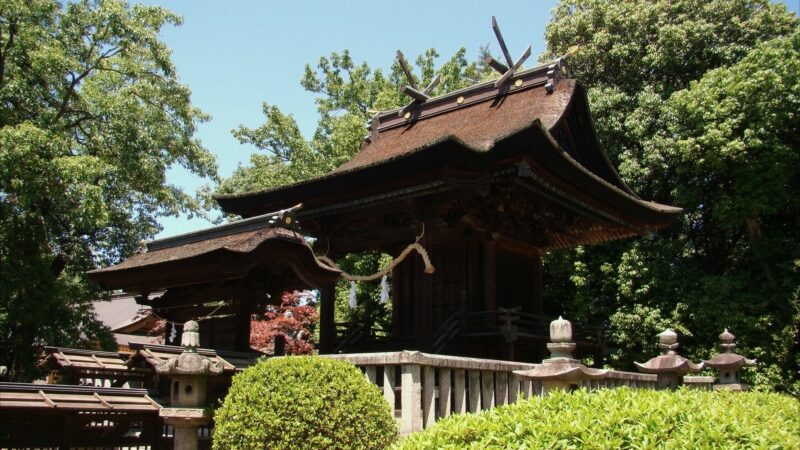
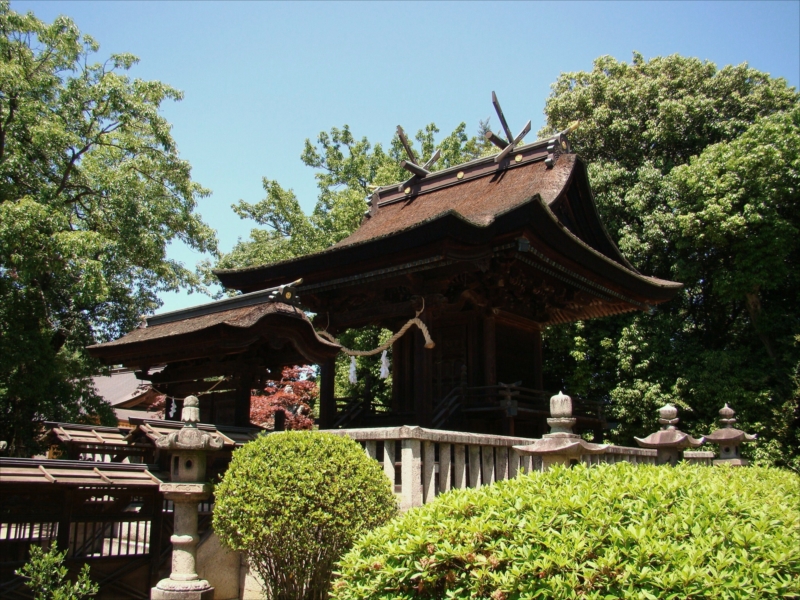
After climbing the stone steps, visitors are first greeted by the Zuishin Gate. Passing through this gate, the worship hall and main shrine come into view. The shrine buildings retain the style of the Edo period, with beautiful carvings and decorations.
The main shrine, a sacred place dedicated to the three Munakata goddesses, exudes a solemn atmosphere. Daily prayers and rituals are performed in the worship hall, where visitors can quietly offer their respects.
Ema Hall and Votive Offerings
Within the shrine grounds is the Ema Hall, where votive ema (votive tablets) and framed plaques from throughout history are preserved. These offerings reflect the history of many people who have entrusted their wishes to Achi Shrine from the Edo period to the present day.
In particular, there are many ema praying for safe voyages and business prosperity, telling the story of Kurashiki’s history as a thriving port town and commercial city.
Annual Events and Festivals
Spring Grand Festival
In spring, the Spring Grand Festival is held, with various Shinto rituals taking place within the shrine grounds. The wisteria of Achi is often in full bloom during this time, attracting many visitors.
Autumn Grand Festival and Historical Procession
The most important festival of Achi Shrine is the Autumn Grand Festival, held in autumn. This festival features a historical procession showcasing Kurashiki’s famous “Suinkyo” (a type of Edo-period townsman’s costume).
Suinkyo are unique costumes mimicking the appearance of Edo-period townspeople, symbolizing Kurashiki’s traditional culture. The historical procession features people dressed in various period costumes, including Suinkyo, parading through the Bikan Historical Quarter, captivating many tourists.
Traditional performing arts such as the “Three Goddesses’ Dance” and “Lion Dance” are performed on the Noh stage within the shrine grounds, adding to the festive atmosphere. The Autumn Grand Festival is a representative autumn event in Kurashiki and is beloved by locals.
Other Annual Events
- Hatsumode (First Shrine Visit of the New Year): The shrine is bustling with many visitors during the first three days of the New Year.
- Setsubun Festival: Shinto rituals such as bean-throwing are held in February.
- Natsukoshi no Oharae (Summer Purification Ceremony): The ritual of passing through a ring of reeds is held in June.
- Shichi-Go-San (Seven-Five-Three Festival): Many families visit in November for Shichi-Go-San prayers.
Goshuin (Shrine Seals) and Amulets
About Goshuin
At Achi Shrine, in addition to regular goshuin, special seasonal goshuin are also available. Especially during the wisteria blooming season, the limited-edition goshuin featuring Achi’s wisteria is very popular.
Goshuin can be received at the reception area (9:00 AM to 5:00 PM). Many visitors receive goshuin as a memento of their visit or as part of a goshuin pilgrimage.
Cute Amulets and Souvenirs
At Achi Shrine, charming amulets featuring designs inspired by the three Munakata goddesses are popular. Especially popular among women are amulets believed to bring good fortune in beauty and relationships.
- Beauty Amulet: An amulet for beauty and improved femininity
- Relationship Amulet: An amulet for successful relationships
- Traffic Safety Amulet: An amulet for safe voyages and travel
- Academic Success Amulet: An amulet for academic success
- Business Prosperity Amulet: An amulet for business success
Other items such as ema (votive tablets) and talismans can also be purchased at the shrine office.
Access Information and Visiting Guide
Access by Train
Approximately 15 minutes on foot from JR Kurashiki Station
Exit the south exit of Kurashiki Station and head towards the Kurashiki Bikan Historical Quarter. The approach to Achi Shrine is located on the north side of the Bikan Historical Quarter, at the entrance to Tsurugatayama Mountain. Since there are many stone steps, we recommend wearing comfortable shoes for your visit.
Access by Car
Approximately 15 minutes from Kurashiki IC on the Sanyo Expressway
Approximately 15 minutes from Hayashima IC on the Seto-Chuo Expressway
Since the shrine’s own parking lot is limited, we recommend using paid parking lots around the Kurashiki Bikan Historical Quarter. The Bikan Historical Quarter has many pedestrian-priority areas, so you will need to walk from the parking lot.
Points to Note When Visiting the Shrine
- Stone Steps: There are long stone steps leading to the shrine grounds, so those who are not confident in their physical strength should allow ample time for their visit.
- Attire: Since you will be climbing stone steps, comfortable shoes and clothing that allows for easy movement are recommended.
- Wisteria Season: The shrine is expected to be crowded during the wisteria blooming season from late April to early May.
- Prayers: If you wish to receive prayers, it is recommended to make a reservation by phone in advance.
Nearby Tourist Attractions
Kurashiki Bikan Historical Quarter
Located very close to Achi Shrine is the Kurashiki Bikan Historical Quarter, one of Japan’s leading tourist destinations. It is full of attractions, including white-walled streets, willow trees along the Kurashiki River, and the Ohara Museum of Art. We recommend enjoying a stroll through the Bikan Historical Quarter in conjunction with your visit to Achi Shrine.
Ohara Museum of Art
Known as Japan’s first Western art museum, the Ohara Museum of Art houses masterpieces by artists such as El Greco and Monet. It is a central spot for sightseeing in the Bikan Historical Quarter. ### Kurashiki Ivy Square
This complex is a renovated Meiji-era spinning mill and houses a hotel, restaurants, galleries, and more. The brick building and ivy-covered exterior are striking.
Kurashiki River Boat Tour
Taking a boat tour down the Kurashiki River is a popular sightseeing activity. The view of the white-walled townscape from the river offers a unique charm.
Summary of the Charms of Achi Shrine
Achi Shrine boasts a history of over 1700 years, beautiful wisteria blossoms, panoramic views of the Kurashiki Bikan Historical Quarter, and the divine blessings of the Munakata Three Goddesses.
It has a long-standing role as a guardian deity of navigation, deep ties to the community as the guardian shrine of Kurashiki, and in modern times, a new aspect as a power spot for enhancing feminine charm.
Climbing the stone steps to the shrine is a bit challenging, but a tranquil shrine grounds and a spectacular view await you at the top. When you visit Kurashiki, be sure to stop by Achi Shrine and experience its history, nature, and sacred atmosphere.
While the wisteria season in spring and the autumn festival are particularly recommended, Achi Shrine displays different expressions throughout the seasons, so you’re sure to discover something new each time you visit.
Gallery
The charm of Achi Shrine is best appreciated by actually visiting and seeing it for yourself. There are many photogenic sights, including the view of the Kurashiki Bikan Historical Quarter from the shrine grounds, the Achi wisteria in full bloom, the ancient garden in the crane-turtle style, the solemn shrine buildings, and the historical procession during the autumn festival.
Especially from late April to early May, when the Achi wisteria is in full bloom, the pale pink blossoms adorn the shrine grounds, creating a truly spectacular sight. It also shows different expressions depending on the time of day: the quiet morning, the lively midday, and the mystical atmosphere at dusk.
The official Instagram account (@achijinja.official) posts information about the shrine grounds throughout the seasons and upcoming events, so we recommend checking it before your visit.
When sightseeing in the Kurashiki Bikan Historical Quarter, be sure to extend your trip to Achi Shrine and enjoy the history, nature, and breathtaking scenery.