Komagata Shrine (Naka City, Ibaraki Prefecture) Complete Guide: History, Deities, Cultural Properties, and Access Information
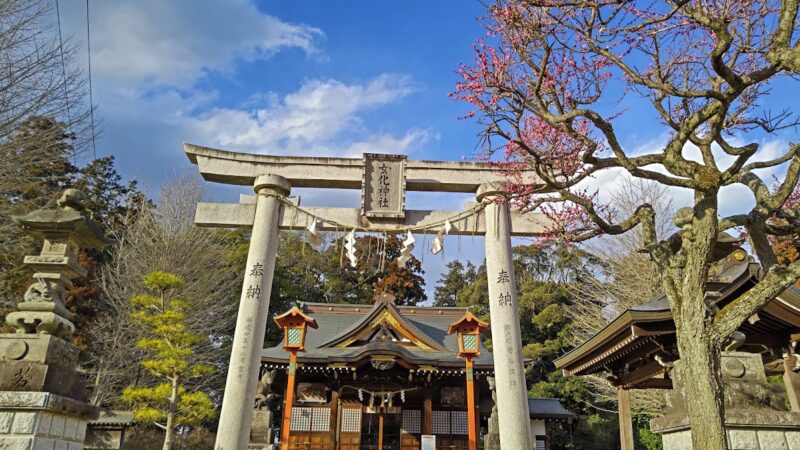
Located in Minami-Sakaide, Naka City, Ibaraki Prefecture, Komagata Shrine is a historic shrine with a connection to Minamoto no Yoshiie and boasts a main hall designated as a city cultural property. As one of the many Komagata Shrines scattered throughout Japan, it continues to preserve its unique history and culture. This article provides a detailed explanation of Komagata Shrine’s history, deities, architectural value, and practical information useful for visitors.
Basic Information about Komagata Shrine
Location: 44 Minami-Sakaide, Naka City, Ibaraki Prefecture (Miyanodai)
Deity Enshrined: Ukemochi-no-kami
Sacred Object: Gray Horse
Founding: Unknown (Estimated to be before the Heian period)
Cultural Property Designation: Naka City Designated Tangible Cultural Property (Main Hall), Designated February 17, 2012
Administrator: Komagata Shrine
Komagata Shrine is located in Miyanodai, Minami-Sakaide district, Naka City, and has long been a beloved shrine for the local people. While the exact founding date is unclear, its connection to Minamoto no Yoshiie (described later) suggests it existed at least during the late Heian period.
Deity and Benefits of Komagata Shrine
About Ukemochi-no-kami
The deity enshrined at Komagata Shrine is Ukemochi-no-kami. Uke-mochi-no-kami is a goddess of food appearing in Japanese mythology. She is recorded as Ōgetsuhime-no-kami in the Kojiki and as Uke-mochi-no-kami in the Nihon Shoki.
Uke-mochi-no-kami has been revered as the goddess who presides over abundant harvests, the blessings of food, and industrial development. In an era when agriculture was the foundation of life, the worship of a goddess of food played a central role in local communities.
Benefits
The main benefits expected at Komagata Shrine are as follows:
- Abundant Harvest: Prayers for a bountiful harvest of crops
- Business Prosperity: Development and prosperity of businesses
- Family Safety: Health and peace of mind for family members
- Industrial Development: Promotion of local industries
As a shrine dedicated to Uke-mochi-no-kami, it attracts particularly devoted followers from those involved in agriculture and food-related businesses.
The Meaning of the Deity: The Gray Horse
The deity enshrined at Komagata Shrine is a gray horse. “Ashige” refers to a type of horse coat color, specifically white or gray.
The shrine’s name, “Komagata,” itself is related to horses, and many Komagata shrines throughout Japan have deep connections to horses. Horses have been considered sacred animals since ancient times, revered as the mounts of the gods, or even as embodiments of the gods themselves.
The following factors are considered to be behind the worship of a gray horse as the sacred object at Komagata Shrine in Naka City:
- The importance of horses in agriculture: Gratitude for the role of horses in agricultural work
- Connection with the samurai class: A historical connection with Minamoto no Yoshiie, discussed later
- Symbol of sacredness: White horses have historically been considered particularly sacred
Historical connection with Minamoto no Yoshiie
The Later Three Years’ War and Komagata Shrine
The most important event in the history of Komagata Shrine is its connection with Minamoto no Yoshiie (Hachiman Taro Yoshiie).
It is said that in Kanji 2 (1088) during the late Heian period, Minamoto no Yoshiie passed through this area on his way to the Later Three Years’ War (1083-1087) in the Tohoku region. It is said that Yoshiie prayed for victory at Komagata Shrine, and upon his triumphant return, he rebuilt and reconstructed the shrine as a token of gratitude.
Minamoto no Yoshiie, as the leader of the Kawachi Minamoto clan, was a warrior who strengthened ties with the warrior groups of eastern Japan and was one of the figures who laid the foundation for the samurai government that would later lead to the Kamakura Shogunate. Numerous records show that Yoshiie prayed for victory at various shrines throughout the Kanto and Tohoku regions during his campaigns.
Historical Significance
The tradition of Minamoto no Yoshiie constructing the shrine buildings indicates that Komagata Shrine was already an important place of worship in the region during the late Heian period. It also speaks to the fact that this area was a strategically important military and transportation hub on the route to Tohoku.
Architectural Value of the Komagata Shrine Main Hall (City-Designated Cultural Property)
Features of the Main Hall
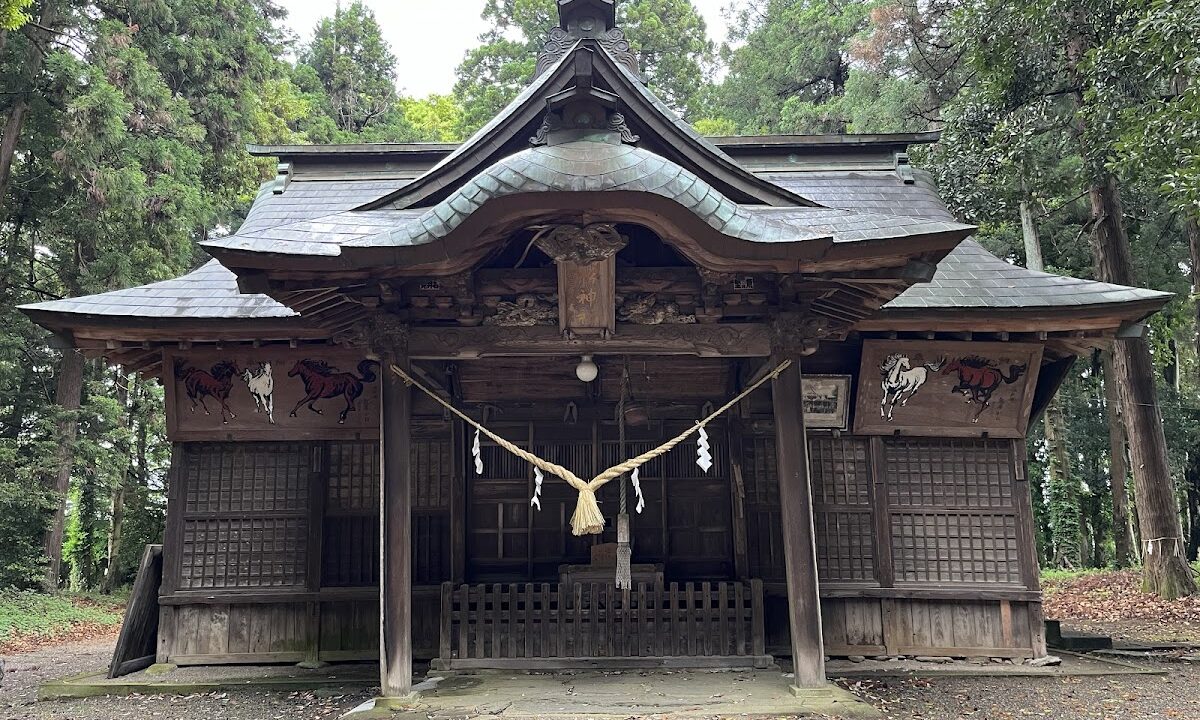
The Komagata Shrine Main Hall was designated a Naka City-Designated Tangible Cultural Property (Building) on February 17, 2012. This main shrine is considered a “rarely seen and magnificent building” and possesses the following characteristics:
- Exquisite Relief Carvings: The main shrine is surrounded by relief carvings, boasting high artistic merit.
- Diverse Subject Matter: The carvings utilize a variety of subjects.
- Regional Architectural Techniques: A valuable historical site showcasing the architectural techniques of northern Ibaraki Prefecture from the Edo period to the Meiji period.
Subject Matter and History of the Carvings
The carvings on the main shrine originally featured the following subjects:
- One side: A depiction of Ryugu-jo (the Dragon Palace)
- Two sides: A depiction of Hachiman Taro Yoshiie (Minamoto no Yoshiie)
However, in September 1945, following the end of World War II and the arrival of the US military, the two sides depicting Yoshiie were removed to avoid being seen as a military symbol. This is a valuable record illustrating the suffering of cultural properties during the chaotic postwar period.
The remaining Ryugu-jo carvings convey the high level of skill of the craftsmen of that time. ### Architectural Style and Historical Context
While the exact construction date of the main hall is unknown, its architectural style and carving techniques suggest it was built during the mid-to-late Edo period. This period saw a rise in ornamentation in shrine architecture, with intricate carvings becoming common.
Several shrines and temples in the northern Ibaraki prefecture possess similar carvings, forming a regional architectural cultural sphere. The Komagata Shrine main hall is recognized as an important component of this regional culture.
Komagata Shrine Grounds and Highlights
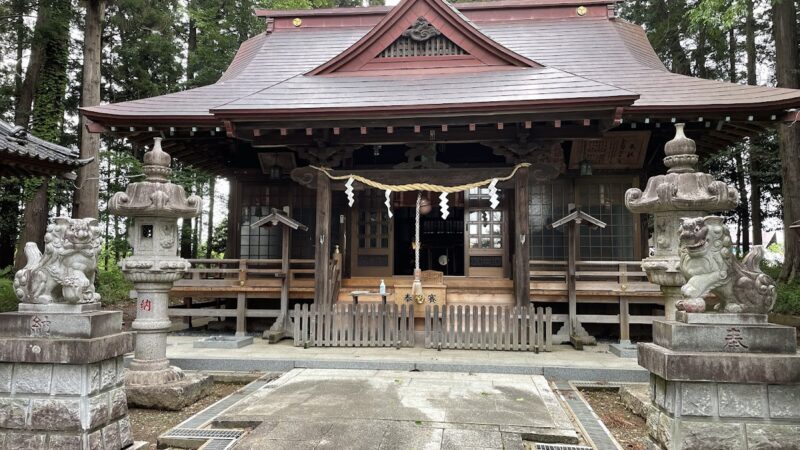
Main Hall
The main hall, a designated city cultural property, is the main highlight of Komagata Shrine. Observing the intricate carvings up close allows visitors to appreciate the high level of Edo-period craftsmanship. The carving of Ryugu-jo (Dragon Palace), in particular, is meticulously crafted down to the smallest detail, captivating visitors.
Shrine Layout
Komagata Shrine is located on a place called “Miya-no-dai,” situated slightly higher than its surroundings. This is a typical pattern for shrine locations since ancient times, intended to clearly distinguish it as a sacred space.
Natural Environment
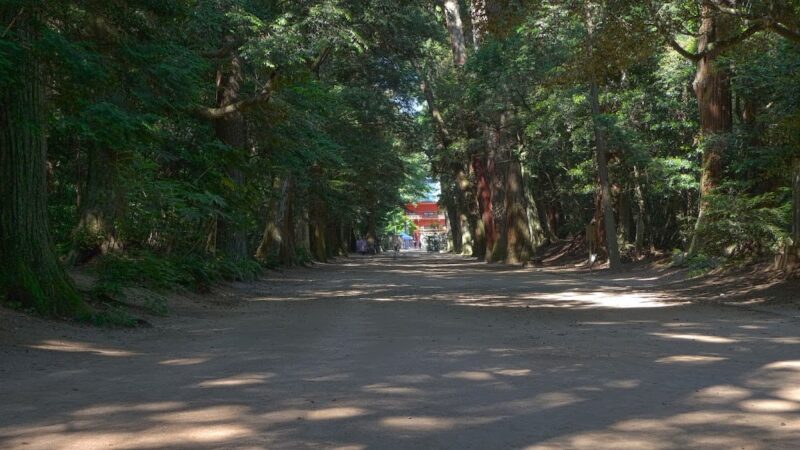
The shrine grounds are lush with trees, creating a tranquil atmosphere. Even amidst increasing urbanization, the area surrounding the shrine remains relatively green, allowing visitors to experience the changing seasons.
Access to Komagata Shrine
Location
44 Minamisakaide, Naka City, Ibaraki Prefecture 311-0111
Access by Public Transportation
Using the JR Suigun Line:
- Nearest Station: Kamisugaya Station
- Distance from Station: Approximately 3.5km
- Approximately 10 minutes by taxi from the station
- Approximately 45 minutes on foot
Route Bus:
The Naka City Community Bus “Himawari Bus” operates, but there is no direct route to the shrine, so walking from the nearest bus stop is necessary.
Access by Car
If using the Joban Expressway:
- Approximately 10 minutes (approx. 5 km) from Naka IC
- Approximately 15 minutes (approx. 8 km) from Tokai Smart IC
Accessible via National Route 118.
Parking
The shrine has parking spaces for visitors, but prior confirmation is recommended for parking large buses.
Connections to Other Shrines in Naka City
In addition to Komagata Shrine, several other important shrines are located in Naka City.
Hitachi Ninomiya Shizu Shrine
Shizu Shrine, located in Shizu, Naka City, is a prestigious shrine that has been revered since ancient times as the second-ranked shrine of Hitachi Province. Visiting both Komagata Shrine and Shizu Shrine will allow you to gain a deeper understanding of Naka City’s shrine culture.
Location: 2 Shizu, Naka City, Ibaraki Prefecture
Deity: Takehazuchi-no-mikoto
Features: Second-ranked shrine of Hitachi Province, listed in the Engishiki (ancient Japanese legal code)
Shizu Shrine is known for its blessings related to academic success, traffic safety, business prosperity, and family safety, and is one of the representative shrines of Naka City.
Relationship with Komagata Shrines Nationwide
There are shrines named “Komagata Shrine” throughout Japan. The main Komagata Shrines are as follows:
Komagata Shrine in Oshu City, Iwate Prefecture
Location: 1-83 Nakagami-cho, Mizusawa-ku, Oshu City, Iwate Prefecture
Features: A representative Komagata Shrine in the Tohoku region, with an inner sanctuary on Mount Komagatake
This shrine is the Ichinomiya (first-ranked shrine) of Mutsu Province and is a central figure in Komagata worship in the Tohoku region.
Komagata Shrines in Saitama Prefecture
There are also several Komagata Shrines in Saitama Prefecture, each attracting local devotion.
The Spread of Komagata Faith
Komagata shrines spread throughout Japan based on the belief that horses are sacred. In an era when horses played a crucial role in agriculture, transportation, and military affairs, the belief in praying for the health and safety of horses developed in various regions.
The Komagata Shrine in Naka City can be understood as part of this nationwide Komagata faith.
Manners and Etiquette for Visiting a Shrine
Basic Etiquette for Visiting a Shrine
- Bow before passing through the torii gate.
- Purify your hands and mouth at the water basin.
- Hold the ladle in your right hand and wash your left hand.
- Switch the ladle to your left hand and wash your right hand.
- Switch the ladle back to your right hand, receive water in your left hand, and rinse your mouth.
- Finally, hold the ladle upright and wash the handle.
- Two bows, two claps, and one bow in front of the main hall.
- Bow deeply twice.
- Clap your hands twice.
- Bow deeply once.
Mindset When Visiting a Shrine
A shrine is a sacred place. Visit quietly and with reverence. When viewing the main hall, which is a cultural property, be mindful of its preservation and avoid touching or damaging it.
Tourist Attractions Around Komagata Shrine
Historical and Cultural Facilities in Naka City
Naka City Historical and Folk Museum: A facility where you can learn about the history and culture of Naka City. It helps in understanding the historical background of Komagata Shrine.
Magariya: An old farmhouse designated as a cultural property of Ibaraki Prefecture. You can see Edo period farmhouse architecture.
Nature and Leisure Spots
Naka River: You can enjoy ayu fishing and other activities on the Naka River, known for its clear waters.
Shizumine Furusato Park: A park known for its double cherry blossoms. The “Double Cherry Blossom Festival” is held in spring.
Gourmet Information
Naka City is a region where agriculture is thriving, and you can enjoy dishes made with fresh agricultural products. Dishes using Hitachi beef and local vegetables are especially exquisite.
Annual Events and Festivals
Traditional festivals are preserved at Komagata Shrine by the local people. For specific festival dates, we recommend checking with the Naka City Board of Education or local information.
General annual events at shrines:
- New Year’s Day Festival (January 1st)
- Spring Grand Festival
- Autumn Grand Festival
- Year-End Purification Ceremony (December 31st)
Preservation and Future of Komagata Shrine
Cultural Property Protection Efforts
With the designation of Komagata Shrine’s main hall as a city-designated cultural property in 2012, it became subject to public protection. This is expected to ensure appropriate preservation, repair, and management.
Connection with the Local Community
Komagata Shrine has been carefully protected by the local people. Even amidst depopulation and an aging population, efforts to pass on its value as a local cultural property and place of worship to future generations are crucial.
Potential as a Tourism Resource
As a historical and cultural resource of Naka City, Komagata Shrine is gaining attention as a tourist attraction. With its history connected to Minamoto no Yoshiie and its main hall featuring valuable carvings, Komagata Shrine is an attractive spot for history buffs and cultural heritage enthusiasts.
Summary: The Charms of Komagata Shrine
Located in Minami-Sakaide, Naka City, Ibaraki Prefecture, Komagata Shrine is worth visiting for the following reasons:
- History connected to Minamoto no Yoshiie: A venerable history dating back to the late Heian period
- Main Hall Designated as a City Cultural Property: A valuable building with intricate carvings
- Blessings of Uke-mochi-no-kami: Abundant harvests, business prosperity, and family safety
- Divine Object of a Gray Horse: A unique belief in the sacredness of horses
- Witness to Post-War History: A historical event of the removal of carvings in 1945
Komagata Shrine is not a large shrine, but it is a valuable presence that conveys the history and culture of the region to the present day. When visiting Naka City, be sure to stop by. Spending time in the tranquil grounds, reflecting on history and offering prayers of gratitude to Uke Mochi no Kami, will be a precious moment away from the hustle and bustle of everyday life.
Visiting Komagata Shrine in conjunction with other cultural properties and tourist spots in Naka City will allow you to enjoy a more fulfilling sightseeing experience. Discover the charm of Naka City, woven from history, nature, and the lives of its people, starting from Komagata Shrine.