Kuroiwa Shrine (Tokushima City, Tokushima Prefecture) Complete Guide | The Miraculous God of Victory on Mount Bizan
Nestled quietly on the slopes of Mount Bizan, a symbol of Tokushima City, Kuroiwa Shrine is a shrine affectionately known locally as “Kuroiwa-san,” dedicated to the god of victory and the fulfillment of wishes. Despite its mountainous location, this shrine attracts many worshippers and boasts a history of over 300 years and numerous tales of miraculous events.
This article comprehensively introduces information useful for both Tokushima residents and tourists, covering the history, blessings, access methods, and annual events of Kuroiwa Shrine.
Basic Information about Kuroiwa Shrine
Location: 51 Fukumanyama, Hachiman-cho, Tokushima City, Tokushima Prefecture
Deity: Oyamatsumi-no-Mikoto
Founded: Hoei era (1704-1711)
Shrine Rank: Village Shrine
Benefits: Good fortune in competitions, fulfillment of wishes, protection from fire, protection of the mountains
Kuroiwa Shrine is located at an altitude of approximately 150 meters on Mount Bizan, nestled in a tranquil environment overlooking Tokushima city. Surrounded by abundant nature, the approach to the shrine, which displays different expressions in each season, provides peace of mind to visitors.
History and Origins of Kuroiwa Shrine
Circumstances of Founding
Kuroiwa Shrine is believed to have been founded during the Hoei era (1704-1711). According to the Hachiman Village History, the origin of the shrine dates back to when a village elder, commemorating a visit to Ise Grand Shrine, invited the deity from Oyamazumi Shrine on Omishima Island in Imabari City, Ehime Prefecture, to serve as the village’s guardian deity.
Oyamazumi-no-Mikoto is known as the god of mountains and the sea in Japanese mythology, and is the principal deity of Oyamazumi Shrine, the head shrine of all Yamazumi and Mishima shrines nationwide. By welcoming this deity to Hachiman, prayers were offered for the safety and prosperity of Mount Mayuyama and the people living at its foot.
The Miracle of the Forest Fire and Divine Power
Kuroiwa Shrine became widely known as a “divine power” after an event in 1928. That year, a large-scale forest fire broke out on Mount Mayuyama, burning down the surrounding forests, but miraculously, Kuroiwa Shrine escaped the flames.
This event deeply impressed the local people, and the divine power of Kuroiwa Shrine was reaffirmed. Since then, the shrine has also attracted worshippers as a god of fire prevention, and people, especially those seeking success in competitions or with important wishes, have come to pray.
The Connection Between Hachiman-cho and Kuroiwa Shrine
Hachiman-cho is located in the southwestern part of Tokushima City, a historical area spreading at the foot of Mount Bizan. There are various theories about the origin of the place name “Hachiman,” but it has long been a place where people have lived a life centered on agriculture.
Kuroiwa Shrine has functioned not only as a place of worship but also as a center of the local community. During festivals, local residents gather, deepening the bonds of community.
About the Enshrined Deity, Oyamatsumi-no-Mikoto
The Divine Nature of Oyamatsumi-no-Mikoto
Oyamatsumi-no-Mikoto is considered in Japanese mythology to be the child deity of Izanagi-no-Mikoto and Izanami-no-Mikoto, and is the god who governs mountains. This ancient deity, appearing in the Kojiki and Nihon Shoki, has been revered as a central figure in mountain worship.
While being a mountain god, this deity also possesses characteristics of a sea god and a god of war, attracting the faith of samurai warriors from ancient times. It is said that the Minamoto, Taira, and even Sengoku period warlords revered Oyamatsumi-no-Mikoto and prayed for victory in battle.
Benefits at Kuroiwa Shrine
At Kuroiwa Shrine, the following benefits are believed to be obtained through the divine power of Oyamatsumi-no-Mikoto:
Improved Luck in Competitions: It is believed that this deity lends strength in all kinds of competitions, such as entrance exams, job interviews, and sports matches.
Fulfillment of Wishes: It is believed that this deity has the power to grant sincere wishes, and many worshippers visit the shrine at turning points in their lives.
Protection from Fire and Disaster: Since the miraculous survival of the mountain fire in 1928, people visit the shrine to pray for protection from fires and disasters.
Mountain Safety: This shrine is worshipped as a deity protecting the safety of climbers and those working in the mountains.
Access to Kuroiwa Shrine
Location and Transportation
Kuroiwa Shrine is located in the mountains of Mount Bizan, so access is primarily by foot.
Nearest Station: JR Tokushima Line, Nikenya Station (approx. 30-minute walk + 20-minute hike)
Nearest Bus Stop: Tokushima City Bus “Ichihara” bus stop (approx. 25-minute walk + 20-minute hike)
Access by Car
The most common way to access the shrine is by car to the Fukumanyama area of Hachiman-cho, at the foot of Mount Bizan, and then hiking up the approach path. There is some parking space near the trailhead, but it is limited, so using public transportation is recommended, especially during festivals.
From Tokushima Station: Approximately 15 minutes by car
From Tokushima IC on the Tokushima Expressway: Approximately 20 minutes by car
About the Hiking Trail
The approach to Kuroiwa Shrine begins deep within the residential area of Hachiman-cho. The trailhead is in a somewhat inconspicuous location, marked by a stone signpost.
From the Trailhead to the Shrine: Approximately 20 minutes on foot
Trail Condition: While there are some exposed stones and rocks, the approach is relatively wide and well-maintained.
Notes: As it is a mountain trail, comfortable clothing and non-slip shoes are recommended.
The approach is rich in nature, and you can enjoy beautiful scenery, especially during the seasons of fresh greenery and autumn leaves. As you slowly make your way along, feeling the nature of Mount Bizan, you can experience a sense of purification.
Highlights of the Shrine Grounds
Torii Gate and Approach
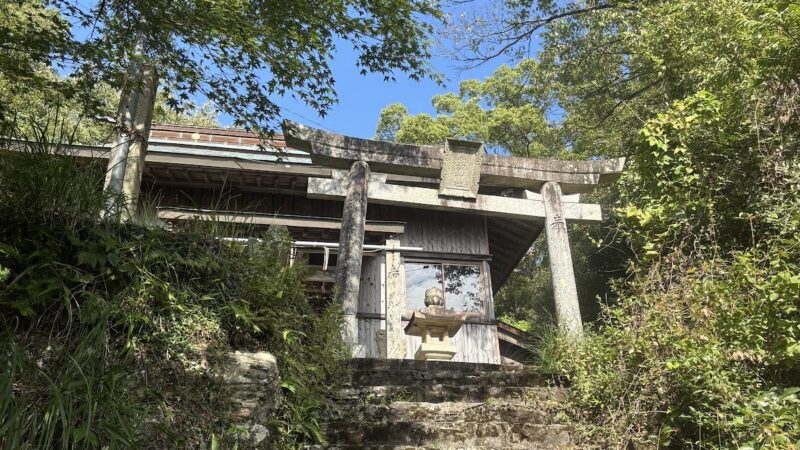
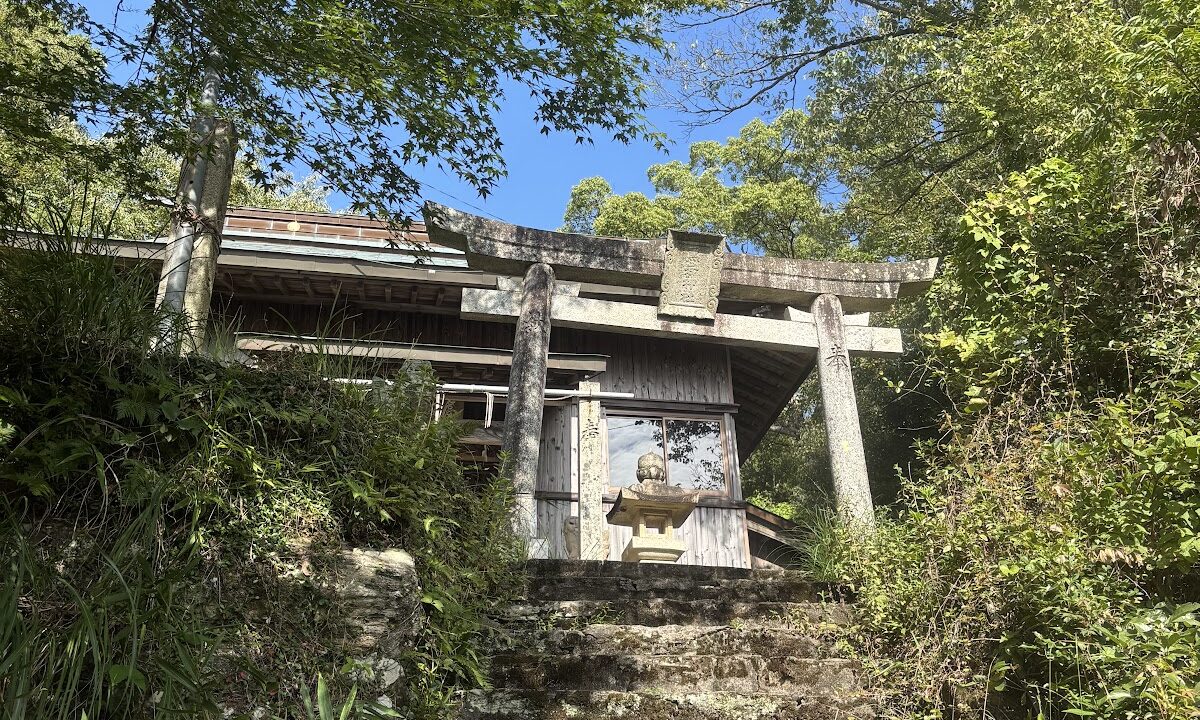
After walking along the hiking trail for about 10 minutes, the first torii gate appears. Passing through this torii gate, you begin to feel an even more sacred atmosphere. After walking for another 10 minutes or so, the shrine building comes into view.
Shrine Building
The shrine building of Kuroiwa Shrine is built on the slope of a mountain, exuding a simple yet solemn atmosphere. Having survived a forest fire in 1928 (Showa 3), the shrine has been carefully maintained by the local people ever since.
From the worship hall, you can see the city of Tokushima, and the view, unique to its location on the slopes of Mount Bizan, is one of its charms.
Natural Environment of the Shrine Grounds
The shrine grounds are surrounded by the rich nature of Mount Bizan. Ancient trees stand as if protecting the shrine, creating a tranquil space where you can hear the chirping of wild birds.
Each season offers its own beauty: fresh greenery in spring, deep green in summer, vibrant autumn leaves, and a crisp, serene landscape after the leaves have fallen in winter. The shrine’s integration with nature deeply moves visitors.
Taidai Kagura Festival and Annual Events
Taidai Kagura Festival
The most important annual event at Kuroiwa Shrine is the “Taidai Kagura Festival.” At this festival, traditional Kagura (sacred Shinto dance) is performed, and people from the local community gather.
What is Taidai Kagura? Taidai Kagura refers to a particularly formal type of Kagura performed at shrines. It is a Shinto ritual to appease the gods and pray for a bountiful harvest and peace in the community.
The Dance of Ame-no-Uzume-no-Mikoto
A particularly noteworthy performance at the Kuroiwa Shrine’s Taidai Kagura Festival is the dance of Ame-no-Uzume-no-Mikoto. In Japanese mythology, Ame-no-Uzume-no-Mikoto is the goddess of performing arts who, when Amaterasu Omikami hid in the Amano-Iwato cave, danced in front of it to lure her out.
This dance is performed with traditional movements and costumes, and is known as a spectacular and impressive performance among Kagura. On the day of the festival, many worshippers visit to witness this sacred dance.
Other Annual Events
New Year’s Day Festival: A festival to pray for happiness and safety in the new year.
Annual Grand Festival: The most important festival held once a year.
Autumn Grand Festival: A festival to give thanks for the harvest and pray for a bountiful harvest in the following year.
These festivals are carefully preserved and passed down by the local people.
Manners and Etiquette for Visiting a Shrine
Basic Shrine Etiquette
- Bow before passing through the torii gate: Bow before entering the sacred area, in front of the torii gate.
- Walk along the edge of the path: The center of the path is considered the path of the gods.
- Purify yourself at the water basin: Purify your hands and mouth before proceeding to the main hall (there may be no water basin in some mountainous areas).
- Etiquette at the main hall: Two bows, two claps, and one bow are the basic rituals.
Points to Note When Visiting a Mountain Shrine
- Clothing: Wear comfortable clothing that you don’t mind getting dirty.
- Footwear: Choose non-slip shoes.
- Time: Visiting during daylight hours is recommended.
- Garbage: Always take your trash with you.
- Nature Conservation: Do not collect plants or startle animals.
Mayuyama and Kuroiwa Shrine
About Mount Bizan
Mount Bizan is a 290-meter-high mountain and a beloved symbol of Tokushima City. As its name suggests, it was named “Mount Bizan” because its shape resembles an eyebrow from any vantage point.
The summit features an observation deck offering breathtaking views of Tokushima city, the Yoshino River, and even Awaji Island in the distance. The summit is also accessible by ropeway.
Mount Bizan Climbing and Visiting Kuroiwa Shrine
Combining a visit to Kuroiwa Shrine with a climb of Mount Bizan provides a more fulfilling experience. There is also a hiking trail leading from Kuroiwa Shrine to the summit of Mount Bizan, allowing you to enjoy further hiking after your visit.
Estimated Time: Approximately 40-50 minutes from Kuroiwa Shrine to the summit
Difficulty: Intermediate (Recommended for those familiar with mountain trails)
Nearby Tourist Attractions
Mount Bizan Ropeway
A ropeway connecting Tokushima city to the summit of Mount Bizan in approximately 6 minutes. The view from the mountaintop is especially beautiful during the Awa Odori festival, making it a classic Tokushima tourist spot.
Tokushima Castle Ruins and Tokushima Central Park
The site of the castle of the Hachisuka clan, the lords of the Tokushima domain. Currently, it has been developed into a park, with the stone walls and moats retaining traces of its former glory. The Tokushima City Tokushima Castle Museum is also located here, where you can learn about Tokushima’s history.
Awa Odori Hall
A facility where you can experience Tokushima’s traditional performing art, Awa Odori, all year round. Performances and workshops are available, allowing you to experience Tokushima culture.
Life and Culture of Hachiman Town
History of Hachiman Town
Hachiman Town has long developed as a settlement centered on agriculture. Due to its geographical location at the foot of Mount Bizan, it has benefited from both the bounty of the mountains and the agriculture of the plains.
Educational Environment
Hachiman Town has educational institutions such as Tokushima City Hachiman Elementary School and Hachiman Junior High School, providing education rooted in the local community. One of the characteristics of this area is its educational activities that utilize the natural environment of Mount Bizan.
Shopping and Convenience
Supermarkets, convenience stores, and drugstores are scattered around Hachiman-cho, so you won’t have any trouble with daily shopping. Access to Tokushima City center is also good, about 15 minutes by car.
Medical Facilities
There are clinics and medical offices in the area to meet everyday medical needs. Furthermore, there is a general hospital in Tokushima City center, providing peace of mind regarding medical care.
Coexistence of Nature and Culture
The charm of Hachiman-cho lies in the coexistence of the rich natural environment of Mount Bizan and the convenience of urban life. It is also rich in historical and cultural resources, including Kuroiwa Shrine, making it a region where you can live a modern life while cherishing tradition.
How to Enjoy Visiting Kuroiwa Shrine
A Visit for Mindfulness
Visiting Kuroiwa Shrine is not just sightseeing; it is also an opportunity to calm your mind. The time spent walking along the mountain path is a precious time to escape the hustle and bustle of everyday life and confront yourself.
Coexistence of Nature and Culture
Seasonal Expressions
Spring: A season of beautiful fresh greenery and pleasant birdsong.
Summer: A cool summer retreat surrounded by deep greenery and shade from the trees.
Autumn: The most beautiful season, with autumn leaves coloring the approach to the shrine.
Winter: A sacred atmosphere enveloped in crisp air and silence.
Photography Tips
- The combination of the torii gate and the approach to the shrine
- The shrine building and the surrounding nature
- The view of Tokushima city from the shrine grounds
- The seasonal expressions of nature
When taking photographs, please be considerate of other worshippers and remember that this is a sacred place.
Summary: The Charm of Kuroiwa Shrine
Kuroiwa Shrine is a shrine with a history of over 300 years, situated on the mountainside of Mt. Bizan in Tokushima City. Known for its blessings in competitions and the fulfillment of wishes, it is widely worshipped as a highly efficacious deity following a miracle during a forest fire in 1928 (Showa 3).
Located in the mountains, a 20-minute hike is required to reach the shrine, but this journey itself is an important process for purifying the heart and drawing closer to the gods. The tranquil grounds, surrounded by the rich nature of Mount Bizan, offer visitors deep peace and strength.
Traditional events, including the Taidai Kagura Festival, are carefully preserved by the local people, making it a valuable place to experience Tokushima’s culture.
If you are facing a turning point in your life, an important challenge, or simply seeking peace of mind, please visit Kuroiwa Shrine. The nature of Mount Bizan and the divine power of the gods will surely empower you.