Complete Guide to Kotoshironushi Shrine (Tokushima Prefecture, Tokushima City, Torimachi) | History, Goshuin (Shrine Seal), and Ebisu Festival
What is Kotoshironushi Shrine? | “Oibessan,” Beloved by Tokushima Citizens
Kotoshironushi Shrine is a shrine located at 2-16 Torimachi, Tokushima City, Tokushima Prefecture. Affectionately known as “Oibessan” or “Ebessan” by locals, it is known for its blessings of business prosperity and family safety.
Despite being located in the city center, just a few minutes’ walk from Tokushima Station, this shrine maintains a tranquil atmosphere and has welcomed many worshippers for many years as one of the centers of faith for the citizens of Tokushima. In particular, the “Ebisu Festival,” held annually from January 9th to 11th, attracts approximately 150,000 visitors, making it an important event that colors the New Year in Tokushima.
Kotoshironushi Shrine has also been selected as a “Tokushima Citizen Heritage Site,” and is an indispensable presence when discussing Tokushima’s culture and history. Even today, it functions as a spiritual center for local residents and businesses, and as a valuable place for tourists to experience Tokushima’s traditional culture.
History of Kotoshironushi Shrine | Relocation from Ebisu Shrine to its Current Location
From Founding to the Edo Period
The history of Kotoshironushi Shrine dates back to Ebisu-yama (Ebisu Mountain) in present-day Hachiman-cho, Tokushima City. Initially, it was called “Ebisu Shrine” and was located at the eastern foot of Ebisu-yama, south of Enpuku-ji Temple, a Shingon Buddhist temple. According to the “Kanpo Revised Shrine Register,” Enpuku-ji Temple served as its administrator.
One theory suggests it was once located within Ebisu-yama Castle (according to the “Awa-shi”), and it may have played a role as a guardian deity of the castle during the Sengoku period. During the Edo period, it was known as “Ebisu Daimyojin” and attracted widespread devotion, particularly from the residents of Shimo-Hachiman Village in Myoto District.
The Meiji Restoration and Relocation
In October 1870 (Meiji 3), Kotoshironushi Shrine underwent a major turning point. It was relocated from Ebisu-yama in Hachiman-cho to its current location in Torimachi, Tokushima City. This relocation is believed to have occurred as part of the Meiji Restoration’s separation of Shinto and Buddhism and the subsequent reorganization of shrines and temples.
Following the relocation, in 1872 (Meiji 5), the shrine’s name was also changed from “Ebisu Shrine” to “Kotoshironushi Shrine.” This was part of a movement to return from the Buddhist name “Ebisu,” used during the era of syncretism of Shinto and Buddhism, to the original Shinto name “Kotoshironushi.” Under the Meiji era’s shrine ranking system, it was classified as a village shrine.
Modern and Contemporary History
After its relocation to Torimachi, Kotoshironushi Shrine became located in the heart of Tokushima City, and with the development of commerce, it gained even greater devotion as a god of business prosperity. Throughout the pre-war and post-war periods, it has been deeply rooted in the lives of the people of Tokushima, and continues to receive fervent devotion to this day.
The current shrine building has undergone several repairs and renovations throughout its history, and while compact for an urban shrine, it maintains a dignified appearance. With Mount Bizan as its backdrop, it blends seamlessly into the townscape of Torimachi while preserving a sacred space.
Deities and Blessings | Ebisu and Daikoku
Kotoshironushi-no-Mikoto
One of the main deities enshrined at Kotoshironushi Shrine is Kotoshironushi-no-Mikoto. Kotoshironushi-no-Mikoto is a god appearing in the Kojiki and Nihon Shoki, and is considered a son of Okuninushi-no-Mikoto. He played a crucial role in the myth of the transfer of the land, and is known as the god who, together with his father Okuninushi-no-Mikoto, made the decision to surrender Ashihara-no-Nakatsukuni (the Central Land of Reed Plains) to the Amatsu-kami (heavenly gods).
Kotoshironushi-no-Mikoto, also written as “言代主,” means “to speak on behalf of others,” and thus possesses the characteristics of a god of oracles and a god who conveys divine will. He is also worshipped as a god of the sea and fishing, and later came to be identified with Ebisu, one of the Seven Lucky Gods.
Ebisu is widely known as the god of business prosperity, and is particularly revered by merchants and business owners. He is often depicted holding a fishing rod in his right hand and a sea bream under his left arm, and is believed to bring blessings of abundant catches, business prosperity, and perfect fortune.
Okuninushi-no-Mikoto
Another main deity is Okuninushi-no-Mikoto. Okuninushi-no-Mikoto is an important god in Japanese mythology, also known as the main deity of Izumo Taisha Shrine. He possesses diverse divine attributes, including being the god of nation-building, agriculture, and medicine, and is counted as one of the Seven Lucky Gods, known as “Daikoku-san.”
Okuninushi-no-Mikoto, also known as “Daikoku-sama,” is a beloved figure depicted carrying a large sack and holding a magic mallet. He is believed to bestow a wide range of blessings, including matchmaking, family safety, abundant harvests, and business prosperity, and is worshipped as a guardian deity of all aspects of life.
The Combination of Ebisu and Daikoku
The fact that Kotoshironushi Shrine enshrines both Kotoshironushi-no-Mikoto (Ebisu) and Okuninushi-no-Mikoto (Daikoku) is considered a very auspicious combination. The presence of these two particularly popular gods among the Seven Lucky Gods is believed to bring blessings of both business prosperity and family safety.
For business owners, Kotoshironushi-no-Mikoto can be prayed to for business prosperity, and for those seeking peace and safety at home, Okuninushi-no-Mikoto can be prayed to for family safety. This shrine, where one can worship “two lucky gods” at once, is beloved by the citizens of Tokushima.
Ebisu Festival | A Traditional Event that Brightens Tokushima’s New Year
Event Overview and History
The most important annual event at Kotoshironushi Shrine is the “Ebisu Festival,” held every year from January 9th to 11th. Approximately 150,000 visitors come during these three days, making it a representative New Year’s event in Tokushima City.
The Ebisu Festival is a traditional event that has continued since the Edo period, and is bustling with people praying for business prosperity and family safety. Especially on January 10th, the main Ebisu day, visitors arrive continuously from early morning until late at night, filling the shrine grounds with excitement.
Characteristics of the Ten-Day Ebisu Festival
Of the three days, the “main Ebisu” day on the 10th is the most lively. On this day, people of all ages visit the shrine, including business owners and shopkeepers praying for business prosperity, and families praying for family safety.
Within the shrine grounds, lucky charms such as Fukuzasa (lucky bamboo branches) and Kumade (lucky rakes) are given out, and many worshippers seek them out. Fukuzasa are decorated with lucky charms such as gold coins and sea bream, and are displayed in shops and offices as symbols of business prosperity.
Plant Market and Stalls
Another highlight of the Ebisu Festival is the plant market held extensively around the shrine. Numerous plant shops line the Torimachi area, selling various plants and gardening supplies, including pine, bamboo, and plum, which are considered auspicious symbols of the New Year.
The plant market is a tradition dating back to the Edo period, where the custom of purchasing new plants at the start of the new year to pray for prosperity throughout the year is passed down. Many stalls selling takoyaki, okonomiyaki, cotton candy, and other items also appear, adding to the festive atmosphere.
Two Festivals, One According to the Gregorian Calendar and One According to the Lunar Calendar
Interestingly, the Ebisu Festival at Kotoshironushi Shrine has a tradition of being held twice: once according to the Gregorian calendar (January 9th-11th) and once according to the lunar calendar. This reflects the local community’s desire to preserve festivals based on the old lunar calendar even after the Meiji Restoration, demonstrating a respect for Tokushima’s traditions.
Highlights of Kotoshironushi Shrine | Guide to Walking the Grounds
Shrine Buildings and Grounds
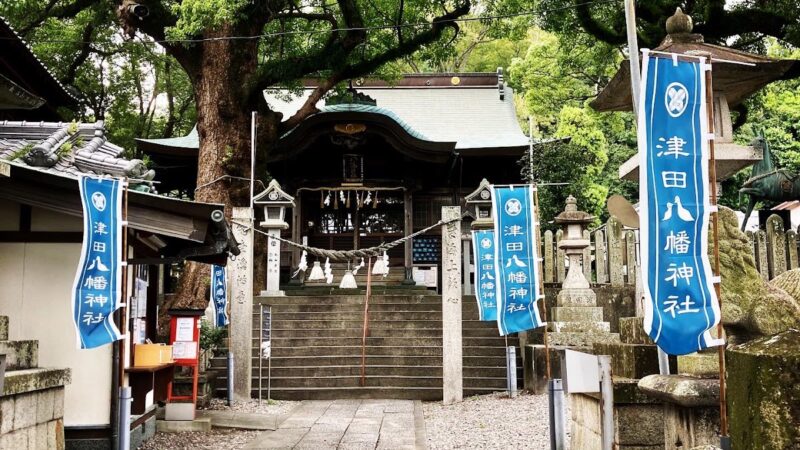
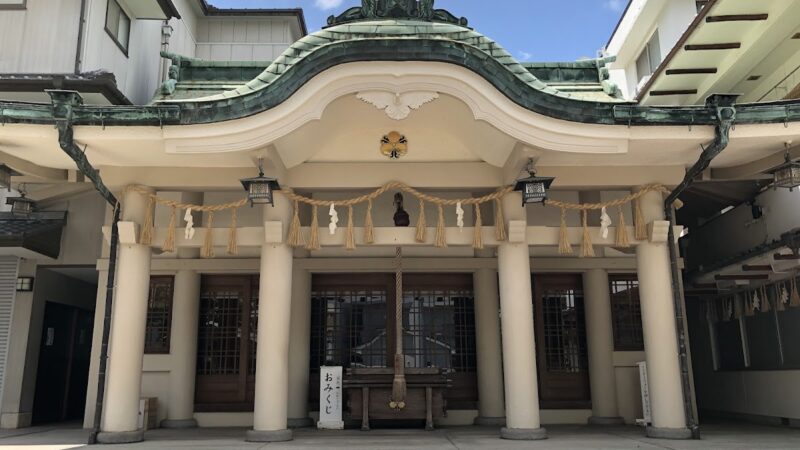
The grounds of Kotoshironushi Shrine, while compact for an urban shrine, maintain a neat and orderly beauty. Upon passing through the torii gate, the worship hall is visible straight ahead, with the main sanctuary located behind it.
The shrine buildings are traditional wooden structures, maintaining a clean and solemn atmosphere through regular maintenance. A donation box is placed in front of the worship hall, and worshippers perform the ritual of two bows, two claps, and one bow.
Ebisu and Daikoku Statues
Statues of Ebisu and Daikoku are enshrined on the grounds, delighting visitors. The statue of Ebisu, in particular, with its auspicious depiction of holding a sea bream, attracts the faith of those praying for business prosperity.
These statues are believed to bring good fortune when touched, and many worshippers can be seen gently stroking them after offering their prayers.
The Shrine Office and Lucky Charms
At the shrine office, amulets, talismans, and votive tablets are available. The amulets for business prosperity and the lucky bamboo branches are particularly popular, and many people seek them out during the Ebisu Festival.
A variety of amulets are available throughout the year, allowing visitors to choose one that suits their wishes, such as family safety, traffic safety, or academic success.
Location Overlooking Mount Bizan
One of the distinguishing features of Kotoshironushi Shrine is its location against the backdrop of Mount Bizan, a symbol of Tokushima City. From the shrine grounds, one can see the greenery of Mount Bizan, creating a space that harmonizes with nature despite being in an urban area.
Mount Bizan is like a spiritual home to the citizens of Tokushima, and Kotoshironushi Shrine, with Mount Bizan as its backdrop, can be said to symbolize Tokushima’s identity.
Goshuin Information | Handwritten Goshuin
About the Issuance of Goshuin
Kotoshironushi Shrine offers goshuin (temple/shrine stamps), and many visitors bring their goshuin notebooks as a memento of their visit. Goshuin are available at the reception area, and the chief priest or other Shinto priest will carefully handwrite them for you.
Handwritten goshuin are precious, each one handwritten with the warmth of a personal touch, as they are written on the spot by the priest. Many people cherish them as a memento of their visit, along with the scent of the ink.
Contents of the Goshuin
The goshuin at Kotoshironushi Shrine features the shrine’s name, “Kotoshironushi Shrine,” written in ink, and stamped with the shrine’s seal. The simple yet powerful brushstrokes convey the shrine’s prestige and history.
The offering fee is the same as for most shrines and can be confirmed at the reception area during your visit. Even if you don’t have your own goshuin notebook, pre-written goshuin may be available. ### Etiquette for Receiving a Goshuin (Shrine/Temple Stamp)
When receiving a Goshuin, it is proper etiquette to first complete your prayers and visit the reception area. A Goshuin is not a stamp rally item, but rather a token of your visit, so approach it with respect.
When handing over your Goshuin book, open it to the next page you want written on. Also, wait quietly while the priest writes, and express your gratitude for the completed Goshuin.
Access and Visiting Information
Location and Basic Information
Location: 2-16 Torimachi, Tokushima City, Tokushima Prefecture
Postal Code: 770-0842
Phone Number: 088-654-3978
Visiting Hours: Open 24 hours (Shrine office open only during the day)
Parking: Coin parking available nearby
Access by Train
The shrine is conveniently located about 5-7 minutes on foot from JR Tokushima Station. From Tokushima Station, head northeast towards Torimachi to reach the shrine. Its proximity to the station makes it easy to visit while sightseeing.
The area around Tokushima Station is the central business district of Tokushima City, with many commercial facilities and restaurants, allowing you to enjoy a stroll through the city in conjunction with your visit.
Access by Car
Approximately 15 minutes by car from Tokushima IC on the Tokushima Expressway. While there is no dedicated parking lot for the shrine, several coin-operated parking lots are available in the surrounding area.
During the Ebisu Festival, surrounding roads become congested and parking lots are often full, so using public transportation is recommended.
Nearby Tourist Attractions
Kotoshiro-nushi Shrine is within walking distance of several of Tokushima’s most representative tourist attractions, including Tokushima Castle Ruins, Tokushima Central Park, and Awa Odori Hall. Visiting these facilities in conjunction with your visit to the shrine will allow you to gain a deeper understanding of Tokushima’s history and culture.
Furthermore, the promenade along the Shinmachi River and the Bizan Ropeway are also nearby, making it a great option to include Kotoshiro-nushi Shrine in a day-long stroll through Tokushima city.
Value as a Tokushima Citizen’s Heritage Site
Significance of Citizen’s Heritage Selection
Kotoshiro-nushi Shrine has been selected as a “Tokushima Citizen’s Heritage Site.” The Tokushima Citizen’s Heritage system recognizes local treasures cherished by the citizens of Tokushima, and heritage sites in various fields, such as historical buildings, traditional events, and natural landscapes, have been selected. The reason why Kotoshironushi Shrine was selected as a Civic Heritage site is not only its value as a shrine with a long history, but also because the traditional Ebisu Festival is still deeply rooted in the lives of the citizens, and because it continues to attract the faith of citizens as a god of business prosperity and family safety.
Center of the Local Community
Kotoshironushi Shrine is not merely a religious facility, but also plays a central role in the local community. Annual events, including the Ebisu Festival, provide valuable opportunities for local residents to gather and interact, fostering bonds across generations.
In modern society, where community ties are weakening, the role played by traditional places of worship like Kotoshironushi Shrine is becoming increasingly important. Community connections centered around the shrine form the foundation that supports the local community in various aspects, including disaster prevention, welfare, and education.
Hub for Cultural Inheritance
Kotoshironushi Shrine is also a hub for passing on Tokushima’s traditional culture to future generations. Traditional customs and values are passed down through the shrine, such as the plant market at the Ebisu Festival, the distribution of lucky charms, and the proper etiquette for worship. Especially for children, visiting a shrine is a valuable opportunity to experience traditional Japanese culture. By visiting as a family, receiving amulets, and enjoying the festival atmosphere, the culture is naturally passed down.
Manners and Etiquette for Shrine Visits
Basic Shrine Visit Etiquette
When visiting a shrine, please observe the following basic etiquette:
- Bow before passing through the torii gate: Before entering the sacred area, bow before the torii gate.
- Walk along the edge of the path: The center of the path is considered the path of the gods, so walk along the edge.
- Purify yourself at the water basin: If there is a water basin, purify your hands and mouth.
- Worship in front of the main hall: Place your offering, ring the bell if there is one, and worship with two bows, two claps, and one bow.
- Bow when leaving: When leaving through the torii gate, turn around and bow. ### Attire and Belongings
While everyday attire is acceptable for visiting the shrine, it’s best to avoid overly casual or revealing clothing. Especially during special times like New Year’s or the Ebisu Festival, slightly more formal attire is recommended.
If you plan to receive a Goshuin (shrine stamp), bring your Goshuincho (stamp book). If purchasing amulets, have small change ready for a smoother experience.
Photography
Photography is generally permitted within the shrine grounds, but please refrain from taking photos inside the main hall or while priests are performing rituals. Also, please be considerate of other visitors.
When posting on social media, please respect the sacredness of the shrine and avoid inappropriate posts.
Annual Events and Festivals
Main Annual Events
Besides the Ebisu Festival, Kotoshironushi Shrine holds various annual events.
- Hatsumode (January 1st-3rd): The shrine is bustling with New Year’s visitors.
- Ebisu Festival (January 9th-11th): The most important festival.
- Setsubun Festival (around February 3rd): Events such as bean-throwing.
- Annual Grand Festival (Autumn): One of the most important festivals of the shrine.
- Great Purification Ceremony (June and December): A Shinto ritual to purify oneself of the impurities accumulated over the past six months.
By participating in these events, you can experience the traditional Japanese sense of the seasons and faith.
Individual Prayers and Supplications
Kotoshironushi Shrine also accepts individual and family prayers and supplications. They address various wishes, including business prosperity, family safety, protection from evil, and safe childbirth.
If you wish to have a prayer performed, it is best to contact the shrine in advance to make a reservation. Prayer fees vary depending on the wish, so please confirm when inquiring.
Kotoshironushi Shrine and Tokushima’s Commercial Culture
As the Guardian Deity of Merchants
The history of Kotoshironushi Shrine’s worship as a god of business prosperity is rooted in the history of Tokushima’s commercial development. During the Edo period, Tokushima flourished through indigo production, and “Awa Indigo” became a nationally recognized brand. Indigo merchants prayed to the gods for business success, and Kotoshironushi Shrine became an object of their worship.
Even after the Meiji Restoration, Tokushima continued to develop as a commercial city, and many shops and companies prayed to Kotoshironushi Shrine for business prosperity. Even today, many business owners visit the shrine when starting a new business or expanding their operations, demonstrating its deep connection to Tokushima’s commercial culture.
Religion in Modern Times
Even today, the worship of Kotoshironushi Shrine for business prosperity continues unabated. Many business owners and shopkeepers visit the shrine during the Ebisu Festival to pray for business success throughout the year.
Furthermore, with the increase in sole proprietors and freelancers, new forms of worship are emerging. Young people aspiring to start businesses and those launching new ventures can be seen visiting the shrine to pray for success.
Summary | A Spiritual Sanctuary for Tokushima Citizens
Kotoshironushi Shrine is a historic shrine located in Torimachi, Tokushima City, Tokushima Prefecture, and is affectionately known as “Oibessan” or “Ebessan.” It enshrines two deities, Kotoshironushi-no-Mikoto and Okuninushi-no-Mikoto, and is known for its blessings of business prosperity and family safety.
Since its relocation from Ebisu-yama in Hachiman-cho to its current location during the Meiji era, it has continued to attract the faith of citizens in the heart of Tokushima City. In particular, the Ebisu Festival, held every January, is a representative traditional event of Tokushima, attracting approximately 150,000 visitors, and, along with the plant market, is a New Year’s tradition.
Kotoshironushi Shrine, which has also been selected as a Tokushima Citizen Heritage Site, is not merely a tourist spot, but an important presence that embodies Tokushima’s history and culture and functions as a center of the local community. Its convenient location within walking distance of Tokushima Station is also a major draw, making it easy to stop by while sightseeing.
Kotoshironushi Shrine warmly welcomes a variety of people, including business owners praying for prosperity, families praying for safety, worshippers collecting Goshuin (shrine stamps), and tourists wanting to experience Tokushima’s culture. When you visit Tokushima, be sure to stop by. The two gods of fortune, Ebisu and Daikoku, will surely hear your wishes.