Sumiyoshi Shrine (Sumiyoshi, Tokushima City, Tokushima Prefecture) | The Complete Story of the Shrine That Originated the Place Name, with a 700-Year History
Sumiyoshi Shrine, located in the Sumiyoshi district of Tokushima City, is a historic shrine that gave its name to the area. Since its founding in 1300 (Shoan 2), it has watched over this land for over 700 years. The shrine boasts many points of interest, including its relocation from Shiroyama to its current location, its deep relationship with the Hosokawa and Hachisuka families, the shugo (military governors) of Awa Province, and valuable cultural assets remaining from the Edo period. This article provides a detailed introduction to Sumiyoshi Shrine, from its history to its highlights within the grounds, information on its goshuin (shrine stamp), and access methods.
History and Origins of Sumiyoshi Shrine
From Founding to Relocation to Awa Province
The history of Sumiyoshi Shrine begins with its relocation to Awa Province in 1300 (Shoan 2). One theory suggests it was founded in 1172 by Tsunomori Kunifusa. Sumiyoshi worship has long been revered as the guardian deity of maritime traffic, and has played an important role in Tokushima.
Originally, Sumiyoshi Shrine was not located in its current location, but at the eastern foot of Mt. Iiyama (Shiroyama). It was protected by the Hosokawa family, the shugo (military governor) of Awa Province, and developed into a center of local faith.
The Era of Hachisuka Iemasa’s Entry and the Guardian Deity of Tokushima Castle
In 1586 (Tensho 14), when Hachisuka Iemasa entered Awa Province, Sumiyoshi Shrine received special reverence as the guardian deity of Tokushima Castle. During this period, the shrine was located on Shiroyama and flourished for 37 years under the patronage of the Hachisuka family as the castle’s guardian deity.
The Hachisuka family, as lords of the Awa Domain, governed Tokushima and positioned Sumiyoshi Shrine as an important guardian deity. This relationship marked the beginning of a deep bond that would continue into later eras.
Relocation to the Current Location and the Birth of Sumiyoshi Island
In 1623 (Genna 9), during the reign of the second lord of the domain, Hachisuka Tadae, Sumiyoshi Shrine underwent a major turning point. It was relocated to its current location, previously known as Fujigoro Island. Following this relocation, Fujigoro Island was renamed “Sumiyoshi Island,” which became the origin of the current place name “Sumiyoshi.”
There are various theories regarding the reasons for the relocation, but reasons such as the development of the castle town and defensive considerations are thought to be involved. Sumiyoshi Shrine, having relocated to its new site, has remained there for 400 years, continuing to be revered as the guardian deity of the region.
Deities and Divine Virtues
The Three Sumiyoshi Deities
The main deities enshrined at Sumiyoshi Shrine are the three gods known as the Three Sumiyoshi Deities.
- Sokotsutsu-no-Mikoto
- Nakatsutsu-no-Mikoto
- Uwatsutsu-no-Mikoto
These deities are sea gods born when Izanagi-no-Mikoto performed a purification ritual. They have been worshipped since ancient times as guardians of safe voyages and maritime traffic. Because Tokushima is located at the mouth of the Yoshino River and was a key point for maritime traffic, it is believed that the worship of the Sumiyoshi Three Gods took root there.
Enshrined Deities
In addition to the Sumiyoshi Three Gods, the following deities are also enshrined:
- Empress Jingu: The empress who is said to have received the protection of the Sumiyoshi Three Gods during her conquest of the Three Kingdoms of Korea
- Ame-no-Hohi-no-Mikoto: The ancestral deity of the Izumo no Kuni no Miyatsuko (provincial governor)
Divine Virtues
Sumiyoshi Shrine is believed to possess the following divine virtues:
- Safe voyages and maritime traffic
- Business prosperity
- Family safety
- Protection from evil and good fortune
- Traffic safety
Especially revered by those working in jobs related to the sea or rivers, and those praying for safe travel.
Highlights of the Shrine Grounds
Edo Period Torii Gate
One of the most noteworthy cultural assets on the grounds of Sumiyoshi Shrine is the torii gate, built during the Edo period. This torii was donated by the lord of the Hachisuka family and is a valuable relic that conveys the depth of faith at that time.
The stone torii gate maintains its dignified presence even after many years, guiding worshippers into the sacred area. Paying attention to the details of the carvings and forms reveals the high level of stonemasonry skill of the Edo period.
Edo Period Komainu (Guardian Dogs)
Like the torii gate, the komainu (guardian dogs) donated during the Edo period are also an important highlight of the shrine grounds. The pair of guardian lion-dogs, A-un, exude a dignified presence that reflects the passage of time, and continue to protect the shrine to this day.
The expressions and postures of the lion-dogs embody the skill and faith of the stonemasons of the time, making them well worth observing closely.
Main Hall and Worship Hall
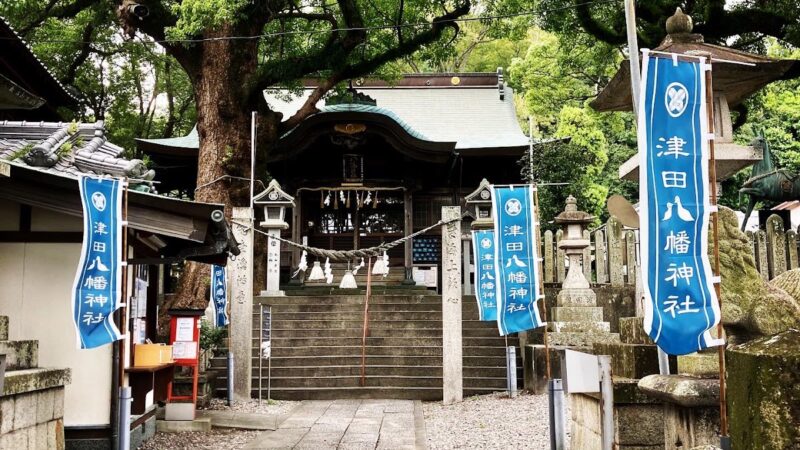
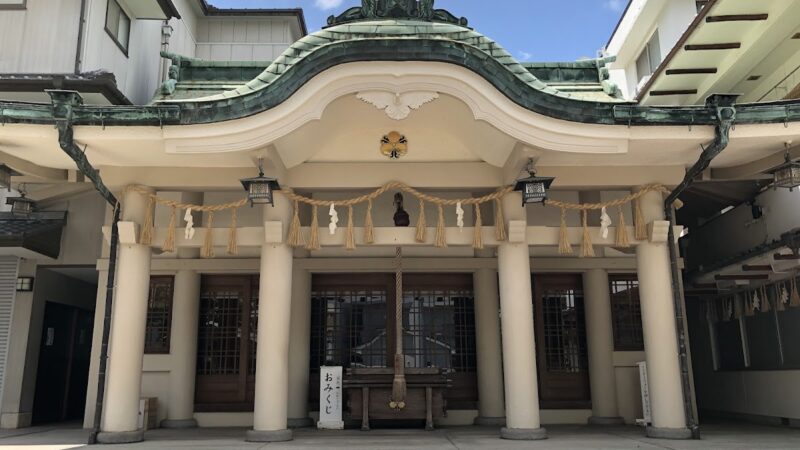
The current shrine buildings are based on those built after the relocation of the deity. The wooden shrine buildings are regularly repaired and maintained in good condition. Standing before the worship hall, one is enveloped in a serene atmosphere, feeling the unique charm of a shrine with a long history.
Subsidiary Shrines
Within the grounds of Sumiyoshi Shrine, several subsidiary shrines are enshrined, representing a diverse range of deities.
Ebisu Shrine
This shrine enshrines Ebisu, known as the god of business prosperity. Local shop owners and businesspeople visit to pray.
Tenjin Shrine
This shrine enshrines Sugawara no Michizane, the god of learning. During exam season, many students and their parents visit to pray for success.
Kasuga Shrine
This shrine was established by inviting a deity from Kasuga Taisha in Nara, and enshrines Takemikazuchi-no-Mikoto and others.
Sumino Shrine
This shrine has been worshipped since ancient times as the guardian deity of the region.
Hikawa Shrine
This shrine is based on the Hikawa faith of Musashi Province and is believed to have divine blessings for matchmaking and family safety.
Inari Shrine
This shrine enshrines Inari, the god of abundant harvests and business prosperity. It is characterized by its vermilion torii gate.
These subsidiary shrines within the grounds demonstrate that Sumiyoshi Shrine has functioned as a comprehensive place of worship for the region. Because one can receive diverse divine blessings within one grounds, it is also called “A shrine where blessings are guaranteed! A shrine where all the gods gather.”
Relationship with the affiliated temple, Rengeji Temple
To the south of Sumiyoshi Shrine is a temple called Rengeji Temple. Rengeji Temple, formerly the head temple of Sumiyoshi Shrine, was responsible for the management and rituals of the shrine during the era of syncretism of Shinto and Buddhism.
Although the Meiji-era decree separating Shinto and Buddhism formally separated shrines and temples, they still exist adjacent to each other, telling the story of the region’s religious history. Visiting Rengeji Temple allows you to learn about the religious practices of Awa during the era of syncretism.
About Goshuin (Shrine Seals)
Where to Obtain Goshuin
Goshuin for Sumiyoshi Shrine are not always available at the shrine itself. Those wishing to obtain a goshuin can do so at Shisho Shrine.
Shisho Shrine is another shrine in Tokushima City that manages the goshuin for several shrines. After visiting Sumiyoshi Shrine, you can obtain a goshuin by visiting Shisho Shrine.
Points to Note When Receiving a Goshuin (Shrine Stamp)
- It is recommended to check the hours for receiving Goshuin at Shisho Shrine in advance.
- Bring your Goshuincho (stamp book).
- Prepare the offering fee (usually around 300 yen).
- It is considered polite to receive the Goshuin after actually visiting Sumiyoshi Shrine.
Annual Events and Festivals
Sumiyoshi Shrine holds various festivals and events throughout the year.
Annual Grand Festival
The annual grand festival, held every autumn, is the most important festival at Sumiyoshi Shrine. Local parishioners and devotees gather for events such as a portable shrine procession and Kagura (sacred dance) performances.
New Year’s Visit
Many worshippers visit the shrine for their first shrine visit of the new year. It is bustling with people praying for family safety and business prosperity.
Other Events
- Setsubun Festival: Prayers for warding off evil are offered on Setsubun in February.
- Summer Purification Ceremony: A Shinto ritual held at the end of June to purify oneself of the impurities accumulated over the past six months.
- Shichi-Go-San Festival: Many families visit in November.
History and Culture of the Sumiyoshi Area
Origin of the Place Name
As mentioned above, the place name “Sumiyoshi” originates from the relocation of the shrine in 1623, when Fujigoro Island was renamed Sumiyoshi Island. The fact that the shrine’s name became the place name demonstrates the shrine’s importance to the community.
Currently, Sumiyoshi has developed as a residential area close to the center of Tokushima City, extending from Sumiyoshi 1-chome to several other districts. While possessing a long history, it is a region that harmonizes with a modern cityscape.
Connection to the Community
Sumiyoshi Shrine is not merely a tourist spot; it is deeply rooted in the lives of the local residents. It serves as the center of local festivals and events, functioning as a spiritual anchor for the residents.
The local community association is very active, and the entire community works together to protect the shrine, including cleaning the grounds and preparing for festivals.
Access
Access by Public Transportation
From JR Tokushima Station
- Walking: Approximately 15-20 minutes
- Taxi: Approximately 5 minutes
- Bus: Take a Tokushima City Bus or Tokushima Bus and get off at the “Sumiyoshi” bus stop, then walk for approximately 3 minutes.
Nearest Station
- JR Tokushima Station is the nearest station.
Access by Car
From the Tokushima Expressway
- Approximately 15 minutes from Tokushima IC
From the City Center
- Approximately 10 minutes from Tokushima City Hall
- Accessible from major roads such as National Route 11 and National Route 192.
Parking Information
Sumiyoshi Shrine has its own parking lot. Parking spaces are available in front of Sumiyoshi Shrine and Sumiyoshi Community Center in Sumiyoshi 1-chome.
Notes on Parking
- Many vehicles are parked there under monthly contracts, so please check for available spaces.
- There is frequent vehicle traffic, so please be considerate of other users.
- The parking lot may be crowded during festivals and other events.
- Avoid long-term parking and move your vehicle promptly after finishing your visit.
Nearby Attractions
Tokushima Castle Ruins
Tokushima Castle, where Sumiyoshi Shrine once stood as the guardian shrine of the castle. Currently, the castle ruins are maintained as a park, with stone walls, moats, and gardens remaining. It is an essential spot for understanding the history of Tokushima City.
Shisho Shrine
Shisho Shrine, which also offers the Goshuin (seal) of Sumiyoshi Shrine, is another shrine worth visiting. It manages several shrines within Tokushima City and boasts a historic shrine building.
Yoshino River Estuary
This is a place where you can truly appreciate why Sumiyoshi Shrine enshrines the guardian deity of maritime traffic. The majestic flow of the Yoshino River and the scenery of the estuary give a sense of Tokushima’s rich natural beauty.
Manners and Points for Visiting a Shrine
Basic Worship Etiquette
- Bow before passing through the torii gate: As a sign of respect before entering the sacred area.
- Purify yourself at the water basin: Purify your left hand, right hand, and mouth in that order.
- Worship at the main shrine: Two bows, two claps, and one bow is the basic ritual.
- Visit the subsidiary shrines: If you have time, visit each of the subsidiary shrines.
- Bow again at the torii gate when leaving: Express your gratitude to the gods.
Suitable Time for Visiting
Sumiyoshi Shrine is open for worship 24 hours a day, but visiting during daylight hours is recommended. Especially in the morning, you can worship in a refreshing atmosphere.
Regarding Photography
Photography is generally permitted on the shrine grounds, but please note the following points.
- Please refrain from taking photographs inside the main shrine.
- Please be considerate of other worshippers.
- Remember that this is a sacred place.
Cultural Value of Sumiyoshi Shrine
Importance as Historical Document
Sumiyoshi Shrine holds significant historical value for understanding the history of Tokushima. The following points are particularly noteworthy:
Relationship with the Hachisuka Family
- Donation of the torii gate by the feudal lord
- Transition from a castle guardian to a regional guardian deity
- Records of religious practices during the feudal period
History of Urban Planning
- Changes in place names due to relocation
- Connection to the development of the castle town
- The process of forming Tokushima city
Edo Period Structures
The existing torii gate and guardian lion-dogs are valuable cultural assets that convey the stone construction techniques of the Edo period. They convey the form of faith and artistry of that time.
Summary
Sumiyoshi Shrine, located in Sumiyoshi, Tokushima City, is a venerable shrine with a history of over 700 years since its founding in 1300. Sumiyoshi Shrine is closely intertwined with the history of Tokushima, from its relocation from Shiroyama to its current location, to its deep connection with the Hachisuka family, and the history behind the origin of the place name.
The shrine grounds retain Edo-period torii gates and guardian lion-dogs, and numerous smaller shrines are enshrined within, offering plenty to see. The Sumiyoshi Three Gods are the main deities, and the shrine is believed to bestow various blessings, including safe voyages, business prosperity, and family safety.
Goshuin (shrine stamps) are available at Shisho Shrine, making it a recommended stop as part of a Tokushima shrine tour. Its convenient location within walking distance of Tokushima Station makes it easily accessible, so be sure to visit during your Tokushima sightseeing trip.
As a place of worship deeply rooted in the community and a cultural asset that tells the history of Tokushima, Sumiyoshi Shrine will undoubtedly continue to be cherished by many people. Why not take some time to quietly reflect on history in its tranquil grounds and offer your prayers in peace?