Complete Guide to Kunitamahiko Shrine (Tokushima Prefecture) | History and Highlights of the Prefectural Shrine Dedicated to the Successive Lords of the Hachisuka Family
About Kunitamahiko Shrine
Kunitamahiko Shrine is a shrine located at 1-6 Iga-cho, Tokushima City, Tokushima Prefecture. Affectionately known as “Kunima-san” by locals, it boasts a scenic location at the eastern foot of Mount Bizan.
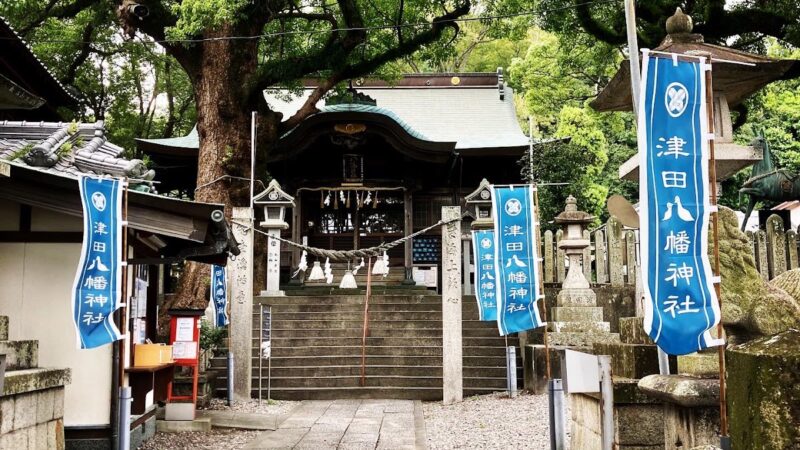
As a former prefectural shrine, it is a highly prestigious shrine, and currently, the Tokushima Prefectural Shrine Association building is located within its grounds, making it an important base for overseeing shrines throughout Tokushima Prefecture. Along with the adjacent Tomita Hachiman Shrine, it is a valuable shrine that conveys the history and culture of Tokushima to the present day.
Pronunciation and Common Name
The official name is “Kunitamahiko Shrine,” and it is pronounced “Kunitamahiko Jinja.” However, it is affectionately known as “Kunima-san” among local residents, and this name is widely established. The divine title “Kunimizuhiko” itself was bestowed with the meaning of wishing for the prosperity and peace of the Tokushima Domain.
Deities Enshrined | Dedicated to the Successive Lords of the Hachisuka Family
The deities enshrined at Kunimizuhiko Shrine are those deeply connected to the Hachisuka family, who ruled the Tokushima Domain.
Main Deity
Hachisuka Iemasa is enshrined as the main deity. Iemasa was the first lord of the Tokushima Domain and is known as a wise ruler who governed Awa Province with a domain of 257,000 koku. Born as the eldest son of Hachisuka Masakatsu (Koroku), a senior retainer of Toyotomi Hideyoshi, he was granted Awa Province in 1592.
Iemasa dedicated himself to laying the foundation of Awa Province, including the construction of Tokushima Castle, the development of the castle town, the development of new rice fields, and the promotion of commerce and industry. Due to his achievements, he was revered as the “founder of the domain,” and more than 200 years after his death, in 1806 (Bunka 3), he was given the divine title of “Kunimizuhiko” and enshrined as a deity.
Enshrined Deities
In addition to the main deity, Lord Iemasa, the following individuals are enshrined:
- Deities of the Successive Lords of the Hachisuka Family: Successive lords from the 2nd lord to the 14th and final lord, Mochiaki.
- Lord Hachisuka Masakatsu: Father of Lord Iemasa and founder of the Hachisuka family. Famous as a warrior who served Toyotomi Hideyoshi.
- Spirits of 92 Meritorious Figures in Literary and Military Affairs: Retainers and samurai who made significant contributions to the Tokushima domain.
In 1871 (Meiji 4), when the last lord, Hachisuka Mochiaki, moved to Tokyo, the spirits of the family’s founder, Lord Masakatsu, and the successive lords, as well as 92 individuals who made significant contributions to the domain’s administration, were enshrined together. As a result, Kunizuhiko Shrine became a shrine that comprehensively enshrines the history of the Hachisuka family and the Tokushima Domain.
History | From its founding in 1806 to the present
Circumstances of its founding
Kunizuhiko Shrine was founded in 1806 (Bunka 3). The 11th lord of the Tokushima Domain, Hachisuka Haruaki, in remembrance of the domain’s founder, Hachisuka Iemasa, petitioned the Imperial Court and was granted the divine title of “Kunizuhiko.”
Initially, the shrine was not located in its current location, but rather built next to the Tomita Hachiman Shrine (then called Hachiman Shrine) in Iga Town. It is believed that the intention was to demonstrate the legitimacy of the domain and strengthen the unity of the samurai by enshrining the domain’s founder as a god.
Development during the Edo period
After its founding, Kunizuhiko Shrine received the fervent reverence of successive lords of the domain. The Hachisuka family established the shrine’s status as the guardian deity of the domain, not only by having the feudal lord himself visit, but also by sending a representative to attend important domain festivals.
Throughout the Edo period, the Hachisuka family devoted themselves to the restoration of the shrine buildings and the maintenance of the grounds. Swords, armor, and other weapons, as well as works of art and crafts, were also donated, further strengthening the shrine’s role as the tutelary deity of the feudal lord’s family.
Changes after the Meiji Restoration
With the Meiji Restoration, the Tokushima Domain ceased to exist due to the abolition of the feudal domains and the establishment of prefectures, but the Hachisuka family survived as a noble family. In 1871, when the last feudal lord, Hachisuka Shigeaki, moved to Tokyo, he enshrined the spirits of the family’s founder, Masakatsu, and 92 other successive feudal lords and meritorious retainers, as mentioned above.
During this period, Kunizuhiko Shrine was ranked as a prefectural shrine under the modern shrine ranking system, and was officially recognized as one of Tokushima Prefecture’s representative shrines. Even after the Meiji Restoration, the Hachisuka family continued to provide support, such as repairing the shrine buildings, contributing to its preservation.
Post-War Devastation and Restoration
After World War II, with the abolition of the peerage system, the Hachisuka family’s support ceased, and Kunimizuhiko Shrine fell into disrepair for a time. This was due to the loss of its financial foundation, making it difficult to maintain the shrine buildings and grounds.
However, through the efforts of local residents and worshippers, the grounds were gradually restored. Currently, it is managed integrally with the adjacent Tomita Hachiman Shrine, and the rituals continue with the chief priest of Tomita Hachiman Shrine also serving as the chief priest of Kunimizuhiko Shrine.
The Current Kunimizuhiko Shrine
The current Kunimizuhiko Shrine maintains a simple yet dignified precinct. Because the Tokushima Prefectural Shrine Association building is located on the grounds, it holds a central position in the Tokushima Prefecture shrine community.
Locally, it is affectionately known as “Kunima-san” and is known as a shrine where one can worship in peace. While not flashy, this valuable historical site, offering a glimpse into the history of the Hachisuka family and Tokushima, continues to welcome many visitors.
Highlights of the Shrine Grounds
Torii Gate and Main Gate
Upon entering the grounds of Kunizuhiko Shrine, visitors are first greeted by a simple yet dignified torii gate. Nestled amidst the rich natural surroundings at the foot of Mount Bizan, the torii gate exudes a serene atmosphere.
Passing through the torii gate, one comes to the main gate, beyond which the shrine building comes into view. The grounds are relatively compact, allowing for a peaceful and tranquil visit.
Shrine Building
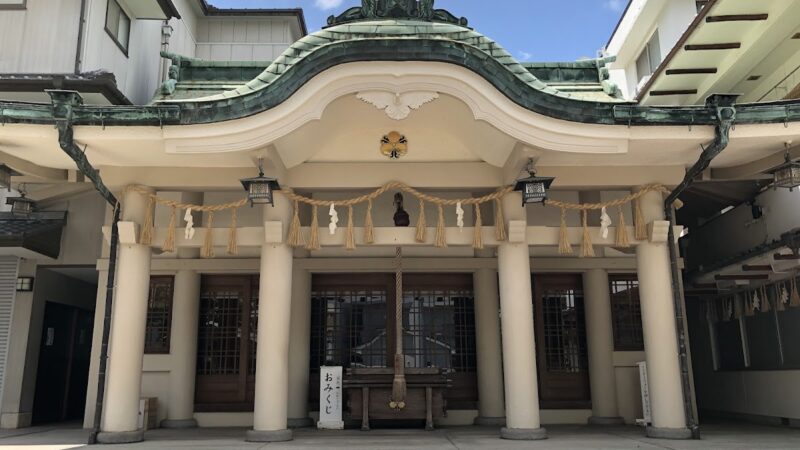
The current shrine building was constructed after the war and is simply built. While a magnificent shrine building was once maintained with the support of the Hachisuka family, after a period of decline following the war, it is now a more functional structure.
Nevertheless, it retains the dignity of a former prefectural shrine, providing a sufficient environment for quiet prayer.
Stone Wall
Within the shrine grounds, a stone wall remains, evoking the atmosphere of bygone days. This stone wall is believed to date back to the Edo period and is a valuable relic demonstrating the technology of the time and the wealth of the Hachisuka family. Its placement, taking advantage of the topography at the foot of Mount Bizan, conveys the depth of the shrine’s history.
Shrine Precincts and Historic Sites
Kunimizuhiko Shrine also has aspects that make it a candidate for the Shikinaisha (shrine listed in the Engishiki) Ama-no-Iwakado-wake-Toyotama-hime Shrine. This is related to the Ryuo Shrine within the grounds, as there was a period when the Ryuo Shrine, which was once located on Tokushima Castle’s Shiroyama, was enshrined here.
Due to this historical background, Kunimizuhiko Shrine is not merely a facility to honor the feudal lord, but also possesses aspects of a shrine that traces its lineage back to ancient beliefs.
Tokushima Prefectural Shrine Association Building
The Tokushima Prefectural Shrine Association building is located within the shrine grounds. The Tokushima Prefectural Shrine Association is an organization that oversees all shrines in the prefecture, and the fact that its office is located here indicates that Kunizuhiko Shrine holds an important position in the Tokushima prefectural shrine community.
Votive Items and Cultural Properties
Weapons and Armor
During the Edo period, the Hachisuka family donated weapons such as swords and armor. These served to demonstrate the authority of the feudal lord and also as a prayer for lasting military fortune. While many of these donations have now been dispersed or transferred to other facilities, they remain important elements in understanding the history of the shrine.
Historical Records
Kunizuhiko Shrine possesses valuable historical records concerning the Hachisuka family and the Tokushima domain. Records of the feudal lord’s visits, festival records, and catalogs of donated items are important historical materials for the study of Tokushima’s history.
Goshuin (Shrine Seal) Information
Goshuin (shrine seals) for Kunizuhiko Shrine can be obtained at the shrine office of the adjacent Tomita Hachiman Shrine. Since Kunimizuhiko Shrine itself does not have a resident priest, Tomita Hachiman Shrine handles its affairs.
Location for Obtaining Goshuin (Shrine Seals)
- Location: Tomita Hachiman Shrine Office
- Address: 1-chome, Iga-cho, Tokushima City, Tokushima Prefecture (right next to Kunimizuhiko Shrine)
- Hours: Usually 9:00 AM to 4:00 PM (Since priests may be absent, it is advisable to contact in advance if you wish to be sure of receiving a goshuin)
Tomita Hachiman Shrine is adjacent to Kunimizuhiko Shrine, just a few seconds’ walk away. Visiting both shrines together is a common pilgrimage route.
Characteristics of Goshuin
Kunimizuhiko Shrine’s goshuin sometimes includes the words “Former Prefectural Shrine” along with the shrine’s name. This indicates the shrine’s status and gives the goshuin a sense of historical weight.
Access
Kunimizuhiko Shrine is close to the center of Tokushima City, and access is relatively good.
Access by Train
- Walking from JR Tokushima Station: Approximately 15 minutes
- Bus from JR Tokushima Station: Get off at the “Iga-cho” bus stop (Tokushima City Bus), approximately 3 minutes on foot
When walking from Tokushima Station, head towards National Route 439 and aim for the foot of Mt. Bizan. It is located near Zuiganji Temple, so using Zuiganji Temple as a landmark will make it easier to find.
Access by Car
- From Tokushima IC on the Tokushima Expressway: Approximately 15 minutes
- Parking: Dedicated parking is limited, so please use nearby paid parking or the parking lot at Tomita Hachiman Shrine (however, the number of spaces is limited).
Due to its location at the eastern foot of Mt. Bizan, you will need to drive on narrow roads. Visiting in a large vehicle may be difficult, so please be careful.
Distance from major nearby attractions
- Tokushima Castle Ruins: Approximately 10 minutes on foot
- Bizan Ropeway Base Station: Approximately 5 minutes on foot
- Awa Odori Hall: Approximately 12 minutes on foot
Because it is close to the center of Tokushima’s tourist area, it is recommended to visit it in conjunction with sightseeing at Tokushima Castle and Bizan.
Nearby attractions
Tomita Hachiman Shrine
Located right next to Kunimizuhiko Shrine, Tomita Hachiman Shrine is an ancient shrine at the foot of Bizan. It existed even before the founding of Kunimizuhiko Shrine and has been revered as the local guardian deity. Currently, it is managed together with Kunimizuhiko Shrine, and it is common to visit both shrines together.
Zuiganji Temple
Zuiganji Temple, located near Kunimizuhiko Shrine, is a temple associated with the Hachisuka family. It has a history of flourishing as one of the family temples of the Tokushima domain lords, and visiting it together with Kunimizuhiko Shrine will allow you to gain a deeper understanding of the history of the Hachisuka family. ### Mount Bizan
Mount Bizan, where Kunimizuhiko Shrine is located, is a mountain beloved as a symbol of Tokushima City. From its 290m-high summit, you can enjoy a panoramic view of Tokushima city, the Yoshino River, and the Kii Channel, and it is especially known for its beautiful night view. You can reach the summit in about 6 minutes using the Bizan Ropeway.
Tokushima Castle Ruins
The site of Tokushima Castle, built by Hachisuka Iemasa, is now developed as Tokushima Central Park. Stone walls and moats remain, allowing visitors to imagine the scale of the former castle. A museum is also located on the premises, where you can learn about the history of the Tokushima Domain.
Annual Events and Festivals
Kunimizuhiko Shrine holds religious ceremonies throughout the year. However, there are few large-scale festivals, and it has a strong character as a quiet shrine.
Annual Festival
An annual festival is held at a fixed time each year to express gratitude and honor to the enshrined deities, including Hachisuka Iemasa. This was once a grand festival attended by the feudal lord himself, but it is now continued in a simpler form.
Monthly Festival
A monthly festival is held regularly to maintain the shrine and continue the worship of the enshrined deity. These rituals are performed by the chief priest of Tomita Hachiman Shrine.
Manners and Precautions for Visiting
Visiting Hours
Kunizuhiko Shrine’s grounds are freely accessible, and you can generally visit at any time. However, it is advisable to avoid visiting at night out of consideration for the surrounding residents.
Maintaining a Quiet Environment
Due to its location near a residential area, visitors are expected to behave quietly during their visit. Please refrain from loud conversations and noise.
Requesting a Goshuin (Shrine Seal)
If you wish to receive a Goshuin, you must visit during the opening hours of the Tomita Hachiman Shrine office. Since the office may be closed, it is recommended to contact them in advance if you wish to be sure to receive one.
Photography
Photography is generally permitted on the shrine grounds, but consideration should be given to avoiding disturbing other worshippers. Furthermore, photography inside the shrine buildings should be refrained from.
Significance and Value of Kunizuhiko Shrine
Historical Value
Kunizuhiko Shrine is a valuable historical site that conveys the history of the Tokushima Domain. By enshrining the wise ruler Hachisuka Iemasa as a deity, and by enshrining successive lords and meritorious retainers, it comprehensively commemorates the more than 250-year history of the Tokushima Domain.
While examples of Edo-period daimyo families enshrining their founders as deities can be found throughout Japan, Kunizuhiko Shrine was founded relatively early (Bunka 3 = 1806), making it an important example for studying the history of honoring feudal lords.
Cultural Value
Tokushima’s culture is deeply intertwined with the rule of the Hachisuka family. Many elements that characterize present-day Tokushima, such as traditional culture including Awa Odori, industries like indigo dyeing, and the urban structure as a castle town, were formed during the time of the Hachisuka family.
Kunimizuhiko Shrine, by enshrining the Hachisuka family—the source of Tokushima’s culture—becomes a symbol of Tokushima’s identity.
Value as a Place of Worship
While Kunimizuhiko Shrine is not a flashy tourist shrine today, it is deeply rooted in the community as a place for quiet prayer. Affectionately known as “Kunimasan,” it serves as a spiritual anchor for the local people.
Summary
Kunimizuhiko Shrine (Tokushima City, Tokushima Prefecture) is a former prefectural shrine that enshrines Hachisuka Iemasa, the first lord of the Tokushima Domain, as its main deity. Since its founding in 1806, it has been deeply rooted in the community as an important shrine that conveys the history of the Hachisuka family and the Tokushima Domain.
Located in a scenic spot at the eastern foot of Mount Bizan, and easily accessible from Tokushima Station (approximately a 15-minute walk), this shrine maintains a tranquil environment for worship. The Tokushima Prefectural Shrine Association building is located within the grounds, making it a central hub for shrines in Tokushima Prefecture.
Goshuin (shrine stamps) can be obtained at the adjacent Tomita Hachiman Shrine, and it is common to visit both shrines together. Visiting this shrine in conjunction with nearby tourist attractions such as Tokushima Castle ruins and Mount Bizan will allow you to gain a deeper understanding of Tokushima’s history and culture.
While not flashy, this is a valuable shrine where you can quietly experience Tokushima’s history, and it is well worth a visit.