Tsuda Hachiman Shrine (Tsuda Nishimachi, Tokushima City, Tokushima Prefecture) Complete Guide | History, Goshuin (Shrine Seal), Benefits, and Access Information
Tsuda Hachiman Shrine, located at 1-8-21 Tsuda Nishimachi, Tokushima City, Tokushima Prefecture, is a historic shrine that has been revered by the local people since ancient times as the “God of Success and Victory.” In the Tsuda area, which prospered from maritime transport and fishing, it remains a popular tutelary shrine visited by many worshippers.
This article comprehensively introduces information you should know before visiting Tsuda Hachiman Shrine, including its history, enshrined deities, benefits, goshuin information, annual events, and access methods.
Enshrined Deities and Benefits of Tsuda Hachiman Shrine
Enshrined Deities
The following three deities are enshrined at Tsuda Hachiman Shrine:
- Honda-wake no Mikoto – The central figure of Hachiman, known as Emperor Ōjin
- Empress Jingū – Mother of Emperor Ōjin
- Tamayorihime no Mikoto – Goddess of the sea, known as the mother of Emperor Jimmu
These deities are widely enshrined in Hachiman shrines throughout Japan and are worshipped as gods of victory, success, long-lasting military fortune, and national protection.
Main Benefits
Tsuda Hachiman Shrine is known as a shrine where the “God of Success and Victory” resides, and is believed to offer the following benefits:
- Improved Luck in Winning and Success – Success in all kinds of competitions, such as exams, job hunting, and sports.
- Business Prosperity – Development of businesses as the guardian deity of maritime transport and fishing.
- Family Safety – Protection of families as the local guardian deity.
- Protection from Misfortune and Disaster – Protection from calamities.
- Maritime Safety – Prayers for the safety of those involved in fishing and shipping.
History and Origins of Tsuda Hachiman Shrine
Origin of Founding
The exact year of founding of Tsuda Hachiman Shrine is unknown, but its origins date back to the Middle Ages. Initially, it was not located in its current location, but rather on the summit of Mount Tsuda.
There was a fort called “Tsuda Rui” on the summit of Mount Tsuda, and it is believed that the shrine’s origins lie in the fact that Kuwamura Hayatonosuke, the lord of the fort, enshrined Hachiman as his guardian deity. For warlords of the Sengoku period, Hachiman was an important guardian deity who presided over military fortune.
Reverence during the Sengoku Period
During the Tenbun era (1532-1555), the shrine received the reverence of the Miyoshi clan, a powerful daimyo family that ruled Awa Province. The Miyoshi clan was a powerful daimyo family that expanded its influence from the Kinai region to Shikoku, and their devotion to Tsuda Hachiman Shrine speaks to the importance of the shrine at that time.
Under the protection of the Miyoshi clan, Tsuda Hachiman Shrine flourished as a center of local faith.
Relocation to the Current Location
During the Keicho era (1596-1615), Tsuda Hachiman Shrine was relocated from the summit of Mount Tsuda to its current location at the eastern foot of the mountain. This period coincided with the Battle of Sekigahara (1600) and the establishment of the Edo Shogunate by Tokugawa Ieyasu, a time when the development of shrines and temples progressed nationwide.
By relocating the shrine from the mountaintop to the foot of the mountain, it became easier for more people to visit, strengthening its role as the local guardian deity.
Tsuda and Maritime Trade
The Tsuda district, where Tsuda Hachiman Shrine is located, has long prospered from maritime trade and fishing. During the Tokushima Domain era, it flourished as a center for the collection of marine products and as a port town with many ships coming and going.
For people who live by the sea, Tsuda Hachiman Shrine has played an important role as a place to pray for safety at sea and abundant catches. The fact that Tamayorihime-no-Mikoto, a goddess of the sea, is enshrined there is deeply connected to these characteristics of the region.
About Hachiman Faith
Hachiman Shrines Spreading Nationwide
There are over 25,000 Hachiman shrines throughout Japan, making them the most numerous type of shrine, along with Inari shrines. In Tokushima Prefecture, there are approximately 1,300 shrines, and about one-third of them are Hachiman shrines, demonstrating the deep penetration of Hachiman faith.
The Origin of Hachiman
Hachiman is a deity whose principal deity is Emperor Ōjin. He was deeply revered by samurai families as the god of military fortune and archery. He is particularly famous as the tutelary deity of the Minamoto clan. Minamoto no Yoritomo, who founded the Kamakura Shogunate, renovated Tsurugaoka Hachimangū Shrine, which led to the spread of Hachiman worship throughout Japan.
Hachiman Worship at Tsuda Hachiman Shrine
At Tsuda Hachiman Shrine, in addition to his role as a god of military fortune, he is also worshipped as the guardian deity of maritime transport and fishing. This can be considered a unique form of worship reflecting the characteristics of the Tsuda area.
Highlights of the Shrine Grounds
Shrine Building
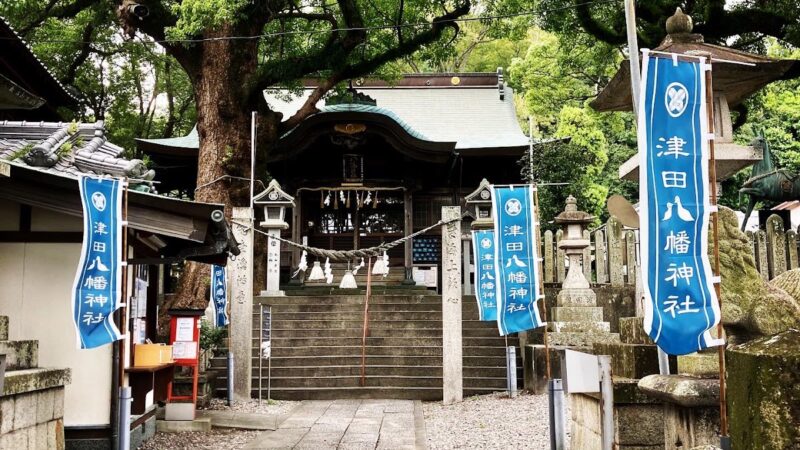
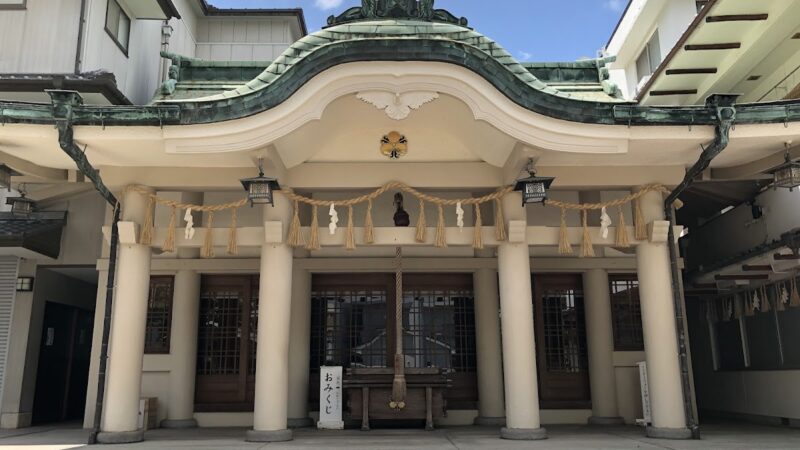
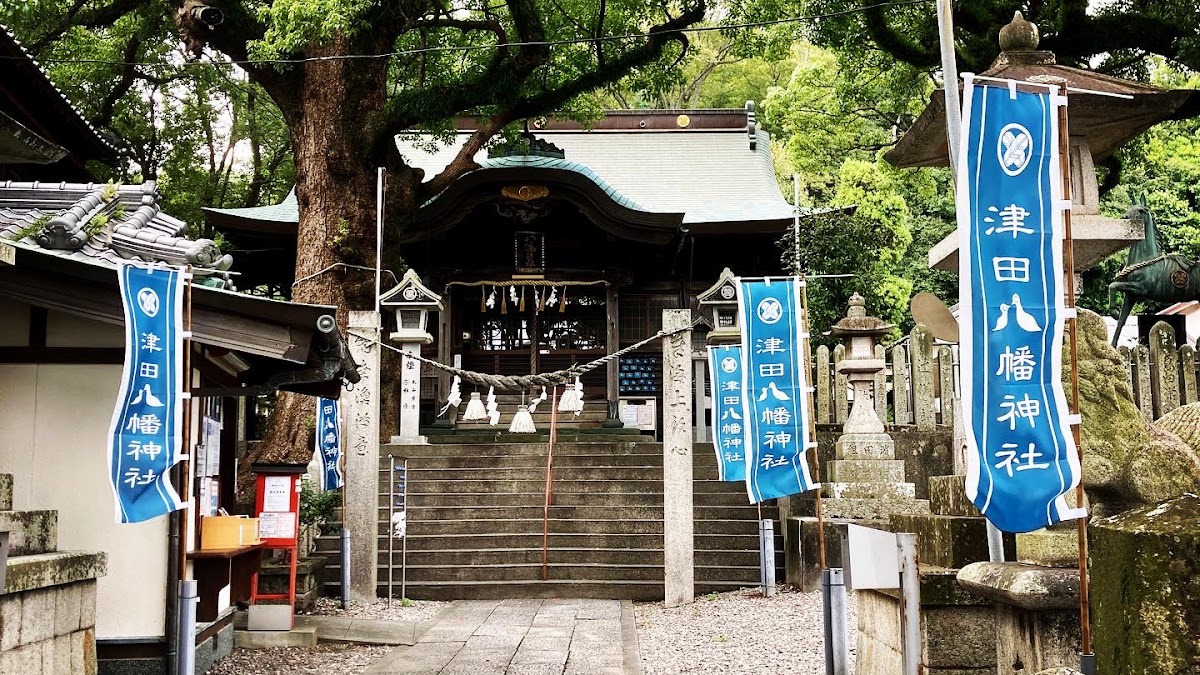
The current shrine building has a dignified appearance that evokes a sense of history, possessing the dignity befitting a local tutelary deity. The grounds are meticulously clean, welcoming visitors with a refreshing atmosphere.
The Tanuki God
The Tanuki God is also enshrined within the grounds of Tsuda Hachiman Shrine. This relates to the fact that Tsuda Town is a place associated with the “Awa Tanuki Battle.”
The Awa Tanuki Battle is a famous folktale from Tokushima, depicting the battle between Kincho Tanuki and Rokuemon Tanuki. Behind Tsuda Hachiman Shrine, on Mount Tsuda, there is a cave called “Ana Kannon,” and it is said that Rokuemon Tanuki, Kincho Tanuki’s enemy, lived there.
This tanuki worship is an interesting example of the fusion of local folk culture and shrine worship.
Mount Tsuda and Ana Kannon
Mount Tsuda, towering behind the shrine, was once the site of the Tsuda Fort and is deeply connected to the shrine’s history. Ana Kannon is located on the mountain and remains an object of worship today.
Goshuin Information
Regular Goshuin
Beautiful goshuin (shrine stamps) can be obtained at Tsuda Hachiman Shrine. The dignified Goshuin (temple/shrine stamp) bearing the calligraphy and red seal of “Tsuda Hachiman Shrine” is popular with many visitors as a memento of their visit.
Limited-Time Goshuin
Tsuda Hachiman Shrine also offers limited-time Goshuin that are tailored to the seasons and events. Past limited-edition Goshuin have included:
- Suzaku Goshuin – A limited-edition Goshuin featuring Suzaku, one of the Four Symbols.
- Spring Kirin – A Goshuin with a Kirin design, available only in spring.
These limited-edition Goshuin maintain the traditional dignity of the shrine while incorporating modern sensibilities, earning high praise from Goshuin collectors.
File-Type Goshuin Books
Tsuda Hachiman Shrine also offers file-type Goshuin books, with new designs appearing regularly. The file-type books are convenient for those who want to organize and store multiple Goshuin.
Amabie Amulet
In response to recent plagues, Tsuda Hachiman Shrine also offers amulets of Amabie. Amabie is a mythical creature believed to predict and ward off plagues, and has recently gained renewed attention.
Points to Note When Receiving a Goshuin (Shrine Stamp)
- Please receive your Goshuin after completing your prayers.
- Bring your own Goshuincho (stamp book) or use one provided by the shrine.
- Please pay the specified offering amount.
- Please visit during the shrine office’s reception hours.
Annual Events
Tsuda Hachiman Shrine holds various festivals and events throughout the year.
Spring Festival and Daidai Kagura
In spring, the Spring Festival is held, and the “Daidai Kagura” is performed. Daidai Kagura is a traditional Kagura (sacred dance) offered to the gods, and is an important Shinto ritual praying for a bountiful harvest and the peace and security of the region.
The elegant dance and the melodies of Gagaku (ancient Japanese court music) envelop the audience in a sacred atmosphere. It is also a valuable opportunity to preserve the region’s traditional culture.
Annual Grand Festival
In autumn, the annual grand festival is held, attracting many worshippers. The procession of the portable shrine and the dedication ceremonies make this a community-wide festival and a characteristic autumn event in Tsuda.
New Year’s Visit
At the start of the new year, many worshippers visit for their first shrine visit of the year. The shrine grounds are bustling with people praying for safety and success throughout the year.
Other Annual Events
- Monthly Festival – A festival held regularly every month
- Exorcism Prayer – A special prayer for those in their unlucky year
- Shichi-Go-San – A celebration of children’s growth
- Prayer for Success in Exams – Many students visit during exam season
Prayers and Exorcisms
Various Prayers
Tsuda Hachiman Shrine accepts various prayers.
- Family Safety – Praying for the health and safety of the family
- Business Prosperity – Praying for the development and prosperity of the business
- Exorcism – Protection from misfortune during the unlucky year
- Prayer for Success in Exams – Praying for success in exams and qualification tests
- Prayer for Safe Childbirth – Praying for the health of mother and child and a safe delivery
- First Shrine Visit – Praying for the healthy growth of the baby
- Shichi-Go-San (7-5-3 Festival) – Giving thanks for the child’s growth and praying for their future health
- Car Blessing – Praying for traffic safety
How to Apply for a Prayer
We recommend making a reservation by phone in advance. Same-day registration is possible, but there may be a waiting time due to the schedule of Shinto rituals.
For information on offering fees and necessary items, please contact the shrine directly.
Access Information
Location
Address: 1-8-21 Tsuda Nishimachi, Tokushima City, Tokushima Prefecture 770-8003
Access by Public Transportation
From JR Tokushima Station
- Using Tokushima City Bus
- Take the Tsuda Line Tokushima City Bus from JR Tokushima Station
- Get off at the “Tsuda 1-chome” bus stop
- Walk approximately 100m (about 2 minutes) west (towards Tsudayama)
- Walking
- Approximately 15 minutes on foot from JR Tokushima Station
- Distance is approximately 1.2km
Access by Car
- Approximately 15 minutes from Tokushima IC on the Tokushima Expressway
- Accessible from National Route 11
Parking
The shrine has parking spaces for visitors. However, it may be full during busy periods such as New Year’s Day and the annual festival, so please consider using public transportation. ### Nearby Landmarks
Located at the eastern foot of Mt. Tsuda, within a residential area. Using Mt. Tsuda as a landmark will make it easy to find.
Manners and Etiquette for Visiting a Shrine
Basic Etiquette for Visiting a Shrine
- Bow Before Passing Through the Torii Gate
- Bow before entering the sacred area, bowing in front of the torii gate.
- Purify at the Water Basin
- Purify your left hand, then your right hand.
- Rinse your mouth, and finally purify the handle of the ladle.
- Worship at the Main Hall
- The basic method is two bows, two claps, one bow (two bows, two claps, one bow).
- Gently place your offering in the offering box, and ring the bell if there is one.
- Bow deeply twice.
- Clap your hands twice.
- Pray with all your heart.
- Finally, bow deeply once.
- When Leaving
- After leaving the torii gate, turn around and bow.
Attire for Visiting a Shrine
Everyday clothes are acceptable, but please dress neatly. If you are receiving a prayer service, slightly more formal attire is preferable. ## The Charm of Tsuda Hachiman Shrine
A Local Guardian Deity
Tsuda Hachiman Shrine has a long history as the guardian deity of the region, intertwined with the lives of the people. Located in Tsuda, a town that prospered from maritime trade and fishing, the shrine has continuously watched over the safety and prosperity of its people.
Benefits of Success and Victory
As the “God of Success and Victory,” this deity lends strength in various life challenges, such as exams, job hunting, and business success. Sincere prayers will surely reach the god.
A Sense of Historical Romance
This shrine evokes a sense of historical romance, with its reverence from Sengoku period warlords, its connection to the Miyoshi clan, and its historical ties to Tsuda Fort on Tsuda Mountain.
Connection to the Awa Tanuki Battle
As a place associated with the Tokushima folktale “The Awa Tanuki Battle,” it’s interesting that a tanuki (raccoon dog) deity is enshrined within the grounds. Here, you can see a fusion of Shinto belief and folk belief.
Beautiful Goshuin (Shrine Seals)
In addition to regular goshuin, beautiful seasonal goshuin are also available, making it popular among goshuin collectors.
Nearby Tourist Attractions
Tsudayama
Tsudayama, towering behind the shrine, is a historical site where the Tsuda Fort once stood. Within the mountain is Anakannon, known as a place associated with the Awa Tanuki Battle.
Tokushima City Center
Around JR Tokushima Station, you’ll find major Tokushima tourist spots such as Tokushima Castle Ruins, Tokushima Central Park, and Awa Odori Hall. Visiting these in conjunction with a visit to Tsuda Hachiman Shrine is highly recommended.
Bizan
Bizan, a symbol of Tokushima City, can be reached by ropeway, offering a spectacular panoramic view of Tokushima city and the Kii Channel.
Inquiries
Contact Information
For detailed information regarding prayer reservations, annual events, goshuin availability, etc., please contact Tsuda Hachiman Shrine directly. The official website is regularly updated with the latest news, event schedules, and information on limited-time Goshuin (temple/shrine stamps).
Shrine Office Hours
Normally, the office is open from 9:00 AM to around 5:00 PM, but this may change due to events or religious ceremonies, so it is recommended to check in advance.
Summary
Tsuda Hachiman Shrine is a historic shrine located in Tsuda Nishimachi, Tokushima City, Tokushima Prefecture, revered as the “God of Success and Victory.” It possesses multifaceted charms, including a history dating back to the Sengoku period, faith as the guardian deity of maritime transport and fishing, and its role as the local tutelary deity.
There are plenty of things to enjoy during your visit, such as beautiful Goshuin stamps, traditional events like the Taidai Kagura dance, and connections to the Awa Tanuki Battle legend. Its convenient location within walking distance of Tokushima Station is also a major attraction.
When you are at a turning point in your life, have an important wish, or are sightseeing in Tokushima, please visit Tsuda Hachiman Shrine. The god who presides over success and victory will surely hear your wishes. The time spent joining your hands in prayer amidst the refreshing air of the temple grounds will surely be a precious and memorable experience.