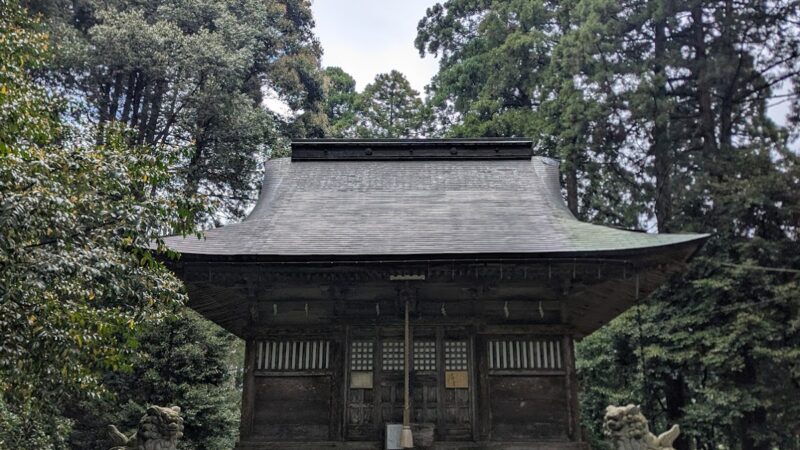
A Complete Guide to Abaka Kasuga Shrine (Fukui Prefecture): An Ancient Shrine Associated with the Asakura Clan Since the Heian Period
Abaka Kasuga Shrine, quietly nestled in Abaka-cho, Fukui City, Fukui Prefecture, is a venerable shrine with a history of nearly a thousand years since its founding in the Heian period. Located near the Ichijodani Asakura Clan Ruins, it played an important role as a place of prayer for victory for the Sengoku-era daimyo Asakura clan. This article will introduce the charm of this historic shrine in detail.
History and Origins of Abaka Kasuga Shrine
Founded in the Heian Period: An Imperial Prayer Site of Emperor Go-Reizei
Abaka Kasuga Shrine is said to have been founded in the 4th year of the Jiryaku era (1068). This year was during the reign of Emperor Go-Reizei, and it is said to have been built to protect the northeast, the “demon gate,” of the imperial capital. According to shrine tradition, the shrine was established on May 13th of the same year, and Urabe Kanetada served as the imperial envoy, presiding over the imperial decree ceremony.
Another theory suggests that the founding was triggered by a divine dream received by the Shinto scholar Yoshida Kanesuke while en route to Suwa Grand Shrine (Lake Suwa, Nagano Prefecture) as an imperial envoy. This dream is said to have led to the construction of the four Kasuga shrines as guardians of Kyoto’s northeast direction.
Since its founding, Awaga Kasuga Shrine became an imperial prayer site of Emperor Go-Reizei and received reverence from the imperial court throughout the Heian period. This history indicates that the shrine was not merely a local shrine, but played an important role in protecting the capital.
Asakura Clan Era: A Prayer Site for Victory by Sengoku Daimyo
During the Sengoku period, Awaga Kasuga Shrine developed deep ties with the Asakura clan, a powerful daimyo based in Ichijōdani. The Asakura clan was a powerful daimyo family that ruled Echizen Province during the Sengoku period, and their power and prosperity were centered around Ichijōdani.
Awaga Kasuga Shrine held an important position as a place of prayer for victory for the Asakura clan, and was closely linked to their military activities, including prayers before battles and reports of victories. In particular, Asakura Yoshikage, the fifth head of the Asakura clan, is said to have held this shrine in high esteem.
While many temples and shrines existed in Ichijōdani, Awaga Kasuga Shrine is said to be the only one that has survived from the Asakura era, a fact that speaks to the high historical value of this shrine.
The Fall of the Asakura Clan and the Fate of the Shrine
In 1573, Asakura Yoshikage committed suicide after being defeated in battle against Oda Nobunaga, and the Asakura clan fell. At this time, Ichijōdani was burned down, and many buildings were reduced to ashes. Awaga Kasuga Shrine also shared the same fate as the Asakura clan, and is believed to have fallen into disrepair at one point.
Restoration in the Edo Period
During the Edo period, Awaga Kasuga Shrine was restored through the efforts of the local people. Even after the fall of the Asakura clan, it continued to attract local faith and was revived as a shrine dedicated to the gods of Kasuga. The current shrine building is believed to have been rebuilt during or after this period.
Deities and Beliefs
Kasuga Shisho Daimyojin
Awaga Kasuga Shrine enshrines the Kasuga Shisho Daimyojin, who were invited from Kasuga Taisha Shrine in Nara. The Kasuga Shisho Daimyojin refers to the following four deities:
- Takemikazuchi-no-Mikoto: The deity enshrined at Kashima Shrine in Hitachi Province, known as a war god, god of thunder and sword.
- Futsunushi-no-Mikoto: The deity enshrined at Katori Shrine in Shimosa Province, a war god alongside Takemikazuchi-no-Mikoto.
- Amenokoyane-no-Mikoto: The ancestral deity of the Fujiwara clan, god of wisdom and learning.
- Himegami: The consort of Amenokoyane-no-Mikoto.
These deities are believed to bestow a wide range of blessings, including military success, national peace and security, academic success, and family safety. It is thought that the Asakura clan revered this shrine as a place of prayer for victory in battle because it enshrined the deities of Kasuga, who have strong characteristics as war gods.
Takidono Shrine: A Shrine Dedicated to Asakura Yoshikage
Within the shrine grounds is a special shrine called “Takidono Shrine.” This shrine is dedicated to Asakura Yoshikage, the last head of the Asakura clan. As you ascend the path to the shrine, you will come across this shrine, which has an interesting legend associated with it: a scroll containing the curse words supposedly uttered by Asakura Yoshikage at the time of his suicide is said to be preserved as the sacred object.
The existence of Takidono Shrine is evidence of the local people’s efforts to pass on the history of the Asakura clan to future generations, demonstrating that Awaga Kasuga Shrine is not merely a religious facility, but also a place that preserves the historical memory of the region.
Highlights within the Shrine Grounds
Buildings Designated as Cultural Properties of Fukui City
The main hall, worship hall, and Takidono Shrine of Awaga Kasuga Shrine are designated as cultural properties of Fukui City. While these buildings are thought to have been rebuilt after the Edo period, they are valuable cultural heritage that convey the traditional style of shrine architecture to the present day.
The main shrine building is in the Kasuga style, and its vermilion-painted structure stands out beautifully amidst the green of the cedar grove. The worship hall is located in front of the main shrine, serving as a place for worshippers to offer their prayers.
Cedar Grove: Fukui City Designated Natural Monument
The cedar grove surrounding the grounds of Awaga Kasuga Shrine is designated as a natural monument of Fukui City. Giant trees, estimated to be several hundred years old, stand tall, giving the sacred grounds a solemn atmosphere.
These cedar trees are believed to have protected the shrine grounds since its founding in the Heian period, or perhaps since its restoration in the Edo period. The tall cedar trees evoke a sense of nature’s power and sacredness in visitors.
Especially on sunny days, the sunlight filtering through the cedar trees is beautiful, making it a popular spot for photography. The cedar grove, which shows different expressions in each of the four seasons, offers new discoveries with every visit.
Stone Steps to the Shrine
The approach to Awaga Kasuga Shrine consists of a series of stone steps. There are no roads leading to the shrine grounds, so visitors must ascend the steps on foot. These stone steps are one of the elements that evoke the history of the shrine.
Climbing the steps step by step, away from the hustle and bustle of everyday life, allows for a quiet and peaceful journey towards the sacred grounds—a crucial time for preparation for worship. The path through the cedar grove evokes a feeling of stepping back in time.
About Goshuin (Shrine Seals)
Goshuin are available at Awaga Kasuga Shrine. Goshuin are popular among many visitors as a memento of their shrine visit and a way to preserve their connection with the deities.
The goshuin features the calligraphy and red seal of “Awaga Kasuga Shrine,” along with the date of visit. Many people also obtain goshuin as a memento of their visit to the Ichijodani Asakura Clan Ruins.
When receiving a Goshuin (temple/shrine stamp), please bring your Goshuincho (stamp book) and request it at the shrine office after your visit. However, procedures may vary depending on the size of the shrine and the time of year, so it is recommended to check in advance.
Access and Parking Information
Access by Public Transportation
Using the JR Kuzuryu Line (Etsumi-Hokubu Line)
- Get off at Ichijodani Station, approximately 7 minutes on foot
- Approximately 25 minutes from Fukui Station to Ichijodani Station
Ichijodani Station is also a base station for sightseeing at the Asakura Clan Ruins, and Awaga Kasuga Shrine is within walking distance from the station. It is best to follow the signs from the station.
Access by Car
From Fukui City Center
- Head east on National Route 158 towards Ichijōdani
- Estimated time: Approximately 20 minutes
Parking
- Use the Nishiyama Kōshōji Temple Ruins parking lot (approximately 5-minute walk to the shrine)
- The Asakura Clan Ruins Museum parking lot is also available (approximately 7-minute walk to the shrine)
Since there is no road leading to the shrine grounds, you will need to park your car in a nearby parking lot and access it on foot. If you are visiting in conjunction with sightseeing at the Ichijōdani Asakura Clan Ruins, using the Asakura Clan Ruins Museum parking lot is convenient.
Location
15-13 Anbaga-cho, Fukui City, Fukui Prefecture
Nearby Tourist Attractions
Ichijōdani Asakura Clan Ruins
Located within walking distance of Awaga Kasuga Shrine, the Ichijōdani Asakura Clan Ruins are a representative Sengoku period (Warring States period) site in Japan, designated as a National Special Historic Site and Special Place of Scenic Beauty. The remnants of the Asakura clan’s 103-year-long prosperity are still preserved today, and the reconstructed townscape allows visitors to experience the atmosphere of a castle town during the Sengoku period.
Considering that Awaga Kasuga Shrine was a place where the Asakura clan prayed for victory in battle, visiting the ruins in conjunction with the shrine will allow for a deeper understanding of the Asakura clan’s faith and way of life.
Asakura Clan Ruins Museum
Opened in October 2022, the Asakura Clan Ruins Museum uses the latest exhibition technology to introduce the history of the Asakura clan and the culture of Ichijodani. The relationship between Awaga Kasuga Shrine and the Asakura clan is also on display, and visiting before or after visiting the shrine will deepen your understanding.
Ichijodani Falls
Located deep in Ichijodani, Ichijodani Falls is a beautiful waterfall approximately 12 meters high. Legend says that the swordsman Sasaki Kojiro trained at this waterfall and developed his secret sword technique, “Tsubame-gaeshi” (Swallow Reversal). It’s a spot where you can feel the romance of history amidst a rich natural environment.
Points and Precautions for Visiting the Shrine
Etiquette for Visiting the Shrine
When visiting Awaga Kasuga Shrine, please follow the general etiquette for visiting a shrine:
- Bow before passing through the torii gate
- Avoid walking in the center of the path (the center is the path of the gods)
- Cleanse your hands and mouth at the water basin
- Bow twice, clap twice, and bow once in front of the main hall
- Also pay your respects at the Takidono Shrine
- Bow once again at the torii gate on your way out
Clothing and Items to Bring
Since you will need to climb stone steps to reach the shrine grounds, we recommend wearing comfortable shoes. The steps can be particularly slippery during rainy weather and winter, so please be careful.
The cedar grove is relatively cool even in summer, but becomes very cold in winter. Please dress appropriately for the season. Insect repellent spray may also be useful during certain seasons.
Regarding Photography
Photography is generally permitted within the shrine grounds, but there are areas where photography is restricted, such as inside the main hall. Please be considerate of other visitors.
The combination of the cedar grove and the shrine buildings is exceptionally beautiful, attracting many photography enthusiasts. Early morning sunlight filtering through the trees and the autumn foliage season are particularly ideal times for photography.
Visiting Hours
While the shrine is generally open for daytime visits, the shrine office’s operating hours may be limited. If you wish to receive a Goshuin (shrine stamp) or receive detailed explanations, it is recommended to check in advance.
Annual Events and Festivals
Awaga Kasuga Shrine holds various Shinto rituals throughout the year. The Asamikesai (morning offering ceremony) is particularly well-known as a special ritual where offerings are carried to only one group at a time.
The Kasuga Shrine’s annual festival, known as the Kasuga Matsuri, has long been an important local event, bringing together local people to express their gratitude to the gods. These festivals offer a precious opportunity to pass on the traditions of the shrine, which boasts a history of nearly a thousand years.
The Charm of Awaga Kasuga Shrine: Why You Should Visit
Layers of History
The greatest charm of Awaga Kasuga Shrine lies in its layered history, spanning from its founding in the Heian period to the present day. Beginning as a place of imperial prayer for Emperor Go-Reizei, it flourished as a place of victory prayer for the Asakura clan, and continued to attract local faith even after the fall of the Asakura clan. Its history can be considered a microcosm of Japanese history.
Deep Connections with the Asakura Clan
As the only surviving temple or shrine in the Ichijodani Asakura Clan Ruins, it is a place where you can truly feel the history of the Asakura clan. The legend of Asakura Yoshikage, passed down at Takidono Shrine, is a valuable cultural heritage that conveys the drama of the Sengoku period.
Harmony with Nature
Surrounded by cedar trees designated as a natural monument by Fukui City, the shrine grounds offer a tranquil space that allows you to forget the hustle and bustle of the city. The environment, where nature and history harmonize, is a precious place for modern people seeking spiritual healing.
Value as a Cultural Asset
The fact that multiple cultural assets—the main shrine, worship hall, waterfall shrine, and cedar grove—are gathered within a single precinct demonstrates the high cultural value of this shrine. The cultural landscape, where buildings and nature are integrated, is an indispensable element in discussing the history of Fukui Prefecture.
Voices of Visitors to Awaga Kasuga Shrine
Visitors to Awaga Kasuga Shrine have shared comments such as, “My soul was cleansed by the quiet atmosphere amidst the cedar grove,” “I felt a closer connection to the history of the Asakura clan,” and “Visiting it together with the Ichijodani Ruins deepened my understanding of the Sengoku period.”
It is particularly highly regarded by history buffs and those who enjoy visiting shrines and temples as a hobby, being considered “a must-visit place when in Ichijodani.” It is also a popular photography spot among photography enthusiasts, who appreciate the beautiful combination of the cedar grove and the shrine buildings.
Summary: A Sacred Site with a Thousand Years of History
Awaga Kasuga Shrine is a venerable shrine with a history spanning nearly a thousand years since its founding in 1068. It began as a place of prayer for Emperor Go-Reizei, flourished as a place of victory prayer for the Asakura clan, and continued to attract local devotion even after the Asakura clan’s downfall.
The main hall, worship hall, and Takidono Shrine, all designated cultural properties of Fukui City, along with the cedar grove designated as a natural monument, allow visitors to feel the weight of history and the solemnity of nature. In particular, the Takidono Shrine, dedicated to Asakura Yoshikage, is a precious place that conveys the historical romance of the Sengoku period.
When visiting the Ichijodani Asakura Clan Ruins, be sure to also visit Awaga Kasuga Shrine. The time spent climbing the stone steps and walking through the cedar grove will be a special experience leading to a sacred site with a thousand years of history. This small shrine quietly, yet surely, continues to tell the story of Japanese history, from the Heian period to the Sengoku period and into the present day.