Itsukushima Shrine (390 Kaminomachi, Nishinomiya City, Hyogo Prefecture) Complete Guide: History, Deities, Access, and Highlights Explained in Detail
Itsukushima Shrine, located at 390 Kaminomachi, Nishinomiya City, Hyogo Prefecture, is a quiet shrine situated east of Kawaragi Junior High School. While several Itsukushima Shrines exist within Nishinomiya City, this particular shrine in Kaminomachi boasts a long history as the local guardian shrine and is known for its lush grounds and majestic torii gate.
Basic Information about Itsukushima Shrine
Location: 390 Kaminomachi, Nishinomiya City, Hyogo Prefecture
Deity: Ichikishimahime-no-Mikoto
Nearest Station: Approximately 1km east from Hankyu Imazu Line “Mondoyakujin Station” (approximately 17 minutes on foot)
Parking: Available (limited space within the shrine grounds)
Ichikishimahime-no-Mikoto is worshipped as the goddess of water and the sea, and is also revered as the goddess of performing arts and wealth. It enshrines the same deity as Itsukushima Shrine in Hiroshima Prefecture, and as one of the Itsukushima Shrines located throughout Japan, it enjoys deep-rooted local faith.
History and Origins of Itsukushima Shrine
About the Founding Period
While detailed records of the founding of Itsukushima Shrine are not available, there are important clues. It is said that around 1637 (Kanei 14), when Aoyama Okura-no-Shosuke Yukinari, the lord of Amagasaki Domain at the time, developed Kami-Shinden Village within the Kami-Kawarabayashi area, the Itsukushima Shrine, dedicated to Ichikishima-hime no Mikoto, was already located there.
Therefore, it is believed that the shrine’s founding dates back to before 1637, that is, to the early Edo period or earlier. It is a venerable shrine with a history of nearly 400 years, or even more.
Relationship between Regional Development and Shrines
In the early Edo period, land reclamation was actively carried out in this region. It is presumed that the Itsukushima Shrine played an important role as the guardian deity of the area in conjunction with the development of Kami-Shinden Village within the Kami-Kawarabayashi area. For the people living in the newly developed land, the shrine was a spiritual anchor and the center of the community.
The enshrinement of Ichikishima-hime no Mikoto, the goddess of water, is thought to reflect the earnest desires of the people at the time for securing agricultural water and protection from floods.
About the Deity Enshrined: Ichikishimahime-no-Mikoto
Divine Nature of Ichikishimahime-no-Mikoto
Ichikishimahime-no-Mikoto is one of the three Munakata goddesses appearing in Japanese mythology. The three Munakata goddesses consist of the following three goddesses:
- Tagorihime-no-Mikoto
- Tagitsuhime-no-Mikoto
- Ichikishimahime-no-Mikoto
These three goddesses are deities born from the oath (ukei) between Amaterasu-Omikami and Susanoo-no-Mikoto, and have been worshipped since ancient times as guardian deities of maritime traffic.
Divine Virtues of Ichikishimahime-no-Mikoto
Ichikishimahime-no-Mikoto is known as a deity with diverse divine virtues:
- Maritime Safety and Traffic Safety: As a goddess of the sea, she protects safe voyages.
- Protection from Water-Related Disasters: Protection from water-related disasters.
- Improvement in Performing Arts: Identified with Benzaiten, she is the goddess of music and performing arts.
- Attracting Wealth and Fortune: Promoting business success and improving financial luck.
- Beauty and Matchmaking: As a beautiful goddess, she brings blessings for beauty and good relationships.
Especially due to her syncretism with Benzaiten (Benten), she is also worshipped as one of the Seven Lucky Gods and is beloved by many.
Highlights of the Shrine Grounds
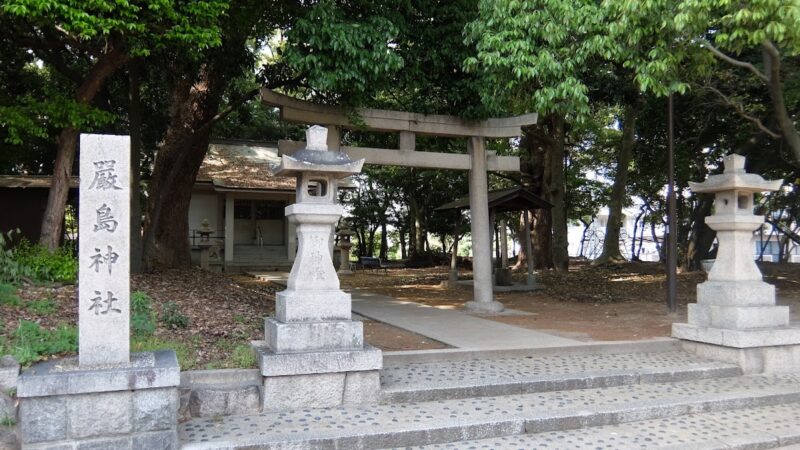
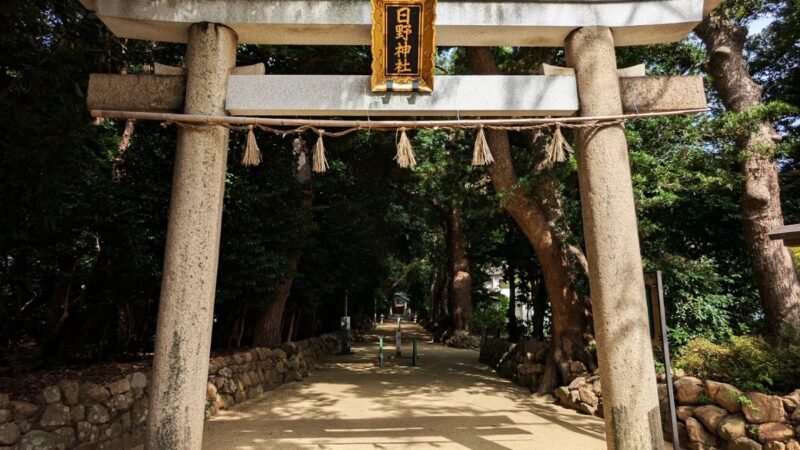
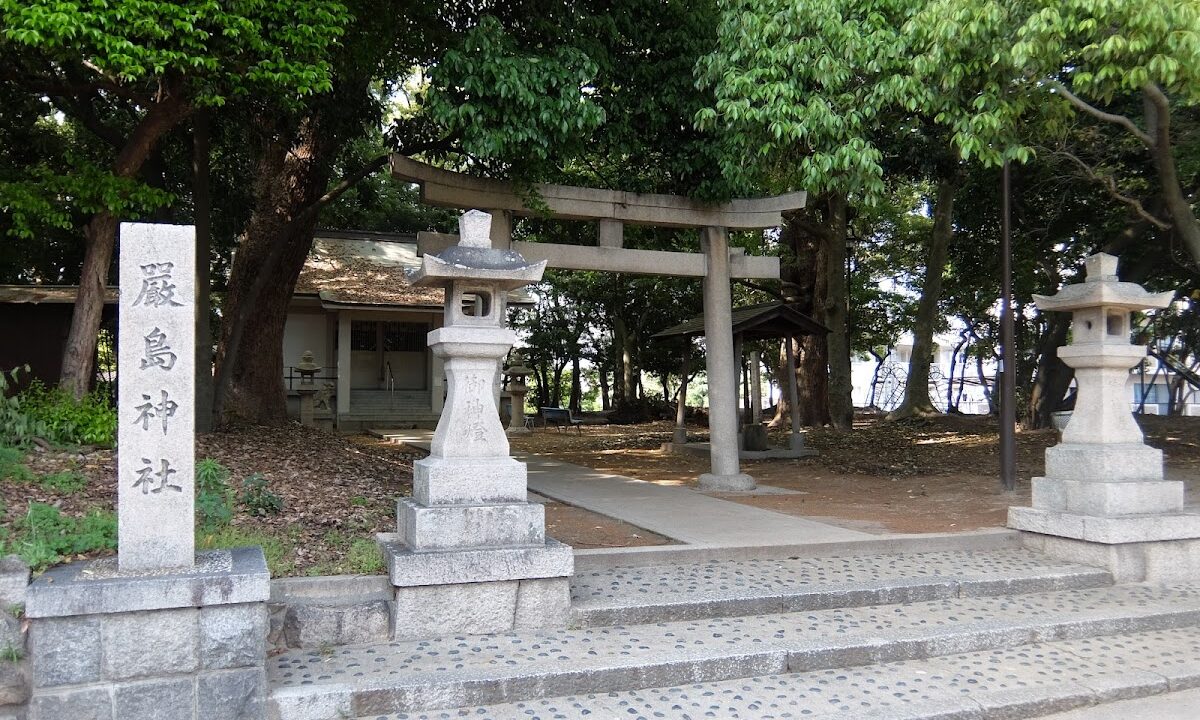
Majestic Torii Gate
A majestic torii gate stands at the entrance to Itsukushima Shrine. This gate quietly welcomes visitors as the entrance to the sacred area. It is customary to bow when passing through the torii gate to show respect to the deity.
Lush Green Grounds
The shrine grounds are lush with trees, creating a quiet and peaceful atmosphere despite its urban location. The beauty of nature is particularly evident during the fresh greenery of spring and the vibrant autumn foliage.
As one review states, “It’s quite a hidden gem. It’s quiet and not many people come, so you can really relax.” It’s an ideal place to escape the hustle and bustle and find peace of mind. A precious spot to forget the noise of the city and enjoy a leisurely time.
Grounds with Playground Equipment
A distinctive feature of Itsukushima Shrine is the presence of playground equipment within its grounds. The presence of a play area for children makes it a welcoming place for local children.
This demonstrates the shrine’s function as a center of the local community and its enduring popularity across generations. Children naturally becoming familiar with the shrine while playing contributes to the transmission of faith to future generations.
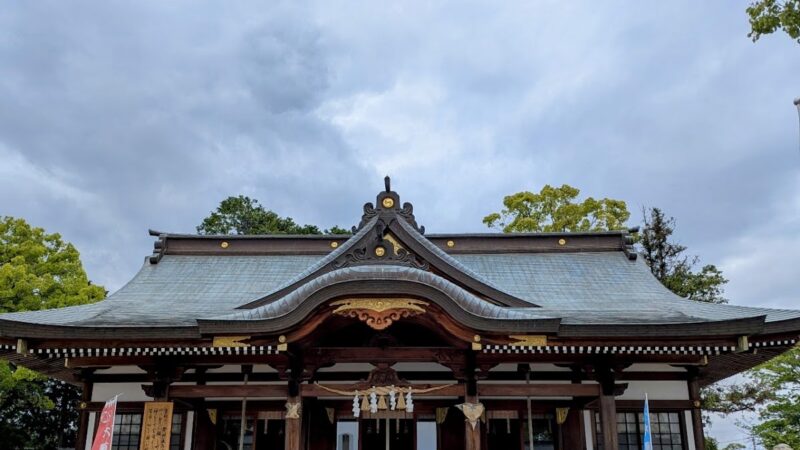
Main Hall and Worship Hall
The main hall enshrines Ichikishimahime-no-Mikoto, and worshippers offer their prayers from the worship hall. When visiting the shrine, please observe the following etiquette:
- Bow before passing through the torii gate
- Cleanse your hands and mouth at the water basin
- Place your offering in front of the main hall
- Pray using the two bows, two claps, and one bow ritual
- Bow again at the torii gate when leaving
Access
Access by Train
The nearest station is Hankyu Imazu Line’s “Mondoyakujin Station”.
- Approximately 17 minutes on foot (about 1 km) east from Exit 1 of Mondoyakujin Station
- It’s easy to find if you head east from the station and aim for Kawaragi Junior High School
- Itsukushima Shrine is located east of Kawaragi Junior High School
The 17-minute walk is a pleasant distance to enjoy a stroll. The route through the residential area allows you to experience the townscape of Nishinomiya.
Access by Car
- From National Route 171, head towards the Kawaragi area.
- Enter “390 Kaminomachi, Nishinomiya City, Hyogo Prefecture” into your car navigation system.
- There is some parking space on the shrine grounds, but the number of spaces is limited, so please consider using nearby coin-operated parking lots.
Landmarks in the Area
- Kawaragi Junior High School: Immediately west of the shrine
- Kaminomachi Bus Stop: Near the shrine
Other Itsukushima Shrines in Nishinomiya City
Besides the Itsukushima Shrine in Kaminomachi, there are other Itsukushima Shrines in Nishinomiya City. The main ones are listed below:
Kanno Genjima Shrine
Location: 4-7 Kamikotoen, Nishinomiya City
Features: Located on the slopes of Mt. Kabuto, adjacent to Kannoji Temple.
This Itsukushima Shrine is associated with mountain worship and has a different character from the Itsukushima Shrine in Kaminomachi.
Other Itsukushima Shrines
There are said to be a total of three Itsukushima Shrines within Nishinomiya City. Each has its own unique history and beliefs as the local guardian deity.
This is evidence that the worship of Ichikishimahime-no-Mikoto was widespread in Nishinomiya City, and that reverence for the water god was deeply rooted in the region.
Recommended Time of Year and Place to Visit
Seasonal Charms
Spring (March-May)
The fresh greenery is beautiful, and the trees in the shrine grounds are budding. You can visit in refreshing air.
Summer (June-August)
The shade of the trees is cool, making it an ideal summer retreat where you can forget the heat of the city.
Autumn (September-November)
The autumn leaves color the shrine grounds, allowing you to visit in a calm atmosphere.
Winter (December-February)
It can get a little crowded during the New Year’s visit period, but at other times you can enjoy a quiet and solemn atmosphere. ### Recommended Time to Visit
Itsukushima Shrine is a relatively uncrowded hidden gem, but for those who wish to visit in even more tranquility, the following times are recommended:
- Early Morning (7:00 AM – 9:00 AM): You can visit in peace amidst the refreshing air.
- Weekday Mornings: Fewer people than on weekends, allowing for a more relaxed experience.
The Role of Itsukushima Shrine in the Community
Function as a Guardian Deity
Itsukushima Shrine serves as the guardian deity of the Kaminomachi area, acting as a spiritual pillar for the local residents. A guardian deity is a god who protects the people living in a particular area, and fulfills the following roles:
- Prayers for the safety and prosperity of the community
- Rituals at life’s milestones (e.g., first shrine visit, Shichi-Go-San)
- A place for community bonding
- Preservation of traditional culture
Children’s Playground
The presence of playground equipment on the shrine grounds makes it a familiar presence for children. Through play, children naturally develop faith and affection for the community. By also functioning as a park, it contributes to the community as a place where multiple generations can gather.
Manners and Etiquette When Visiting a Shrine
Basic Etiquette for Visiting a Shrine
There are basic manners to observe when visiting a shrine. When visiting Itsukushima Shrine, please observe the following etiquette:
1. How to pass through the torii gate
- Bow before passing through the torii gate
- Walk along the edge of the path, as the center is the path for the gods.
2. How to perform the purification ritual
- Hold the ladle in your right hand and purify your left hand.
- Switch the ladle to your left hand and purify your right hand.
- Switch the ladle back to your right hand, receive water in your left hand, and rinse your mouth.
- Finally, hold the ladle upright and purify the handle.
3. Worship at the main hall
- Quietly place your offering in the offering box.
- Ring the bell if there is one.
- Perform the two bows, two claps, one bow (bowing deeply twice, clapping twice, bowing deeply once).
4. How to behave on the shrine grounds
- Worship quietly.
- Take photographs only where permitted.
- Take your trash with you.
- Remember that this is a sacred area, even when children are playing on the playground equipment.
What you can pray for at Itsukushima Shrine
Due to the divine virtues of Ichikishimahime-no-Mikoto, the following wishes are said to be particularly effective:
- Traffic Safety: Prayers for safe commuting to work or school
- Protection from Water Disasters: Safety in water-related work or hobbies
- Improvement in Performing Arts: Improvement in music, dance, theater, etc.
- Academic Success: The blessing of wisdom from Benzaiten
- Business Prosperity: Success in business and improved financial fortune
- Family Safety: Health and happiness of family members
- Matchmaking: Prayers for a good marriage
Nearby Attractions and Facilities
When visiting Itsukushima Shrine, there are also places to stop by nearby:
Around Kawaragi Junior High School
The area around Kawaragi Junior High School, located just west of the shrine, is a quiet residential area. You can experience the traditional streetscape of Nishinomiya.
Around Mondoyakujin Station
The area around Mondoyakujin Station, the nearest station, has a shopping street and restaurants, which you can visit after your pilgrimage. Mondoyakujin (Tokoji Temple) in particular is a temple famous for warding off evil, and many people visit both.
Summary of Itsukushima Shrine’s Charms
Itsukushima Shrine, located at 390 Kaminomachi, Nishinomiya City, Hyogo Prefecture, is a shrine with the following charms:
Deep History
It is a venerable shrine with a history of nearly 400 years, existing since before the 14th year of the Kan’ei era (1637).
Peaceful Environment
Despite being in an urban area, you can spend a relaxing time in the quiet grounds surrounded by trees.
Diverse Divine Virtues
Thanks to the divine virtues of Ichikishimahime-no-Mikoto, it can grant a wide range of wishes, from traffic safety to improvement in performing arts and matchmaking.
A Shrine Open to the Community
It has playground equipment, making it a welcoming place for children and a central presence in the local community.
Hidden Gem
This is a hidden gem, not a well-known tourist spot, allowing you to avoid crowds and enjoy a peaceful visit.
Things to Know Before Visiting
About the Shrine Office
Since there may not be a resident priest, it is recommended to check in advance if you wish to obtain a Goshuin (shrine stamp) or amulet.
About Parking
Parking space on the shrine grounds is limited. If you plan to visit during busy times or for an extended period, please consider using public transportation or nearby coin-operated parking lots.
Accessibility Information
Because the shrine grounds utilize the natural terrain, some areas may be difficult for wheelchair users or those with strollers. It is recommended to check in advance.
In Conclusion
Itsukushima Shrine (390 Kaminomachi, Nishinomiya City, Hyogo Prefecture) is a locally rooted shrine with a long history that remains largely unspoiled by tourism. Passing through the majestic torii gate and strolling through the lush grounds, you can forget the hustle and bustle of the city and enjoy a peaceful time.
Receiving the divine blessings of Ichikishimahime-no-Mikoto while finding peace of mind in a tranquil environment—Itsukushima Shrine offers such a luxurious experience, making it a worthwhile visit not only for Nishinomiya residents but also for those traveling from afar.
Located a 17-minute walk from Mondoyakujin Station, it’s the perfect distance for a leisurely stroll. Enjoy the atmosphere of Nishinomiya while visiting the historic Itsukushima Shrine.
Itsukushima Shrine is a place everyone, from children to the elderly, can enjoy. Why not visit this hidden gem on your next day off?