Complete Guide to Koshien Hachiman Shrine | History and Goshuin Information for Kami-Koshien, Nishinomiya City, Hyogo Prefecture
Koshien Hachiman Shrine, located at 4-4-11 Kami-Koshien, Nishinomiya City, Hyogo Prefecture, is a shrine that has long been revered as a local guardian deity. This article provides detailed information you should know before visiting, including the history of Koshien Hachiman Shrine, its enshrined deities, goshuin (shrine seals), highlights of the grounds, and access methods.
Basic Information on Koshien Hachiman Shrine
Location and Access
Location: 4-4-11 Kami-Koshien, Nishinomiya City, Hyogo Prefecture
Phone/Fax: 0798-34-1298
Koshien Hachiman Shrine is located in the Koshien district of Nishinomiya City, famous for the Hanshin Koshien Stadium. It is a quiet shrine nestled in a residential area, serving as a place of relaxation for local residents.
Nearest Stations and Access
- Approximately 10 minutes on foot from Hanshin Railway “Koshien Station”
- Approximately 12 minutes on foot from Hanshin Railway “Kusugawa Station”
- Approximately 13 minutes on foot from Hanshin Railway “Hanshin Kokudo Station”
- Approximately 7 minutes on foot (491m) from Hanshin Bus “Tsumon Bus Stop”
The shrine is located within walking distance of several stations, making it relatively easy to access. It’s also a convenient stop when visiting the Koshien Stadium area.
Parking Information
There is parking space for visitors on the shrine grounds, but the number of spaces is limited. Especially during New Year’s visits and festivals, congestion is expected, so we recommend using public transportation.
Deities and Divine Virtues
Main Deity: Hondawake-no-Mikoto
The main deity of Koshien Hachiman Shrine is Hondawake-no-Mikoto (Hachiman-Okami/Emperor Ojin). Hachiman is widely worshipped as the god of military success, victory in competitions, and protection from misfortune. This deity was invited from Usa Shrine in Oita Prefecture, the head shrine of approximately 44,000 Hachiman shrines nationwide.
Enshrined Deities
The following deities are enshrined alongside the main deity:
- Amaterasu Omikami: The supreme deity of Japan as the Imperial Goddess
- Amenokoyane no Mikoto: The god of wisdom and learning as Kasuga Okami
- Nakatsutsunoo no Mikoto: The god of safe voyages and waka poetry as Sumiyoshi Okami
The enshrinement of these deities allows for the bestowal of diverse divine blessings.
Divine Virtues (Benefits)
Koshien Hachiman Shrine is believed to offer the following divine virtues:
- Good Fortune and Victory: Passing exams and achieving victory in sports through the divine virtues of Hachiman-sama
- Protection from Misfortune and Good Luck: Exorcism of misfortune at important life stages
- Family Safety: Health and safety of family members
- Traffic Safety: Safe daily travel
- Academic Success: Improvement in academics through the divine virtues of Amenokoyane-no-Mikoto
- Business Prosperity: Development and prosperity of businesses
Especially due to its location in Koshien, the shrine is frequently visited by people involved in sports and students taking exams.
History of Koshien Hachiman Shrine
Founding and Development
While there are various theories regarding the exact founding date of Koshien Hachiman Shrine, it has a history of being revered as the local guardian deity alongside the development of the region. The Koshien area was developed as a residential area from the Meiji to Showa periods, and the shrine was also established as a spiritual center for the local residents.
Construction in the Showa Era
The current worship hall was constructed in 1957 (Showa 32). Built during the post-war reconstruction period with the cooperation of local residents, it has watched over the community for over 60 years.
Connection to the Community
Koshien Hachiman Shrine, as the guardian shrine of the Kami-Koshien area, has played a central role in the local community. Through annual events such as the autumn festival, it serves as a place for intergenerational exchange.
Highlights of the Shrine Grounds
Worship Hall and Main Hall
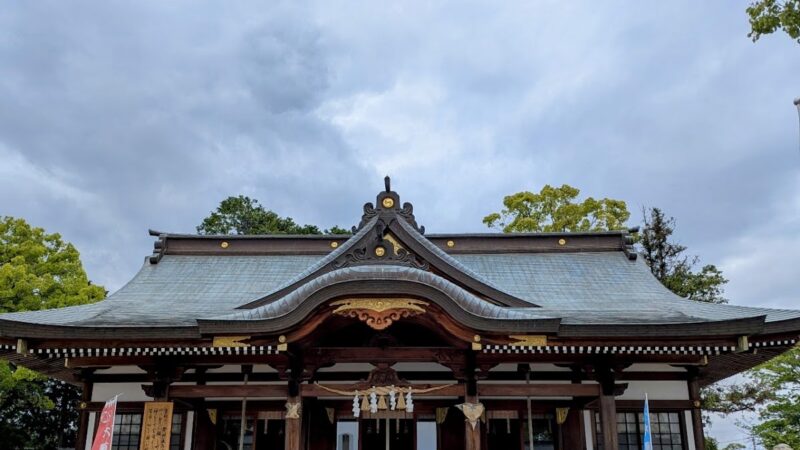
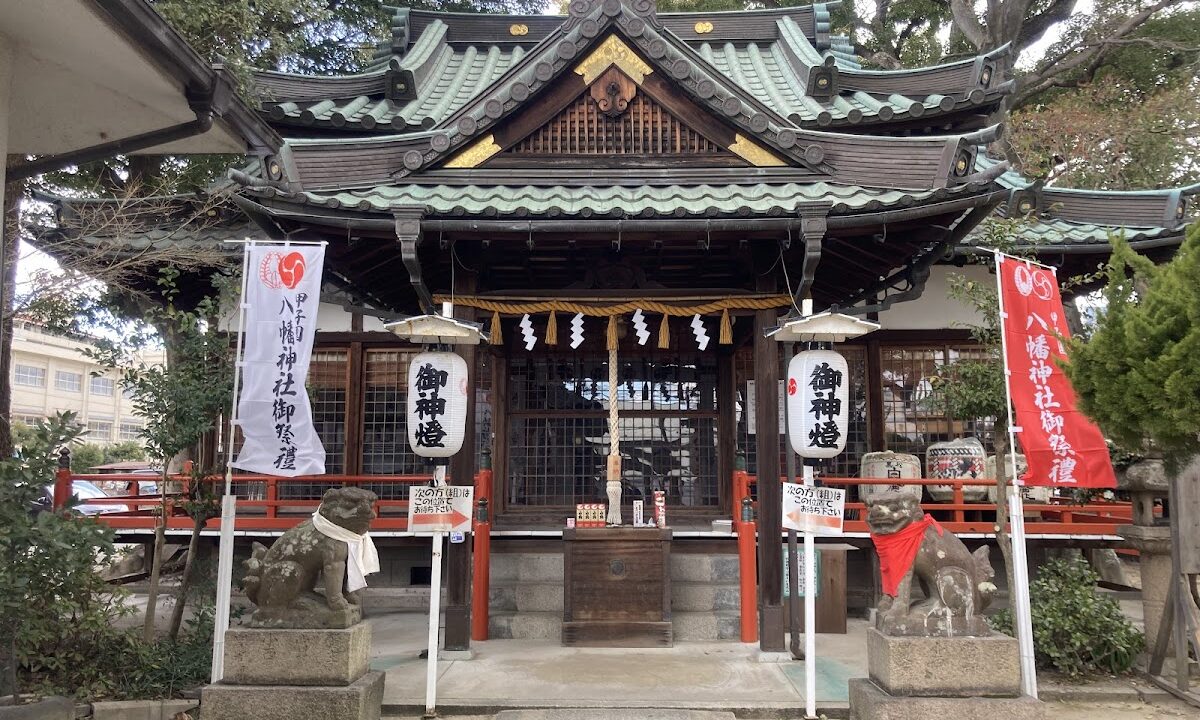
The worship hall, constructed in 1957, employs a traditional wooden shrine architectural style. Simple yet solemn, it quietly welcomes worshippers. The main hall enshrines the deity, and daily prayers are offered there.
Subsidiary Shrines
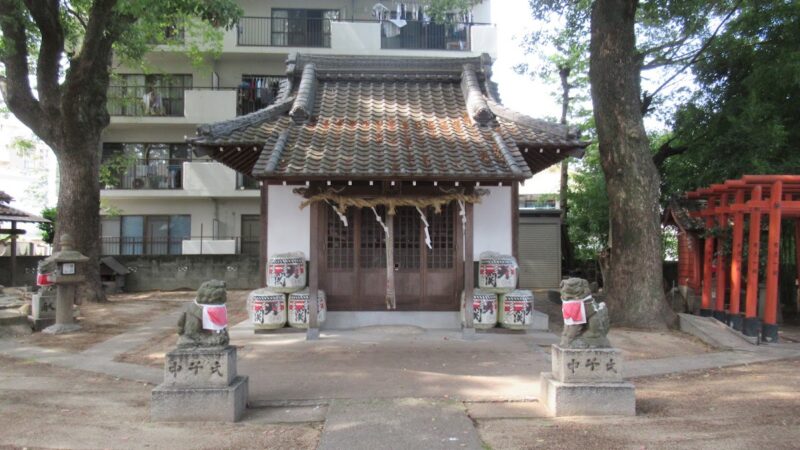
In addition to the main hall, there are small shrines within the grounds that attract the faith of the local community. By visiting these subsidiary shrines as well, you can receive even more divine blessings.
Shrine Office
The shrine office handles the issuance of Goshuin (shrine stamps) and the acceptance of various prayer requests. Since priests are not always present, it is recommended that those wishing to receive a Goshuin call in advance to confirm.
Atmosphere of the Shrine Grounds
Despite being located in a residential area, the shrine grounds are enveloped in a tranquil atmosphere. Surrounded by trees, the grounds display different expressions throughout the seasons, offering particularly beautiful scenery during the fresh green season and the autumn foliage season.
Goshuin Information
About the Issuance of Goshuin
Koshien Hachiman Shrine offers Goshuin. Goshuin are popular among many visitors as proof of worship and as a way to deepen their connection with the shrine.
Features of the Goshuin
The Goshuin features the calligraphy of “Koshien Hachiman Shrine” and the shrine’s seal. It is characterized by its simple yet powerful brushstrokes and can be inscribed in your Goshuincho (shrine stamp book).
Issuance Hours and Precautions
The issuance hours for Goshuin (temple/shrine stamps) are the same as the opening hours of the shrine office. Since the priests may not always be present, it is recommended that those who wish to be sure to receive a Goshuin call in advance (0798-34-1298).
The offering fee is a standard amount (around 300-500 yen), but please offer what you feel is appropriate. For those who do not have a Goshuincho (stamp book), pre-printed Goshuin may be available.
Manners for Visiting Shrines and Temples
Goshuin are not merely stamps; they are proof of worship. Always complete your prayers before receiving a Goshuin. Also, remember to express your gratitude to the priests and use polite language.
Annual Events and Festivals
New Year’s Visit
Many worshippers visit shrines and temples for their first visit of the new year. The shrines and temples are bustling with people praying for family safety, business prosperity, academic success, and more. The shrine is especially crowded from New Year’s Day through the third day of the year, but its charm lies in its warm, homey atmosphere, characteristic of a community-oriented shrine.
Autumn Grand Festival
Every autumn, the grand festival is held. Local parishioners gather to celebrate the gods with portable shrines and drums. It’s a popular community event, with children also participating.
Setsubun Festival
In February, the Setsubun Festival is held, featuring events such as bean-throwing. It’s bustling with worshippers praying for protection from evil and good fortune.
Shichi-Go-San Festival
November sees many visitors for Shichi-Go-San (a traditional Japanese rite of passage for children). The shrine grounds are vibrant with families praying for the healthy growth of their children.
Prayers, Amulets, and Souvenirs
Prayers
Koshien Hachiman Shrine accepts various types of prayers:
- Prayer for Protection from Evil
- Prayer for Family Safety
- Prayer for Business Prosperity
- Prayer for Traffic Safety
- Prayer for Success in Exams
- Prayer for Safe Childbirth
- First Shrine Visit for a Newborn
- Shichi-Go-San (7-5-3 Festival)
Those wishing to receive a prayer are advised to make a reservation by phone in advance.
Amulets and Souvenirs
The shrine office offers various amulets and souvenirs. A variety of types are available, including amulets for traffic safety, academic success, and protection from evil.
Nearby Attractions
Hanshin Koshien Stadium
Within walking distance of Koshien Hachiman Shrine is Hanshin Koshien Stadium, known as the sacred ground of high school baseball. It’s a must-visit for baseball fans, and stadium tours are also available.
Other Shrines in Nishinomiya City
Nishinomiya City has many other shrines:
- Nishinomiya Shrine (Nishinomiya Ebisu): The head shrine of Ebisu worship
- Hirota Shrine: An ancient shrine dedicated to the fierce spirit of Amaterasu Omikami
- Koshien Susanoo Shrine: Another tutelary shrine of the Koshien area
Shrine hopping is highly recommended.
Koshien Beach
Koshien Beach is located along the coast, offering opportunities for birdwatching and walks. It’s a spot where you can escape the hustle and bustle of the city and connect with nature.
Manners and Etiquette for Visiting Shrines
How to Pass Through a Torii Gate
The torii gate is the entrance to the sacred area. Bow before passing through, and avoid walking in the center of the path (the path of the gods).
Proper Ritual for Washing Hands
- Hold the ladle in your right hand and wash your left hand.
- Switch the ladle to your left hand and wash your right hand.
- Switch the ladle back to your right hand, receive water in your left hand, and rinse your mouth.
- Wash your left hand again.
- Hold the ladle upright, wash the handle, and return it to its original position.
Proper Ritual for Worshiping at the Main Hall
- Gently place your offering in the offering box.
- Ring the bell if there is one.
- Bow twice (two deep bows).
- Clap twice (two claps at chest height).
- Pray sincerely.
- Bow once (one deep bow).
This “two bows, two claps, one bow” is the basic ritual for worshipping.
The Charm of Koshien Hachiman Shrine
Warmth Rooted in the Community
The greatest charm of Koshien Hachiman Shrine is its warm atmosphere rooted in the local community. Unlike large-scale tourist shrines, this shrine possesses a unique charm, befitting a local guardian deity that has been cherished by the community for generations.
Quiet Worship Environment
Despite being located in a residential area, the shrine grounds are enveloped in a tranquil atmosphere. It offers an environment where you can peacefully worship away from the hustle and bustle of the city.
Diverse Divine Blessings
With Hachiman as the main deity, and Amaterasu Omikami, Kasuga Omikami, and Sumiyoshi Omikami enshrined alongside, you can receive a variety of divine blessings, including good fortune in victory, academic success, and safe voyages.
Easy Access
Its convenient location, within walking distance of several train stations, is another attractive feature. You can easily combine a visit with watching a baseball game at Koshien Stadium or sightseeing in the surrounding area.
Notes on Visiting
Dress Code
There are no specific dress code requirements, but please dress in clean, respectful attire. Formal attire is recommended if you are receiving a prayer service.
Photography
Photography is generally permitted on the shrine grounds, but please be considerate of other worshippers. Please follow instructions if photography is prohibited in certain areas, such as inside the main shrine.
Visiting Hours
While entry to the shrine grounds is generally permitted, please refrain from visiting early in the morning or late at night. Since the opening hours of the shrine office may vary depending on the day, it is recommended to check in advance if you wish to receive a Goshuin (shrine stamp) or prayers.
History and Culture of the Koshien Area
Origin of the Name Koshien
The name “Koshien” originates from the opening of Koshien Stadium in 1924 (Taisho 13), the year of the Wood Rat (Koshi). Before that, the area was known as “Edagawa.”
Development as a Residential Area
With the opening of the Hanshin Electric Railway, the area developed as a residential area and is now known as a quiet residential neighborhood. Koshien Hachiman Shrine has also been revered as the local guardian deity along with the development of the area.
Connection to Baseball Culture
Due to the presence of Koshien Stadium, this area is deeply connected to baseball culture. During high school baseball season, many people from all over the country visit, bringing vibrancy to the entire area.
Summary
Koshien Hachiman Shrine, located at 4-4-11 Kamikoshien, Nishinomiya City, Hyogo Prefecture, is a shrine with a warm, community-rooted atmosphere and diverse divine blessings. The main hall, built in 1957, has watched over the community for over 60 years, playing a central role in the local community through annual events such as New Year’s visits and autumn festivals.
The shrine enshrines the main deity, Homudawake-no-Mikoto (Hachiman-Okami), as well as Amaterasu-Omikami, Amenokoyane-no-Mikoto, and Nakatsutsunoo-no-Mikoto, and is believed to offer various blessings including victory, academic success, and family safety. Goshuin (shrine stamps) are also available, making it a recommended spot for those who enjoy visiting shrines.
Its convenient location, approximately a 10-minute walk from Hanshin Koshien Station, makes it easy to visit in conjunction with attending a baseball game at Koshien Stadium or sightseeing in Nishinomiya City. Why not take some time to calm your mind in the tranquil grounds of the shrine and offer your daily gratitude and prayers to the gods?
Koshien Hachiman Shrine, beloved by the local community, offers a unique charm—a friendly and warm atmosphere—unlike large-scale tourist shrines, befitting a local guardian deity. When you visit Nishinomiya City, be sure to stop by.