Tenman Shrine (1-7-1 Aioi, Aioi City, Hyogo Prefecture) Complete Guide | History, Goshuin (Shrine Seal), and Access Information
Tenman Shrine (Aioi Tenman Shrine), located at 1-7-1 Aioi, Aioi City, Hyogo Prefecture, is a shrine affectionately known as “Aioi’s Tenjin-san” by the local people. It enshrines Sugawara no Michizane, the god of learning, and attracts many worshippers during exam season. This article provides detailed information you should know before visiting this historic shrine, including its history, highlights within the grounds, goshuin information, and access methods.
Basic Information about Aioi Tenman Shrine
Shrine Name: Tenman Shrine (Aioi Tenman Shrine)
Location: 1-7-1 Aioi, Aioi City, Hyogo Prefecture
Phone Number: 0791-22-1528
Deity Enshrined: Sugawara no Michizane
Shrine Rank: Village Shrine
Founding Date: Unknown (Estimated to be the medieval period based on tradition)
Aioi Tenman Shrine is located in the Aioi city center and has a long history as a center of faith for local residents. The shrine grounds have a parking lot, making it accessible by car.
History and Origins of Aioi Tenman Shrine
Founding Legend
The exact founding date of Aioi Tenman Shrine is unknown, but according to materials from the Aioi City Library, an interesting origin story is told. It is said that the Ebina clan of the Harima region obtained a wooden statue of Sugawara no Michizane during a battle and enshrined it, marking the beginning of the shrine. This legend illustrates a common form of shrine founding during the medieval period: samurai warriors brought back divine images as war spoils and enshrined them as local guardian deities.
About Sugawara no Michizane
The enshrined deity, Sugawara no Michizane (845-903), was a renowned scholar and politician of the Heian period. His exceptional learning and political acumen led him to the position of Minister of the Right. However, due to slander from the Fujiwara clan, he was exiled to Dazaifu, where he died in despair. After his death, a series of strange occurrences occurred in the capital, feared to be the work of Michizane’s vengeful spirit. He was therefore deified as Tenman Daijizai Tenjin.
Today, he is revered nationwide as the “god of learning” and the “god of calligraphy,” and is believed to bestow blessings such as success in examinations, academic achievement, and improvement in calligraphy.
Connection to the Aioi Region
Aioi City has long flourished as part of Harima Province and developed as a port town facing the Seto Inland Sea. During the Edo period, the shipping industry thrived, taking advantage of the excellent port of Aioi Bay, and since the Meiji era, it has been known as a shipbuilding town. Tenman Shrine has watched over the development of this region and has functioned as a spiritual pillar for its residents.
Locally, it is affectionately known as “Aioi no Tenjin-san” and is bustling with worshippers during New Year’s and exam seasons.
Highlights of the Shrine Grounds
Main Hall and Worship Hall
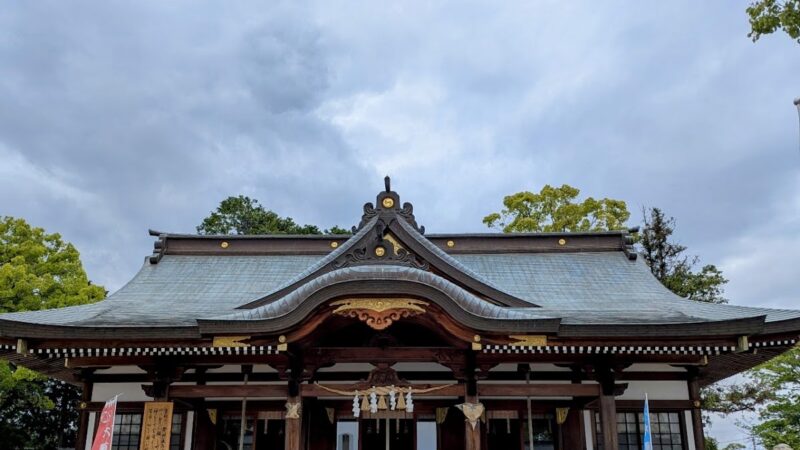
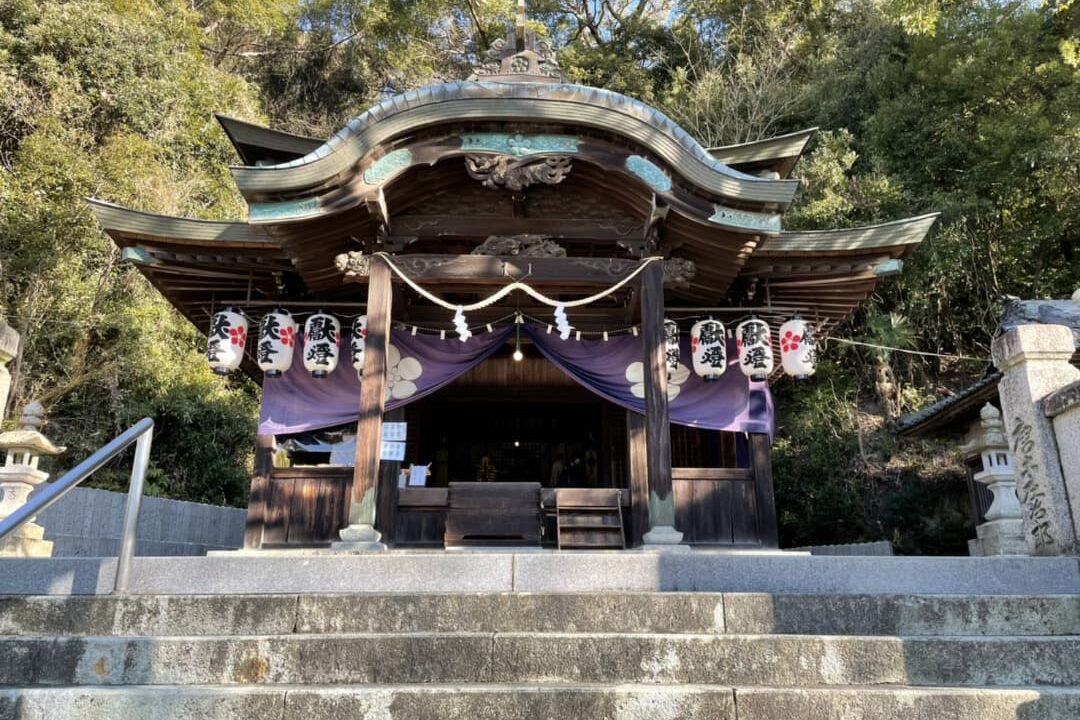
The main hall of Aioi Tenman Shrine is built in the traditional style of shrine architecture, and together with the worship hall, it exudes a solemn atmosphere. In front of the worship hall, there is a place where worshippers can offer their prayers, and a tranquil atmosphere permeates the area.
Nature of the Shrine Grounds
The shrine grounds are lined with ancient trees, creating a lush green space despite being in an urban area. Especially during the seasons of fresh greenery in spring and vibrant autumn foliage, you can enjoy the beauty of nature in conjunction with your visit to the shrine.
Nadeshiko (Patting Cow)
Many Tenmangu shrines feature statues of cows, which have a deep connection to Sugawara no Michizane. There is a possibility that Aioi Tenman Shrine also has a Nadeshiko (patting cow) statue (confirmation required). Because Michizane was born in the Year of the Ox, and because of a legend that he was buried in the place where a cow sat down on his way to Dazaifu, the cow has become a symbol of Tenmangu shrines.
Annual Events and Festivals
New Year’s Visit
Many worshippers visit the shrine in the New Year to pray for safety throughout the year, family well-being, and academic success. It is particularly lively from New Year’s Day to the third day of the year.
Tenjin Festival
Tenjin Festivals are held at Tenmangu shrines throughout Japan, commemorating the anniversary of Sugawara no Michizane’s death. There is a possibility that Aioi Tenman Shrine also holds festivals based on local traditions (please inquire with the shrine for details).
Visiting the Shrine During Exam Season
During the exam season from January to March, many students and their parents visit the shrine to pray for success in their exams. A constant stream of worshippers visit Sugawara no Michizane, known as the god of learning, to pray for academic achievement and passing exams.
Goshuin (Shrine Seal) Information
Goshuin are available at Aioi Tenman Shrine. Goshuin are popular among many worshippers as proof of their visit and as a record of their faith.
Goshuin Reception Hours: During the shrine office’s opening hours (we recommend calling ahead to confirm)
Offering Fee: Generally around 300-500 yen
Goshuincho (Shrine Seal Book): Please check if original goshuincho are available.
When requesting a goshuin, please speak to the shrine office after completing your prayers. Bringing your goshuincho is considered good manners.
Divine Blessings and Amulets
Main Divine Blessings
- Academic Success and Passing Exams: The most well-known divine virtue of the god of learning.
- Improvement in Calligraphy: A divine virtue associated with Michizane, who was also an excellent calligrapher.
- Improvement in Literature: A divine virtue associated with Michizane’s talent in poetry and song.
- Protection from Misfortune and Disaster: Due to his transformation from a vengeful spirit to a god, he possesses the power to ward off disaster.
- Family Safety: A divine virtue as the guardian deity of the region.
Amulets and Items Available
Aioi Tenman Shrine offers various amulets and items such as votive tablets (please check with the shrine office for details). Amulets for academic success and votive tablets for passing exams are particularly popular among students.
Access Information
Access by Train
Nearest Station: JR Sanyo Main Line “Aioi Station” or “Nishi-Aioi Station”
- From Aioi Station: Approximately 15-20 minutes on foot
- From Nishi-Aioi Station: Approximately 27 minutes on foot (approx. 2,116m)
Taking a taxi from Aioi Station is also convenient, taking approximately 5 minutes.
Access by Car
From Sanyo Expressway “Tatsuno-Nishi IC”: Approximately 15 minutes
Via National Route 2: Towards Aioi city center
There is a parking lot for visitors on the temple grounds, so you can visit by car. However, congestion is expected during New Year’s visits and festivals, so please allow ample time for your visit.
Nearby Parking Information
- Shrine Grounds Parking: Due to limited spaces, we recommend using nearby public parking lots during peak hours.
- Aioi City Municipal Parking: Several parking lots are within walking distance.
Manners and Etiquette for Visiting Shrines
Basic Visiting Etiquette
- Bow at the Torii Gate: Bow at the torii gate before entering the shrine grounds.
- Purify at the Water Basin: Purify your left hand, right hand, and mouth in that order.
- Worship at the Main Hall: The basic procedure is two bows, two claps, and one bow.
- Be Quiet on the Shrine Grounds: Be mindful that this is a sacred place.
Attire for Visiting Shrines
Everyday clothing is acceptable, but please dress neatly and respectfully to avoid offending the gods. Especially if you are receiving a prayer, slightly more formal attire is preferable.
Other Tenman Shrines in Aioi City
Besides the Tenman Shrine in Aioi 1-chome, Aioi City, there is also the Wakasano Tenman Shrine (1190 Nono, Wakasano-cho, Aioi City, Hyogo Prefecture). Wakasano Tenman Shrine also enshrines Sugawara no Michizane as its main deity, and also enshrines Amenoshihomimi no Mikoto. When visiting Tenman shrines in Aioi City, it is recommended to also visit this shrine.
About Aioi City
Aioi City is a city with a population of approximately 30,000 located in the Harima region of southwestern Hyogo Prefecture. Facing the Seto Inland Sea, it enjoys a mild climate. Historically, it prospered from shipbuilding and developed as an industrial city centered around the IHI Aioi Plant.
Aioi City Tourist Attractions
- Rakan no Sato: A tranquil space lined with stone Buddha statues.
- Aioi Peiron Festival: A sea festival held every May.
- Aioi Bay: Beautiful scenery of the Seto Inland Sea.
Why not enjoy sightseeing in Aioi City in conjunction with your visit to Tenman Shrine?
Visitor Voices and Reviews
Visitors to Aioi Tenman Shrine describe it as a “quiet and peaceful shrine” and a “warm, community-oriented shrine.” Students have also expressed gratitude, saying they “visited to pray for success in exams and passed.”
As a community-oriented shrine, it has strong ties with its parishioners and devotees, and actively participates in local events and cleaning activities.
Nearby Shrines and Temples
Aioi City and the surrounding areas are dotted with other historical shrines and temples.
- Wakasano Tenman Shrine: Another Tenmangu shrine dedicated to Sugawara no Michizane.
- Kanjōzan Castle Ruins: A popular mountain castle ruin among history buffs.
- Akō Ōishi Shrine: A famous shrine in the neighboring city of Akō (associated with the story of the 47 Ronin).
If you have time, visiting these historical sites will allow you to gain a deeper understanding of the history and culture of the Harima region.
Contact Information
Tenman Shrine (Aioi Tenman Shrine)
- Address: 1-7-1 Aioi, Aioi City, Hyogo Prefecture 678-0041
- Phone: 0791-22-1528
- Visiting Hours: Grounds are freely accessible (please check the shrine office hours).
For details on prayers and various festivals, please contact the shrine directly.
Summary
Located at 1-7-1 Aioi, Aioi City, Hyogo Prefecture, the Tenman Shrine (Aioi Tenman Shrine) is a historic shrine dedicated to Sugawara no Michizane, the god of learning. Affectionately known as “Aioi no Tenjin-san” by local residents, it attracts many worshippers praying for success in exams and academic achievement.
Tradition tells of its origins when the Ebina clan of Harima enshrined a wooden statue of Michizane, and since then, it has watched over the development of the region as its guardian deity. The shrine grounds are enveloped in a tranquil and peaceful atmosphere, providing a calming space for worship despite its urban location.
Within walking distance of JR Aioi Station and ample parking on the grounds, it’s easily accessible by both train and car. Goshuin (shrine stamps) are also available, making it a great choice for those on a shrine-hopping pilgrimage.
Aioi Tenman Shrine is believed to offer various blessings, including academic success, passing exams, family safety, and protection from evil. When you visit Aioi City, be sure to pay your respects at “Aioi no Tenjin-san” and receive the divine blessings of Sugawara no Michizane.