Shirahige Shrine (Kuboizumi-cho, Saga City, Saga Prefecture) Complete Guide | History, Deities, and the Charm of the Dengaku Festival
Shirahige Shrine, located at 2121 Kamiizumi, Kuboizumi-cho, Saga City, Saga Prefecture, is a historical shrine that has attracted the faith of the local community. It enshrines Shirahige Daimyojin, who was invited from Omi Province (present-day Shiga Prefecture), and formerly held the rank of a village shrine, serving as a spiritual pillar of the region. This article provides a detailed introduction to the charm of Shirahige Shrine, including its history, enshrined deities, highlights of the grounds, and the traditional Dengaku Festival.
Overview and Basic Information of Shirahige Shrine
Shirahige Shrine is located in the Kamiizumi district of Kuboizumi-cho, in the northern part of Saga City. Surrounded by tranquil nature, the shrine grounds have a long history as a place of worship for local residents.
Location and Access
Location: 2121 Kamiizumi, Kuboizumi-cho, Saga City, Saga Prefecture
The shrine is located in the Kuboizumi-cho area, north of central Saga City, in a quiet environment surrounded by rural landscapes. It is easily accessible by car from downtown Saga City and is cherished as the local guardian shrine.
Shrine Rank and Classification
The former shrine rank of Shirahige Shrine was Village Shrine. Under the Meiji era shrine ranking system, village shrines were positioned as the central shrines of each village, serving as spiritual centers for local communities. In terms of Shinto, it is classified as a Shirahige-type shrine and is counted as one of the Shirahige Shrines scattered throughout Japan.
Deity: Sarutahiko-no-Mikoto
The deity enshrined at Shirahige Shrine is Sarutahiko-no-Mikoto. Sarutahiko-no-Mikoto is a deity who plays an important role in Japanese mythology and is revered by many.
The Divine Nature and Virtues of Sarutahiko-no-Mikoto
Sarutahiko-no-Mikoto is known as a Kunitsukami (earthly deity) who guided Ninigi-no-Mikoto during the descent of the heavenly grandchild. He is depicted as an old man with white hair and a white beard, which is the origin of his name, “Shirahige” (white beard).
Main Divine Virtues:
- God of Path Opening and Guidance: Guiding at life’s crossroads and new beginnings
- Traffic Safety: Protecting safe travels
- Longevity and Longevity: Worshipped as a god of longevity due to his image as a white-haired old man
- Protection from Misfortune and Good Fortune: Warding off disaster and guiding towards a positive direction
Sarutahiko-no-Mikoto is a “god of path opening,” and many people visit him when starting something new or at a turning point in their lives.
History and Origins of Shirahige Shrine
Established from Omi Province
According to the history of Shirahige Shrine, this shrine is said to have been established from Fukishita in Omi Province (present-day Shiga Prefecture). Omi Province is home to the Shirahige Shrine (Takashima City, Shiga Prefecture), considered the head shrine of all Shirahige Shrines nationwide, and the Shirahige Shrine in Saga Prefecture follows in its tradition.
While historical records are limited regarding the exact date of the establishment, it is certain that the shrine has long been a center of local faith. Revered as Shirahige Daimyojin, it has grown alongside the development of the Kami-Izumi district as the local guardian deity.
History as a Village Shrine
As a village shrine under the Meiji-era shrine system, Shirahige Shrine has functioned as the central shrine of the Kami-Izumi district in Kuboizumi-cho. Throughout the Showa era, it was central to local festivals and annual events, and it continues to be carefully preserved by local residents.
Highlights of the Shrine Grounds
Culturally Valuable Komainu (Guardian Lion-Dogs)
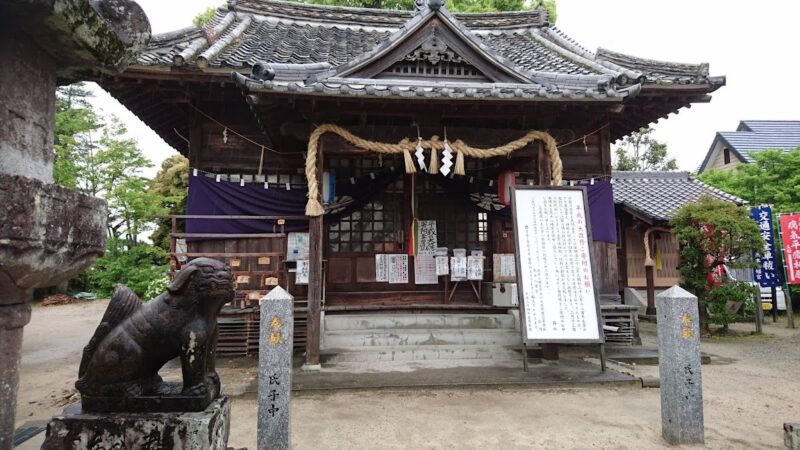
Of particular note within the grounds of Shirahige Shrine are the komainu (guardian lion-dogs) dedicated in Bunka 2 (1805). These komainu bear the inscription “Shirahige Daimyojin Gobyōmae” (In Front of Shirahige Daimyojin’s Mausoleum) on the right pillar, making them of high historical value.
Characteristics of the Komainu:
- Agyo (Open-mouthed):: Holding a ball in its mouth
- Ungyo (Closed-mouthed):: Stepping on a ball
- Unique Facial Expression:: A distinctive expression different from komainu at other shrines
Bunka 2 falls in the late Edo period, and these komainu, with over 200 years of history, are valuable cultural assets that convey the stonemasonry techniques and religious practices of the time. Be sure to take a look when you visit the shrine grounds.
Main Shrine and Worship Hall
The shrine buildings of Shirahige Shrine maintain the style of traditional shrine architecture. The grounds are surrounded by a rich natural environment, displaying different expressions throughout the seasons. The tranquil atmosphere makes it a cherished place for locals to escape the hustle and bustle of the city and find peace of mind.
Torii Gate and Approach
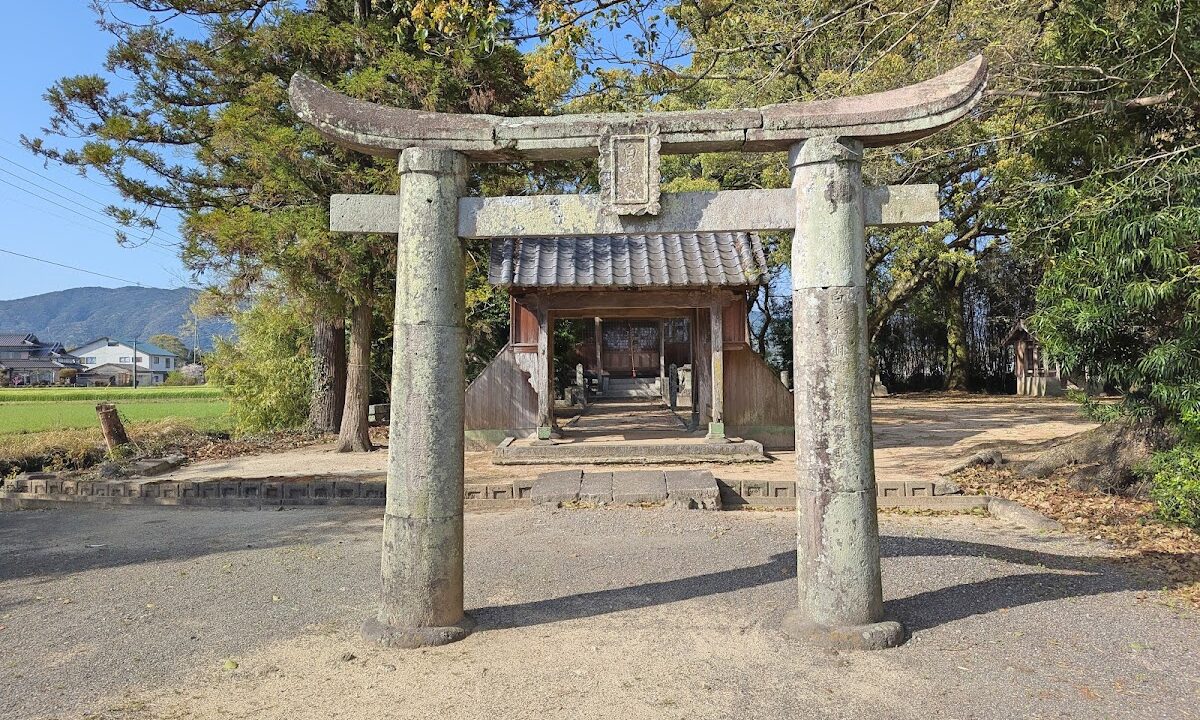
A torii gate stands at the entrance to the shrine grounds, and the approach leads to the main shrine. Walking along the approach, one can feel the nature of the grounds and experience a sense of being led into a sacred space.
Traditional Events: Dengaku Festival and Jukumaru
A notable cultural aspect of Shirahige Shrine is the dedication of Dengaku. This is a traditional performing art passed down in the region and has played an important role in the shrine’s festivals.
History and Characteristics of Dengaku
Dengaku is a performing art said to have originated in the Heian period, originally performed as a prayer for a bountiful harvest during rice planting. The Dengaku dance performed at Shirahige Shrine has also been passed down as a traditional event linked to agricultural rituals.
The Jukumaru Servant Group
The festivals of Shirahige Shrine involve a servant group called “Jukumaru“. This group plays a role in serving the portable shrine and participating in Shinto rituals during the festival, symbolizing community unity.
The organization of the Jukumaru and the nature of the Dengaku dance are examined in detail in the fourth issue of “Saga Folklore Studies,” and it has attracted academic attention as an important case study in folk culture research in Saga Prefecture.
Current Festivals
Currently, various festivals are held at Shirahige Shrine throughout the year. Seasonal events such as the spring grand festival and the autumn harvest festival are important events for the local community, attracting many parishioners and worshippers.
Shirahige Shrine and Shinto Beliefs
Connection to Ancient Deity Beliefs
The beliefs at Shirahige Shrine are deeply intertwined with ancient Japanese Shinto beliefs. The enshrinement of Sarutahiko-no-Mikoto, a Kunitsukami (earthly deity), strongly reflects its character as a local god and guardian deity of the region.
A distinctive feature of Shirahige Shrine is its belief in longevity and extended life. This stems from the fact that the enshrined deity, Sarutahiko-no-Mikoto, is depicted as an old man with white hair and a white beard, and the belief has developed as a prayer for protection and guidance throughout one’s life.
Relationship with Shrines in Saga Prefecture
Saga Prefecture has many shrines and temples, each closely linked to the history and culture of the region. Shirahige Shrine is also one of the shrines in Saga, situated within the prefecture’s Shinto network.
In particular, several shrines are scattered around Kuboizumi-cho, each functioning as the tutelary deity of small local settlements. Shirahige Shrine is known among them as a shrine with a long and distinguished history. ## Points and Manners for Visiting a Shrine
Etiquette for Visiting a Shrine
When visiting Shirahige Shrine, follow the general etiquette for visiting a shrine:
- Bow before passing through the torii gate: Show respect for entering the sacred area.
- Walk along the edge of the approach: The center is considered the path for the gods.
- Purify yourself at the water basin: Cleanse your hands and mouth to purify yourself.
- Bow twice, clap twice, and bow once in front of the main hall: This is the basic Shinto way of worship.
Suitable Time to Visit
Shirahige Shrine is open for visits throughout the year, but the following times are especially recommended:
- New Year’s Day (Hatsumode): Pray for good health and good fortune in the new year.
- Spring Grand Festival: An opportunity to observe traditional local events.
- Autumn Harvest Festival: A festival to give thanks for the year’s harvest.
Regarding Goshuin (Shrine Seals):
Some shrines do not offer Goshuin. It is recommended to check in advance before visiting Shirahige Shrine.
Nearby Attractions and Kuboizumi-cho, Saga City
Characteristics of Kuboizumi-cho
Kuboizumi-cho is located in the northern part of Saga City and is characterized by its rich natural environment. It is a quiet area with a thriving agricultural sector and sprawling rural landscapes. The area around Shirahige Shrine is also surrounded by fields, allowing visitors to experience the changing seasons.
Other Shrines and Temples in Saga City
Besides Shirahige Shrine, there are many other shrines and temples in Saga City:
- Saga Shrine: A shrine dedicated to the Nabeshima clan, the lords of the Saga Domain
- Yotohime Shrine: An ancient shrine known as the Ichinomiya (first-ranked shrine) of Hizen Province
- Ryuzoji Hachimangu Shrine: A shrine associated with the Ryuzoji clan, a powerful daimyo family during the Sengoku period
Visiting these shrines together will allow you to gain a deeper understanding of Saga’s history and culture.
About the Shirahige Shrine Lineage
Shirahige Shrines Nationwide
There are said to be approximately 300 Shirahige Shrines throughout Japan, with the head shrine being the Shirahige Shrine in Takashima City, Shiga Prefecture. The head shrine is located on the shores of Lake Biwa and is known for its large vermilion torii gate that appears to float in the lake, earning it the nickname “Itsukushima of Omi.”
The Position of the Shirahige Shrine in Saga
The Shirahige Shrine in Kuboizumi-cho, Saga City, Saga Prefecture, is a shrine connected to the Shirahige faith lineage, having been invited from Omi Province. While possessing the historical significance of being an invitation from the head shrine, it is characterized by its development of unique local beliefs and culture.
In particular, the dedication of Dengaku (a type of traditional dance) and the unique local festival organization, Jukumaru, demonstrate a unique development rooted in the land of Saga, and can be evaluated not merely as a branch shrine, but as a shrine integrated with local culture.
Cultural Value of Shirahige Shrine
Folkloric Perspective
Shirahige Shrine is an important case study for studying the folk culture of Saga Prefecture. As highlighted in the journal “Saga Folklore Studies,” the shrine’s festival forms, the organization of the accompanying groups, and the transmission of Dengaku (a type of traditional dance) provide clues to understanding the historical changes of the local community.
Core of Regional Identity
Shirahige Shrine, which has functioned as a village shrine, has been the core of the identity of the Kami-Izumi district. Through festivals, it fosters community unity, the transmission of traditions across generations, and the cultivation of a sense of community. The shrine fulfills social functions beyond mere religious institutions.
The existence of Shirahige Shrine, which has been preserved by local people amidst social changes from the Showa era to the present day, can be said to symbolize the sustainability of regional culture.
Precautions When Visiting
Manners on the Shrine Grounds
When visiting Shirahige Shrine, please observe the following manners:
- Be quiet: The shrine grounds are a sacred place. Please refrain from speaking loudly.
- Regarding Photography: There may be areas where photography is prohibited, such as inside the main hall.
- Respect Nature: Please be careful not to harm the plants or animals on the shrine grounds.
- Take Your Trash Home: To keep the shrine grounds clean, please be sure to take your trash home with you.
Notes on Access
Kuboizumi-cho is an area where residential areas and farmland are mixed. When accessing by car:
- Drive Slowly: Please drive safely when using residential roads.
- Check Parking: Please check in advance whether there is parking space on the shrine grounds.
- Consideration for Neighbors: Please be mindful of noise in residential areas.
Shirahige Shrine and the History of Saga
Shrines During the Saga Domain Era
During the Edo period, Saga developed as a castle town of the Saga Domain (Nabeshima Domain). During the feudal period, shrines were positioned within the domain’s religious policies and played a role in regional governance. Shirahige Shrine is also thought to have played a role in maintaining order in the local community as the guardian deity of the village.
Changes Since the Meiji Era
The Meiji-era decree separating Shinto and Buddhism and the introduction of the shrine ranking system had a significant impact on shrines throughout Japan. Shirahige Shrine was also designated a village shrine and incorporated into the modern shrine system.
Throughout the Showa era, even amidst the major social changes of the pre-war State Shinto system and the post-war separation of church and state, Shirahige Shrine continued to exist as a place of local worship, and remains so to this day.
Summary: The Charm of Shirahige Shrine
Located at 2121 Kami-Izumi, Kuboizumi-cho, Saga City, Saga Prefecture, Shirahige Shrine is a historical shrine that was established by inviting a deity from Omi Province. It enshrines Sarutahiko-no-Mikoto and attracts worshippers for its divine blessings of opening paths, longevity, and traffic safety.
Main Attractions of Shirahige Shrine:
- Historical Background: Its history includes being invited from Omi Province and its role as a village shrine.
- Cultural Assets: Unique guardian lion-dogs dedicated in 1805 (Bunka 2).
- Traditional Events: Dedication of Dengaku (traditional dance and music) and the procession of the Nineteen-Maru group.
- Natural Environment: Shrine grounds surrounded by a quiet rural area.
- Regional Characteristics: A place that conveys the folk culture of Saga to the present day.
Shirahige Shrine, while connected to the nationwide Shirahige faith lineage, has cultivated its own unique culture rooted in the land of Saga. As the local guardian deity and a cultural heritage of Saga Prefecture, it is a shrine that should continue to be carefully preserved.
When visiting Saga City, or if you have the opportunity to stroll around the Kuboizumi-cho area, please be sure to stop by Shirahige Shrine. You can spend a peaceful time feeling the history in its tranquil grounds. We encourage you to experience firsthand the charm of Shirahige Shrine, a place woven from Shinto traditions, local culture, and the faith of its people.