Jodo Shinshu Honganji-ha Kinshokuzan Shofukuji Temple (Gotsu City, Shimane Prefecture) | Complete Guide to History, Access, and Memorial Service Information
About Kinshokuzan Shofukuji Temple
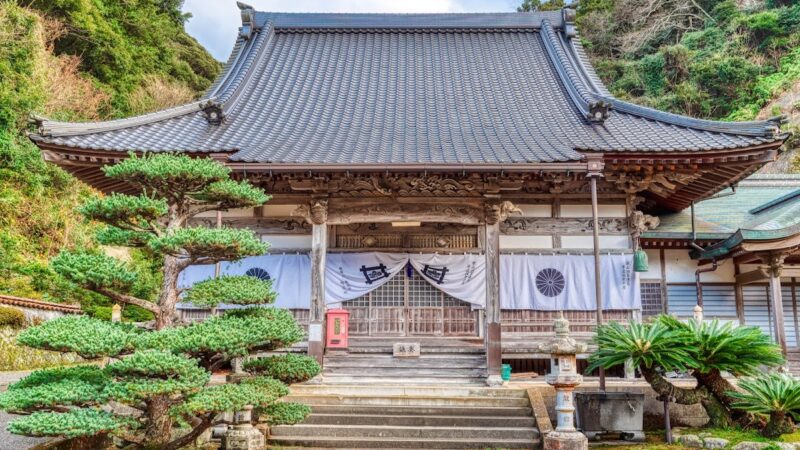
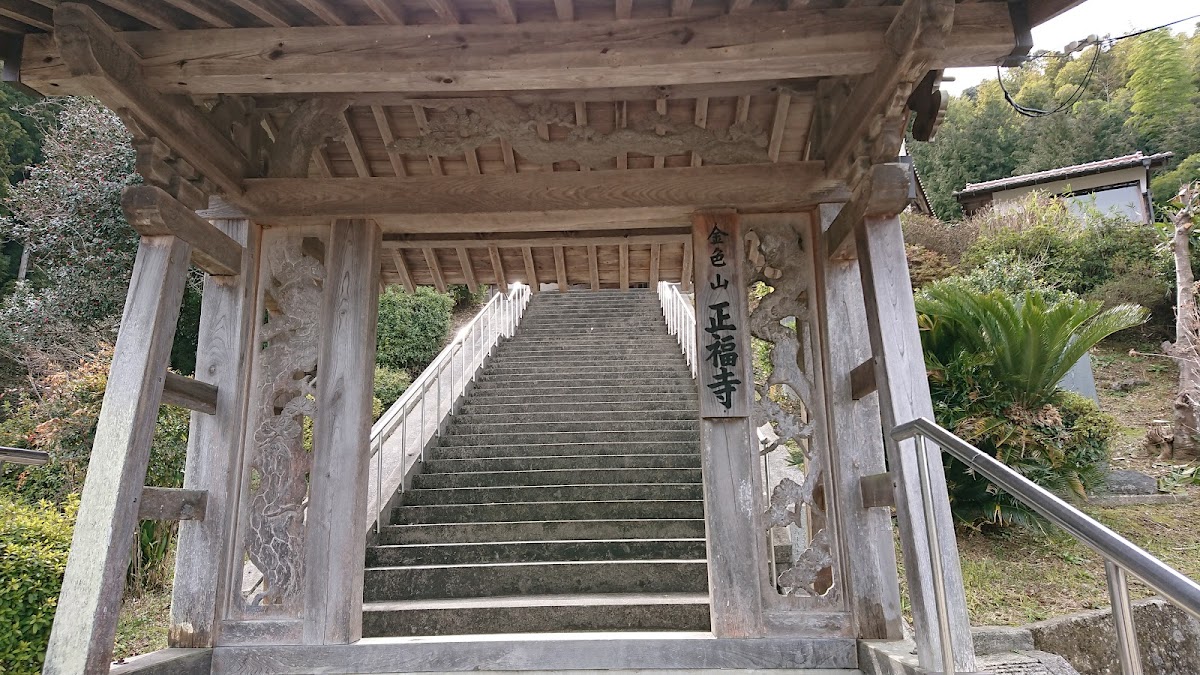
Kinshokuzan Shofukuji Temple is a Jodo Shinshu Honganji-ha temple located in Kawadaira-cho, Gotsu City, Shimane Prefecture. Nestled in a rich natural environment, it has a long history as a spiritual haven for the local people.
The Jodo Shinshu Honganji-ha is a sect that inherits the teachings of its founder, Shinran Shonin, and has Nishi Honganji Temple in Kyoto as its head temple. Shofukuji Temple belongs to the San’in Diocese and, as part of a network of over 410 temples spread throughout Shimane and Tottori Prefectures, plays an important role in the preservation of local Buddhist culture.
Characteristics of Shofukuji Temple
Shofukuji Temple strives for open temple management based on the concept of “a place where I can always come to pray.” Our aim is not merely to provide a place for memorial services, but to offer a peaceful space where local residents can easily visit.
The temple regularly hosts the “Yorozu-ji Cafe ‘Sharanam’,” a forum where people can casually discuss Buddhist teachings and life’s worries every first Tuesday of the month from 2:00 PM to 4:00 PM. This initiative is a good example of the new role that temples should play in modern society.
About the Jodo Shinshu Honganji School and the San’in Diocese
Overview of the Jodo Shinshu Honganji School
The Jodo Shinshu Honganji School is a Buddhist sect founded by Shinran Shonin (1173-1263), a monk from the Kamakura period. It originated at the Otani Mausoleum, the burial place of Shinran Shonin, and later developed into “Honganji.” The current head temple, Nishi Honganji (officially known as Ryukokuzan Honganji), is located in Shimogyo-ku, Kyoto City, and is known as a historical building possessing numerous national treasures and important cultural properties.
The core of Jodo Shinshu Buddhism lies in “reliance on the power of others.” This teaching, that all people will be saved by the vow of Amida Buddha, is widely accepted in Japanese society from the medieval period onward as a simple teaching that does not require rigorous training or scholarship, but rather allows one to attain rebirth in paradise by chanting “Namu Amida Butsu.”
Organization and Role of the San’in Diocese
The San’in Diocese is one of the 32 “dioceses” into which the Jodo Shinshu Honganji sect divides the country. Its boundaries encompass all of Shimane and Tottori prefectures, and it currently comprises over 410 temples. The Honganji San’in Church, the center of the diocese, is located at 443-1 Taisho-cho, Matsue City, and plays an important role as a directly affiliated temple of Nishi Honganji.
The San’in Diocese is subdivided into several “groups,” and each group, including the area to which Shofuku-ji Temple belongs, conducts educational activities tailored to the characteristics of its region. Numerous organizations exist within Shimane Prefecture, such as the Ota-Nishi Group and the Ochi-Higashi Group, each closely connected to its local community.
Main Activities of the San’in Diocese
The San’in Diocese provides information to its affiliated temples and parishioners through the publication of its diocesan newsletter. Furthermore, organizations such as the Toeikai (a religious organization) and the San’in Diocese Ritual Practice Center continuously conduct activities for the training of monks and the deepening of the faith of parishioners.
The San’in Diocese Office handles a wide range of tasks, including supporting the management of temples within the diocese, coordinating religious services, and planning educational activities. Because it covers the vast area of Shimane and Tottori prefectures, cooperation with each group is essential.
History and Origins of Shofuku-ji Temple
Founding and Development of the Temple
Research into the founding date of Kinshokuzan Shofuku-ji Temple is ongoing, based on local historical materials and temple records. The Kawadaira-cho area of Gotsu City has long flourished as a transportation hub in the Iwami region, and many temples were built there from the medieval to the early modern period.
Shofuku-ji Temple also played an important role as a center for the propagation of Jodo Shinshu Buddhism in this region. From the Sengoku period to the Edo period, Jodo Shinshu Buddhism spread rapidly in the Iwami region, and many people converted to the teachings of Shinran Shonin.
Meaning of the Mountain Name “Kinshokuzan”
The temple’s mountain name, “Kinshokuzan,” symbolizes the ideal world and the splendor of the Pure Land in Buddhism. “Kinshoku” (golden) frequently appears in Pure Land Buddhist scriptures as a word expressing the light of Amida Buddha and the radiance of the Pure Land. This temple’s mountain name embodies the wish of Amida Buddha to save all people and its mission as a temple to transmit his teachings.
Connection with the Local Community
Kawadaira-cho in Gotsu City is a naturally rich area facing the Sea of Japan. For many years, Shofuku-ji Temple has supported the ceremonial occasions of the people in this region, serving as a spiritual pillar. In particular, it has built deep ties with local residents through funerals, memorial services, and annual memorial services.
In recent years, while facing the challenges of depopulation and aging in rural cities, the temple has sought new roles as a temple and contributed to maintaining the local community.
Shofuku-ji Temple Facilities and the Columbarium “Shofuku-ji Mausoleum”
Main Hall and Temple Grounds
The main hall of Shofuku-ji Temple follows the traditional architectural style of the Jodo Shinshu Honganji sect. The principal image, a statue of Amida Buddha, is enshrined inside the main hall, where daily services and memorial services are held.
The temple grounds offer a tranquil environment surrounded by nature, allowing visitors to enjoy the scenery of each season. It provides a space where worshippers can escape the hustle and bustle of the city and quietly connect with Buddhist teachings.
Perpetual Columbarium “Shofukuji Mausoleum”
One of the major features of Shofukuji Temple is the existence of the perpetual columbarium, “Shofukuji Mausoleum.” In modern society, as the difficulty of inheriting burial plots increases, the option of perpetual memorial services holds significant meaning for many people.
Shofukuji Mausoleum is a columbarium where the temple provides perpetual memorial services for those without successors or those who do not wish to burden their descendants with the responsibility of maintaining a grave. Because the remains are placed in a communal columbarium without individual tombstones, the financial burden is also reduced.
Regular joint memorial services are held at the mausoleum to pray for the repose of the souls of those interred there. Furthermore, the facility is operated in an open manner, allowing family and relatives to visit at any time.
Pet Memorial Services
In modern society, pets are cherished as members of the family. Shofuku-ji Temple responds to this need and also provides pet memorial services. By performing appropriate memorial services when saying goodbye to beloved pets, we contribute to the healing of the owner’s heart.
Memorial Services and Events at Shofuku-ji Temple
Regular Memorial Services
At Shofuku-ji Temple, various memorial services are held throughout the year in accordance with the traditions of the Jodo Shinshu Honganji sect.
Ho-on-ko is the most important memorial service commemorating the death anniversary of the founder, Shinran Shonin. Held annually from late November to January at various temples, Shofuku-ji Temple also holds a solemn memorial service where parishioners gather to express gratitude for the blessings of Shinran Shonin.
Eitaikyo Memorial Service is a memorial service for ancestors and is generally held in spring and autumn. At Shofuku-ji Temple, perpetual memorial services are held regularly, and many parishioners attend.
Higan-e is a Buddhist service held around the spring and autumn equinoxes, providing an opportunity to reflect on the other world from this world, to express gratitude to ancestors, and to re-examine one’s own way of life.
Individual Memorial Services
Shofuku-ji Temple handles various memorial services, including individual funerals, the first seven days, forty-ninth day, first anniversary, third anniversary, seventh anniversary, thirteenth anniversary, seventeenth anniversary, twenty-third anniversary, twenty-seventh anniversary, thirty-third anniversary, and fiftieth anniversary.
By contacting the temple in advance, you can receive detailed guidance on scheduling and preparations for memorial services. In Jodo Shinshu Buddhism, memorial services are not viewed as mere memorial services for the deceased, but rather as an opportunity to encounter Buddhist teachings through the deceased.
Yorozu-dera Cafe “Sharanam”
Held every first Tuesday of the month from 2:00 PM to 4:00 PM, the “Yorozu-dera Cafe ‘Sharanam'” is a distinctive initiative of Shofuku-ji Temple. “Sharanam” is a Sanskrit word meaning “to take refuge” or “to surrender,” representing a fundamental stance in Buddhism.
At this cafe, you can learn about Buddhist teachings and discuss life’s worries while enjoying tea. The close proximity to the monks and the relaxed atmosphere that encourages questions are highly appreciated. It is an open space where anyone can participate, regardless of religion or sect.
Access Information and Visitor Guide
Location
Official Name: Jodo Shinshu Honganji-ha Konjikizan Shofuku-ji Temple
Location: Kawadaira-cho, Gotsu City, Shimane Prefecture
Sect: Jodo Shinshu Honganji-ha
Affiliation: San’in Diocese
Transportation Access
Access by Car
From the center of Gotsu City, take National Route 9 towards Kawadaira-cho. It’s approximately a 15-20 minute drive from Gotsu Station. Parking is available on the temple grounds, with ample space reserved during religious services.
Access by Public Transportation
The nearest station is Gotsu Station on the JR San’in Main Line. From the station, you can take a taxi or a local bus towards Kawadaira-cho. However, since bus services are limited, it is recommended to check the timetable in advance.
Notes for Visitors
Visiting Shofuku-ji Temple is generally free, but it is advisable to contact the temple in advance for memorial services and events. Especially for individual memorial services or consultations, please be sure to contact the temple by phone in advance to schedule an appointment.
Regarding attire, semi-formal attire or simple, understated clothing is appropriate for memorial services. For regular visits, clean and presentable clothing is acceptable.
Websites of the San’in Diocese Groups
The San’in Diocese is a vast diocese covering the entire prefectures of Shimane and Tottori, and is divided into several “groups” that conduct community-based activities. Each group has its own website and information dissemination channels, providing information about its affiliated temples and event schedules.
Main Groups in Shimane Prefecture
Oda-Nishi Group is composed of temples mainly in the western part of Oda City. Oda City, known for the Iwami Ginzan Silver Mine ruins, is historically a region where Jodo Shinshu Buddhism flourished, and many ancient temples exist there.
The Ochi Higashi Group oversees the eastern region of Ochi County and includes many temples located in mountainous areas. In areas experiencing depopulation, temples serve as important community hubs.
Furthermore, groups have been established in various regions of Shimane Prefecture, including Matsue City, Izumo City, and Masuda City, conducting educational activities tailored to the specific characteristics of each region. The group to which Shofuku-ji Temple belongs also maintains close cooperation with local temples, conducting joint memorial services and training sessions.
Main Groups in Tottori Prefecture
The group centered around Tottori City has many temples due to its location as the prefectural capital. Historic temples are scattered throughout Tottori City, making it a center of Jodo Shinshu Buddhism in an urban area.
Groups have also been established in towns and villages in eastern Tottori Prefecture, such as Iwami Town, Wakasa Town, Chizu Town, and Yazu Town, striving to maintain Buddhist culture in rural areas.
The Jodo Shinshu Honganji-ha group, including those in Kurayoshi City, Yurihama Town, and Kotoura Town in the Chubu region, is also actively engaged in various activities. Kurayoshi City, known for its historic townscape with its white-walled storehouses, has long been a region with a large number of followers.
Each group’s website contains information such as a list of affiliated temples, event schedules, back issues of the diocesan newsletter, and telephone sermon information, serving as a valuable resource for followers and the general public.
Head Temple, Sect, and District Websites
The Jodo Shinshu Honganji-ha information network is structured hierarchically, from the head temple to the dioceses, groups, and individual temples, with comprehensive websites operated at each level.
Head Temple and Sect Official Website
The official Jodo Shinshu Honganji-ha website provides comprehensive information on the sect’s doctrines, history, information on the head temple (Nishi Honganji), a nationwide diocesan and temple search, and explanations of Buddhist rituals.
Nishi Honganji Temple is one of the constituent assets of the World Cultural Heritage site “Historic Monuments of Ancient Kyoto,” and possesses valuable cultural assets, including the National Treasures Amida-do (main hall) and Miei-do (Daishi-do). The official website provides detailed information on these buildings and visiting information.
Furthermore, the temple actively disseminates information in line with the digital age, such as an online version of the sect’s journal “Honganji Shinpo” and podcast distribution of Dharma talks.
San’in Diocese Official Website
The official website of Honganji San’in Church and San’in Diocese (saninkyoku.net) serves as an information hub for Jodo Shinshu Honganji-ha temples in Shimane and Tottori prefectures.
The site comprehensively contains useful information for followers and the general public, including an overview of the San’in Diocese, a list of affiliated temples (searchable by city/town), downloadable diocesan newsletters, introductions to religious organizations, event schedules, and telephone numbers for Dharma talks.
The temple list page, in particular, features a convenient function that allows you to search for temples in each city and town in Shimane and Tottori prefectures, which is useful when looking for nearby temples when moving or traveling.
Regional Diocese Websites
Websites of dioceses adjacent to the San’in Diocese also exchange information through reciprocal links.
Dioceses in the Chugoku region, such as Shishu Diocese Honganji Bingo Church (eastern Hiroshima Prefecture), Bingo Diocese Honganji Hiroshima Branch (western Hiroshima Prefecture), and Aki Diocese Honganji Yamaguchi Branch (Yamaguchi Prefecture), are geographically close and have a deep historical relationship.
These regional diocese websites introduce examples of missionary activities that utilize the unique characteristics of each region, and contain much information that can be used as reference for the activities of the San’in Diocese.
San’in Diocese Telephone Dharma Talks
Telephone Dharma Talks are a service that allows you to listen to Buddhist sermons simply by making a phone call. Each group within the San’in Diocese offers telephone Dharma talks via its own telephone number, providing an opportunity to easily engage with Buddhist teachings in daily life.
Features of Telephone Dharma Talks
The content of the Dharma talks covers a wide range of topics, including the teachings of Shinran Shonin, fundamental Buddhist concepts, the relationship between daily life and Buddhism, and seasonal events and Buddhism. Monks from each group take turns giving the talks, and the content is regularly updated.
Each talk is typically 3-5 minutes long, a length that can be easily listened to even by busy modern people. While call charges are borne by the caller, some areas may have toll-free numbers.
How to Use
The telephone numbers for telephone Dharma talks are listed on the official San’in Diocese website, each group’s website, and the diocesan newsletter. They are also often posted on bulletin boards at temples, including Shofuku-ji Temple.
Since you can listen 24 hours a day, you can listen to the Dharma talks at your convenience, such as before going to work in the morning or before going to bed at night. This provides a valuable opportunity for the elderly and those who have difficulty going out to engage with Buddhist teachings from the comfort of their homes.
Digital Age Dharma Talk Distribution
In recent years, in addition to telephone Dharma talks, the distribution of Dharma talks via the internet has increased. The San’in Diocese and individual temples have begun distributing Dharma talks through YouTube channels and podcasts, continuing their efforts to reach a wider audience.
Shofuku-ji Temple also utilizes social media such as Facebook pages to disseminate information, promoting the content of Dharma talks and the temple’s activities.
Jodo Shinshu Teachings and Modern Society
The Teachings of Shinran Shonin
The core of Shinran Shonin’s teachings lies in “other-power vows.” This is the teaching that salvation is achieved not through one’s own power (self-power), but through the power of Amida Buddha’s vow (other-power).
“The Original Vow” refers to the 48 vows made by Amida Buddha when he was Bodhisattva Dharmakara. The eighteenth vow, “The Vow of Rebirth Through Nembutsu,” is considered particularly important. This vow promises that all those who chant “Namu Amida Butsu” will be reborn in the Pure Land.
Shinran Shonin left behind the famous words, “If even good people attain rebirth, how much more so wicked people?” This is a paradoxical teaching, suggesting that since even those who consider themselves good can attain rebirth, it is precisely the wicked, who are aware of their own defilements, who are the recipients of Amida Buddha’s Original Vow.
Significance in Modern Society
Modern society emphasizes competition and efficiency, constantly demanding that one “achieve something through one’s own efforts.” However, many people become exhausted and find life difficult within this value system.
The Jodo Shinshu teaching of “reliance on the power of others” teaches us the peace of mind that comes from acknowledging the limits of our own strength and entrusting ourselves to something greater. This does not negate effort, but rather emphasizes the importance of living humbly while being aware of human finitude.
The concept of Shofuku-ji Temple, “There is a place for me to belong, wherever I come to pray,” can be seen as an expression of its desire to support people seeking spiritual solace in modern society.
Consultation and Inquiries to the Temple
Topics of Consultation
Shofuku-ji Temple offers consultations on the following topics:
- Regarding Funerals and Memorial Services: Questions about funeral procedures, scheduling memorial services, etiquette, and preparations.
- Regarding Cemeteries and Interment: Consultations regarding interment at Shofukuji Temple’s mausoleum, cemeteries, and details of perpetual memorial services.
- General Buddhist Rituals: Questions about purchasing and setting up Buddhist altars, the meaning of sutras, and the use of Buddhist implements.
- Questions about Religion: Questions about the teachings of Jodo Shinshu Buddhism, differences from other sects, and basic Buddhist concepts.
- Life Counseling: Advice from a Buddhist perspective on the meaning of life and how to cope with suffering.
How to Contact
Contacting the temple is primarily done by phone or in person. Contact information is also available on Shofukuji Temple’s website and Facebook page.
If you are visiting for the first time, we recommend contacting us by phone beforehand. This allows us to confirm the availability of the head priest and temple family and schedule a time for a thorough consultation.
In case of emergency (such as a funeral), you can contact us day or night, but it is best to be prepared to calmly explain the situation.
Summary
Konjikizan Shofuku-ji Temple, a Jodo Shinshu Honganji-ha temple, is located in Kawadaira-cho, Gotsu City, Shimane Prefecture, and is a temple deeply rooted in the local community. Belonging to the San’in Diocese, and as a member of the Jodo Shinshu network in Shimane and Tottori Prefectures, it plays a vital role in transmitting the teachings of Shinran Shonin to the modern age.
While offering services that meet modern needs, such as the perpetual ossuary “Shofuku-ji Mausoleum” and pet memorial services, the temple practices open management through new initiatives like the “Yorozu-ji Cafe ‘Sharanam’.”
Nestled in a rich natural environment, Shofuku-ji Temple offers a peaceful place to connect with Buddhist teachings and serves as an invaluable spiritual haven for local residents. Visitors can engage with the temple in various ways, including participating in memorial services and events, regular visits, and life counseling.
Taking advantage of the San’in Diocese’s comprehensive information network and services such as telephone Dharma talks, why not visit Shofuku-ji Temple to experience the teachings of Jodo Shinshu Buddhism and find inspiration for a richer life?