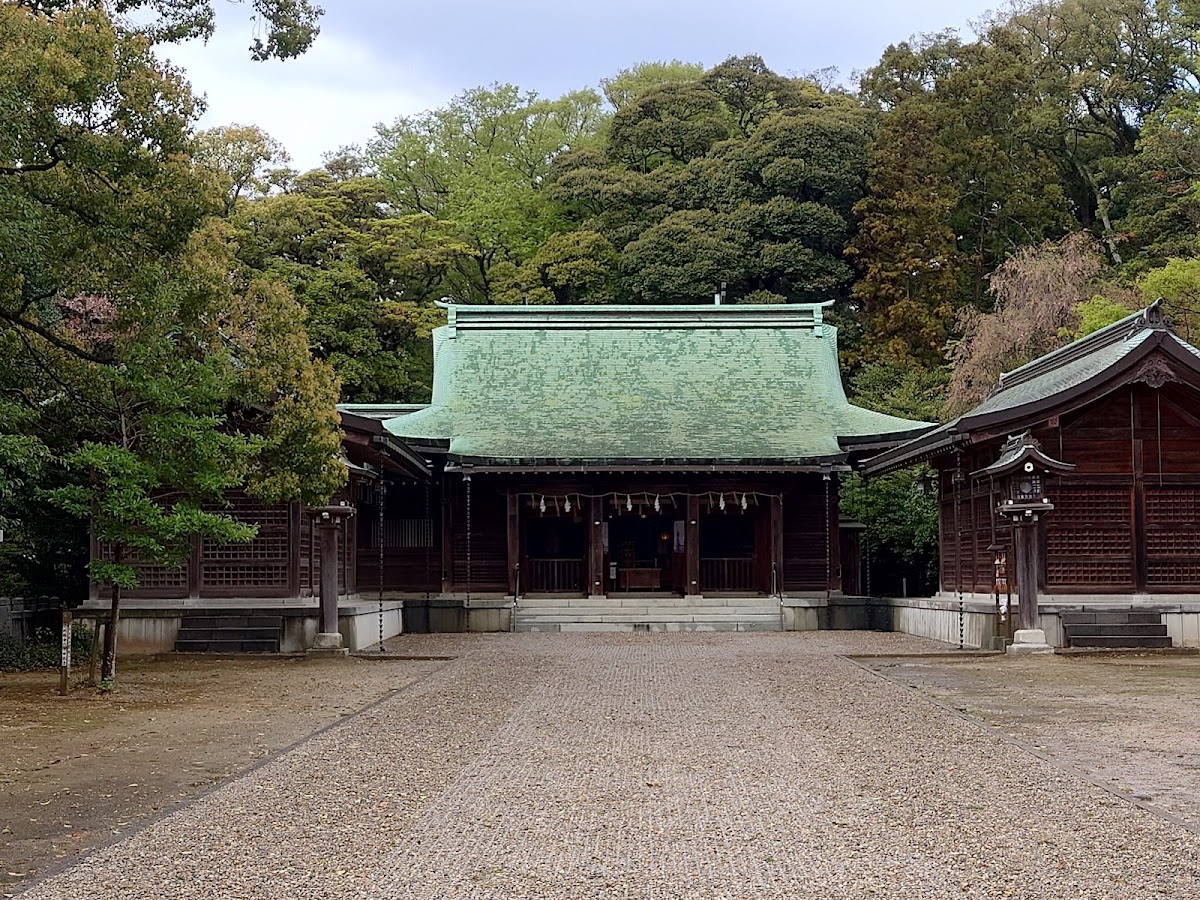
Shinkakuin Temple (Hamada City, Shimane Prefecture): A Complete Guide to a Historic Jodo Sect Temple with a Nationally Important Cultural Property Buddhist Statue
Located in Matsubara-cho, Hamada City, Shimane Prefecture, Shinkakuin Temple is a Jodo Sect temple deeply intertwined with the history of the Hamada Domain. It enshrines a standing Amida Buddha statue from the Kamakura period, designated as a Nationally Important Cultural Property, and is known for possessing the only Buddhist statue designated as a Nationally Important Cultural Property in the Iwami region. Situated on a hill overlooking Matsubara Bay, its tranquil grounds, surrounded by ancient pine trees, make it a valuable spot for history enthusiasts and those interested in Buddhist art.
History and Origins of Shinkakuin Temple
Construction of Hamada Castle and Temple Relocation
The history of Shinkakuin Temple is closely linked to the establishment of the Hamada Domain. Originally located on the site of Hamada Castle, the temple was relocated to its current location in Matsubara-cho in 1619 (Genna 5) when Lord Furuta Shigeharu constructed Hamada Castle. This relocation was part of an early Edo period urban planning project that involved the development of the castle town and the reorganization of temple locations.
Lord Furuta Shigeharu is known as the first lord of the Hamada Domain and is credited with laying the foundation for the castle town. With the construction of Hamada Castle, many temples and shrines were relocated and reorganized, and Shinkakuin Temple was one of them, settling in its current location.
Conversion from Tendai to Jodo Sect
Shinkakuin Temple initially existed as a Tendai sect temple. However, a major turning point occurred in 1663. It is said that Matsudaira Suo-no-kami Yasuteru, the lord of the Hamada Domain at the time, invited the high-ranking Jodo sect priest, Hennyo Shonin, to establish the temple in order to commemorate his mother, Shinkakuin-dono.
With this conversion, the temple’s name was also changed to reflect the lord’s mother’s posthumous Buddhist name, “Shinkakuin,” and it has continued as a Jodo sect temple to this day. Born from a deep filial piety to his mother, this temple also came to serve as the family temple of the Hamada domain’s ruling family.
Mountain Name and Temple’s Position
The mountain name of Shinkakuin Temple is Gankokuzan. This name is thought to originate from the topography and surrounding environment of the temple’s location. As a Jodo sect temple, it has functioned as a center of faith for the local people, conducting religious activities centered on the Nembutsu faith.
National Important Cultural Property: Wooden Standing Amida Buddha Statue
The Only Nationally Designated Important Cultural Property Buddhist Statue in the Iwami Region
Shinkakuin Temple’s greatest treasure is its principal image, a wooden standing statue of Amida Buddha. This statue is believed to have been created in Kencho 7 (1255) during the mid-Kamakura period and is designated as a National Important Cultural Property. It is particularly noteworthy that this statue is the only Nationally Designated Important Cultural Property Buddhist statue in the Iwami region.
The Iwami region in western Shimane Prefecture is home to numerous temples and various Buddhist statues, but only the standing Amida Buddha statue at Shinkakuin Temple has received the highest level of cultural property designation as a National Important Cultural Property. This speaks to the high artistic and historical value of this statue.
Characteristics and Artistic Value of the Buddhist Statue
The wooden standing Amida Buddha statue is made using the ichiboku-zukuri technique, carving from a single piece of cypress wood. Standing 98 centimeters tall, it is a magnificent work that embodies the pinnacle of Kamakura period sculptural techniques.
Ichiboku-zukuri is a technique of carving the entire statue from a single piece of wood, and was widely used from the Heian period to the Kamakura period. Buddhist statues created using this technique possess a unique charm, a fusion of the natural strength of the wood and the skill of the sculptor.
Buddhist sculptures from the mid-Kamakura period are works that harmonize the elegance of the Heian period with the realism and strength characteristic of the Kamakura period. The fact that its creation date, Kenchō 7 (1255), is clearly established enhances its value in art history research. The sculpture is meticulously finished down to the smallest detail, and the depiction of the drapery and facial features, among other things, makes it a valuable cultural asset that conveys the advanced techniques of the time.
Preservation and Public Access as an Important Cultural Property
Buddhist statues designated as Important Cultural Properties of Japan require strict preservation and management. Shinkakuin Temple continues its efforts to appropriately preserve this precious statue while passing on its cultural value to future generations.
For opportunities for general visitors to view the statue, it is recommended to inquire with the temple in advance. While balancing the protection and public access of Important Cultural Properties, opportunities for many people to experience this precious statue are provided to the extent possible.
Highlights and Atmosphere of the Temple Grounds
Location Overlooking Matsubara Bay
Shinkakuin Temple is located on a hill in Matsubara-cho, Hamada City, and the temple grounds offer a view overlooking Matsubara Bay. This location, overlooking the coastline of Hamada facing the Sea of Japan, brings a unique sense of openness and tranquility to the temple.
The temple’s location overlooking the sea resonates with the Jodo sect’s concept of the Western Pure Land. The view of the sunset over the sea creates a space where Buddhist faith and nature are in harmony.
Temple Grounds Surrounded by Ancient Pine Trees
Many ancient pine trees are planted within the temple grounds, creating a landscape that evokes a long history. Pine trees are considered auspicious trees in Japanese temples and are also symbols of longevity. These ancient pine trees are witnesses to the history of Shinkakuin Temple, which has existed in this place for hundreds of years.
The landscape, woven from the green of the pines, the blue of the sea, and the temple architecture, shows different expressions in each of the four seasons. In particular, the sea breeze blowing through the pines leaves visitors with a refreshing impression.
Main Hall and Kannon Hall
The temple grounds contain the main hall and the Kannon Hall. The main hall is the central building of a Jodo sect temple, housing the principal image, a standing statue of Amida Buddha. The Kannon Hall is a hall dedicated to Kannon Bodhisattva and has been cherished as an object of popular faith.
These buildings stand amidst the tranquil temple grounds, offering visitors a place for prayer and meditation. Surrounded by ancient pine trees, the main hall and Kannon Hall exude a sense of historical weight and religious solemnity.
Basic Information and Access to Shinkakuin Temple
Location and Contact Information
- Address: 266-1 Matsubara-cho, Hamada City, Shimane Prefecture
- Postal Code: 697-0021
- Sect: Jodo-shu (Pure Land Buddhism)
- Mountain Name: Iwatani-san
- Principal Image: Wooden Standing Amida Buddha Statue (Nationally Designated Important Cultural Property)
Access Methods
Using Public Transportation
The nearest station is Hamada Station on the JR San’in Main Line. It’s about a 10-minute drive from the station. Using a bus or taxi is convenient.
Using a Car
It’s about a 15-minute drive from the Hamada Interchange on the San’in Expressway. From Hamada city center, head towards Matsubara-cho and follow the signs.
We recommend checking with the temple regarding parking availability before your visit.
Regarding Visits
For information on visiting hours, admission fees, and special viewings of important cultural properties, please contact Shinkakuin Temple directly in advance. Visits may be unavailable depending on temple events and ceremonies, so prior confirmation is especially important if you are visiting from afar.
History of Hamada City and Shinkakuin Temple
The Hamada Domain and the Formation of the Castle Town
Hamada City developed as a castle town of the Hamada Domain during the Edo period. Hamada Castle was built on a strategic location facing the Sea of Japan and functioned as the political, economic, and cultural center of the Iwami region.
When Hamada Castle was built in 1619, Furuta Shigeharu promoted the development of the castle town, and in the process, many temples and shrines, including Shinkakuin Temple, were relocated and positioned at their current locations. This urban plan was designed with both defensive considerations and the placement of religious facilities in mind.
The Relationship Between the Matsudaira Family and Shinkakuin Temple
In 1663, Matsudaira Suo-no-kami Yasuteru founded Shinkakuin Temple as a Jodo sect temple, thus establishing a deep connection with the Matsudaira family. As the family temple of the lord’s mother and a temple associated with the lord’s family, Shinkakuin became one of the religious centers of the Hamada Domain.
The Matsudaira family was a branch of Tokugawa Ieyasu and served as lords of various domains. The Matsudaira family of the Hamada Domain was also a prestigious family connected to this lineage, and Shinkakuin Temple, as their family temple, was positioned as a temple of high status.
Shinkakuin Temple in the Modern Era
After the Meiji Restoration, the Hamada Domain ceased to exist due to the abolition of the feudal domains and establishment of prefectures. However, Shinkakuin Temple continued to exist as a local temple, and remains so to this day. Through the preservation and public display of the standing statue of Amida Buddha, a nationally important cultural property, it also functions as a center for the protection of local cultural properties.
After the post-war period of rapid economic growth, temples in regional cities faced various challenges. However, Shinkakuin Temple continues to fulfill its role as a religious institution in the local community while preserving valuable cultural assets.
Nearby Tourist Attractions and the Charms of Hamada City
Hamada Castle Ruins
Hamada Castle, where Shinkakuin Temple once stood, is now a preserved castle ruin. Remnants of stone walls and baileys remain, allowing visitors to imagine the scale of the castle at the time. From the castle ruins, you can enjoy a panoramic view of Hamada city and the Sea of Japan, making it a popular scenic spot.
Iwami Tatamigaura
On the coast of Hamada City lies Iwami Tatamigaura, designated as a national natural monument. The unique topography, formed by wave erosion, is a spot where you can enjoy the beauty of natural formations.
Hamada City World Children’s Art Museum
This art museum is enjoyable for both children and adults, and features interactive exhibits. It is a popular spot for families.
Hamada Fishing Port and Seafood
Hamada City boasts one of the leading fishing ports in the San’in region, offering an abundance of fresh seafood. In particular, blackthroat seaperch (akamutsu) is a Hamada specialty known nationwide. When visiting Shinkakuin Temple, savoring Hamada’s seafood is one of the pleasures of your trip.
Points to Note When Visiting Shinkakuin Temple
Manners for Visiting the Temple
Shinkakuin Temple is a temple that still functions as a place of worship. When visiting, please observe the following manners:
- Act quietly within the temple grounds and avoid disturbing other worshippers.
- Take photographs only in designated areas (prior confirmation is necessary, especially for photographing important cultural properties).
- Remove your shoes and handle them carefully when entering the main hall or Kannon hall.
- Offer your donation quietly and respectfully.
Clothing and Belongings
When visiting a temple, it is advisable to avoid revealing clothing and wear modest attire. During the summer months, the sun is strong, so it’s a good idea to bring a hat or parasol. Also, we recommend wearing comfortable shoes for walking around the temple grounds.
Best Seasons for Visiting
Shinkakuin Temple is open year-round, but each season offers its own unique charm:
- Spring: The fresh green pines are beautiful, and the mild weather makes it ideal for visiting.
- Summer: The sea breeze is pleasant, and the contrast between the blue sea and green pines is striking.
- Autumn: Enjoy the tranquil atmosphere in the crisp air.
- Winter: The contrast between the rough waves of the Sea of Japan and the serene temple grounds is impressive.
Estimated Time Required
Allow 30 minutes to an hour for a stroll and visit to the temple grounds. If you wish to carefully view the important cultural property Buddha statues or spend more time lingering on the grounds, we recommend allocating more time.
Jodo Sect Teachings and Nembutsu Faith
Shinkakuin Temple is a Jodo sect temple, and its religious activities center on Nembutsu faith. The Jodo sect, founded by Honen Shonin (1133-1212), teaches that anyone can receive salvation from Amida Buddha and attain rebirth in the Pure Land through chanting “Namu Amida Butsu.”
The standing statue of Amida Buddha, the principal image of Shinkakuin Temple, is the central figure of this Jodo sect faith. Amida Buddha is the lord of the Western Pure Land and is worshipped as the Buddha who made the vow to save all who chant the Nembutsu.
This standing statue of Amida Buddha, created during the Kamakura period, is thought to have been made against the backdrop of the rising popularity of Jodo Buddhism at the time. Its creation date, Kencho 7 (1255), is approximately 40 years after Honen Shonin’s death, a period when the Jodo sect was becoming widely known among the common people.
Cultural Property Protection and Local Communities
Preservation and Management of Important Cultural Properties
Shinkakuin Temple, which houses a Buddhist statue designated as a National Important Cultural Property, has a strict responsibility for its preservation and management under the Cultural Properties Protection Law. Various preservation measures are taken, including temperature and humidity control, disaster prevention measures, and regular inspections.
When repairs to the Important Cultural Property are necessary, they are carried out by specialized technicians with permission from the Agency for Cultural Affairs. These cultural property protection efforts are carried out primarily by the temple, with support from the national and local governments.
Regional Cultural Identity
Shinkakuin Temple and its wooden standing statue of Amida Buddha are important elements of the cultural identity of Hamada City, and indeed the entire Iwami region. Having the only nationally designated Important Cultural Property Buddhist statue in the Iwami region is a source of regional pride and a cultural focal point.
Shinkakuin Temple is sometimes featured in school education as a regional cultural property, providing children with opportunities to learn about local history and culture.
Value as a Tourism Resource
Temples possessing cultural properties are also important as tourism resources. For tourists interested in history and Buddhist art, Shinkakuin Temple is a major motivation to visit Hamada City. Utilizing historical and cultural resources is an important strategy in promoting regional tourism, and Shinkakuin Temple plays a role in this.
However, balancing tourism, its function as a place of worship, and the preservation of cultural properties is always a challenge. Shinkakuin Temple fulfills its role as a temple while harmonizing these elements.
Annual Events and Ceremonies at Shinkakuin Temple
As a Jodo sect temple, Shinkakuin Temple holds various ceremonies and events throughout the year. The main events include the following:
Major Annual Events
- Shushōe: A Buddhist service held to welcome the New Year
- Shunki Higan-e: A memorial service for ancestors held during the spring equinox
- Hanamatsuri (Kanbutsu-e): A memorial service celebrating the birth of Shakyamuni Buddha (around April 8th)
- Obon: The Obon festival to welcome the spirits of ancestors
- Shūki Higan-e: A memorial service held during the autumn equinox
- Jūya Hōyō: One of the important memorial services of the Jōdo sect
For detailed dates and content of these events, please contact Shinkakuin Temple directly.
Summary: The Charm and Value of Shinkakuin Temple
Shinkakuin Temple in Hamada City, Shimane Prefecture, boasts a rich history, dating back to its relocation during the construction of Hamada Castle in the early Edo period and its founding as a Jodo sect temple by the Matsudaira family, the lords of the Hamada domain. It enshrines a wooden standing statue of Amida Buddha from the Kamakura period, a nationally designated Important Cultural Property, making it a temple of high historical and cultural value.
Located on a hill overlooking Matsubara Bay, its tranquil grounds, surrounded by ancient pine trees, offer peace of mind to visitors. The temple’s unique status as the only nationally designated Important Cultural Property Buddha statue in the Iwami region demonstrates its exceptional value.
When visiting Hamada City, be sure to visit Shinkakuin Temple to experience its historical significance, the magnificence of its Buddhist art, and the beautiful scenery overlooking the Sea of Japan. It is recommended to contact the temple in advance to confirm visiting hours and availability.
Shinkakuin Temple will continue to play an important role in Hamada as a place of faith and culture that spans the past, present, and future.