Complete Guide to Chodaiji Temple (Yasugi City, Shimane Prefecture) | The Charm of a 1300-Year-Old Tendai Sect Temple
Located in Yasuda-seki, Hakuta-cho, Yasugi City, Shimane Prefecture, Chodaiji Temple is a Tendai sect temple boasting a history of over 1300 years. It is said to have been founded by Gyoki Bodhisattva during the Nara period and welcomes many worshippers as the 20th temple on the Izumo Kannon Pilgrimage. Situated at the foot of Yogaiyama Mountain, the site of battles between the Amago and Mori clans during the Sengoku period, it is known as a special place where history and faith intersect.
History and Origins of Chodaiji Temple
From Founding to the Nara Period
The founding of Chodaiji Temple dates back to the Tenpyo era (729-749), during the reign of Emperor Shomu. It is said to have been founded by Gyoki Bodhisattva, a renowned high priest of the Nara period, and from the beginning held an important position as an imperial prayer temple of Emperor Shomu. The temple, whose mountain name is Fukujuzan, has developed as a temple belonging to the Tendai sect.
The Great Flood of the 9th Year of the Hakuhō Era and the Miracle of the Principal Image
According to temple tradition, the temple suffered a great disaster in the 9th year of the Hakuhō era when a great flood swept away all of its buildings. At this time, the principal image, the Thousand-Armed, Thousand-Eyed Avalokiteshvara Bodhisattva, was also swallowed up by the raging torrent.
However, an old man named Yaheita, a local resident of Kiyose, had a spiritual vision of the carpenter who created the Kannon statue. Sharing the same resolve as the then head priest, Teien, they explored the seabed. They succeeded in raising the statue using ropes. Afterwards, it is said that the main hall, which had been in Boshō, was rebuilt at its current location, and the temple was rebuilt.
The Prosperity Period During the Tenpyō Era
During the Tenpyō era, at the behest of Emperor Shōmu, the temple buildings, monks’ quarters, and a three-story pagoda were constructed, and the temple flourished greatly. During this period, Chodaiji Temple served as a center of local faith and a hub of Buddhist culture in the Hakuta region.
Rise and Fall in the Middle Ages and the Sengoku Period
In the Middle Ages, Chodaiji Temple experienced a period of repeated rise and fall. Particularly during the Sengoku period, its location at the foot of Yogaiyama Mountain, the site of fierce battles between the Amago and Mori clans, meant it was greatly affected by the turmoil of war. Secret stories related to the rise and fall of the Amago clan and traces of the battles remain throughout the temple, conveying the history of that time to the present day.
Restoration in the Edo Period
In the Edo period, the temple was restored under the patronage of the Mori domain lord. During this time, the foundation of the current temple was laid, and it once again played an important role as a center of local faith.
The Principal Image and Beliefs of Chodaiji Temple
Thousand-Armed, Thousand-Eyed Avalokiteshvara Bodhisattva
The principal image of Chodaiji Temple is the Thousand-Armed, Thousand-Eyed Avalokiteshvara Bodhisattva (Senju Kannon). This Kannon Bodhisattva, said to possess a thousand arms and a thousand eyes, is considered a symbol of compassion, watching over all directions and saving all people. The Thousand-Armed Kannon at Chodai-ji Temple is particularly known as a Kannon of longevity and has attracted many worshippers.
Izumo Kannon Pilgrimage Site No. 20
Chodai-ji Temple is designated as the 20th temple of the Izumo Thirty-Three Kannon Pilgrimage (Izumo Kannon Pilgrimage). Pilgrimages to Kannon sites have long been practiced as a way to deepen faith in Kannon Bodhisattva and accumulate merit. Many pilgrims visit Chodai-ji Temple and offer prayers to the Thousand-Armed Kannon.
Benefits and Faith
Chōdaiji Temple is believed to offer the following benefits:
- Healing from Illness: Prayers are offered for recovery from illness through the compassion of the Thousand-Armed Kannon.
- Longevity: Many visitors come to pray for long life.
- Successful Marriage: The temple attracts worshippers seeking good relationships.
- Protection from Misfortune: Prayers are offered for protection from disaster.
- Childbearing: Prayers are offered for being blessed with children.
- Traffic Safety: In modern times, prayers for traffic safety are also offered.
Due to these benefits, Chōdaiji Temple has long been a center of local faith and a cultural asset that Hakuta is proud of.
Highlights of the Temple Grounds
Approach and Lotus Pond
The approach to Chōdaiji Temple leads to the old approach, bypassing a large lotus pond. The lotus pond is filled with beautiful lotus flowers depending on the season, soothing the hearts of visitors. In Buddhism, the lotus is a symbol of purity and enlightenment, further enhancing the atmosphere of the temple. ### Niomon Gate
As you proceed along the old approach to the temple, you will be greeted by the magnificent Niomon Gate. This gate houses two painted Nio statues, each approximately 120cm tall, protecting the temple. The statues depict Mitsushaku Kongo and Naraen Kongo, and their role is to protect the temple from evil.
Main Hall
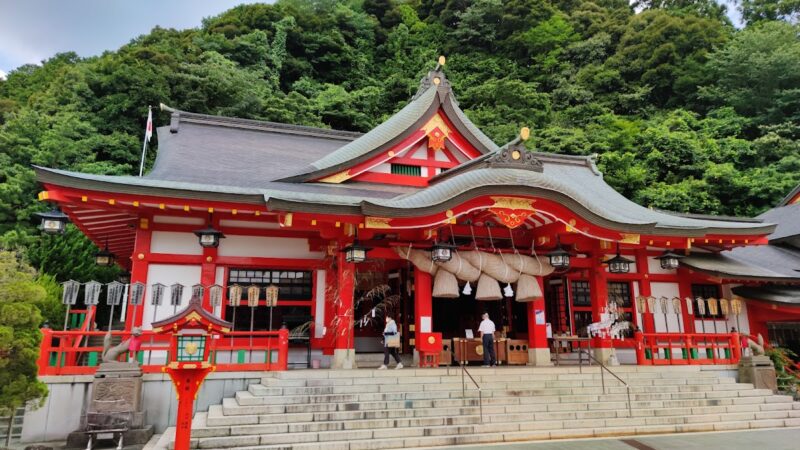
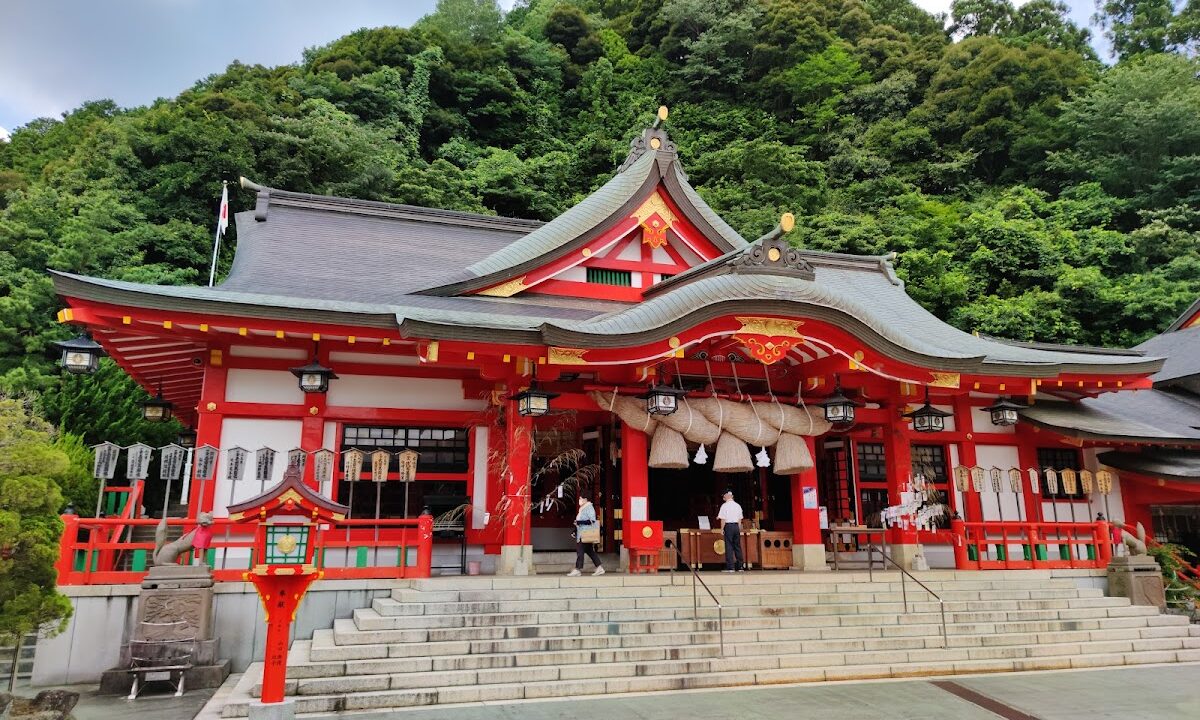
The main hall, with its hipped roof, is the central building of Chodaiji Temple. Inside, the principal image, the Thousand-Armed, Thousand-Eyed Avalokiteshvara Bodhisattva, is enshrined, creating a solemn atmosphere. The architectural style exhibits characteristics of traditional Tendai Buddhist temples, making it a building of high historical value.
Corridor and Votive Offerings
The corridor surrounding the main hall is a distinctive space of Chodaiji Temple. This corridor is adorned with a mix of old and new votive offerings, including votive tablets, photographs, and other items. These offerings are testaments to people’s faith over many years, each imbued with wishes and gratitude.
These timeless offerings speak volumes about how important Chodaiji Temple has been to the local community.
Relationship with Yogaiyama Mountain
Historical Background of Yogaiyama Mountain
Chodaiji Temple is located at the entrance to Yogaiyama Mountain, a crucial battlefield during the Sengoku period (Warring States period). Yogaiyama Mountain was the site of fierce battles between the Amago and Mori clans, and many secret stories related to the rise and fall of the Amago family remain there.
Starting Point for Climbing Yogaiyama Mountain
Currently, Chodaiji Temple also serves as a starting point for climbing Yogaiyama Mountain. History enthusiasts and hikers use Chodaiji Temple as a starting point to visit the remnants of the Sengoku period on their way to Yogaiyama Mountain. Traces of the battles from that time remain throughout the mountain, allowing visitors to experience history firsthand.
A Base for Historical Walks
The path from Chodaiji Temple to Yogaiyama Mountain is not merely a hiking trail, but also a path that traces history. It is an important location that evokes the history of the San’in region during the Sengoku period, including the rise and fall of the Amago clan and their battles with the Mori clan.
Nearby Attractions
Yasuda Hachimangu Shrine
On the way to Chodaiji Temple, you will see Yasuda Hachimangu Shrine on your right. This shrine is also an important place of worship in the region, reflecting the region’s strong tradition of syncretism between Shinto and Buddhism.
Hakuta River and Otsuka Bridge
Otsuka Bridge, spanning the Hakuta River, serves as a landmark on the way to Chodaiji Temple. This river has long been an important water source supporting the lives of the local people and is deeply connected to the history of Chodaiji Temple.
Cultural Properties of the Hakuta Area
Chodaiji Temple is positioned as a “cultural property that Hakuta is proud of,” and many other historical and cultural resources are scattered throughout the surrounding area. Hakuta-cho in Yasugi City is known as a region where culture has flourished since ancient times.
Access Information
Basic Information
Address: 352 (or 354) Yasuda-seki, Hakuta-cho, Yasugi City, Shimane Prefecture 692-0202
Access by Public Transportation
- From JR Yasugi Station:
- Approximately 30 minutes by bus from Yasugi Station, get off at Yasugi City Hall Hakuta Branch.
- Approximately 15 minutes by bus, get off at Chodaiji-mae.
- Approximately 10 minutes on foot from the bus stop.
- From Yonago Area:
- Approximately 4km towards Yonago from Otsuka Bridge over the Hakuta River.
- There is a small Chodaiji Temple sign along the roadside.
Access by Car
Visiting by car is convenient. There is parking space around the temple, but it is recommended to check details in advance. When using a car navigation system, please enter the above address.
Points to Note When Visiting
- You will need to detour around the lotus pond to reach the old approach road, so please carefully check the route.
- If you plan to climb Mt. Yogai, please visit with appropriate equipment and ample time.
- It is recommended to check the visiting hours and events in advance.
Cultural Value of Chodaiji Temple
Importance as a Tendai Sect Temple
Chodaiji Temple is an ancient temple of the Tendai sect and an important temple that conveys the history of the Tendai sect in the San’in region. The Tendai sect is one of the major sects of Japanese Buddhism, founded by Saicho in the early Heian period, and Chodaiji Temple continues that tradition to this day.
Temple Associated with Gyoki Bodhisattva
Gyoki Bodhisattva, who is considered the founder, is known as a high-ranking priest of the Nara period, who established temples throughout Japan and dedicated himself to social work. As a temple associated with Gyoki Bodhisattva, Chodaiji Temple occupies a historically and religiously important position.
Center of Local Faith
For 1300 years, Chodaiji Temple has functioned as the center of faith in the Hakuta region. Its continued role as a spiritual anchor for the local people is evident from the numerous votive offerings remaining at the temple.
Value as a Sengoku Period Historical Site
Due to its connection with Yogaiyama Mountain, Chodaiji Temple is also an important historical site that conveys the history of the Sengoku period (Warring States period). It is an indispensable place for understanding the Sengoku history of the San’in region, particularly the battles between the Amago and Mori clans.
Points to Note During Your Visit
As a Kannon Pilgrimage Site
As the 20th temple on the Izumo Kannon Pilgrimage, those visiting as part of a pilgrimage can receive inscriptions in their pilgrimage notebooks and receive temple stamps. Understanding the significance of the pilgrimage and offering heartfelt prayers is important.
Prayer in Silence
Chodaiji Temple is located in a relatively quiet environment, allowing for a peaceful atmosphere during your visit. Through prayer to the Thousand-Armed Kannon, you can attain inner peace.
Historical Exploration
Those interested in history can gain a deeper understanding by learning about the temple’s history and combining it with a stroll around Yogaiyama Mountain. It will be a valuable opportunity to feel the historical romance of the Sengoku period.
Seasonal Beauty
The scenery is especially beautiful during the lotus season (summer) when the lotus flowers in the lotus pond are in bloom. Visiting while experiencing the changing seasons is one of the charms of Chodaiji Temple.
Chodaiji Temple as a Filming Location
Due to its historical background and unique atmosphere, Chodaiji Temple and Yogaiyama Mountain are attracting attention as filming locations for movies and TV shows. Their value as filming locations for works set in the Sengoku period and historical dramas is recognized.
The temple’s atmospheric architecture, the rugged terrain of Yogaiyama Mountain, and the environment with remaining Sengoku period ruins provide ideal conditions for filming period dramas and historical documentaries. It is registered in the National Location Database, and interest from film production professionals is growing.
Summary
Located in Hakuta-cho, Yasugi City, Shimane Prefecture, Chodaiji Temple is a Tendai sect temple with a history of over 1300 years, possessing many fascinating features. Founded by Gyoki Bodhisattva, it has a long history marked by various transformations, from its establishment as an imperial prayer temple by Emperor Shomu, to its reconstruction after the great flood of the 9th year of the Hakuhō era, through the turmoil of the Sengoku period, and its revival during the Edo period.
As the 20th temple on the Izumo Kannon Pilgrimage, devotion to the Thousand-Armed, Thousand-Eyed Avalokiteshvara Bodhisattva remains strong, attracting visitors seeking numerous blessings such as healing from illness, longevity, successful marriage, protection from evil, fertility, and traffic safety.
With numerous points of interest including the Niomon Gate, main hall, and corridors, the temple boasts a wealth of exhibits, particularly the diverse array of old and new offerings displayed in the corridors, testifying to the depth of people’s faith over the centuries. Furthermore, it serves as a starting point for climbing Mt. Yogai and a base for tracing the history of the Sengoku period.
As a cultural treasure that Hakuta is proud of, a center of local faith, and a historical site of great historical value, Chodaiji Temple is a temple with multifaceted charm. It is one of the places you should definitely visit when you come to Shimane Prefecture. You will be able to reflect on history in silence and have a precious experience of feeling the compassion of the Thousand-Armed Kannon.