Ryukoku-ji Temple (Kanazawa City, Ishikawa Prefecture) Complete Guide | A Soto Zen Temple Associated with Maeda Toshiie and the Sacred Site of Kaga Yuzen Dyeing
Located in the Higashiyama district of Kanazawa City, Ishikawa Prefecture, close to the Higashi Chaya District, Ryukoku-ji Temple is an ancient Soto Zen temple known for its connection to Maeda Toshiie, the first lord of the Kaga Domain, and as the burial place of Miyazaki Yuzensai, the founder of Kaga Yuzen dyeing. Every May, the “Yuzen-ki” memorial service, attended by those involved in the Kaga Yuzen industry, is held here, making it an important sacred site for traditional crafts.
This article comprehensively introduces everything you need to know before visiting Ryukoku-ji Temple, including its history, highlights, visiting information, and access methods.
Basic Information about Ryukoku-ji Temple
Official Name: Shounzan Ryukoku-ji Temple
Sect: Soto Zen Buddhism
Principal Image: Shakyamuni Buddha
Year of Founding: Kanbun 11 (1671)
Founder: Gessho Kohaku Daisho
Founder: Hakuho Sonsei Daisho
Address: 2-25-72 Higashiyama, Kanazawa City, Ishikawa Prefecture 920-0831
Phone Number: 076-252-3933
Visiting Hours: Grounds are freely accessible (reservations required for viewing buildings)
Admission Fee: Grounds are free
Parking: Available (several spaces)
History and Origins of Ryukoku-ji Temple
The Temple’s Founding and its Connection to Maeda Toshiie
Ryukoku-ji Temple was founded in Kanbun 11 (1671) by the eighth abbot of Hoen-ji Temple, the Great Abbot Gessho Kohaku. Its purpose was to enshrine the Kotoku Inari Daimyojin, which contained the lucky charm of Maeda Toshiie, the first lord of the Kaga Domain who laid the foundation for the domain.
Maeda Toshiie was a Sengoku period warlord who, in his youth, served Oda Nobunaga and achieved numerous military successes, later becoming a daimyo of Kaga with a domain worth one million koku. As a temple that enshrines the lucky charm he cherished for his success and good fortune, Ryukoku-ji Temple became a temple of special significance to the Kaga Domain.
The founding abbot, Hakuho Zonsei, together with the Great Abbot Kohaku, constructed the temple buildings on this site, and for over 350 years since then, the temple has continued to uphold its traditions in Kanazawa.
Kaga Yuzen and the Burial Site of Miyazaki Yuzensai
Ryukoku-ji Temple became known as the “holy site of Kaga Yuzen” after the discovery of Miyazaki Yuzensai’s tombstone on its grounds in 1920 (Taisho 9).
Miyazaki Yuzensai (circa 1654–circa 1736) was a fan painter and dyeing craftsman who was active in the mid-Edo period and is known for perfecting the techniques of Kaga Yuzen. Born in Kyoto, Yuzensai later moved to Kanazawa and innovated traditional dyeing techniques, establishing “Yuzen dyeing,” characterized by its painterly and elegant patterns.
The discovery of Yuzensai’s tomb, whose whereabouts had long been unknown, at Ryukoku-ji Temple made this temple a special place for the Kaga Yuzen industry. Every year on May 17th, the “Yuzen Memorial Service” is held, and people involved with Kaga Yuzen gather from all over the country to commemorate Yuzensai’s achievements.
Highlights of Ryukoku-ji Temple
Takatoku Inari Daimyojin
The Takatoku Inari Daimyojin enshrined within the temple grounds is revered as a sacred object containing a talisman belonging to Lord Maeda Toshiie. It is believed to bring good fortune, career advancement, and business prosperity, and is deeply revered by locals and visitors alike.
The Inari shrine is located beside the main hall, marked by a vermilion torii gate. Though small, the meticulously maintained shrine conveys the deep faith of the local people.
Grave of Miyazaki Yuzensai
In the temple grounds’ cemetery stands the tombstone of Miyazaki Yuzensai. As the resting place of the founder of Kaga Yuzen and a figure who made significant contributions to Japanese dyeing culture, it attracts many dyeing professionals and craft enthusiasts.
The tombstone, though simple, possesses a dignified character, reflecting Yuzensai’s personality. During the Yuzen Memorial Service, a memorial service is held at this grave, with offerings of flowers and incense.
Atmosphere of the Main Hall and Temple Grounds
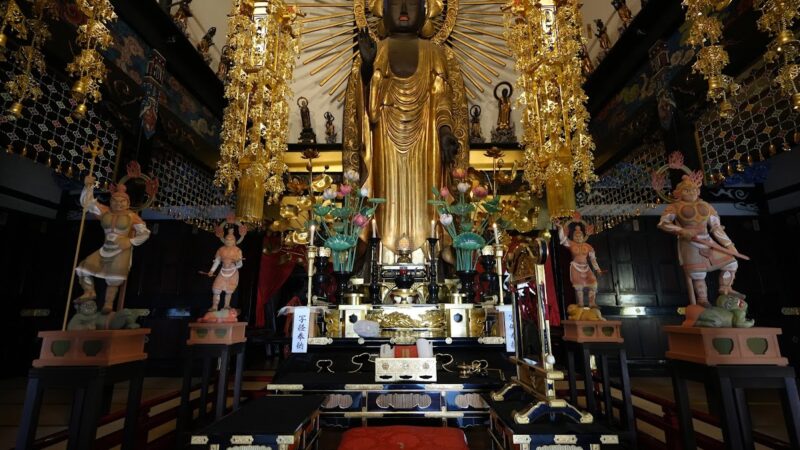
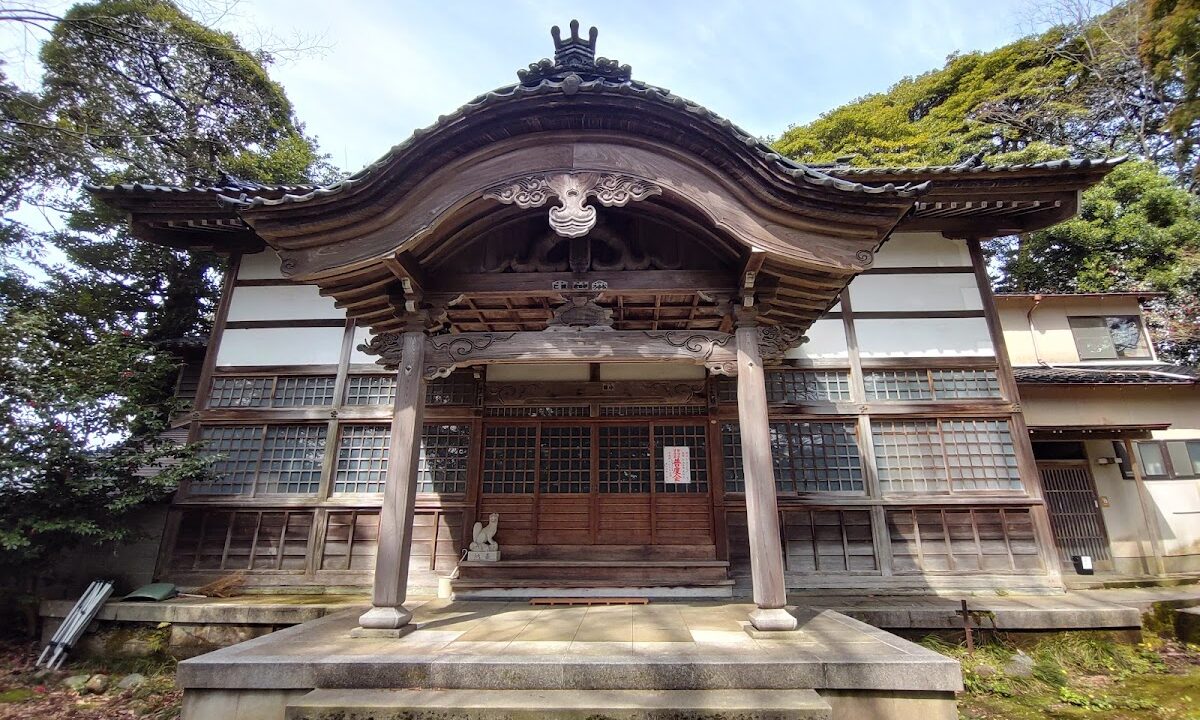
Ryukoku-ji Temple’s main hall exhibits a tranquil atmosphere typical of a Soto Zen temple. While the hall housing the principal image of Shakyamuni Buddha is usually only open to visitors by reservation, the temple grounds are freely accessible.
Located on a hill in Higashiyama, some spots within the grounds offer panoramic views of Kanazawa, allowing visitors to enjoy the scenery throughout the seasons. The scenery is particularly beautiful during the cherry blossom season in spring and the autumn foliage season.
Goshuin (Temple Seal)
Ryukoku-ji Temple offers Goshuin (temple seals). It is recommended to call ahead to confirm availability before visiting. These Goshuin, with their special significance as a sacred site of Kaga Yuzen, are also valuable to Goshuin collectors.
Annual Events
Yuzen Memorial Service (May 17th)
The most important annual event at Ryukoku-ji Temple is the Yuzen Memorial Service, held every year on May 17th. This memorial service brings together artists, craftsmen, dyers, and people from the kimono industry across Japan to commemorate the achievements of Miyazaki Yuzensai and pray for the development of Kaga Yuzen.
After the service, tea ceremonies and exhibitions are sometimes held, making it the most important gathering of the year for the Kaga Yuzen industry. General visitors may be able to attend, so those interested are advised to inquire with the temple in advance.
Access Information
Access by Public Transportation
By Bus
- Take the Hokutetsu Bus from the JR Kanazawa Station East Exit Bus Terminal
- Get off at the “Hashibacho” bus stop and walk for approximately 5 minutes
- Or get off at the “Higashiyama” bus stop and walk for approximately 7 minutes
Sightseeing buses circulating within Kanazawa city are also available. It’s convenient to stop by when visiting Higashi Chaya District.
Access on Foot
- Approximately 10 minutes on foot from Higashi Chaya District
- Approximately 30 minutes on foot from Kanazawa Station (a pleasant stroll is recommended)
Access by Car
- Approximately 15 minutes from Kanazawa East IC on the Hokuriku Expressway
- Approximately 20 minutes from Kanazawa West IC on the Hokuriku Expressway
- Parking: Several spaces available on the temple grounds (free)
The Higashiyama area has many narrow roads, so caution is required when driving. During peak tourist season, surrounding roads can be congested, so it’s recommended to allow ample time for your visit.
Nearby Tourist Attractions
Many of Kanazawa’s representative tourist attractions are scattered around Ryukoku-ji Temple.
Higashi Chaya District
Located approximately 10 minutes on foot from Ryukoku-ji Temple, Higashi Chaya District is a representative tourist attraction of Kanazawa. The charming streetscape, lined with Edo-period teahouses, has been designated a National Important Preservation District for Groups of Traditional Buildings. Cafes, craft shops, and gold leaf product stores line the streets, making it a pleasant place to stroll.
Kazue-machi Teahouse District
One of Kanazawa’s three main teahouse districts, alongside Higashi-chaya District. Its quiet atmosphere along the Asano River is its charm, offering a more tranquil experience.
Nearby Temples
Many temples are scattered throughout the Higashiyama area, making it a great place for temple hopping.
Sanboji Temple: A Nichiren Buddhist temple within walking distance of Ryukokuji Temple.
Shinseiji Temple: A popular tourist spot known as the “Ninja Temple.”
Kyumanboji Temple: A temple known for its Tengu legend.
Koshoji Temple: A Soto Zen Buddhist temple with a tranquil atmosphere.
Seiganji Temple: A Jodo Buddhist temple associated with the Kaga Domain.
Gesshinji Temple: A Soto Zen Buddhist temple located on a hill in Higashiyama.
Honkoji Temple: A historic Nichiren Buddhist temple.
A “Higashiyama Temple Walk” visiting these temples is a recommended course for gaining a deep understanding of Kanazawa’s history and culture.
Kanazawa Castle Park and Kenrokuen Garden
A representative tourist spot in Kanazawa, located about 10 minutes by car or 15 minutes by bus from Ryukokuji Temple. Experience the history of the Kaga Domain.
Notes and Manners for Visiting the Temple
Manners for Visiting the Temple
- You are free to stroll around the temple grounds, but please maintain silence.
- If you wish to visit the main hall, you must make a reservation by phone in advance.
- Photography is generally permitted, but consideration is required inside the main hall and in the cemetery.
- When visiting the grave of Miyazaki Yuzensai, please pay your respects quietly and respectfully.
Dress Code
There are no particularly strict dress code regulations, but please dress appropriately and modestly for visiting a temple.
Participation in the Yuzen Memorial Service
The Yuzen Memorial Service is mainly for those involved in the Kaga Yuzen industry, but general visitors may be able to attend. If you wish to participate, it is recommended that you inquire with the temple in advance.
The Charm and Value of Visiting Ryukoku-ji Temple
Ryukoku-ji Temple is not as well-known as some of Kanazawa’s famous tourist spots, but this is precisely why it has the charm of a quiet and peaceful atmosphere for worship.
This temple holds special significance for history buffs and those interested in traditional crafts, as it is a place where two different historical elements intersect: the history of the Sengoku period warlord Maeda Toshiie and the Kaga Domain, and the history of the Edo period craftsman Miyazaki Yuzensai and the tradition of Kaga Yuzen dyeing.
By extending your visit slightly to Ryūkoku-ji Temple when exploring Higashi Chaya District, you can gain a deeper understanding of Kanazawa’s history and culture.
Recommended Ryūkoku-ji Temple Visit Course
Example Half-Day Course:
- Take a bus from Kanazawa Station to Higashiyama (approx. 15 minutes)
- Stroll through Higashi Chaya District (1 hour)
- Visit Ryūkoku-ji Temple (30 minutes to 1 hour)
- Visit surrounding temples (1 hour)
- Stroll through Kazue-machi Chaya District (30 minutes)
- Walk along the Asano River towards Kanazawa Station
This course allows you to fully enjoy the historical atmosphere of Kanazawa.
Summary
Located in Higashiyama, Kanazawa City, Ishikawa Prefecture, Ryukoku-ji Temple is a Soto Zen Buddhist temple dedicated to Takatoku Inari Daimyojin, associated with Maeda Toshiie, and also houses the tomb of Miyazaki Yuzensai, the founder of Kaga Yuzen dyeing.
Founded in 1671, it boasts a history of over 350 years and plays an important role as a sacred site for the Kaga Yuzen industry, where the “Yuzen Memorial Service” is held annually on May 17th, and as a place of worship for the local people.
Conveniently located near the Higashi Chaya District, it offers a rare opportunity to visit a temple in a quiet and peaceful atmosphere, while still being easily accessible during Kanazawa sightseeing. Those interested in experiencing Kanazawa’s history and traditional crafts should definitely visit.
Address: 2-25-72 Higashiyama, Kanazawa City, Ishikawa Prefecture 920-0831
Phone Number: 076-252-3933
Admission: Grounds are free (reservations required for entry into buildings)
Access: 5-7 minute walk from Hokutetsu Bus “Hashibacho” or “Higashiyama” bus stop
Enjoy a peaceful moment at Ryukoku-ji Temple, where you can feel the profound history and culture of Kanazawa.