Complete Guide to Kobore Inari Shrine (Osaka Prefecture) | History and Goshuin Information of the Seven Shrines of Shitennoji
Kobore Inari Shrine is a historic shrine located in Daido, Tennoji-ku, Osaka City. Counted as one of the seven shrines of Shitennoji, this shrine boasts a long history dating back to ancient times and is affectionately known locally as “Kobore no Miya.” This article provides detailed information you should know before visiting, including the history of Kobore Inari Shrine, its enshrined deities, blessings, goshuin (shrine seals), and access methods.
What is Kobore Inari Shrine?
Kobore Inari Shrine is located at 3-7-3 Daido, Tennoji-ku, Osaka City, and its former shrine rank was Village Shrine. The unique pronunciation “Kobore Inari” is a familiar name among locals. Situated east of Inari Park, it maintains a tranquil atmosphere despite being in the heart of the city.
Kawabori Inari Shrine holds a deep connection with Shitennoji Temple and occupies an important position as one of the seven shrines protecting Shitennoji Temple. The Shitennoji Seven Shrines are a collective term for seven shrines that protect Shitennoji Temple, and Kawabori Inari Shrine is considered one of the oldest among them.
Origin of the Shrine Name
The place name “Kawabori” is thought to originate from the fact that there were once rivers and canals in this area. “Inari” refers to the enshrined deity, Inari no Kami (Ugatama no Okami), representing the worship of the god who presides over abundant harvests.
History
Founding and Ancient Origins
The founding of Kawabori Inari Shrine is extremely ancient, dating back to the reign of Emperor Keiko (around 99 AD). At that time, this area was called “Hirugaoka,” and it is believed that the shrine began with the enshrinement of Inari no Kami there. Emperor Keiko was the 12th Emperor of Japan and is known as the father of Yamato Takeru no Mikoto.
During this period, rice cultivation was the most important industry supporting the foundation of Japanese society, and the faith in the god of rice, prayed to for a bountiful harvest, was directly linked to people’s lives. The place name “Hirugaoka” suggests a sunny, hilly area, making it suitable for agriculture.
Prince Shotoku and the Construction of Shitennoji Temple
The most important turning point in the history of Kawabori Inari Shrine was the construction of Shitennoji Temple by Prince Shotoku during the reign of Empress Suiko (593 AD). When Prince Shotoku built Shitennoji Temple, the shrine buildings of Kawabori Inari Shrine were constructed.
At this time, Emperor Sushun was also enshrined, and Kawabori Inari Shrine became one of the seven shrines protecting Shitennoji Temple. Being positioned as one of the seven shrines protecting Shitennoji Temple greatly increased the shrine’s status and importance.
Enshrinement of Emperor Sushun
Emperor Sushun (reigned 587-592) was the 32nd Emperor of Japan and met a tragic end, allegedly assassinated by Soga no Umako. It is believed that Prince Shotoku’s enshrinement of Emperor Sushun at Kawabori Inari Shrine was intended to appease and pacify the Emperor’s spirit.
This enshrinement transformed Kawabori Inari Shrine from a simple agricultural deity to a shrine with deep ties to the Imperial family. One theory suggests it also served as a shrine to appease vengeful spirits.
From the Medieval to the Early Modern Period
From the medieval period onward, Kawabori Inari Shrine was maintained under the patronage of Shitennoji Temple. Although it was caught in the ravages of war during the Sengoku period, it survived thanks to the faith of the local people.
During the Edo period, as Osaka developed, it also attracted the faith of merchants seeking business prosperity. The belief in Ukanomitama-no-Okami deepened as it became associated with Inari worship.
Modern Era
Although the relationship with Shitennoji Temple was institutionally severed by the Meiji-era separation of Shinto and Buddhism, the religious connection continues to this day. Under the old shrine ranking system, it was classified as a village shrine.
During the Osaka air raids of World War II, the surrounding area suffered significant damage, but the shrine was protected by the local people and continues to be revered as the local guardian deity even after the war.
Deities and Benefits
Main Deity
Three deities are enshrined at Kawabori Inari Shrine.
Ukanomitama-no-Okami
Ukanomitama-no-Okami, the main deity, is widely worshipped as the god of grain and food. This deity appears in the Kojiki and Nihon Shoki, and is considered the child of Susanoo-no-Mikoto and Kami-Oichihime-no-Mikoto. Worshipped nationwide as Inari-sama, this deity is believed to bring blessings of abundant harvests and business prosperity.
While sometimes depicted as Ugajin, a human-faced serpent deity, this is a result of syncretism with the Buddhist belief in Benzaiten; originally, the deity possessed the characteristics of a grain spirit.
Emperor Sushun
He is enshrined as the 32nd Emperor. Having been enshrined by Prince Shotoku, he is believed to bring blessings of protection for the Imperial family and national peace. Furthermore, as an emperor who met a tragic end, there is also a belief that he can appease vengeful spirits and ward off calamities.
Susanoo-no-Mikoto
A heroic deity in Japanese mythology, known for blessings of protection against misfortune, disaster, and epidemics. He is also the father of Uga-no-Mikoto-no-Okami and holds an important position at this shrine.
Blessings
The main blessings believed to be obtainable at Kawabori Inari Shrine are as follows: – Abundant Harvest: This is the original divine virtue of Uga-no-Mikoto, allowing for prayers for agricultural prosperity.
- Business Prosperity: Many worshippers visit to pray for business success, reflecting Inari faith.
- Family Safety: This shrine protects the health and peaceful lives of families.
- Protection from Misfortune and Disaster: This shrine offers protection from various calamities through the divine virtue of Susanoo-no-Mikoto.
- Good Fortune and Prosperity: This shrine is believed to bring overall good fortune.
Highlights of the Shrine Grounds
Shrine Buildings
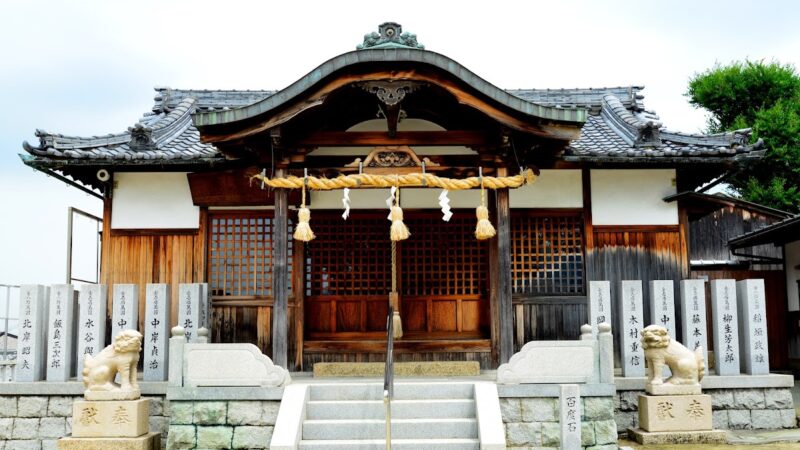
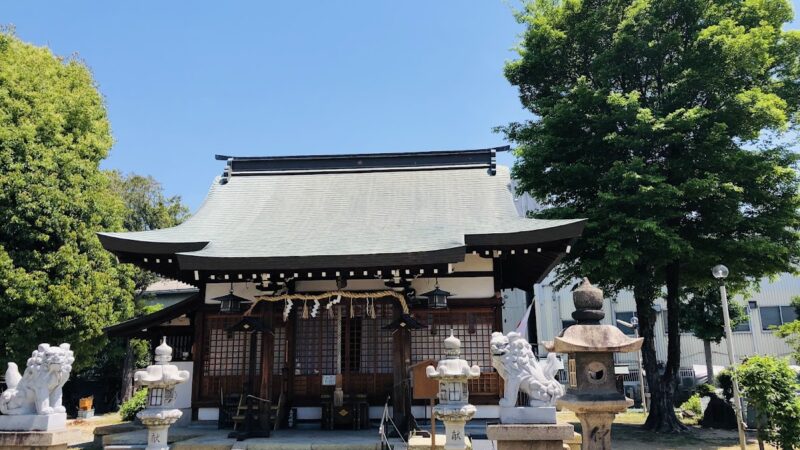
The current shrine buildings maintain traditional shrine architectural styles while being renovated to suit urban settings. The main hall and worship hall form a compact yet dignified structure.
Relationship with Inao Park
Inao Park is adjacent to the west side of the shrine, serving as a place of relaxation for local residents. The park and shrine work together to form an oasis-like space in the city.
Atmosphere of the Shrine Grounds
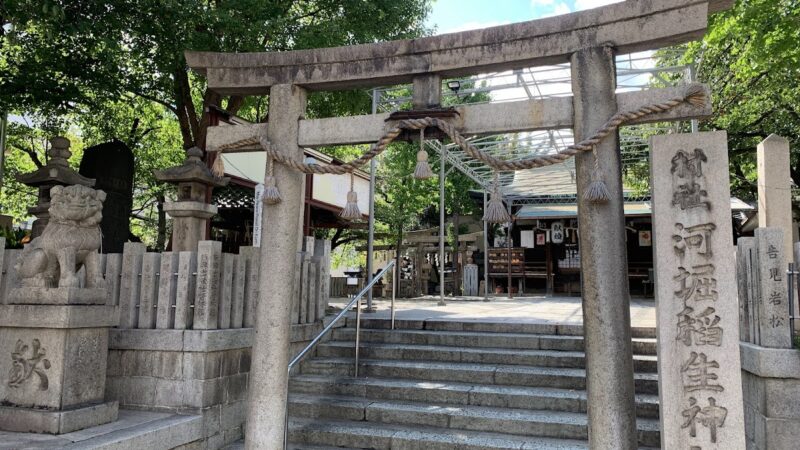
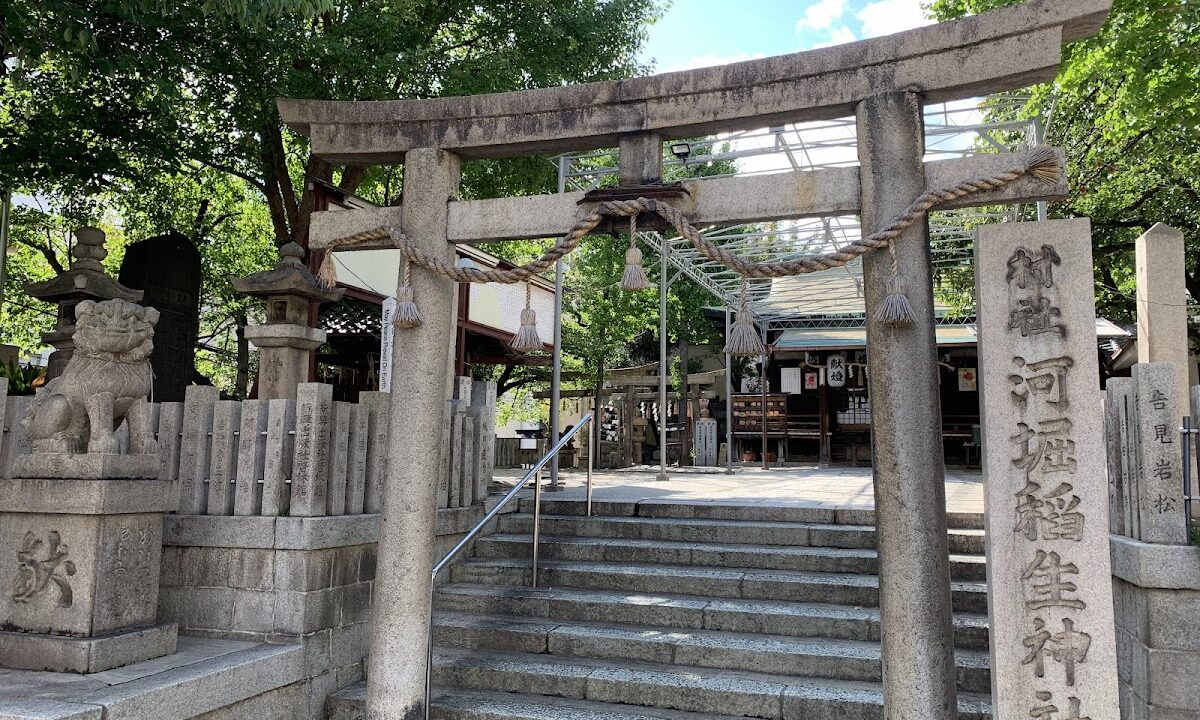
Located in a residential area of Osaka City, stepping onto the shrine grounds reveals a quiet and peaceful space. Surrounded by trees, the grounds are a sacred place that allows you to forget the hustle and bustle of the city.
Goshuin (Shrine Seal) and Goshuincho (Shrine Seal Book)
About Goshuin
Kawabori Inari Shrine offers goshuin (shrine seals). As one of the seven shrines of Shitennoji Temple, it attracts many visitors on a pilgrimage to the seven shrines.
The goshuin may include the name of “Kawabori Inari Shrine” and an indication that it is one of the seven shrines of Shitennoji Temple. The goshuin, with its powerful calligraphy and red seal, is cherished as a memento of the visit.
Goshuin Reception Hours
Goshuin reception hours may vary depending on the time the shrine priests are present. If you wish to receive a goshuin, it is recommended to confirm by phone in advance.
Contact: 06-6771-6513
Pilgrimage to the Seven Shrines of Shitennoji Temple
Kawabori Inari Shrine is one of the seven shrines of Shitennoji Temple. Visiting all six shrines together offers a deeper religious experience. The “Seven Shrine Pilgrimage,” visiting all seven shrines, is a valuable experience for understanding Osaka’s history and faith.
The seven shrines of Shitennoji Temple are as follows:
- First Shrine: Horikoshi Shrine
- Second Shrine: Kawabori Inari Shrine (Our Shrine)
- Third Shrine: Ooe Shrine
- Fourth Shrine: Kubo Shrine
- Fifth Shrine: Futara Shrine
- Sixth Shrine: Okuninushi Shrine
- Seventh Shrine: Miyake Shrine
Annual Events and Festivals
Summer Grand Festival
The most important festival of Kawabori Inari Shrine is the Summer Grand Festival. Local people gather for a portable shrine procession and offering ceremonies. Local organizations such as the Kawabori Youth Association and the Koyu-kai support the festival and carry on its traditions.
The summer festival includes taiko drum performances and other events, making it an important opportunity to strengthen community bonds.
New Year’s Visit
Many worshippers visit the shrine in the new year to pray for safety and prosperity throughout the year. Many local shop owners and business representatives also visit to pray for business success.
Other Annual Events
- Setsubun Festival: Events such as bean-throwing are held on Setsubun in February.
- Annual Festival: The annual festival is held in autumn to express gratitude to the gods.
Access Information
Access by Train
JR Osaka Loop Line “Teradacho Station”
The nearest station is Teradacho Station on the JR Osaka Loop Line. It is approximately a 7-minute walk from the station.
Exiting the north exit of Teradacho Station, head west along National Route 25 (Chuo-dori) and enter the residential area of Daido 3-chome, where you will see the shrine.
Osaka Metro Tanimachi Line “Shitennoji-mae Yuhigaoka Station”
The shrine is also accessible on foot in about 15 minutes from Shitennoji-mae Yuhigaoka Station on the Osaka Metro Tanimachi Line. Visiting via Shitennoji Temple is also a charming route.
Access by Car
The shrine does not have its own parking lot, so you will need to use a nearby coin-operated parking lot. Since the surrounding area is residential, we recommend using public transportation.
Address
〒543-0052 3-7-3 Daido, Tennoji-ku, Osaka City, Osaka Prefecture
Nearby Attractions
Shitennoji Temple
Shitennoji Temple, within walking distance, is the first official Buddhist temple in Japan, established by Prince Shotoku. It has a deep connection with Kawabori Inari Shrine, and visiting both together deepens your historical understanding.
Isshinji Temple
Isshinji Temple, known as a columbarium, is also nearby. This temple, famous for its bone Buddha statues, is an important spot for understanding Osaka’s history and faith.
Tennoji Park and Abeno Harukas
With a short trip, you can access Osaka’s representative tourist spots, such as Tennoji Park and Abeno Harukas.
Manners and Precautions for Visiting a Temple
Basic Worship Etiquette
- Bow before passing through the torii gate.
- Cleanse your hands and mouth at the water basin.
- Worship in front of the main hall using the “two bows, two claps, one bow” method.
- Maintain silence on the temple grounds and be considerate of other worshippers.
Photography
Photography is generally permitted on the temple grounds, but consideration for other worshippers is necessary. There are areas where photography is prohibited, such as inside the main hall, so please follow the signs.
Visiting Hours
While entry to the shrine grounds is generally possible during the day, the shrine office has limited opening hours. If you wish to obtain a Goshuin (shrine stamp) or other items, it is recommended to check in advance.
Features and Charms of Kawabori Inari Shrine
A Tranquil Space in the City
Despite being located in a residential area of Osaka City, the shrine grounds maintain a quiet and sacred atmosphere. It is cherished by local residents as a place to escape the hustle and bustle of everyday life and find peace of mind.
Historical Connection to Shitennoji Temple
As one of the seven shrines of Shitennoji Temple, a historical connection dating back to the time of Prince Shotoku is a major characteristic of this shrine. Visiting in conjunction with a visit to Shitennoji Temple allows you to experience the form of faith from the Asuka period.
Community-Rooted Faith
This shrine is supported by local people, such as the Kawabori Youth Association and the Koyu-kai (drumming group). Events such as the Summer Festival demonstrate the strong community bonds.
Multifaceted Blessings
It is believed that a variety of blessings can be obtained from the three deities, ranging from abundant harvests and business prosperity to protection from evil and national peace. It possesses a profound capacity to welcome worshippers with diverse wishes.
Kawabori Inari Shrine and the History of Osaka
Kawabori Inari Shrine is an indispensable part of Osaka’s history. It has witnessed the transformations of this area, from ancient Hirugaoka to the present-day Daido in Tennoji Ward.
During the reign of Empress Suiko, when Prince Shotoku built Shitennoji Temple, this area was one of the centers of Japanese Buddhist culture. Throughout the era of Shinto-Buddhist syncretism, Kawabori Inari Shrine, along with Shitennoji Temple, served as a spiritual pillar of Osaka.
During the Edo period, it witnessed the commercial development of Osaka, which flourished as the “kitchen of the nation,” and has always been with the community through modernization after the Meiji Restoration, post-war reconstruction, and the development of modern-day Osaka, a major metropolis.
Summary
Kawabori Inari Shrine is a historical shrine with origins dating back to the reign of Emperor Keiko, and developed alongside the construction of Shitennoji Temple by Prince Shotoku. As one of the seven shrines of Shitennoji, it holds an important position in the history of faith in Osaka.
It enshrines three deities: Uga-no-Mikoto, Emperor Sushun, and Susanoo-no-Mikoto, and is believed to offer various blessings, including abundant harvests, business prosperity, and protection from evil. Despite being in the heart of the city, it maintains a tranquil atmosphere and continues to be cherished by the local community.
Its convenient location, approximately a 7-minute walk from JR Teradacho Station, is also a major draw. Visiting it in conjunction with a pilgrimage to Shitennoji Temple allows for a deeper historical experience. Goshuin (shrine stamps) are also available, and many people visit as part of a pilgrimage to the seven shrines of Shitennoji.
When visiting Tennoji Ward in Osaka City, be sure to visit Kawabori Inari Shrine. A quiet visit to this ancient place of worship will surely be a special experience.