Karasunomiya Shrine (Osaka Prefecture) Complete Guide | An Ancient Shrine in Konohana Ward with the Legend of Toyotomi Hideyoshi and the Three-Legged Crow
Karasunomiya Shrine, located in Denpo, Konohana Ward, Osaka City, is a shrine with a history of over 800 years, dating back to the Kamakura period. It is known as a historically significant shrine, having received its name “Karasunomiya” (Crow Shrine) from a legend that Toyotomi Hideyoshi visited the shrine before his military campaigns and a three-legged crow appeared. This article provides a detailed introduction to Karasunomiya Shrine, including its history, enshrined deities, highlights of the grounds, goshuin (shrine seal), festivals, and access information.
Overview and Basic Information of Karasunomiya Shrine
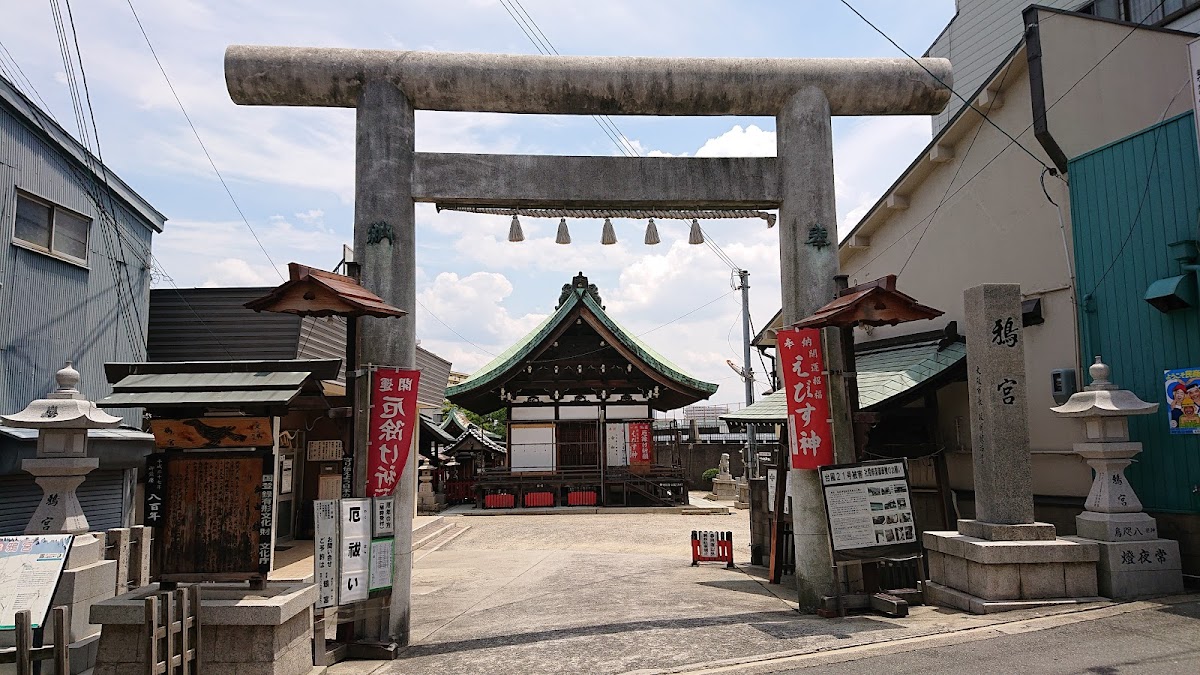
Karasunomiya Shrine is located at 2-10-18 Denpo, Konohana Ward, Osaka City, Osaka Prefecture, on the south bank (left bank) of the former Denpo River. The Denpo settlement was once divided into a north and south section by the Denpo River, and Karasunomiya Shrine was revered by the local people as the guardian shrine of the south section.
Basic Information
- Location: 2-10-18 Denpo, Konohana-ku, Osaka City, Osaka Prefecture
- Phone Number: 06-6461-3592
- Former Shrine Rank: Village Shrine
- Founded: Kenpo 3 (1215)
- Alternate Names: Honmiya Karasumiya, Denmosu Shrine
History and Origins of Karasumiya
Origins of Founding
The history of Karasumiya dates back to the Kamakura period. It is said to have begun in April of Kenpo 3 (1215), when people engaged in maritime transport built a shrine in the center of Denpo village as “Morisu Shrine” to pray for the prosperity of the village and port.
Denpo has long flourished as a port town located at the mouth of the Yodo River, and many people involved in maritime transport and fishing lived there. Therefore, the shrine has played an important role in the region as a center of faith for safe voyages and protection from water-related disasters. ### The Legend of Toyotomi Hideyoshi and the Three-Legged Crow
The name of Karasu-gu Shrine originates from a famous legend concerning Toyotomi Hideyoshi. In February 1592, during the Japanese invasion of Korea (the Bunroku War), Toyotomi Hideyoshi visited the shrine and prayed for a safe journey. It is said that a three-legged crow appeared from the forest behind the shrine and displayed numerous auspicious signs.
Hideyoshi was able to proceed safely by sea and returned home without incident. Deeply moved by this divine intervention, Hideyoshi is said to have named the shrine “Karasu-gu” (Crow Shrine). The three-legged crow has been considered a sacred being signifying good fortune since ancient times, and in Japanese mythology, it is known as Yatagarasu, the divine messenger that guided Emperor Jimmu.
Due to this legend, Karasu-gu Shrine became widely known as a shrine associated with Toyotomi Hideyoshi and as a sacred shrine protected by the three-legged crow.
History Since the Edo Period
Throughout the Edo period, Karasumiya Shrine continued to attract local devotion as the guardian shrine of the southern district of Denpo. In Denpo, a thriving port town, it received fervent devotion from sailors and fishermen as a deity of safe voyages and protection from maritime disasters.
With the reorganization of the shrine system during the Meiji era, it was designated a village shrine, establishing its position as a central shrine in the region. Even today, it remains a beloved historical shrine in Konohana Ward.
Deities and Benefits
Main Deities
The following deities are enshrined at Karasumiya Shrine:
Amaterasu Omikami
The supreme deity in Japanese mythology and the ancestral deity of the Imperial Family. As the deification of the sun, she is considered the source of all life.
Sumiyoshi-no-Okami
This refers to the four deities (Sokotsutsuo-no-Mikoto, Nakatsutsuo-no-Mikoto, Omotsutsuo-no-Mikoto, and Empress Jingu) enshrined at Sumiyoshi Taisha Shrine. They have been worshipped since ancient times as guardians of safe voyages and maritime traffic. Because Denpo was a port town, these deities are worshipped as particularly important.
Ebisu-no-Okami
Also known as Hiruko-no-Okami, this deity is known as the guardian of business prosperity and fishing. They are also popular as one of the Seven Lucky Gods.
Ichikishima-hime-no-Okami
A water deity, also syncretized with Uga-Benzaiten. Worshipped as a god who brings the blessings of water, and also as a god of performing arts and wealth.
Benefits
The main benefits that can be received at Karasu-no-Miya are as follows:
- Safe Navigation and Protection from Water Disasters: Since Sumiyoshi-no-Okami is enshrined here, protection for maritime safety is ensured.
- Traffic Safety: Safe travels are ensured through the divine guidance of the Yatagarasu (three-legged crow).
- Business Prosperity: Business prosperity is ensured through Ebisu-no-Okami.
- Prayers for Safe Childbirth and Child-Rearing: The maternal divine virtue of Ichikishima-hime-no-Okami, the water deity.
- Fulfillment of Wishes: Based on the legend that Toyotomi Hideyoshi’s wish was granted here.
- Good Fortune and Prosperity: Good fortune is bestowed through the auspicious sign of the three-legged crow.
Highlights of the Shrine Grounds
Shrine Buildings
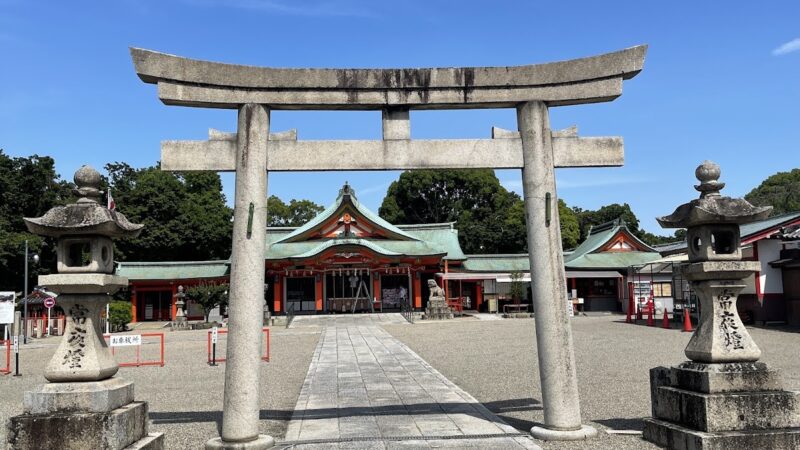
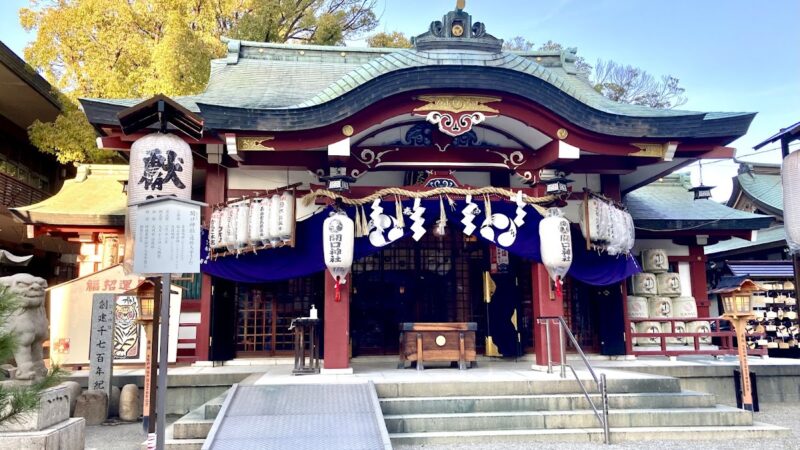
The shrine buildings of Karasu-gu Shrine are constructed in the traditional style of Shinto shrine architecture. Both the main hall and the worship hall are made of wood, creating a calm atmosphere befitting a local guardian shrine. A sacred forest remains surrounding the shrine buildings, maintaining a tranquil space despite its urban location.
The “Forest Behind the Shrine,” where a three-legged crow is said to have appeared when Toyotomi Hideyoshi visited in 1592 (Bunroku 1), is still cherished as a sacred place within the shrine grounds.
Symbol of the Yatagarasu
Symbols and decorations related to the three-legged crow (Yatagarasu) can be seen throughout the shrine grounds. The Yatagarasu is also known as the symbol of the Japan Football Association and is worshipped as a god of guidance and victory.
Subsidiary Shrines
Several subsidiary shrines are enshrined around the main hall, showcasing a layered display of worship to various deities. Each shrine reflects the local history and beliefs, allowing visitors to feel the cultural richness of the area.
Atmosphere of the Shrine Grounds
Despite being located in a residential area, the grounds of Karasu-gu Shrine are a quiet space surrounded by trees. It offers an environment where one can escape the hustle and bustle of the city and worship in peace. The sight of local residents regularly visiting the shrine for worship gives a strong sense of its deep roots in the community.
Main Festivals and Annual Events
Annual Grand Festival (Summer Festival)
The annual grand festival is held every summer at Karasumiya Shrine. Known locally as the “Karasumiya Summer Festival,” the shrine grounds and surrounding area are bustling with many worshippers and local residents. The festival includes a procession of portable shrines and dedication ceremonies, making it a quintessential summer event in Denpo.
New Year’s Visit
Many worshippers visit the shrine for their first shrine visit of the year. The grounds are lively with people, mainly locals, praying for safety and prosperity in the new year.
Other Festivals
Various Shinto rituals, such as spring and autumn festivals and monthly festivals, are held throughout the year. These are valuable places that preserve local traditions.
Goshuin (Shrine Seal) Information
Goshuin (shrine seals) are available at Karasumiya Shrine. Many visitors receive a Goshuin (temple/shrine stamp) as a memento of their visit or as part of a Goshuin pilgrimage.
Features of the Goshuin
The Goshuin of Karasumiya Shrine features the shrine’s name, “Karasumiya,” written in ink, and stamped with the shrine’s seal. Befitting a shrine with a legend of the three-legged crow, the design sometimes incorporates motifs related to the Yatagarasu (three-legged crow).
Issuance Hours
Goshuin are available during the shrine office’s opening hours. However, since the shrine priest may not always be present, it is recommended to call ahead to confirm availability if you wish to receive one.
Contact Information: 06-6461-3592
Access
Public transportation is the most convenient way to access Karasumiya Shrine.
Access by Train
Using the Hanshin Namba Line
- Get off at “Denpo Station,” approximately 5 minutes on foot
- Get off at “Chidoribashi Station,” approximately 6-7 minutes on foot northwest
Denpo Station is the nearest station, and it’s about a 5-minute walk through a residential area from the station. It’s also within walking distance from Chidoribashi Station, about 400m northwest.
Access by Car
If using the Hanshin Expressway, you can access it via local roads from the nearest interchange. However, there may not be a dedicated parking lot on the temple grounds, so we recommend using nearby coin parking or public transportation.
Landmarks in the Area
The Denpo area is known for its many temples, and several temples are scattered around Karasumiya. Visiting while strolling through the historical streets of Denpo is one way to enjoy your trip.
Nearby Attractions
Temples of Denpo
The Denpo area has a high concentration of temples and is also known as “Temple Town.” When visiting Karasumiya Shrine, exploring the surrounding temples will allow you to gain a deeper understanding of the history and culture of the Dharma.
Yodogawa Estuary Area
Karasumiya Shrine is located near the mouth of the Yodogawa River, and you can still feel the atmosphere of the former port town. Although industrial areas now extend throughout the area, it remains a place where you can experience the waterfront scenery and historical geography.
Universal Studios Japan (USJ)
Universal Studios Japan is located in Konohana Ward and is relatively close to Karasumiya Shrine. A sightseeing route that includes a visit to the historic Karasumiya Shrine during a USJ visit is also possible.
Points to Note When Visiting Karasumiya Shrine
Etiquette for Visiting Shrines
Please observe basic shrine etiquette when visiting a shrine.
- Bow before passing through the torii gate.
- Cleanse your hands and mouth at the purification fountain.
- Bow twice, clap twice, and bow once in front of the main hall.
- Remain quiet within the shrine grounds.
Recommended Time to Visit
While Karasumiya Shrine can be visited year-round, the following times are particularly recommended:
- New Year’s Visit (January): Many visitors come to pray for the new year.
- Summer Festival: A valuable opportunity to experience a local festival.
- Autumn: A season with pleasant weather for a peaceful visit.
Regarding Photography
Photography is generally permitted within the shrine grounds, but please be considerate of other visitors and remember that this is a sacred place, taking photos with moderation.
Karasumiya Shrine and the Yatagarasu Belief
What is Yatagarasu?
Yatagarasu is a sacred three-legged crow that appears in Japanese mythology. This is a divine messenger said to have guided Emperor Jimmu through the treacherous mountain paths from Kumano to Yamato during his eastern expedition. “Yata” means “large,” and it is also considered an embodiment of the sun.
Symbolism of the Three-Legged Crow
While there are various interpretations of the three legs, they are said to represent the three elements of heaven, earth, and humanity, or symbolize the past, present, and future. Legends of the three-legged crow also exist in China and the Korean Peninsula, indicating a widespread belief in East Asia.
The Yatagarasu in Modern Times
In modern times, the Yatagarasu is used as the symbol of the Japan Football Association and is cherished as a symbol of victory. Therefore, worshippers praying for victory in sports sometimes visit Karasu-gu Shrine.
The History of Denpo and Karasu-gu Shrine
Denpo as a Port Town
Denpo flourished as an important port town at the mouth of the Yodo River from ancient times to the Middle Ages. As a vital hub for water transport connecting Kyoto and the Seto Inland Sea, it was a bustling center for the collection of goods and a place where many ships came and went.
The Denpo River and Regional Development
The Denpo River once flowed through the area, dividing the settlement into North and South districts. Karasumiya Shrine, as the guardian shrine of the South district, played a central role in the region’s faith, alongside the guardian shrine of the North district. Although the Denpo River has now been reclaimed, its traces remain in the area’s topography and town layout.
The Faith of Shipping Traders
Since its founding in 1215 (Kenpo 3), Karasumiya Shrine has attracted the faith of those engaged in shipping, truly embodying the history of the port town of Denpo. Prayers for safe voyages and the prosperity of the port have been offered here for over 800 years.
Summary
Karasumiya Shrine (Konohana-ku, Osaka City, Osaka Prefecture) is a historic shrine founded in 1215 during the Kamakura period. It was given the name “Karasumiya” (Crow Shrine) based on a legend that a three-legged crow appeared when Toyotomi Hideyoshi visited the shrine. It is known as a highly efficacious shrine protected by the Yatagarasu (three-legged crow).
It enshrines Amaterasu Omikami, Sumiyoshi Omikami, Ebisu Omikami, and Ichikishima Hime Omikami, and is believed to offer blessings for safe voyages, protection from water-related disasters, business prosperity, and safe childbirth. It is easily accessible, just a 5-minute walk from Denpo Station on the Hanshin Namba Line, and offers Goshuin (shrine stamps).
Karasumiya Shrine, which conveys the history of Denpo, a thriving port town, is a popular spot not only among locals but also among history buffs and visitors collecting Goshuin. When visiting Konohana-ku, be sure to stop by. You can find peace of mind in the tranquil temple grounds while reflecting on the legend of Toyotomi Hideyoshi and the three-legged crow.