Complete Guide to Susanoo-no-Mikoto Shrine (Joto Ward, Osaka Prefecture) | History, Benefits, and Access Information for Sekime Shrine
The Susanoo-no-Mikoto Shrine, located in Joto Ward, Osaka City, is a historical shrine affectionately known locally as “Sekime Shrine.” It has a deep connection to the construction of Osaka Castle by Toyotomi Hideyoshi and has a history of approximately 440 years as a guardian deity protecting against evil influences. This article comprehensively guides you through the detailed history of this shrine, its enshrined deities, highlights within the grounds, and access information—all the information you need to know before visiting.
What is Susanoo-no-Mikoto Shrine (Sekime Shrine)?
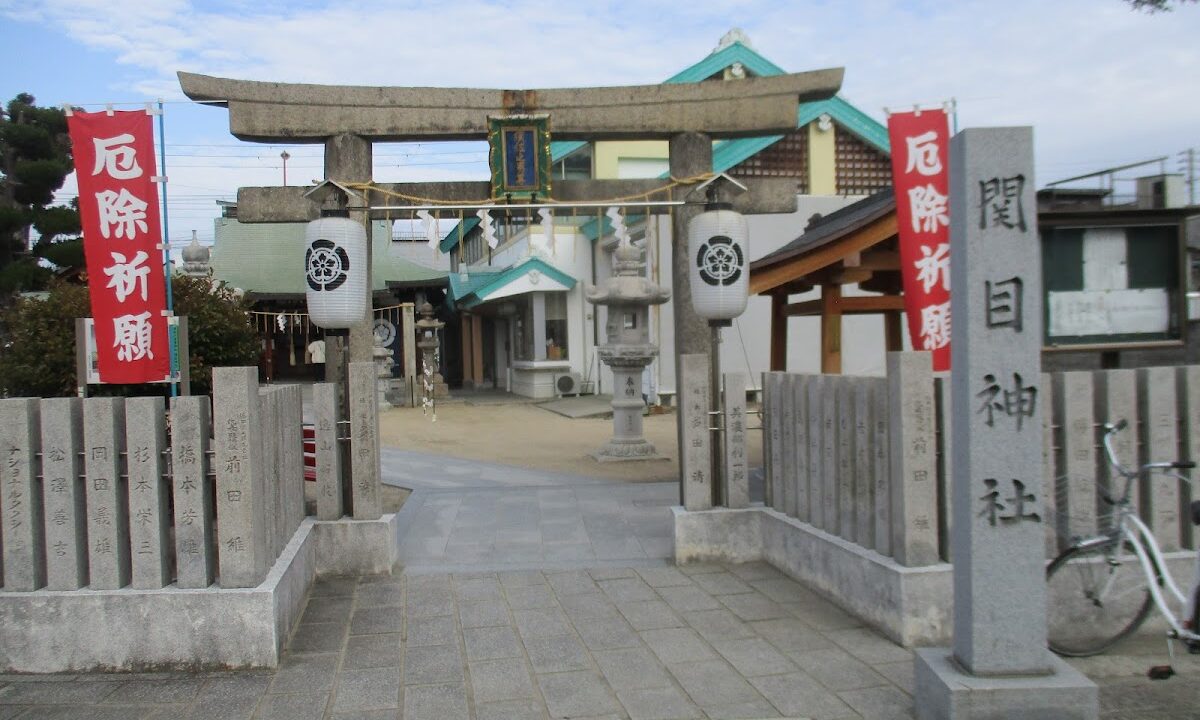
The Susanoo-no-Mikoto Shrine is located in Nariku, Joto Ward, Osaka City. Its official name is “Susanoo-no-Mikoto Shrine,” but it is widely known locally as “Sekime Shrine.” This shrine, with Susanoo-no-Mikoto as its principal deity, has played an important role in protecting the northeast (demon’s gate) of Osaka Castle.
The current shrine stands quietly in a residential area, carefully preserved as a place of faith for local residents and as a valuable cultural asset that tells the story of history.
History
Founding History and Relationship with Toyotomi Hideyoshi
The exact founding date of Susanoo-no-Mikoto Shrine is unknown, but its origins date back to 1580 (Tensho 8). When Toyotomi Hideyoshi built Osaka Castle, this area was located in the northeast (demon’s gate) of the castle, and it is believed that he enshrined a deity to protect the castle from evil influences.
Initially, Hideyoshi invited Bishamonten and Gozu Tenno and erected a small shrine. Gozu Tenno was later identified with Susanoo-no-Mikoto due to the separation of Shinto and Buddhism, and is the deity enshrined there today.
Defensive Strategies and Road Design
When the shrine was founded in 1580 (Tensho 8), Toyotomi Hideyoshi, as part of his defenses, intentionally designed the road between Kimura (present-day Sekime) and Furuichi Morikoji, a distance of over 10 cho (approximately 1 kilometer), to have several bends. This was a strategic placement to allow for a bird’s-eye view of enemy advances from a high vantage point, making it easier to assess their troop size and numbers. Susanoo-no-Mikoto Shrine was located at a key point along this defensive line.
Changes After the Meiji Era
In the Meiji era, due to the separation of Shinto and Buddhism, Gozu Tenno was formally enshrined as Susanoo-no-Mikoto. In 1872 (Meiji 5), it was designated a village shrine, recognized as an official local shrine.
Even after the Showa era, it continued to attract the fervent faith of local residents, surviving the war and continuing to this day. The shrine buildings were restored in the 1940s, and through regular maintenance, its historical value has been preserved and passed down to the present day.
Origin of the Common Name “Sekime Shrine”
The common name “Sekime Shrine” originates from the place name “Sekime” where the shrine is located. One theory suggests that the name Sekime itself was given because this area was once a transportation hub and a “checkpoint” was located there. Locally, it has also been affectionately called “Sekime no Tenno-san.”
Deity Enshrined
Susanoo-no-Mikoto
The main deity enshrined at Susanoo-no-Mikoto Shrine is Susanoo-no-Mikoto. Susanoo-no-Mikoto is an important god in Japanese mythology, known as the younger brother of Amaterasu-Omikami. While possessing a fierce character, he also has a heroic side, having saved people by slaying the Yamata no Orochi (eight-headed serpent).
Relationship with Gozu Tenno
Initially, the shrine was dedicated to Gozu Tenno. Gozu Tenno is a syncretic deity originating from Buddhism, widely worshipped as a god of protection against epidemics. Following the Meiji-era separation of Shinto and Buddhism, Gozu Tenno was identified with Susanoo-no-Mikoto and worshipped as a Shinto deity. This transformation symbolizes a major turning point in Japanese religious history.
Bishamonten-no
Bishamonten-no was also enshrined at the time of the shrine’s founding. Bishamonten-no is another name for Tamonten, one of the Four Heavenly Kings, and is worshipped as a god of war and wealth. Along with Susanoo-no-Mikoto (Gozu Tenno), he held an important position in protecting against evil influences.
Benefits and Faith
The following benefits are believed to be offered at Susanoo-no-Mikoto Shrine:
Protection from Evil and Disaster
Due to its history as a shrine dedicated to warding off evil spirits, it is believed to offer particularly strong protection from evil and disaster. As a deity that has protected Osaka Castle, it is believed to protect worshippers from various calamities.
Protection from Epidemics and Recovery from Illness
Due to its history as a shrine dedicated to Gozu Tenno (Ox-Headed Heavenly King), it is also deeply revered for its blessings of protection from epidemics and recovery from illness. Especially during infectious disease outbreaks, many worshippers visit to pray for good health.
Good Fortune and Success in Competitions
Based on the heroic tale of Susanoo-no-Mikoto slaying the Yamata no Orochi (eight-headed serpent), it is believed to bestow the strength to overcome difficulties and succeed in competitions. Many worshippers pray for success in exams, job hunting, and business ventures.
Matchmaking and Family Safety
Based on the myth of Susanoo-no-Mikoto marrying Kushinada-hime and building a happy family, it is also believed to offer blessings for matchmaking and family safety.
Highlights of the Shrine Grounds
Main Hall
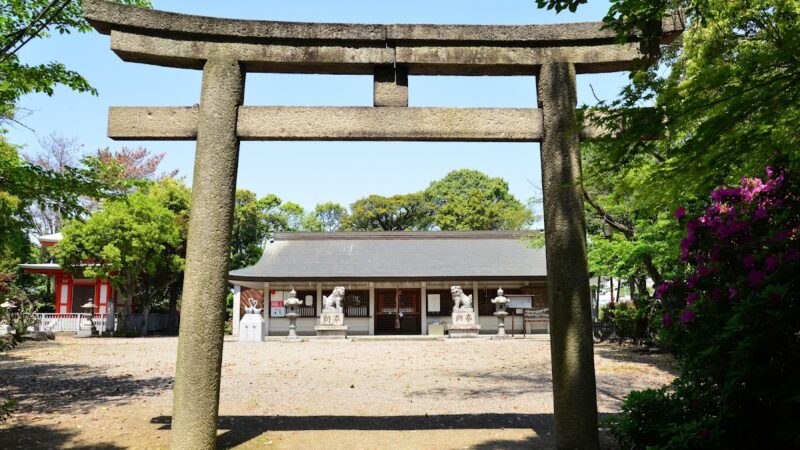
The main hall is relatively small, but it is meticulously maintained, exuding a sense of historical weight. Visitors can find peace and tranquility in this serene environment to offer their prayers.
Worship Hall
The worship hall is where worshippers offer their prayers, and its atmosphere changes with the seasons. It is particularly lively with local residents during New Year’s and the annual festival.
Atmosphere of the Shrine Grounds
Despite being located in a residential area, the shrine grounds are enveloped in a serene atmosphere. It is cherished by local residents as a place to escape the hustle and bustle of the city and find peace of mind. Trees are planted within the grounds, allowing visitors to feel the changing seasons.
Torii Gate and Approach
After passing through the torii gate at the entrance, a short but charming approach path continues. Walking along the path allows one to shift their mind from everyday life to a sacred realm.
Festivals and Annual Events
Susanoo-no-Mikoto Shrine holds various festivals and events throughout the year.
Annual Festival
The annual festival is held at a fixed time each year, bringing together local people to offer thanks to the gods. After the Shinto rituals, a celebratory feast (naorai) is sometimes held, providing an opportunity to deepen the bonds of the local community.
New Year’s Visit
During the first three days of the New Year, the shrine is bustling with many worshippers praying for good health and protection from illness in the coming year. Worshippers come not only from the local area but also from surrounding regions.
Other Events
Seasonal Shinto rituals such as the Setsubun Festival and the Summer Purification Ceremony are also held. These events are valuable opportunities to pass on traditional Japanese beliefs to the modern age.
Access
Access by Train
Using public transportation is the most convenient way to reach Susanoo-no-Mikoto Shrine.
Nearest Stations:
- Approximately 5 minutes on foot from Sekime-Seiiku Station on the Osaka Metro Imazatosuji Line
- Approximately 10 minutes on foot from Sekime Station on the Keihan Main Line
- Approximately 12 minutes on foot from Sekime-Takadono Station on the Osaka Metro Tanimachi Line
Sekime-Seiiku Station is the closest; it’s just a few minutes’ walk through the residential area after exiting the station. Since there are few signs, it’s recommended to check the location beforehand using a map app.
Access by Bus
Various Osaka City Bus routes are also available. Get off at the “Sekime” bus stop and it’s a few minutes’ walk.
Access by Car
The shrine does not have its own parking lot, so if you are visiting by car, you will need to use a nearby coin-operated parking lot. Since it is located in a residential area, please avoid street parking and be considerate of the neighbors.
Address: 3-chome, Nariku, Joto-ku, Osaka City, Osaka Prefecture
Access Notes
- The shrine is located in a residential area, and some roads are narrow. First-time visitors are advised to use a map app.
- There are few large signs or directions, so be careful not to miss it.
- As it is a quiet residential area, please be considerate of the local residents when visiting.
Nearby Attractions
Historical Walks in Joto Ward
Around Susanoo-no-Mikoto Shrine, there are many spots where you can experience the history of Joto Ward.
Birthplace of Enami Sarugaku: Nearby is a place associated with Enami Sarugaku, considered one of the origins of Noh theater.
Walking Path along the Neyagawa River: A short walk from the shrine allows you to enjoy nature along the Neyagawa River promenade.
Gourmet Food around Sekime
Around Sekime Station, there is a traditional shopping street lined with restaurants loved by locals. It’s also recommended to stop by after your visit to the shrine.
Manners and Etiquette for Visiting a Shrine
When visiting a shrine, please observe basic manners for visiting.
Basic Etiquette for Visiting a Shrine
- Bow before passing through the torii gate: As a sign of respect before entering the sacred area, bow before the torii gate.
- Walk along the edge of the path: The center of the path is considered the path of the gods, so walk along the edge.
- Purify yourself at the water basin: If there is a water basin, purify your hands and mouth.
- Two bows, two claps, one bow: In front of the main hall, bow twice, clap twice, and finally bow once.
- Bow at the torii gate on your way out: When leaving the sacred area, turn around and bow once.
Regarding Photography
Photography is generally permitted on the shrine grounds, but please note the following points.
- Please refrain from taking photographs inside the main shrine.
- Please be considerate of other worshippers.
- Please remember that this is a sacred place and behave with moderation.
Comparison with other shrines dedicated to Susanoo-no-Mikoto
There are several shrines dedicated to Susanoo-no-Mikoto (Susanoo-no-Mikoto) within Osaka Prefecture.
Susanoo-no-Mikoto Shrine (Settsu City)
The Susanoo-no-Mikoto Shrine, located in Senrioka, Settsu City, is said to have originated during the Tenpyo era (729-749) of Emperor Shomu, when the monk Gyoki built Kongoin Temple and enshrined Gozu Tenno as its guardian deity. It is said to have a longer history than the Susanoo-no-Mikoto Shrine in Joto Ward.
Mizudo Susanoo Shrine (Amagasaki City)
Although not in Osaka Prefecture, the Mizudo Susanoo Shrine in Amagasaki City, Hyogo Prefecture, is also famous. This shrine is known for life-changing rituals such as Shichi-Go-San (a traditional Japanese rite of passage for children).
Characteristics of Each Shrine
The Susanoo-no-Mikoto Shrine in Joto Ward is unique in its historical background, stemming from its connection to Toyotomi Hideyoshi and Osaka Castle. Its founding with the clear purpose of protecting against evil influences (kimon) gives it a distinct character compared to other shrines dedicated to Susanoo-no-Mikoto.
The Role of Protecting Osaka Castle from Evil Influences
What is the Evil Influence (Kimon)?
In Onmyodo (Japanese esoteric cosmology), the evil influence refers to the northeast direction, which has been considered an inauspicious direction from which demons enter and exit. This direction required particularly strong protection, and measures to counter evil influences were always taken when constructing important buildings.
The Guardian System of Osaka Castle
When Toyotomi Hideyoshi built Osaka Castle, he incorporated the principles of Onmyodo and placed the Susanoo-no-Mikoto Shrine in the direction corresponding to the evil influence. This was not merely a matter of faith, but also had political and military significance. By entrusting the protection of the castle to deities, he also gained the trust and support of the people.
Significance in the Modern Era
Even today, Susanoo-no-Mikoto Shrine is positioned as an important historical site that conveys the history of Osaka Castle. It provides valuable clues to understanding the urban planning and religious policies of the Toyotomi regime.
Connection with the Community
Relationship with Parishioners
Susanoo-no-Mikoto Shrine has long been revered by residents as the local guardian deity. The shrine is maintained and managed by the parishioners’ organization, playing a central role in the local community.
Participation in Local Events
Many local residents participate in Shinto rituals such as the annual festival, creating a place for intergenerational exchange. In particular, it provides a valuable opportunity for the history and traditions of the region to be passed down from the elderly to children.
Preservation Amidst Urbanization
Even as the surrounding area was developed into a residential area, the shrine has been carefully preserved as a historical identity of the region. It offers one answer to the modern challenge of coexisting urbanization and tradition.
Voices of Visitors
The following are some comments from people who have actually visited Susanoo-no-Mikoto Shrine.
“It was so quiet and peaceful, you wouldn’t think it was in a residential area.”
“It’s a precious shrine where you can feel the history that has continued since the time of Toyotomi Hideyoshi.”
“Although small, it is carefully maintained, and you can feel the love of the local people.”
“I walked there from Sekime-Takadono Station, but it was a little difficult to find, so a map app is essential.”
Summary
Susanoo-no-Mikoto Shrine (Sekime Shrine) is a representative shrine of Joto Ward, Osaka City, deeply connected to the historical project of Osaka Castle’s construction by Toyotomi Hideyoshi. Since its founding in 1580, it has protected Osaka Castle and the surrounding area as a guardian deity against evil.
Although it is a small shrine quietly nestled in a residential area, its historical value is extremely high, and it is an indispensable presence for understanding Osaka’s history. It is believed to offer various blessings, such as protection against evil, eradication of disease, and good fortune in competitions, and many worshippers still visit it today.
Located just a 5-minute walk from Sekime-Seiiku Station on the Osaka Metro Imazatosuji Line, this shrine boasts excellent accessibility while offering a tranquil setting away from the hustle and bustle of the city. If you’re visiting Osaka or the Joto Ward area, be sure to stop by. It will be a valuable experience, allowing you to reflect on the era of Toyotomi Hideyoshi and feel the weight of history.
As a place of worship deeply rooted in the community and a cultural asset that conveys history, Susanoo-no-Mikoto Shrine will undoubtedly continue to be carefully preserved.