Hachiman Shintoku-ji Temple (Naha City, Okinawa Prefecture) Complete Guide | History and Access Information for the Ryukyu Eight Shrines’ Head Temple
Located in a residential area of Asato, Naha City, Okinawa Prefecture, Hachiman Shintoku-ji Temple is a Toji Shingon sect temple with a history dating back to the Ryukyu Kingdom era. Having played a vital role as the head temple of Asato Hachiman-gu Shrine, one of the eight Ryukyu shrines, the temple was rebuilt after being destroyed during the Battle of Okinawa and continues to welcome many worshippers as a center of local faith.
This article provides comprehensive and detailed information useful for those planning a visit to Hachiman Shintoku-ji Temple, from its historical background and highlights within the temple grounds to access methods and surrounding area information.
Overview and Basic Information of Hachiman Shintoku-ji Temple
Basic Temple Data
Official Name: Komeizan Hachiman Shintoku-ji Temple
Sect: Toji Shingon Sect
Mountain Name: Komeizan
Principal Image: Fudo Myoo
Founding Date: Unknown (Ryukyu Kingdom era)
Address: 38 Asato, Naha City, Okinawa Prefecture 902-0067
Phone Number: 098-867-5894
Hachiman Shintoku-ji Temple is a betto-ji temple established to manage Asato Hachimangu Shrine, one of the eight Ryukyu shrines. A betto-ji temple is a temple that manages a shrine based on the syncretic belief of Shinto and Buddhism, a form seen throughout Japan before the Meiji-era separation of Shinto and Buddhism. This system was also introduced in Okinawa during the Ryukyu Kingdom era, and Hachiman Shintoku-ji Temple continues to this day as a representative example.
The Relationship Between the Eight Ryukyu Shrines and Asato Hachimangu Shrine
The Eight Ryukyu Shrines are a collective term for eight shrines that received special protection from the royal government during the Ryukyu Kingdom era. Among them, Asato Hachimangu Shrine holds a special position as the only one of the eight shrines to enshrine Hachiman-sama. The other seven shrines enshrine Kumano Gongen, making Asato Hachimangu Shrine unique.
Founded in 1466 by King Shōtoku, the seventh king of the First Shō Dynasty, Asato Hachimangu Shrine is located on a hill in Asato, Naha City, and continues to attract worshippers adjacent to Hachiman Shintoku-ji Temple. The two are closely related both historically and geographically, and it is recommended to visit both during your pilgrimage.
The History of Hachiman Shintoku-ji Temple
Establishment of the Ryukyu Kingdom
Unfortunately, detailed records of the exact founding date and the founding of Hachiman Shintoku-ji Temple do not exist. However, since Asato Hachimangu Shrine was founded in 1466, it is presumed that Hachiman Shintoku-ji Temple was established around the same time or later as its affiliated temple.
During the Ryukyu Kingdom era, temples functioned not only as religious facilities but also as centers of education and culture. Shingon Buddhism was positioned as one of the most important sects in the Ryukyu Kingdom and developed under the protection of the royal government. Hachiman Shintoku-ji Temple, as the affiliated temple of Asato Hachimangu Shrine, is thought to have played a religious and cultural role in the region.
Destruction during the Battle of Okinawa and Post-War Reconstruction
The Battle of Okinawa in 1945 caused immense damage to Hachiman Shintoku-ji Temple. Due to the fierce ground fighting, all the buildings on the temple grounds, including the main hall, were destroyed by fire. This was a tragedy experienced by many temples and shrines throughout Okinawa Prefecture, resulting in the loss of many valuable cultural assets and historical materials.
After the war, thanks to the efforts of local residents and parishioners, Hachiman Shintoku-ji Temple was gradually rebuilt. The current main hall and temple grounds were built after the war, but the temple continues to function as a Shingon Buddhist temple while maintaining its historical connection with Asato Hachimangu Shrine. The reconstructed buildings incorporate features suited to Okinawa’s climate and environment, creating a unique atmosphere distinct from temples on mainland Japan.
Highlights and Features of the Temple Grounds
Main Hall and Principal Image: Fudo Myoo
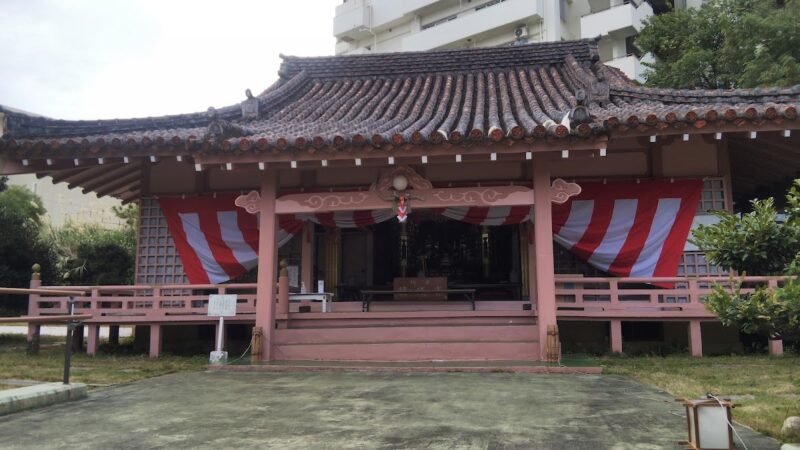
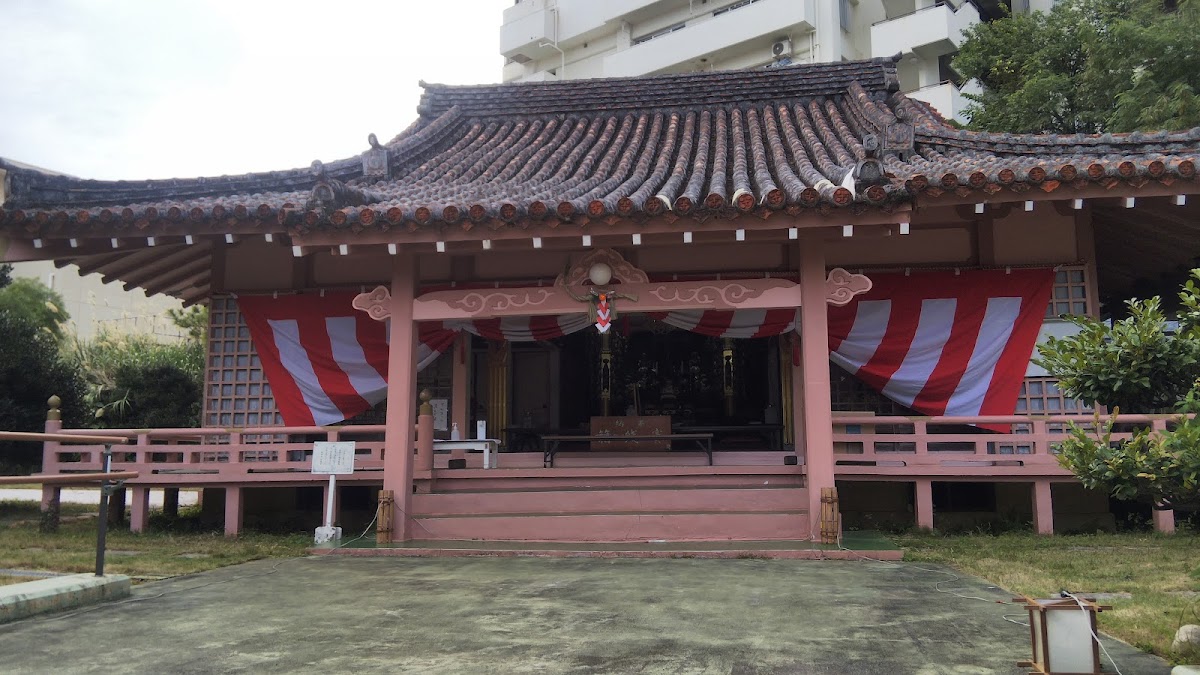
The main hall of Hachiman Shintoku-ji Temple is a modern building rebuilt after the war, but it retains the solemn atmosphere of a Shingon Buddhist temple. The principal image, Fudo Myoo, is one of the important Myoo (wisdom kings) in Shingon Buddhism, believed to have the power to sever worldly desires and remove obstacles hindering Buddhist practice.
Inside the main hall, various Buddhas are enshrined around Fudo Myoo, allowing visitors to quietly offer their prayers. As befits a Shingon Buddhist temple, the space exudes an esoteric Buddhist atmosphere.
The Atmosphere and Architectural Style of an Okinawan Temple
Many visitors to Hachiman Shintoku-ji Temple point out its unique atmosphere, distinct from temples on the mainland. The architectural style, adapted to Okinawa’s strong sunlight and hot, humid climate, sets it apart from mainland temple architecture.
While there is a purification fountain on the temple grounds, its construction and placement differ from those of mainland temples. Furthermore, influences of Ryukyu culture can be seen throughout, such as the red-tiled roofs of the buildings and the unique Okinawan stone walls. The fusion of these elements expresses the temple’s distinctive character as an “Okinawan temple.”
The Environment and Atmosphere of the Temple Grounds
The grounds of Hachiman Shintoku-ji Temple are praised by visitors for being “beautifully maintained.” Located on a small hill within a residential area, the temple grounds offer views of the surrounding cityscape.
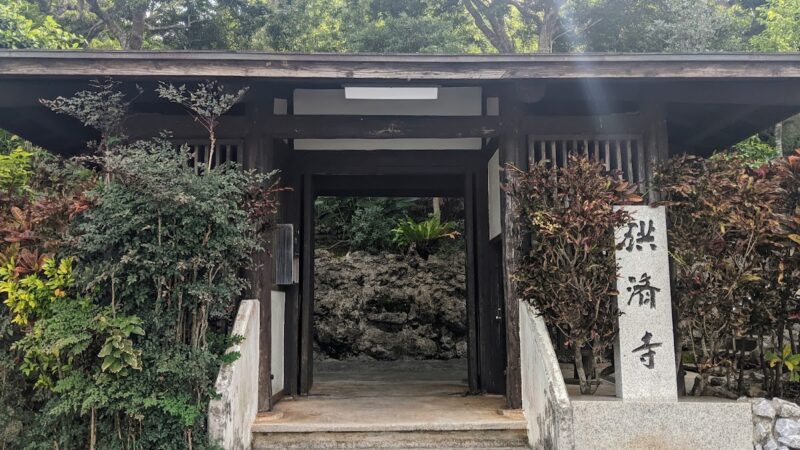
Passing through the stone-pillared gate, the temple grounds, which also serve as a parking lot, unfold. While not vast, the well-maintained and clean space provides visitors with a peaceful and tranquil experience. Located on a hill slightly removed from the hustle and bustle of the city, it offers a peaceful environment for worship.
Access and Surrounding Information
Access by Public Transportation
The most convenient way to reach Hachiman Shintoku-ji Temple is by using the Okinawa Urban Monorail “Yui Rail”.
Nearest Stations and Walking Time:
- Makishi Station: Approximately 5-7 minutes on foot (approx. 420m)
- Asato Station: Approximately 6-8 minutes on foot (approx. 430m)
- Omoromachi Station: Approximately 8-10 minutes on foot (approx. 460m)
Route from Makishi Station:
Exit Makishi Station and head towards Kokusai Street, then towards Asato Crossroads. Walking uphill from Asato Crossroads, you will see a stone gate on your left inscribed with “Shingon Sect, Hachiman Shintoku-ji Temple”. It’s less than a 5-minute walk from the eastern entrance of Kokusai Street, making it easy to stop by during sightseeing. Route from Omoromachi Station: If you’re coming from Omoromachi Station, you’ll be navigating a winding residential area. Using a smartphone map app is recommended. Since you’ll be walking uphill, comfortable shoes are advisable.
Access by Car and Parking
Hachiman Shintoku-ji Temple has parking spaces inside the gate. However, because you’ll be navigating narrow residential streets, it’s best to avoid visiting in large vehicles.
It’s about a 10-15 minute drive from central Naha City, making it easy to combine a visit with other tourist spots like Kokusai Street and Shuri Castle. However, the surrounding area is densely populated, so driving requires caution.
Map and Location Features
Hachiman Shintoku-ji Temple is located on a hill in Asato, Naha City, surrounded by a residential area. Its location near the Asato intersection is convenient for getting around Naha City, making it easily accessible.
Because it is built on a terrain with significant elevation changes, you can enjoy the view from the temple grounds. Since it is adjacent to Asato Hachimangu Shrine, you can visit both on foot.
Goshuin (Temple Seal) and Visiting Information
About Goshuin
You can receive a goshuin at Hachiman Shintoku-ji Temple. As a Shingon Buddhist temple, the carefully written goshuin are popular as a memento of your visit. If you wish to receive a goshuin, please speak to the temple office after your visit.
It is common to bring a goshuincho (stamp book), but they may be able to accommodate you even if you don’t have one. However, it is recommended to check by phone in advance.
Manners and Precautions for Visiting
Hachiman Shintoku-ji Temple is a Shingon Buddhist temple, so please follow the basic manners of visiting Buddhist temples.
Basic Procedure for Visiting the Temple:
- Bow at the temple gate (stone pillar gate) before entering the grounds.
- Cleanse your hands and mouth at the water basin.
- Join your hands in prayer in front of the main hall and pray quietly.
- Take photographs only where permitted.
- Maintain silence on the temple grounds and be considerate of other visitors.
As this temple is located in a residential area, consideration for nearby residents is especially important when visiting early in the morning or late at night. Also, when using the parking lot, please be careful not to disturb other visitors or neighbors.
Characteristics of Hachiman Shintoku-ji Temple as a Naha Temple
A Different Atmosphere from Mainland Temples
Many visitors to Hachiman Shintoku-ji Temple notice its unique atmosphere, which differs from temples on the mainland. This stems from Okinawa’s historical and cultural background and is a fascinating characteristic.
Characteristics of Okinawan Temples:
- Influence of Ryukyuan Architecture: Elements of Ryukyuan culture, such as red tile roofs and stone walls, are incorporated.
- Adaptation to Climate: Architectural styles adapted to typhoons and the hot, humid climate.
- Tradition of Shinto-Buddhist Syncretism: As seen in its relationship with Asato Hachimangu Shrine, the close relationship between shrines and temples continues to this day.
- Influence of Post-War Reconstruction: Reconstruction after destruction during the Battle of Okinawa incorporates modern elements.
The fusion of these characteristics creates an “Okinawan tropical” atmosphere distinct from temples on the mainland. While some visitors find them “inorganic and bland,” others appreciate their “unique Okinawan atmosphere.”
Community-Based Activities
Hachiman Shintoku-ji Temple is not merely a tourist spot, but actively serves as a center of local faith. In particular, it maintains ties with the local community through Buddhist events, such as serving as the venue for the Hana Matsuri (Buddha’s Birthday) ceremony.
While cherishing interactions with parishioners and local residents, the temple plays a vital role in passing on the traditional teachings of Shingon Buddhism to the modern age. Such community-oriented activities are invaluable in the increasingly urbanized city of Naha.
Reviews and Reputation
Visitor Voices
Visitors to Hachiman Shintoku-ji Temple have shared a variety of impressions.
Positive Reviews:
- “The temple grounds are very beautifully maintained.”
- “It’s nice that you can visit it together with Asato Hachimangu Shrine.”
- “It’s close to Kokusai Street and easily accessible.”
- “I’m happy that I can get a Goshuin (temple stamp).”
- “You can feel the atmosphere of an Okinawan temple.”
Neutral/Suggestions for Improvement:
- “It’s a small temple in a residential area, and it’s not flashy.”
- “Those expecting the grandeur of mainland temples might be disappointed.”
- “You need to climb a hill, so those who are not confident in their physical strength should be careful.”
Overall, Hachiman Shintoku-ji Temple is highly regarded as a “nice temple where you can pray in peace,” and it receives particularly high praise from those interested in the Ryukyu Eight Shrines and Okinawan history.
Charm as Seen from Posted Photos
Many photos of Hachiman Shintoku-ji Temple have been posted on various travel websites and social media. These photos show the following aspects of the temple grounds:
- Stone pillar gate and the inscription “Shingon Sect, Hachiman Shintoku-ji Temple”
- Exterior of the main hall, rebuilt after the war
- Water basin and temple grounds
- Location relative to Asato Hachimangu Shrine
- View from the hilltop
Checking these photos before your visit will give you a sense of the temple grounds’ atmosphere and access route.
Nearby Shops and Surrounding Spots
Characteristics of the Asato Area, Naha City
Asato, where Hachiman Shintoku-ji Temple is located, is a mixed residential and commercial area situated between Kokusai Street and Omoromachi. There are various shops and services in the surrounding area, which you can visit before or after your visit.
Major Nearby Facilities:
- Kokusai Street: 5-10 minute walk, Okinawa’s largest tourist street
- Asato Crossroads: A major intersection in Naha City, with a concentration of restaurants and shops
- Omoromachi: 10 minute walk, the commercial area of Naha’s new city center
Restaurants and Cafes
The Asato area has a variety of restaurants, from Okinawan cuisine to mainland Japanese food and cafes. Convenient for meals and breaks after visiting the temple.
- Okinawa Soba Restaurants: Several restaurants where you can enjoy traditional Okinawa soba, popular with locals
- Cafes: A wide variety of options, from modern cafes to old-fashioned coffee shops
- Izakayas: Izakayas that are bustling with locals in the evenings
Nearby Tourist Spots
Here are some nearby spots you might want to visit in conjunction with your visit to Hachiman Shintoku-ji Temple.
Asato Hachimangu Shrine: A short walk away. One of the eight Ryukyu shrines, and a shrine related to Hachiman Shintoku-ji Temple. By visiting both, you can experience the history of the syncretism of Shinto and Buddhism during the Ryukyu Kingdom era.
Kokusai Street:
5-10 minute walk. Naha City’s largest tourist street. Souvenir shops, restaurants, and entertainment facilities line the street, making it the heart of Okinawan tourism.
Shuri Castle Park:
Approximately 15 minute drive. A symbol of the Ryukyu Kingdom, registered as a World Heritage Site. Reconstruction is progressing since the 2019 fire, making it an essential spot for learning about Ryukyu history.
Naminoue Shrine:
Approximately 10 minute drive. Known as the guardian shrine of the eight Ryukyu shrines. The shrine buildings, built on a cliff, are breathtaking.
Best Season and Time for Visiting
Seasonal Characteristics
Okinawa’s climate differs significantly from mainland Japan, belonging to a subtropical climate. Please use this as a reference when choosing the season to visit Hachiman Shintoku-ji Temple.
Spring (March-May):
Mild temperatures make it ideal for visiting. Special events are sometimes held during the Flower Festival (around April 8th).
Summer (June-September): High temperatures, high humidity, and strong sunlight make hats and sunscreen essential. Be aware of the weather during typhoon season (July-September).
Autumn (October-November): Temperatures begin to drop, making it a pleasant season. This is also the best time for sightseeing.
Winter (December-February): While warmer than the mainland, cloudy and rainy days are frequent. It’s a time with fewer tourists, allowing for a quiet visit.
Recommended Time of Day
Morning (9-11 AM): The time before the sun gets too strong, making it relatively cool for a visit. Visiting in the refreshing morning air is exceptional.
Evening (4-6 PM): The time when the sun begins to set. In summer, visiting in the evening is recommended to avoid the midday heat.
Because it is located in a residential area, please avoid visiting early in the morning or late at night, and try to visit during reasonable hours.
The Future and Preservation Activities of Hachiman Shintoku-ji Temple
Value as a Cultural Property
Although the pre-war buildings of Hachiman Shintoku-ji Temple have been lost, it is an important historical temple that has continued since the Ryukyu Kingdom era, conveying Okinawa’s religious culture to the present day. Its relationship with Asato Hachimangu Shrine is a valuable example for understanding the syncretism of Shinto and Buddhism in Japanese religious history.
Its historical position as the head temple of the eight Ryukyu shrines demonstrates Okinawa’s unique religious culture, and its cultural value is considered high.
Coexistence with the Community
In Naha City, which is undergoing urbanization, historical temples like Hachiman Shintoku-ji Temple play an important role in preserving the historical memory of the region. Despite being located in a residential area, it maintains its function as a place of worship while maintaining good relations with local residents.
Future efforts to adapt to modern society while preserving tradition are expected. As a visitor, it is important to observe proper etiquette when visiting the temple in order to pass on this precious cultural heritage to future generations.
Summary: Key Points for Visiting Hachiman Shintoku-ji Temple
Hachiman Shintoku-ji Temple is an important temple in Naha City, boasting a history dating back to the Ryukyu Kingdom era, and having overcome the ordeal of the Battle of Okinawa to reach the present day.
Key Points for Visiting:
- Historical Value: Unique position as the head temple of the eight Ryukyu shrines, Asato Hachimangu Shrine.
- Easy Access: Within walking distance of Kokusai Street, 5-10 minute walk from the Yui Rail station.
- Okinawan Atmosphere: Experience a unique atmosphere different from temples on the mainland.
- Goshuin (Temple Seal): As a Shingon Buddhist temple, you can receive a Goshuin.
- Nearby Sightseeing: Can be combined with sightseeing at Asato Hachimangu Shrine and Kokusai Street.
When you visit Naha City, be sure to visit Hachiman Shintoku-ji Temple and experience Okinawa’s religious culture and history. The time spent praying in the tranquil temple grounds will be a special and memorable experience during your trip.
Contact Information:
Hachiman Shintoku-ji Temple
38 Asato, Naha City, Okinawa Prefecture 902-0067
TEL: 098-867-5894
When visiting, we recommend calling in advance to check opening hours and event schedules. As a temple deeply rooted in the community, it will continue to be a spiritual haven for many people.