Asato Hachimangu Shrine (Naha City, Okinawa Prefecture) Complete Guide | History, Goshuin (Shrine Seal), and Access Information for the Eight Ryukyu Shrines
Asato Hachimangu Shrine, located in Asato, Naha City, Okinawa Prefecture, is one of the eight Ryukyu shrines that have existed since the Ryukyu Kingdom era, and is known as the only Hachimangu shrine among the eight. This article comprehensively introduces information you should know before visiting Asato Hachimangu Shrine, including its history, enshrined deities, visiting information, goshuin (shrine seal), and access methods.
What is Asato Hachimangu Shrine? | The Only Hachimangu Shrine Among the Eight Ryukyu Shrines
Asato Hachimangu Shrine is a shrine located at 3-19-14 Asato, Naha City, Okinawa Prefecture, and is one of the eight Ryukyu shrines established during the Ryukyu Kingdom era. The eight Ryukyu shrines refer to eight official shrines specially protected by the Ryukyu royal government, and consist of Naminoue Shrine, Okinomiya Shrine, Shikina Shrine, Futenma Shrine, Sueyoshi Shrine, Ameku Shrine, Kin Shrine, and Asato Hachimangu Shrine.
Among these eight shrines, Asato Hachimangu Shrine is the only Hachimangu shrine, distinguishing itself from the other seven by enshrining Emperor Ojin as its principal deity. Although it was classified as an unranked shrine under the modern shrine ranking system of the Meiji era, its historical importance as an official shrine in the Ryukyu Kingdom remains unchanged.
Currently, it stands quietly in a residential area, attracting the faith of local residents and gaining attention from pilgrims on the Ryukyu Eight Shrines pilgrimage and history enthusiasts.
History and Origins of Asato Hachimangu Shrine
Founding History | King Shōtoku and the Kikaijima Expedition
Asato Hachimangu Shrine was founded in 1466 (Bunshō 1, Ming Chenghua 2) by King Shōtoku (reigned 1461-1469), the seventh king of the First Shō Dynasty. King Shōtoku was also known as “Hachiman no Aji” (Hachiman’s Lord) and is known as a king deeply devoted to Hachiman worship.
The founding of the shrine is rooted in King Shōtoku’s expedition to Kikaijima (Kikaijima) Island. At the time, the Ryukyu Kingdom was seeking to expand its influence over the surrounding islands, and King Shōtoku decided to launch this expedition. It is said that before this expedition, King Shōtoku prayed for the protection of Hachiman Daibosatsu (Emperor Ōjin) and vowed to build a Hachiman shrine if the expedition was successful.
The expedition ended successfully, and upon his triumphant return, King Shōtoku fulfilled his vow by building the Asato Hachiman Shrine on the spot where he shot his arrow. This legend of “the place where the arrow was planted” has been passed down to this day as the founding myth of Asato Hachiman Shrine.
Asato Hachiman Shrine during the Ryukyu Kingdom Era
During the Ryukyu Kingdom era, Asato Hachiman Shrine was an official shrine protected by the royal government, and important rituals were performed there. The eight Ryukyu shrines functioned as places where the royal government prayed for the peace and prosperity of the nation, and Asato Hachimangu Shrine also played this role.
Asato Hachimangu Shrine also appears in “Kudoki,” a classical Ryukyuan performing art, and was widely known among the people. The Hachiman faith, as the god of archery and military fortune, was highly valued in Ryukyu, which was influenced by the samurai society.
Changes After the Meiji Era
With the abolition of the Ryukyu Kingdom in the Meiji era, Asato Hachimangu Shrine also underwent a major transformation. Although it was classified as an unranked shrine under the modern shrine ranking system, it continued to play a central role in local faith.
During the Battle of Okinawa in 1944, Naha city was ravaged by fierce fighting, and the Asato Hachimangu Shrine’s main building was completely destroyed by fire. After the war, the burnt-out shrine was rebuilt as a temporary structure, and later, through the efforts of local residents, the current shrine building was constructed.
During the post-war reconstruction process, the shrine developed a unique form that blended traditional Okinawan architectural styles with Shinto shrine architecture, and it holds significant importance as a place that conveys the memory of the Battle of Okinawa.
Deities Enshrined: Emperor Ōjin, Empress Jingū, Tamayorihime-no-Mikoto
The following three deities are enshrined at Asato Hachiman Shrine:
Emperor Ōjin
Emperor Ōjin, the principal deity, was the 15th Emperor of Japan and is worshipped as Hachiman-sama at Hachiman shrines throughout Japan. He is revered as the god of military fortune and victory, and King Shōtoku prayed to him during his expedition to Kikaijima Island. He is also known as the god who brings about the development of culture and industry.
Empress Jingū
Empress Jingū, the mother of Emperor Ōjin, is worshipped as the goddess of safe childbirth and child-rearing. Furthermore, due to the legend of her conquest of the Three Kingdoms of Korea, she is also considered a symbol of a woman of outstanding military prowess and is believed to bring good fortune and victory.
Tamayorihime-no-Mikoto
Tamayorihime-no-Mikoto is a goddess known as the mother of Emperor Jimmu, and is revered as the goddess of safe childbirth, child-rearing, and matchmaking. She also possesses characteristics as a sea goddess, making her a particularly significant deity in Okinawa, a region surrounded by the sea.
Due to these deities, Asato Hachimangu Shrine is believed to offer blessings for military success, victory, safe childbirth, child-rearing, and good fortune, attracting worshippers with various wishes.
Highlights of the Shrine Grounds
Shrine Buildings
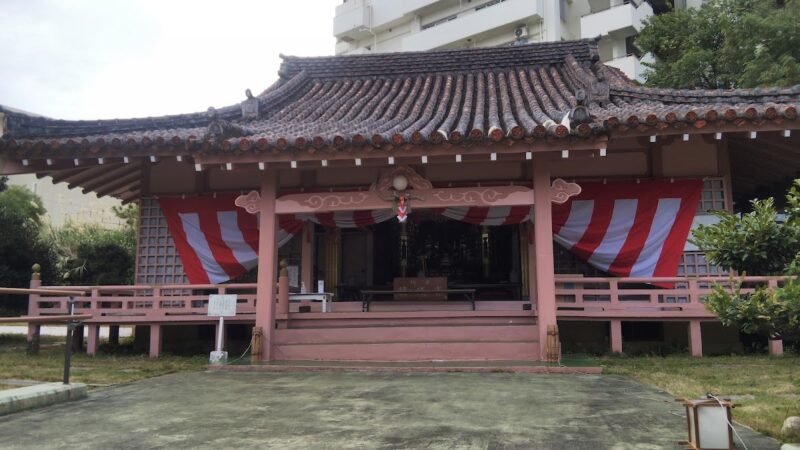
The current shrine buildings were rebuilt after the war and are structured to suit Okinawa’s climate and environment. The concrete main hall, while simple, possesses a solemn atmosphere, and the worship hall welcomes daily worshippers.
The shrine’s crest is the “Mitsudomoe,” a symbol of Hachimangu shrines, and can be seen on the shrine buildings and amulets.
Atmosphere of the Shrine Grounds
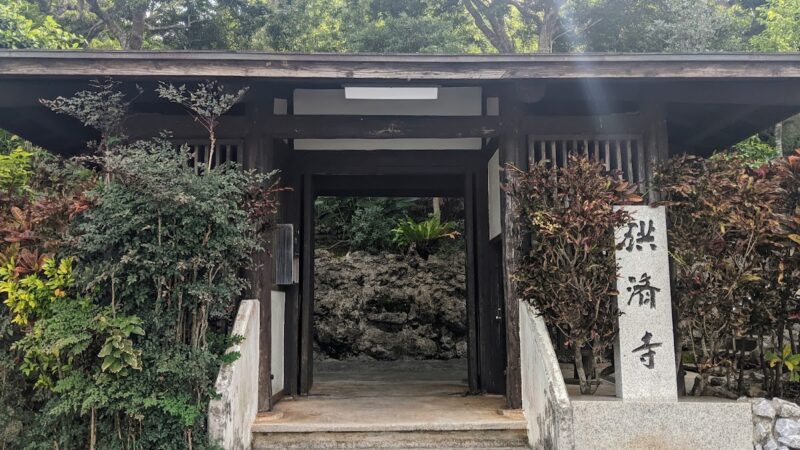
Asato Hachimangu Shrine is located in a residential area, maintaining a tranquil space despite being in an urban area. The occasional sounds of children’s voices from the adjacent nursery school give a real sense of the shrine’s deep roots in the community.
The shrine grounds are not large, but they are well-maintained, maintaining a clean and pleasant worship space. The shade of the trees provides a tranquil respite from the strong Okinawan sun.
Visiting Information | Office Hours & Holidays
Office Hours
The office (shrine office) at Asato Hachimangu Shrine is open during the following hours:
- Weekdays & Saturdays: 9:00 AM – 5:00 PM
- Sundays & Public Holidays: 9:00 AM – 5:00 PM
However, staff may be absent during lunchtime (around noon to 1:00 PM), so it is recommended to check in advance if you wish to receive a Goshuin (shrine stamp) or other items.
Holidays
The office at Asato Hachimangu Shrine is closed on the following days:
- Every Thursday
- Weekday Butsumetsu (unlucky day in the Japanese calendar)
Those planning a pilgrimage to the eight Ryukyu shrines should pay particular attention to these closing days. We recommend checking the official website or social media for the latest information before visiting.
Contact Information
- Address: 3-19-14 Asato, Naha City, Okinawa Prefecture 902-0067
- Phone Number: 098-887-0556
- FAX Number: 098-887-0556
Inquiries are accepted by phone, but we may not be able to answer during festivals or visitor services, so please try calling at a different time.
Goshuin (Shrine Seal) Information
Goshuin Issuance
At Asato Hachimangu Shrine, you can receive goshuin (shrine seals) for the eight Ryukyu shrines. Goshuin may be written directly for you or provided as pre-printed during the hours the office is open.
Collecting the goshuin (temple/shrine stamps) of all eight Ryukyu shrines, known as the “Ryukyu Eight Shrines Pilgrimage,” is a popular and highly recommended way to visit shrines in Okinawa. The goshuin from Asato Hachimangu Shrine features the words “Ryukyu Eight Shrines” and the name of the shrine, along with the date.
Points to Note When Receiving a Goshuin
- Visit during the shrine office’s opening hours.
- Closed on Thursdays and weekdays that fall on a day considered inauspicious in the Japanese calendar.
- Bring your goshuincho (stamp book) with you (stamp books are also available for purchase).
- Prepare the offering fee (usually 300-500 yen).
- Receive the goshuin after completing your prayers.
The goshuin is proof of your visit, not a stamp rally. Please visit with respect and receive the goshuin with gratitude.
Annual Festival and Events
Annual Festival
The annual festival of Asato Hachimangu Shrine is held every autumn. The annual grand festival is the most important event for the shrine, a time to express gratitude to the enshrined deity and pray for peace and prosperity in the region.
During the grand festival, Shinto rituals are solemnly performed, with parishioners and devotees in attendance. A unique form of worship, blending Ryukyuan traditions and Shinto ceremonies, can be observed.
New Year’s Events
The first three days of the New Year see many visitors. The shrine is bustling with worshippers praying for safety and happiness in the new year, and New Year’s amulets and talismans are distributed at the shrine office.
During the New Year period, opening hours may be extended; it is recommended to check the official website in advance.
Other Annual Events
- Monthly Festival: A festival held on a fixed day each month.
- Shichi-Go-San: A visit to celebrate children’s growth in the autumn.
- Exorcism Prayer: Accepted throughout the year.
Access Methods | Monorail, Bus, Car
Using the Okinawa Urban Monorail (Yui Rail)
The most convenient access method is using the Okinawa Urban Monorail “Yui Rail”.
- Nearest Station: Asato Station
- Distance from Station: Approximately 7-10 minutes on foot north (approximately 500m)
After leaving Asato Station, head north and you will arrive at Asato Hachimangu Shrine after passing through a residential area. There are signs along the way, but using a smartphone map app is recommended.
Using Local Buses
Access is also possible via local buses running within Naha City.
- Nearest Bus Stops: Asato 3-chome, Asato Bus Stop, etc.
- Main Bus Routes: Routes 1, 3, 5, 9, 14, and many others.
The shrine is a few minutes’ walk from the bus stops.
Access by Private Car/Rental Car
Located in Naha city center, it is accessible by car.
- From Naha Airport: Approximately 20-30 minutes by car (depending on traffic conditions)
- From Kokusai Street: Approximately 10 minutes by car
Parking: There is parking space for visitors on the shrine grounds, but the number of spaces is limited, so we recommend using public transportation. There are also coin-operated parking lots nearby.
Access from Kokusai Street
It is relatively close to Kokusai Street, the center of tourism, and is about a 20-minute walk away. As the shrine closest to Kokusai Street among the eight Ryukyu shrines, it is possible to visit during sightseeing.
Pilgrimage to the Eight Ryukyu Shrines and Asato Hachimangu Shrine
What are the Eight Ryukyu Shrines?
The Eight Ryukyu Shrines are eight shrines that were specially protected by the royal government during the Ryukyu Kingdom era, and consist of the following shrines:
- Naminoue-gu Shrine: Wakasa, Naha City
- Okinomiya Shrine: Okuyama, Naha City
- Shikina-gu Shrine: Shikina, Naha City
- Futenma-gu Shrine: Futenma, Ginowan City
- Sueyoshi-gu Shrine: Sueyoshi-cho, Shuri, Naha City
- Ameku-gu Shrine: Tomari, Naha City
- Asato Hachiman-gu Shrine: Asato, Naha City
- Kin-gu Shrine: Kin, Kin Town
Route for visiting the eight shrines
Six of the eight shrines—Naminoue-gu, Okinomiya, Shikina-gu, Sueyoshi-gu, Ameku-gu, and Asato Hachiman-gu—are concentrated within Naha City, making it possible to visit them all in one day. Asato Hachimangu Shrine is conveniently located near Kokusai Street, making it easy to combine with sightseeing.
For an efficient tour, consider combining the monorail and bus, following this order:
- Naminoue Shrine (Asahibashi Station/Kencho-mae Station)
- Okinomiya Shrine (Ogiyama Park Station)
- Asato Hachimangu Shrine (Asato Station)
- Ameku Shrine (Omoromachi Station)
- Sueyoshi Shrine (Shimin Byoin-mae Station)
- Shikina Shrine (Bus or Taxi)
Futenma Shrine and Kinbu Shrine are outside Naha City, so it’s best to visit them on a separate day or use a rental car.
Significance of the Eight Shrine Pilgrimage
The Ryukyu Eight Shrines pilgrimage is a journey to deeply understand Okinawa’s history and culture. Through the unique history, enshrined deities, and architectural styles of each shrine, you can feel the forms of worship during the Ryukyu Kingdom era and cultural exchange with mainland Japan.
Asato Hachimangu Shrine is the only Hachimangu shrine among the eight main shrines, and holds an important position as a historical witness to the introduction of Hachiman worship from mainland Japan to Ryukyu.
Nearby Tourist Attractions
Kokusai Street
Naha’s largest shopping street, within walking distance of Asato Hachimangu Shrine. Lined with souvenir shops, restaurants, and hotels, it’s the heart of Okinawa tourism. Perfect for a visit before or after your shrine visit.
Sakaemachi Market
A local market near Asato Station. Popular with tourists as a restaurant district where you can experience the authentic Okinawan atmosphere.
Shuri Castle (Shuri Castle Park)
The site of the Ryukyu Kingdom’s royal castle. Reconstruction is underway after the 2019 fire. It was also the residence of King Shōtoku, who founded Asato Hachimangu Shrine, allowing visitors to feel a historical connection.
Shikinaen Garden
A garden built as a villa for the Ryukyu royal family, and registered as a World Heritage Site. Visiting it along with Shikinagu Shrine, one of the eight main shrines of Ryukyu, is highly recommended. ## Etiquette for Visiting Asato Hachimangu Shrine
Basic Worship Etiquette
- Bow before passing through the torii gate: This is a courtesy when entering the sacred area.
- Purify yourself at the water basin: Purify your left hand, right hand, and mouth in that order.
- Etiquette in front of the main hall: Two bows, two claps, and one bow is the basic procedure.
- Worship quietly: Maintain silence within the shrine grounds.
Photography
Photography is generally permitted within the shrine grounds, but please note the following:
- Refrain from taking photos inside the main hall.
- Be considerate of other worshippers.
- Refrain from taking photos during religious ceremonies.
- Avoid using flash photography.
Clothing
There are no specific dress code regulations, but it is desirable to wear clothing that reflects the sacred nature of the place. Avoid extremely revealing clothing or flip-flops.
Items Offered (Amulets and Talismans)
Asato Hachimangu Shrine offers a variety of items.
Main Items Offered
- Amulets: Various types available, including those for traffic safety, academic success, and family safety.
- Talismans: Talismans to be placed on the household shrine.
- Ema (Votive Tablets): Ema (votive tablets) on which wishes are written and offered.
- Goshuincho (Stamp Books): Goshuincho for visiting the eight Ryukyu shrines are also available.
Items can be obtained during the shrine’s opening hours. The offering fee varies depending on the item; please check at the shrine.
Cultural Significance of Asato Hachimangu Shrine
Fusion of Ryukyu and Mainland Cultures
Asato Hachimangu Shrine is a symbolic representation of the fusion of Ryukyu’s unique beliefs and the Hachiman faith introduced from mainland Japan. While the Ryukyu Kingdom possessed its own unique culture, it also incorporated diverse cultures through exchanges with China and Japan.
Hachiman worship is a form of faith that developed alongside samurai society from the Kamakura period onward, and in Ryukyu, it was also accepted as a god of military fortune and victory. King Shōtoku’s prayers to Hachiman Daibosatsu indicate that the Ryukyu Kingdom was influenced by the samurai culture of mainland Japan.
A Place to Convey the Memories of the Battle of Okinawa
Asato Hachimangu Shrine, which was destroyed by fire during the war and rebuilt afterward, is a place that conveys the memories of the Battle of Okinawa. In Naha, where many historical buildings were lost, the rebuilt shrine is a symbol of prayers for peace and regional regeneration.
Center of the Local Community
Even today, Asato Hachimangu Shrine functions as a center of faith and interaction for local residents. The relationship with the adjacent nursery school and local festivals demonstrate the role the shrine plays in the community.
Summary | Points to Note When Visiting Asato Hachimangu Shrine
Asato Hachimangu Shrine is a historic shrine that has continued since the Ryukyu Kingdom era, as the only Hachimangu shrine among the eight Ryukyu shrines. With its history of being founded by King Shōtoku, its enshrined deities being Emperor Ōjin, Empress Jingū, and Tamayorihime-no-Mikoto, and its history of reconstruction after the Battle of Okinawa, this shrine is an important spot where you can experience Okinawa’s history and culture.
Points to note when visiting:
- The shrine office is closed on Thursdays and weekdays that are considered unlucky in the Japanese calendar.
- Approximately 7-10 minutes on foot from Asato Monorail Station
- Recommended as one of the eight Ryukyu shrines to visit
- Close to Kokusai Street, making it easy to combine with sightseeing
- When receiving a Goshuin (shrine stamp), complete your prayers first.
Asato Hachimangu Shrine maintains a tranquil atmosphere despite being located in the heart of Naha City. Why not take some time to quietly pray while reflecting on the history of the Ryukyu Kingdom? As part of the eight Ryukyu shrines pilgrimage, or as part of exploring Okinawa’s history, Asato Hachimangu Shrine is a shrine well worth visiting.