Complete Guide to Kaimonji Temple (Kagoshima Prefecture): History, Goshuin (Temple Seal), and Access Information
Located in Ibusuki City, Kagoshima Prefecture, Kaimonji Temple is an ancient temple nestled against the backdrop of Mount Kaimon, a sacred mountain at the southernmost tip of the Satsuma Peninsula. With a long history as a center of local faith, it offers tranquility and healing to visitors. This article provides a detailed explanation of Kaimonji Temple’s history, highlights, visiting information, and access methods—all essential information before your visit.
What is Kaimonji Temple?: Basic Information and Overview
Kaimonji Temple is a Buddhist temple located in the Kaimon area of Ibusuki City, Kagoshima Prefecture. Situated at the foot of Mount Kaimon, known as “Satsuma Fuji,” it has long been a cherished center of faith in the region.
Basic Temple Data
- Location: Kaimon district, Ibusuki City, Kagoshima Prefecture
- Sect: Shingon Buddhism (details may vary depending on the region)
- Principal Image: Yakushi Nyorai or Kannon Bodhisattva (varies depending on the temple)
- Founding Period: Estimated to be from the Heian to Kamakura periods
- Cultural Properties: Possesses cultural properties designated by the region
Kaimonji Temple is a place of worship for local residents and is also open to tourists, with an increasing number of visitors coming in conjunction with climbing Mt. Kaimon or sightseeing at Ibusuki Onsen.
History of Kaimonji Temple: From Ancient Times to the Present
Origin and Legend of Founding
Several legends remain regarding the founding of Kaimonji Temple. According to the most plausible theory, it began in the late Heian period when a Shugendo practitioner revered Mt. Kaimon as a sacred mountain and established a place of training at its foot.
Mount Kaimon has been known since ancient times as “Kaimon-dake” or “Kaimon-dake,” and has been revered as a landmark for maritime traffic and as a sacred mountain. It is believed that Kaimonji Temple developed as a center of local faith, linked to this mountain worship.
Development in the Middle Ages
From the Kamakura period to the Muromachi period, Satsuma Province came under the rule of the Shimazu clan, and Buddhist temples received protection. It is presumed that Kaimonji Temple’s temple complex was developed during this period, establishing its position as a powerful local temple.
The Kaimon region in the Middle Ages flourished as a key point for maritime traffic, and many sailors and merchants visited Kaimonji Temple to pray for safe voyages. The worship of Kannon (Goddess of Mercy) for rescue from maritime accidents is said to have been particularly prevalent.
Changes in the Early Modern and Modern Periods
During the Edo period, under the rule of the Satsuma Domain, the temple system was established. Kaimonji Temple also became deeply rooted in the local community under the danka (parishioner) system.
During the anti-Buddhist movement of the Meiji era, Kagoshima Prefecture is known as a region where temples were particularly severely destroyed. While many temples were forced into ruin, the survival and subsequent restoration of Kaimonji Temple is a testament to the strength of the local faith, as evidenced by numerous anecdotes.
Kaimonji Temple in Modern Times
From the Showa to the Heisei and Reiwa eras, Kaimonji Temple has taken on the roles of a spiritual pillar for the local community and a tourist attraction. Continuous maintenance of the temple grounds and preservation of cultural properties have ensured a welcoming environment for visitors.
Highlights of Kaimonji Temple: Exploring the Charms of the Temple Grounds
Main Hall and Buddhist Statues
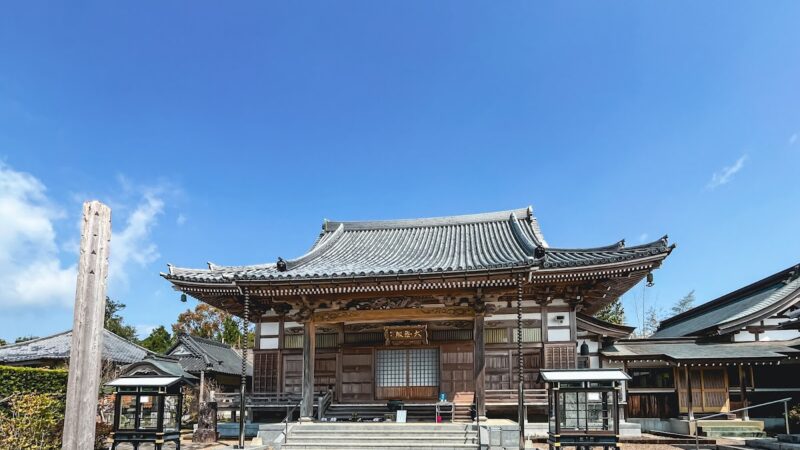
The main hall of Kaimonji Temple retains the traditional Japanese architectural style. Inside, the principal image is enshrined, allowing worshippers to quietly offer their prayers.
The principal image often enshrines Yakushi Nyorai (Medicine Buddha) or Kannon Bodhisattva, believed to bring blessings for healing illnesses, maritime safety, and family safety. Some of the Buddhist statues are believed to have been created before the Edo period, and their artistic value is also recognized.
Natural Environment of the Temple Grounds
One of the greatest attractions of Kaimonji Temple is its natural environment. Ancient trees flourish within the grounds, and seasonal flowers welcome visitors.
- Spring: Cherry blossoms and camellias adorn the grounds.
- Summer: Lush green trees provide cool shade.
- Autumn: Autumn leaves color the grounds, creating a tranquil atmosphere.
- Winter: In the crisp air, the majestic figure of Mount Kaimon stands out even more.
View of Mount Kaimon
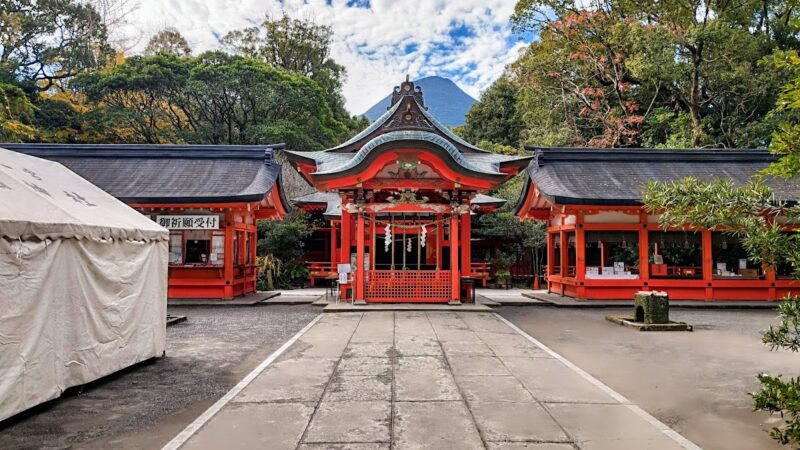
The view of Mount Kaimon from Kaimonji Temple is exceptional. Its beautiful conical shape, reaching an altitude of 924 meters, is known as “Satsuma Fuji” and is one of Japan’s 100 Famous Mountains.
On clear days, the entirety of Mount Kaimon can be seen from the temple grounds, and its divine appearance leaves a deep impression on visitors. It’s a popular spot for photography, and the view of Mount Kaimon illuminated by the sunrise and sunset is particularly spectacular.
Stone Monuments and Memorials
There are several stone monuments and memorials within the temple grounds that tell the story of history. These are inscribed with the history of the temple, local events, and the names of donors, making them valuable resources for local history research.
Annual Events and Festivals of Kaimonji Temple
Major Annual Events
Kaimonji Temple holds various Buddhist events throughout the year.
- First three days of the New Year: Many worshippers visit for the first shrine visit of the year.
- Spring Equinox Service: Memorial services for ancestors are held.
- Obon: An event to welcome the spirits of ancestors as part of the Urabon-e festival.
- Autumn Equinox Service: Memorial services for the autumn equinox.
- New Year’s Eve Bell: The temple bell is rung on New Year’s Eve.
Connection to Local Festivals
Traditional festivals and events are passed down in the Kaimon area, and Kaimonji Temple is deeply involved in these events. As a remnant of the syncretism of Shinto and Buddhism with local shrines, there is a culture where temples cooperate during festivals.
Goshuin Information: Obtaining a Goshuin (temple stamp) at Kaimonji Temple
Features of the Goshuin
Kaimonji Temple offers Goshuin to worshippers. The Goshuin includes the temple name, the name of the principal deity, and the date of visit, written in ink, and stamped with a red seal.
Goshuin (temple stamps) are not merely commemorative stamps; they are cherished as proof of worship and as a way to forge a connection with Buddha.
How to Obtain a Goshuin
- Location of Issuance: Main Hall or Temple Office
- Hours of Issuance: Usually 9:00 AM to 5:00 PM (may vary depending on the season and events)
- Donation Fee: Generally around 300-500 yen
- Notes: Goshuin may not be available if the head priest is absent. It is recommended to call ahead to confirm.
About Goshuincho (Goshuin Stamp Books)
When collecting goshuin, a special goshuincho is used. Kaimonji Temple may also offer its own original goshuincho. The beautiful goshuincho featuring Mount Kaimon is a valuable souvenir.
Manners and Etiquette for Visiting a Temple
Basic Etiquette for Visiting a Temple
There are basic manners to observe when visiting a Buddhist temple.
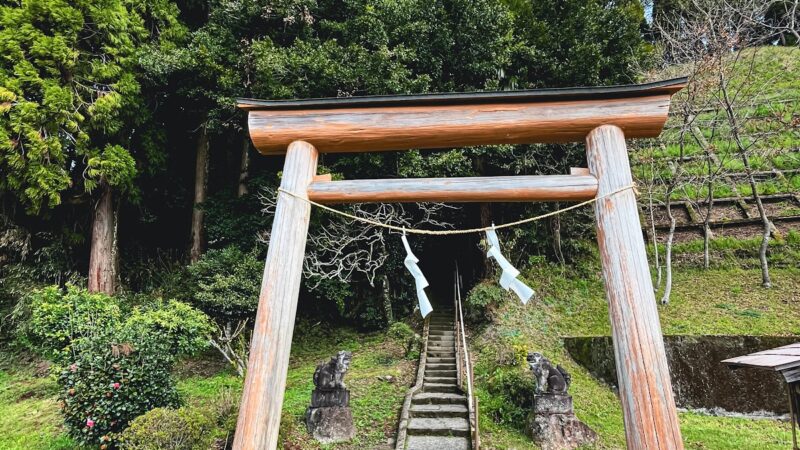
- A Bow at the Temple Gate: Bow before entering the temple grounds.
- Purifying at the Water Basin: If there is a water basin, purify your hands and mouth.
- Worship at the Main Hall:
- Quietly place your offering in the offering box.
- Ring the bell if there is one.
- Clasp your hands together and bow.
- Pray sincerely.
- Clasp your hands together again and bow.
- A Bow Upon Departure: Turn around and bow when leaving the temple grounds.
Photography Etiquette
Photography is generally permitted on the temple grounds, but please note the following:
- Photography is often prohibited inside the main hall.
- Be considerate of other worshippers.
- Obtain permission before using a tripod.
- Maintain silence and refrain from loud conversations.
Clothing
There are no specific dress code regulations, but it is desirable to dress appropriately for a sacred place. Avoid revealing or overly flashy clothing.
Access Information: How to Get to Kaimonji Temple
Access by Public Transportation
By JR
- Get off at Kaimon Station on the JR Ibusuki-Makurazaki Line.
- Approximately 10-20 minutes on foot or by taxi from the station (depending on the exact location of the temple).
By Bus
Kagoshima Kotsu buses operate from Ibusuki city towards Kaimon. It is accessible on foot from the nearest bus stop.
Access by Car
From Kagoshima City
- Head south on National Route 226, passing through Ibusuki city center towards Kaimon.
- Travel time: Approximately 90 minutes from central Kagoshima city.
From Ibusuki City
- Head south on National Route 226.
- Travel time: Approximately 30 minutes.
Parking
There is often parking space for visitors on the temple grounds or nearby, but the number of spaces is limited. Crowds are expected during long holidays and the New Year’s pilgrimage season.
Combining with nearby tourist spots
A visit to Kaimonji Temple can be made more fulfilling by combining it with nearby tourist spots.
- Mount Kaimon Climb: A hiking course of approximately 2-3 hours one way
- Nagasakibana: The southernmost cape of the Satsuma Peninsula, the site of the Urashima Taro legend
- Ibusuki Onsen: A hot spring resort famous for its sand baths
- Lake Ikeda: Kyushu’s largest caldera lake
- Chiringashima: An island accessible by sandbar at low tide
History and Culture of the Kaimon Region
History of Mount Kaimon Worship
Mount Kaimon has been revered as a sacred mountain since ancient times. It is mentioned in the *Nihon Shoki* and *Shoku Nihongi*, and was a mountain highly valued by the imperial court.
Its beautiful conical shape, visible from the sea, was an important landmark for sailors and an object of prayer for safe return. This mountain worship supported the development of local temples and shrines, including Kaimonji Temple.
Buddhist Culture of Satsuma
Kagoshima Prefecture (formerly Satsuma and Osumi Provinces) flourished with esoteric Buddhist temples during the Middle Ages, fostering a unique Buddhist culture. However, as a center of the Meiji Restoration, it was also one of the regions most strongly affected by the anti-Buddhist movement.
While many temples and Buddhist statues were lost, the temples that remain today are precious relics preserved by the faith of the local people.
Folk Beliefs of the Kaimon Region
Besides Buddhism, the Kaimon region retains diverse folk beliefs, including worship of sea gods, mountain gods, and ancestor worship. These sometimes merged with Buddhism, creating unique forms of faith.
Practical Information for Visiting Kaimonji Temple
Best Time to Visit
Kaimonji Temple is open for visits throughout the year, but each season has its own charm.
- Spring (March-May): Beautiful cherry blossoms and fresh greenery, mild weather
- Summer (June-August): Lush greenery, ideal for combining with a climb of Mt. Kaimon
- Autumn (September-November): Autumn foliage, crisp air, and superb views of Mt. Kaimon
- Winter (December-February): Fewer tourists, allowing for a peaceful visit
Estimated Time Required
- Visiting the temple only: 30 minutes to 1 hour
- Including receiving a Goshuin (temple stamp): 1 hour to 1 hour 30 minutes
- Including exploring the surrounding area: 2 hours to 3 hours
Nearby Accommodations
Since accommodations around Kaimonji Temple are limited, we recommend staying in the Ibusuki Onsen hot spring resort area.
- Ibusuki Onsen: Numerous hotels and inns offer the opportunity to enjoy sand bath hot springs.
- Kaimon Area Guesthouses: Enjoy dishes made with local ingredients.
- Campgrounds: Ideal for those who want to enjoy nature.
Food and Drink Information
In the Kaimon area, you can enjoy fresh seafood and local Satsuma cuisine.
- Bonito Dishes: Located near Makurazaki Port, you can savor fresh bonito.
- Satsuma-age: Kagoshima’s famous fish paste confection.
- Kurobuta Pork Dishes: Kagoshima’s proud brand of pork.
- Somen Nagashi: A summer tradition in Ibusuki.
Frequently Asked Questions about Kaimonji Temple
Is there an entrance fee?
Generally, entry to the temple grounds is free. However, there may be separate fees for special viewings or the treasure hall.
Is it guaranteed that I can get a Goshuin (temple stamp)?
If the head priest or temple staff are absent, you may not be able to receive a Goshuin. If you wish to be sure of receiving the amulet, we recommend calling ahead to confirm.
Is it accessible for wheelchair users?
This varies depending on the temple grounds, but there are often steps. We recommend checking with the temple in advance regarding accessibility.
Is it possible to visit with a pet?
Generally, as it is a sacred place, it is considered good manners to refrain from bringing pets. If you enter the grounds, you will need to carry your pet or put it in a carrier. We recommend checking in advance.
Summary: The Significance and Charm of Visiting Kaimonji Temple
Kaimonji Temple is a historic temple located at the foot of Mount Kaimon, a sacred mountain at the southernmost tip of the Satsuma Peninsula. It preserves a unique faith culture that blends ancient mountain worship with Buddhism.
Visitors can find peace of mind in the tranquil grounds and feel the grandeur of nature in the majestic view of Mount Kaimon. Kaimonji Temple, where history, culture, and nature harmonize, offers us, who live busy lives in modern society, a valuable opportunity to pause and reflect. Combine your visit with a trip to Ibusuki Onsen or a hike up Mount Kaimon, and be sure to include a visit to Kaimonji Temple as part of your journey to experience the rich nature and culture of the Satsuma Peninsula. Touching upon the region’s history and the faith of its people will create even deeper travel memories.
When visiting, please observe the manners and etiquette described in this article and show respect for a more fulfilling experience. May Kaimonji Temple be a place of peace and tranquility for you.