Nanshu-ji Temple (Kagoshima Prefecture) Complete Guide: History and Highlights of a Rinzai Zen Temple Associated with Saigo Takamori
Nanshu-ji Temple, located in Minami-Rinji-cho, Kagoshima City, Kagoshima Prefecture, is a Rinzai Zen temple of the Shokoku-ji branch, founded by Saigo Takamori (Nanshu-o), a hero of the Meiji Restoration. Built during the Meiji era, this temple is popular with history enthusiasts and tourists alike, serving as Saigo Takamori’s family temple and the burial place of the monk Gessho Shonin. This article comprehensively explains everything you need to know before visiting Nanshu-ji Temple, including its detailed history, highlights, access information, and goshuin (temple stamp) information.
Basic Information about Nanshu-ji Temple
Location and Access
Location: 23-22 Minamirinji-cho, Kagoshima City, Kagoshima Prefecture
Postal Code: 892-0834
Sect: Rinzai Zen Shokoku-ji School
Head Temple: Shokoku-ji Temple (Kyoto Prefecture)
Chief Priest: Yukihide Yano
Transportation Access
Nanshu-ji Temple is easily accessible by using the Kagoshima City Tram.
- Nearest Station: Get off at “Shin-yashiki Station” on the Kagoshima City Tram Line 1, approximately 5 minutes on foot
- Tram Line 2: Also accessible from “Shin-yashiki Station”
- Bus: Immediately after getting off at the “Minamirinji-cho” bus stop on the Kagoshima City Bus
- Car: Approximately 10 minutes from Kagoshima Chuo Station, parking available
Located in the heart of Kagoshima City, it’s easily incorporated into sightseeing routes. Many visitors come here as part of a historical walking tour of places associated with Saigo Takamori.
History of Nanshu-ji Temple: From the Meiji Restoration to the Present
Origins of Nanrin-ji Temple and its Relationship with the Shimazu Family
The site where Nanshu-ji Temple now stands was originally home to a temple called Nanrin-ji, built by Shimazu Takahisa, the 15th head of the Shimazu family. Nanrin-ji, known as “Matsubara-yama Nanrin-ji,” had deep ties to the Shimazu family, but it was abandoned during the late Edo period and early Meiji era.
Establishment in the Meiji Era: As a Temporary Branch Temple of Shokoku-ji
In October 1876 (Meiji 9), Ogino Dokuen, the head priest of Shokoku-ji Temple in Kyoto, established the “Shokoku-ji Temporary Branch Temple” on this site. This marked the beginning of Nanshu-ji Temple.
In Kagoshima after the Meiji Restoration, a storm of anti-Buddhist sentiment swept through the region, resulting in the destruction of numerous temples and Buddhist statues. Amidst this chaos, Ogino Dokuen established a missionary center in Kagoshima, aiming for the revival of Buddhism.
Development into Shokokuji Kagoshima Branch Temple
In January 1879 (Meiji 12), the missionary center relocated to a corner of the former Matsubara-yama Nanrin-ji Temple and was officially established as “Shokokuji Kagoshima Branch Temple.” During this period, the temple played a central role in the revival of Buddhism in Kagoshima, serving as a base for the Rinzai sect’s Shokokuji branch.
Renaming to Nanshu-ji Temple: With Saigo Takamori as the Founding Patron
In 1907 (Meiji 40), Shokokuji Kagoshima Branch Temple underwent a major turning point. Saigo Takamori, who had already passed away, was invited as the founding patron, and the temple’s name was changed to “Nanshu-ji Temple.”
Saigo Takamori died in the Satsuma Rebellion of 1877 (Meiji 10), but his achievements and character continued to be revered by many. Nanshu-ji Temple became Saigo Takamori’s family temple, a place to pass on his spirit.
The name “Nanshu” originates from Saigo Takamori’s pseudonym, “Nanshu.” This name change made Nanshu-ji Temple widely known as a temple associated with Saigo Takamori, and it continues to attract many visitors today.
Highlights and Cultural Assets of Nanshu-ji Temple
Standing Statue of Fudo Myoo: An Ancient Buddha that Survived the Anti-Buddhist Movement
The most valuable cultural asset of Nanshu-ji Temple is the standing statue of Fudo Myoo. This Buddha statue is an ancient Buddha created during the late Heian to Kamakura period, and has a long history.
Originally, this standing statue of Fudo Myoo was enshrined in the Fudo-do Hall in Ishiki-cho, Kagoshima City. However, amidst the chaos of the anti-Buddhist movement in the early Meiji period, many Buddhist statues were in danger of being destroyed. Fortunately, this standing statue of Fudo Myoo escaped destruction and was enshrined at Nanshu-ji Temple.
In Kagoshima, where the anti-Buddhist movement was particularly intense, the continued existence of an ancient Buddhist statue dating back to the Heian period is extremely valuable. This standing statue of Fudo Myoo attracts the attention of visitors as an important cultural asset that tells the story of Buddhist history in Kagoshima.
Connection to Saigo Takamori: Role as a Family Temple
Nanshu-ji Temple serves as the family temple of Saigo Takamori, a place to commemorate his legacy. The temple grounds contain materials and exhibits related to Saigo Takamori, allowing visitors to learn about the history of the Meiji Restoration.
Saigo Takamori committed suicide on September 24, 1877 (Meiji 10), at Shiroyama during the final stages of the Satsuma Rebellion. Later, Saigo Takamori’s tomb was established in Nanshu Cemetery (Kamitatsuo-cho, Kagoshima City), but Nanshu-ji Temple remains a spiritual memorial temple, a place of worship for those who admire Saigo Takamori.
The Tomb of Gessho Shonin
Another important point of interest at Nanshu-ji Temple is the tomb of Gessho Shonin. Gessho Shonin was a monk involved in the Sonno Joi (Revere the Emperor, Expel the Barbarians) movement of the late Edo period and had a deep connection with Saigo Takamori.
In 1858 (Ansei 5), Gessho Shonin, pursued during the Ansei Purge, attempted suicide by drowning in Kagoshima Bay with Saigo Takamori. Gessho Shonin perished, but Saigo Takamori survived. This tragic event is known as an important episode in the history of the late Edo period.
Gessho Shonin’s tomb is located within the grounds of Nanshu-ji Temple, conveying the passionate feelings of the patriots of the late Edo period.
Atmosphere and Architecture of the Temple Grounds
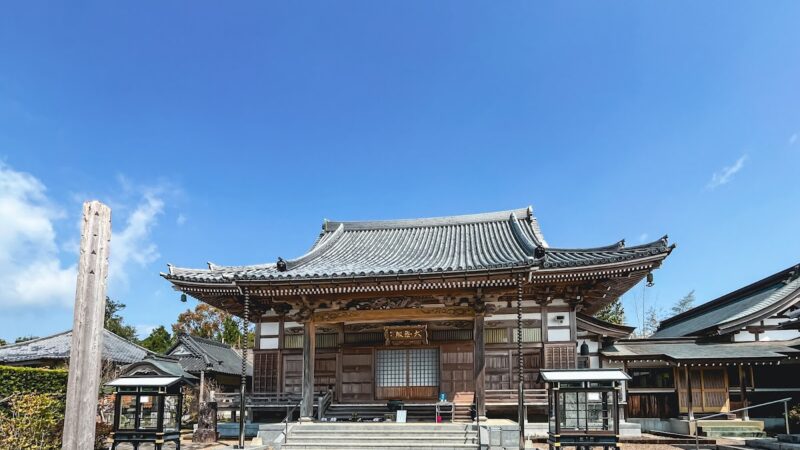
Nanshu-ji Temple maintains a tranquil atmosphere despite being located in the heart of Kagoshima City. Its simple yet dignified appearance, characteristic of a Rinzai Zen temple, brings peace of mind to visitors.
The main hall, built during the Meiji era, retains its original appearance despite several renovations. The grounds are lush with ancient trees, allowing visitors to enjoy the beauty of nature throughout the seasons.
Goshuin Information: Goshuin (Temple Seal) Offered at Nanshu-ji Temple
Features of the Goshuin
Nanshu-ji Temple offers goshuin. The goshuin features the temple name “Nanshu-ji” written in ink and stamped with the temple’s seal. As a temple associated with Saigo Takamori, it is popular among history buffs and goshuin collectors.
Time and Location of Goshuin Issuance
Goshuin are available at the temple office. The hours for receiving goshuin (temple stamps) are generally from 9:00 AM to around 5:00 PM, but these may vary depending on memorial services and events. It is recommended to call ahead to confirm.
You can bring your own goshuincho (stamp book) or receive a pre-written goshuin. The offering fee is generally around 300 to 500 yen.
Points for a Goshuin Pilgrimage
Besides Nanshu-ji Temple, there are many other historical temples and shrines in Kagoshima City. For a goshuin pilgrimage course focusing on places associated with Saigo Takamori, it is recommended to visit Nanshu Cemetery, Terukuni Shrine, and the site of Fukusho-ji Temple in conjunction with Nanshu-ji Temple.
About the Rinzai Zen Shokoku-ji School
What is the Rinzai Zen School?
The Rinzai Zen school, to which Nanshu-ji Temple belongs, is a branch of Zen Buddhism. Its founder was Linji Yixuan of China, and it was introduced to Japan during the Kamakura period by Eisai. It emphasizes enlightenment through seated meditation and is characterized by its practice using koans (Zen dialogues).
Characteristics of the Shokokuji School
The Shokokuji school is a branch of the Rinzai sect of Zen Buddhism, with Shokokuji Temple in Kyoto as its head temple. Shokokuji Temple is a historically significant temple founded in 1382 (Eitoku 2) by Ashikaga Yoshimitsu. Kinkakuji Temple (Rokuonji Temple) and Ginkakuji Temple (Jishoji Temple) also belong to the Shokokuji school.
Nanshu-ji Temple belongs to the Shokokuji school due to its historical origins, as it was established by Ogino Dokuen, the head priest of Shokokuji Temple.
Tourist Attractions Around Nanshu-ji Temple
Nanshu Cemetery
Nanshu Cemetery, located about 10 minutes by car from Nanshu-ji Temple, is the site of Saigo Takamori’s grave. It is the resting place of Saigo Takamori and the soldiers of the Satsuma army who died in the Satsuma Rebellion. Visiting both Nanshu-ji Temple and the cemetery will allow for a deeper understanding of Saigo Takamori’s life.
Terukuni Shrine
Terukuni Shrine, located in the center of Kagoshima City, is a shrine dedicated to Shimazu Nariakira. You can commemorate the achievements of Shimazu Nariakira, known as a wise ruler who laid the foundation for the Meiji Restoration.
Kagoshima Castle (Tsurumaru Castle) Ruins
The site of Kagoshima Castle, the former residence of the Shimazu family, is now home to the Kagoshima Prefectural History and Art Center, Reimeikan. It’s a popular tourist attraction where you can learn about Kagoshima’s history.
Sengan-en Garden (Iso Garden)
Sengan-en Garden, a former villa of the Shimazu family, is a beautiful garden that incorporates Sakurajima volcano as a borrowed landscape. It is also one of the constituent assets of the World Cultural Heritage site “Sites of Japan’s Meiji Industrial Revolution.”
Manners and Precautions for Visiting Nanshu-ji Temple
Etiquette for Visiting Temples
At Nanshu-ji Temple, a Rinzai Zen Buddhist temple, the following etiquette is fundamental for visiting temples.
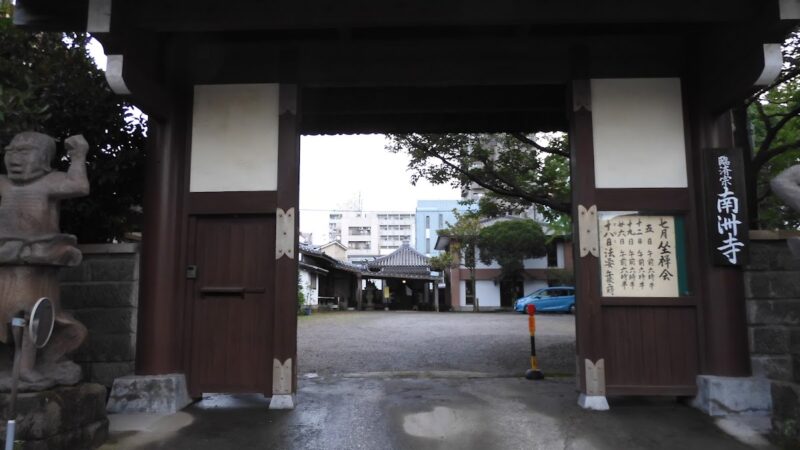
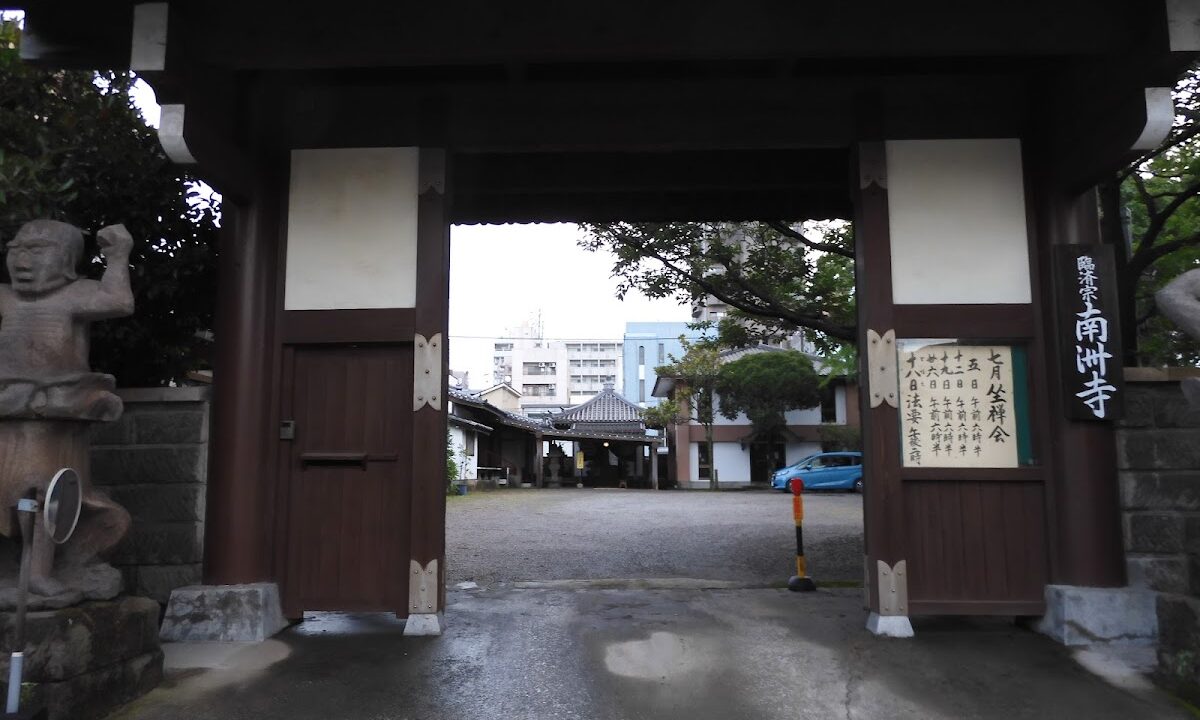
- A Bow at the Temple Gate: Bow at the temple gate before entering the temple grounds.
- Purifying at the Water Basin: If there is a water basin, purify your hands and mouth.
- Worship at the Main Hall: Join your hands in prayer in front of the main hall and offer your prayers quietly.
- A Bow Upon Departure: Bow at the temple gate again when leaving the temple grounds.
Photography
Photography is generally permitted on the temple grounds, but photography inside the main hall or of Buddha statues may be prohibited. Please check with the temple office or review any posted notices before taking photographs.
Clothing and Belongings
There are no specific dress code requirements, but please dress appropriately when visiting a temple. Remember to take precautions against the heat in summer and warm clothing in winter. If you wish to receive a temple stamp (Goshuin), please prepare your stamp book and offering.
Annual Events and Memorial Services at Nanshu-ji Temple
Memorial Service for Saigo Takamori
A memorial service is held around September 24th each year to commemorate the anniversary of Saigo Takamori’s death. Many people who admire Saigo Takamori attend to remember his virtues.
Memorial Service for Gessho Shonin
A memorial service is also held on the anniversary of Gessho Shonin’s death, preserving the spirit of the patriots of the late Edo period.
Other Annual Events
As a Rinzai Zen temple, Buddhist events such as Obon and Higan are also held. Please contact the temple office for detailed schedules.
Contact Information for Nanshu-ji Temple
For inquiries regarding visiting hours, memorial service dates, issuance of temple seals, and other questions, please contact Nanshu-ji Temple directly.
Address: 23-22 Minamirinji-cho, Kagoshima City, Kagoshima Prefecture 892-0834
Access: Approximately 5 minutes on foot from Shin-yashiki Station on the Kagoshima City Tram
Checking opening hours and any events by phone before your visit will allow for a smoother visit.
The History of Buddhism in Kagoshima and the Anti-Buddhist Movement
The Intensity of the Anti-Buddhist Movement in the Satsuma Domain
After the Meiji Restoration, the anti-Buddhist movement (a movement to expel Buddhism) occurred nationwide, but it was particularly intense in Kagoshima Prefecture (the former Satsuma Domain). The anti-Buddhist movement, which intensified from 1869 (Meiji 2), resulted in the closure of almost all temples within the Satsuma Domain, and the destruction of many Buddhist statues and artifacts.
The Significance of the Establishment of Nanshu-ji Temple
Within this historical context, the establishment of Nanshu-ji Temple (then a temporary branch temple of Shokoku-ji Temple) in 1876 (Meiji 9) was a symbolic event in the revival of Buddhism in Kagoshima. Thanks to the efforts of Abbot Ogino Dokuen, the flame of Buddhism was rekindled in Kagoshima.
The fact that the standing statue of Fudo Myoo enshrined at Nanshu-ji Temple survived the anti-Buddhist movement is also miraculous. This ancient Buddha statue is still carefully preserved today as a valuable living witness to the history of Buddhism in Kagoshima.
Summary: The Significance of Visiting Nanshu-ji Temple
Nanshu-ji Temple is a temple with many historical values, including its connection to Saigo Takamori, a hero of the Meiji Restoration, the burial place of Gessho Shonin, a patriot of the late Edo period, and the precious standing statue of Fudo Myoo that survived the anti-Buddhist movement.
Located in the heart of Kagoshima City, Nanshu-ji Temple offers a tranquil atmosphere where one can reflect on history, making it an unmissable spot for Kagoshima sightseeing.
As a temple of the Rinzai sect’s Shokoku-ji branch, its connection to the head temple Shokoku-ji in Kyoto is particularly interesting, allowing visitors to feel the historical ties between Kagoshima and Kyoto.
A visit to Nanshu-ji Temple offers diverse ways to enjoy it, whether it’s a historical walk exploring places associated with Saigo Takamori, collecting temple stamps, or simply finding a place to quietly tranquilize your mind. When you visit Kagoshima, be sure to stop by Nanshu-ji Temple and experience the spirit of the Meiji Restoration and the history of Buddhism in Kagoshima.
Nanshu-ji Temple is more than just a tourist spot; it is a meaningful place where the history of Japan’s modernization, the inheritance of Buddhist culture, and the faith of the people intersect.