Matsubara Shrine (Kagoshima City, Kagoshima Prefecture) Complete Guide | A Thorough Explanation of History, Deities, Blessings, Goshuin (Shrine Seals), and Access
Nearby nestled south of Tenmonkan, Kagoshima City’s bustling downtown area, is the historic Matsubara Shrine, dedicated to Shimazu Takahisa, the 15th head of the Shimazu family. Born after the turbulent history of the anti-Buddhist movement of the Meiji era, this shrine is affectionately known locally as “Daitsusama” and is also revered as a rare “god of teeth.”
This article comprehensively covers everything you need to know before visiting Matsubara Shrine, including its history, deities, blessings, highlights within the grounds, goshuin information, and access methods.
Basic Information about Matsubara Shrine
Shrine Name: Matsubara Shrine
Location: 3-35 Matsubara-cho, Kagoshima City, Kagoshima Prefecture 892-0833
Former Shrine Rank: Prefectural Shrine
Annual Festival Dates: April 5th, October 5th
Common Name: Daitsusaa
Shrine Emblem: Maruju (Shimazu family crest)
Telephone Number: 099-226-0220
Matsubara Shrine is located in the heart of Kagoshima City, within walking distance of the Tenmonkan shopping district. Despite its urban location, the shrine grounds are enveloped in a tranquil atmosphere, providing a peaceful space for visitors.
Deities Enshrined at Matsubara Shrine
Main Deity: Kunimukeisatakahiko-no-Mikoto (Shimazu Takahisa)
The main deity enshrined at Matsubara Shrine is Kunimukeisatakahiko-no-Mikoto, also known as Shimazu Takahisa. Shimazu Takahisa (1514-1571) was the 15th head of the Shimazu family, ruling Satsuma Province during the Sengoku period and is known as a wise ruler who greatly contributed to the expansion of the Shimazu family’s power.
Takahisa, together with his father, Shimazu Tadayoshi (Nisshinsai), dedicated himself to the unification and development of the Shimazu family, laying the foundation for the unification of the three provinces of Satsuma, Osumi, and Hyuga. He also implemented progressive policies, such as allowing the propagation of Christianity. His reign is remembered and passed down through generations as “Takahisa’s Reign.”
Deities Enshrined in the Side Shrine
Along with the main deity, Lord Shimazu Takahisa, the following deities are enshrined in the side shrine.
- Amenominakanushi-no-kami: The primordial god of the universe
- Takamimusubi-no-kami: The god of creation
- Kamimusubi-no-kami: The god of generation
- Amaterasu-Omikami: The sun goddess, the ancestral god of the imperial family
- Toyouke-Daimyojin: The god of food and industry
- Hirata Sumisada: A loyal retainer who committed suicide to follow Lord Shimazu Takahisa in death
Hirata Sumisada is particularly known as a loyal retainer who committed suicide to follow his lord in death when Lord Takahisa died in 1571 (Eiroku 14). He is enshrined in the same sanctuary in honor of his loyalty. Even today, the shrine preserves the nails used by Hirata Sumiyoshi when he committed suicide, a testament to his profound loyalty.
History of Matsubara Shrine
The Era of Nanrinji Temple (Edo Period)
The site where Matsubara Shrine currently stands was once home to a temple called Matsubara-san Nanrinji. Nanrinji was a branch temple of Fukushoji Temple, founded by Shimazu Takahisa himself in 1556. Fukushoji Temple is a renowned temple known as the Shimazu family’s ancestral temple, and Nanrinji also had deep ties to the Shimazu family.
Throughout the Edo period, Nanrinji Temple attracted worshippers in this area and served as a spiritual center for the local people. The history of Nanrinji Temple as a temple spanned approximately 300 years, deeply rooted in the Matsubara region.
The Anti-Buddhist Movement and the Transformation into a Shinto Shrine (Meiji Era)
After the Meiji Restoration, the Satsuma Domain experienced a particularly intense anti-Buddhist movement. From 1868 (Meiji 1) to 1869 (Meiji 2), temples within the Satsuma Domain were successively abolished, and many Buddhist statues and artifacts were destroyed.
Nanrinji Temple was also unable to escape this wave of anti-Buddhist movement and was abolished in 1869 (Meiji 2). However, the reverence for Lord Shimazu Takahisa did not disappear, and in the same year, Matsubara Shrine was founded on the temple’s site. Thus, while transforming from a Buddhist temple to a Shinto shrine, its role as a sacred site dedicated to Lord Shimazu Takahisa continued.
Promotion to Prefectural Shrine and Development
Under the Meiji era’s shrine ranking system, Matsubara Shrine was ranked as a Prefectural Shrine. This meant it was recognized as an important shrine within Kagoshima Prefecture. Since then, Matsubara Shrine, located in the heart of Kagoshima City, has attracted many worshippers.
The shrine’s torii gate displays the Shimazu family crest, “Maruju,” a testament to its connection to the Shimazu family. While the current shrine building was rebuilt after the war, its majestic presence continues to impress many visitors.
Benefits of Matsubara Shrine
Matsubara Shrine is believed to offer a variety of benefits, attracting worshippers with diverse wishes.
Prayer for Health and Recovery from Illness
Due to the compassion shown to the people during the reign of Lord Shimazu Takahisa, the shrine is believed to offer blessings for health and recovery from illness. In particular, the belief in it as the “god of teeth,” as described later, is widely known as part of the prayer for health.
Career Success and Advancement
Many worshippers visit the shrine to pray for career advancement and success, drawing on the achievements of Lord Takahisa, who contributed greatly to the development of the Shimazu family during the Sengoku period. Business professionals and executives are also frequent visitors. ### Protection from Misfortune and Good Fortune
Due to the divine power of the gods enshrined alongside Amaterasu Omikami, you can expect blessings of protection from misfortune and good fortune. Many people visit this shrine at important turning points in their lives.
Academic Success and Passing Exams
Due to Lord Shimazu Takahisa’s understanding of civilian politics and education, students and their parents also visit the shrine to pray for academic success and passing exams.
Faith as the “God of Teeth”
The most distinctive aspect of Matsubara Shrine’s faith is its aspect as the “God of Teeth”. This faith, rare nationwide, has an interesting origin.
Origin as the God of Teeth
From the tradition that Lord Shimazu Takahisa had strong and healthy teeth during his lifetime, the shrine came to be worshipped as the “god who protects dental health.” Furthermore, Lord Takahisa’s longevity (living to 57 years old was considered long-lived at the time) is also thought to be associated with dental health.
This belief aligns with modern medical understanding that dental health is linked to overall health, and it continues to hold meaning across generations.
Special Ceremony on National Caries Prevention Day
Every year on June 4th, National Caries Prevention Day (now “Dental and Oral Health Week”), a special ceremony is held at Matsubara Shrine. Many worshippers visit on this day to pray for dental health, and members of the dental association also attend.
Prayers are offered, and prayers are made for the dental and overall health of the worshippers. This event has become a characteristic feature of Kagoshima and is sometimes covered by local media.
Visits by Dental Professionals
Many dental professionals, including dentists and dental hygienists, visit the shrine, praying for success in opening their practices or for safety in their daily work. There are also many elderly people visiting to pray for dental treatment or for the comfort of their dentures.
Places Associated with Okubo Toshimichi
Matsubara Shrine is a place deeply connected to Okubo Toshimichi, one of the three great figures of the Meiji Restoration.
The Oyura Incident and the Okubo Family’s Hardships
The Oyura Incident, which occurred in the Satsuma Domain during the late Edo period, was a political dispute over the succession of the domain lord. In this incident, Okubo Toshimichi’s father, Okubo Toshiyo, was in danger of being punished for his involvement.
It is said that the young Okubo Toshimichi prayed daily at Matsubara Shrine (then known as Nanrinji Temple) for his father’s punishment to be lenient. Perhaps due to his fervent prayers, Toshiyo’s punishment was relatively light, and he was later pardoned.
Okubo Toshimichi’s Faith
This experience is believed to have held significant meaning in Okubo Toshimichi’s life. The gratitude Okubo felt towards the gods and Buddhas who saved his father from danger is said to have influenced his spirituality afterward.
Even today, Matsubara Shrine remains a place associated with Okubo Toshimichi, attracting history buffs and local history researchers.
Highlights of the Shrine Grounds
Main Shrine and Worship Hall
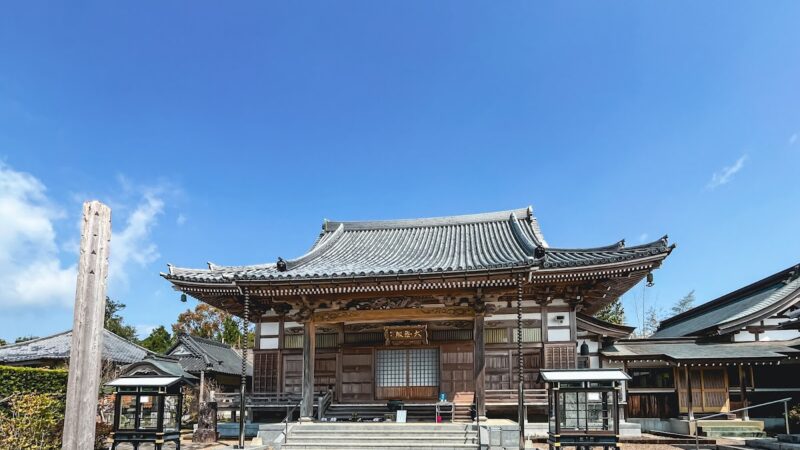
The main shrine of Matsubara Shrine, though rebuilt after the war, boasts a dignified structure. The worship hall offers a quiet space for prayer, allowing visitors to forget the hustle and bustle of the city.
Torii Gate and the Maruju Family Crest
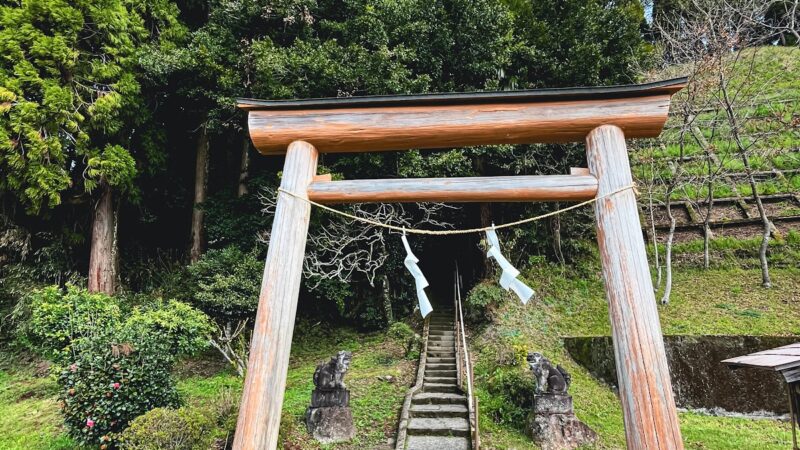
The torii gate at the entrance of the shrine displays the Maruju family crest of the Shimazu family. This crest symbolizes Matsubara Shrine’s connection to the Shimazu family and is a popular spot for photography.
Old Torii Gate
Walking towards National Route 225 from the back of the shrine, you will find the old torii gate of Matsubara Shrine still standing. This old torii gate is a remnant of the former approach to the shrine and a valuable historical structure that conveys the history of the shrine to the present day. Still standing despite the passage of time, this torii gate is preserved as part of the historical landscape of the region.
Shrine Precincts
Several shrines are enshrined within the grounds of Matsubara Shrine.
- Inari Okami: God of business prosperity and abundant harvests
- Ichikishima-hime no Mikoto: Goddess of water and performing arts, identified with Benzaiten
These shrines also attract their own devotions, and many worshippers visit them after paying their respects at the main shrine.
Annual Events of Matsubara Shrine
Annual Festival (April 5th and October 5th)
The annual festival is held twice a year, in spring and autumn. It is an important festival commemorating the virtues of Lord Shimazu Takahisa and praying for the peace and well-being of worshippers.
National Tooth Decay Prevention Day Festival (Around June 4th)
As mentioned above, a special festival is held to pray for dental health. This is a unique event at Matsubara Shrine, attracting many dental professionals and general worshippers.
New Year’s Visit
Many people visit the shrine for their first shrine visit of the new year. Due to its convenient location in Tenmonkan, many people visit while shopping or dining, making it especially lively during the first three days of the year.
Goshuin (Shrine Seal) Information
Matsubara Shrine offers Goshuin.
Reception Hours: Usually 9:00 AM – 5:00 PM (may vary depending on the season)
Offering Fee: Approximately 300-500 yen
The Goshuin features the calligraphy of “Matsubara Shrine” and the shrine’s crest (a circle with a cross). You can bring your own Goshuin book or receive a pre-printed Goshuin. We highly recommend receiving one as a memento of your visit.
Access and Parking Information
Access by Public Transportation
Using the City Tram (Kagoshima City Tram)
- Approximately 5 minutes on foot from Tenmonkan-dori tram stop
- Approximately 7 minutes on foot from Takamibaba tram stop
- Approximately 8 minutes on foot from Izuro-dori tram stop
The city tram is a major mode of transportation for sightseeing in Kagoshima city, and the Tenmonkan area is accessible from multiple tram stops.
Using the Bus
Approximately 5 minutes on foot from the “Tenmonkan” bus stop served by various bus companies such as Kagoshima Kotsu, Nangoku Kotsu, and JR Kyushu Bus.
Access by Car
From Kagoshima Chuo Station
Approximately 10 minutes (approximately 2 km)
From Kagoshima Airport
Approximately 40 minutes (using the expressway)
From Kagoshima IC on the Kyushu Expressway
Approximately 20 minutes
Parking
Matsubara Shrine does not have its own parking lot, so you will need to use nearby coin-operated parking lots. There are many paid parking lots in the Tenmonkan area, but they can get crowded on holidays, so we recommend using public transportation.
Nearby Tourist Attractions
Matsubara Shrine is located in the heart of Kagoshima City, so there are many tourist attractions nearby.
Tenmonkan
Kagoshima’s largest shopping and entertainment district. An area where shopping, dining, and entertainment are concentrated, perfect for a stroll after visiting the shrine.
Terukuni Shrine
A shrine dedicated to Shimazu Nariakira. Located about a 10-minute walk from Matsubara Shrine, many people visit both.
Saigo Takamori Statue
A symbolic landmark of Kagoshima. Located about a 15-minute walk from Matsubara Shrine.
Shiroyama Observatory
A scenic spot offering panoramic views of Kagoshima city and Sakurajima. About a 10-minute drive from Matsubara Shrine.
Sengan-en Garden (Iso Garden)
The Shimazu family’s villa. One of the constituent assets of the World Cultural Heritage site “Sites of Japan’s Meiji Industrial Revolution.”
Manners and Points for Visiting a Shrine
Basic Worship Etiquette
- Bow before passing through the torii gate
- Purify your body and mind at the water basin
- Bow twice, clap twice, and bow once in front of the main hall
- Visit the subsidiary shrines within the grounds
- Bow once again at the torii gate when leaving
Attire for Visiting a Shrine
There are no strict dress code regulations, but it is desirable to wear modest attire that reflects the sacred nature of the place.
Photography
Photography is generally permitted within the shrine grounds, but please be considerate of other visitors. It is considered good manners to refrain from taking photographs inside the shrine buildings.
Summary of the Charms of Matsubara Shrine
Matsubara Shrine is a shrine that encapsulates the history and culture of Kagoshima. It enshrines Shimazu Takahisa, a renowned lord of the Sengoku period, and its history, which has spanned the turbulent era of the anti-Buddhist movement, can be said to be the very history of modern Kagoshima.
Matsubara Shrine is a special place in Japan due to its unique belief in the “God of Teeth,” its historical significance as a site associated with Okubo Toshimichi, and its tranquil atmosphere despite its urban location in Tenmonkan.
When visiting Kagoshima, be sure to stop by Matsubara Shrine, experience the legacy of Shimazu Takahisa, pray for good dental health, and spend some time finding peace in its serene grounds. Its convenient location, easily accessible from shopping and dining in Tenmonkan, is another attractive feature.
Experience history, pray for health, and find inner peace. Matsubara Shrine is a treasure of Kagoshima, offering much to those of us living in the modern age.
References and Related Information
- Kagoshima Prefectural Shrine Association, “Matsubara Shrine”
- Matsubara Shrine Official Website
- “Kagoshima Prefectural History”
- “History of the Shimazu Family”
- Kagoshima City Board of Education Cultural Properties Division Materials
*Please note that visiting hours and event schedules may change. For the latest information, please check the Matsubara Shrine official website or call them.
—
Matsubara Shrine is a special place where the history and faith of Kagoshima breathe life into. We hope this article will help make your visit to Matsubara Shrine more fulfilling.