Complete Guide to Kōsenji Temple (Satsuma Town, Kagoshima Prefecture): History and Highlights of a Medieval Temple that Survived the Anti-Buddhist Movement
Kōsenji Temple, located in Hirose, Satsuma Town, Satsuma District, Kagoshima Prefecture, is an ancient temple of the Jōdo Shinshū Honganji sect with a history of over 700 years. It preserves extremely rare medieval temple architecture within Kagoshima Prefecture and, as one of the few temples that survived the fierce anti-Buddhist movement of the Meiji Restoration, it holds immense historical and cultural value.
Basic Information about Kōsenji Temple
Location: 1175 Hirose, Satsuma-cho, Satsuma-gun, Kagoshima Prefecture
Sect: Jodo Shinshu Honganji-ha
Mountain Name: Matsuo-san
Founded: Einin 5 (1297)
Phone Number: 0996-53-1732
Cultural Property Designation: The inner sanctuary of the main hall is a Kagoshima Prefecture designated tangible cultural property (building)
Access: Approximately 30 minutes by car from JR Kyushu Shinkansen Sendai Station, approximately 15 minutes by car from Minami Kyushu Expressway Satsuma-cho IC
History of Kōsenji Temple: Over 700 Years of Changes
Founding in the Kamakura Period and the Shibuya Clan
The history of Kōsenji Temple dates back to Einin 5 (1297). It is believed to have originated when the Shibuya clan, a powerful local lord in Satsuma Province at the time, built a Kannon Hall. The Shibuya clan was a samurai family that migrated from Sagami Province to Satsuma Province, and they played a significant role in the development and governance of this region.
Initially known as “Matsuo-dera,” it was a center of Kannon worship, attracting the faith of the local people. From the late Kamakura period to the Nanboku-cho period, Satsuma was in the midst of intense political upheaval, but Matsuo-dera survived this turbulent period.
Relocation and Conversion to a Zen Temple in the Muromachi Period
In 1398 (Oei 5), the temple relocated to its current location in Hirose. It is said that at the same time as this relocation, the temple was reorganized as a Zen Buddhist temple and renamed “Matsuo-san Kōzen-ji.” This period was the height of the Muromachi Shogunate, and it is thought that the widespread influence of Zen Buddhism in samurai society at that time played a significant role.
The current main hall’s interior is believed to date from the late 15th century (mid-Muromachi period) based on its architectural style, and it is highly likely that it was built shortly after the relocation. This inner sanctuary is an extremely valuable example of medieval temple architecture, one of the few remaining in Kagoshima Prefecture.
Edo Period: As the Family Temple of the Sashi Family
During the Edo period, Kōsenji Temple became the family temple of the Sashi family, a branch of the Shimazu clan who were private lords in this region. The Sashi family, as a branch of the Shimazu family who ruled the Satsuma Domain, governed the area centered around Miyanojo, and Kōsenji Temple was maintained under the patronage of the Sashi family.
During this period, the temple functioned as a religious and cultural center of the region, becoming deeply rooted in the community under the danka system (parishioner system). This strong connection with the Shimazu family played a crucial role in the temple’s survival during the later anti-Buddhist movement.
The Meiji Restoration and the Storm of Anti-Buddhist Movement
After the Meiji Restoration, Kagoshima Prefecture was one of the regions in Japan where the anti-Buddhist movement was most intense. Between 1868 and 1871, the Satsuma Domain implemented a thorough anti-Buddhist policy, abolishing almost all temples within its territory. As a result, over 1,000 temples were destroyed, Buddhist statues and artifacts were burned or sold, and monks were forced to renounce their vows.
It is believed that Kōsenji Temple survived this brutal storm of destruction largely because it housed the memorial tablet of Keijuin, the daughter of Shimazu Yoshihiro. Keijuin was an important woman in the Shimazu family, and the temple, as a hall enshrining her memorial tablet, was spared destruction.
It is believed that the temple’s current name, “Kōsenji,” was adopted during this period. In a time when almost all temple architecture dating back to before the Edo period has been lost in Kagoshima Prefecture, the existence of Kōsenji Temple is extremely exceptional and holds immeasurable value in the religious and architectural history of Kagoshima.
Architecture and Cultural Properties of Kōsenji Temple
Main Hall Inner Sanctuary: Prefectural Designated Tangible Cultural Property
The greatest highlight of Kōsenji Temple is the inner sanctuary of the main hall, which is designated as a Kagoshima Prefecture Designated Tangible Cultural Property (building). It was officially designated as a prefectural cultural property on April 21, 2000.
Construction Period: Late 15th Century (Mid-Muromachi Period)
Architectural Style: Medieval temple architecture influenced by Zen Buddhist style (Tang style)
Features: The pillars, ceiling, and other original materials remain almost entirely intact.
The inner sanctuary is considered one of the oldest wooden buildings in Kagoshima Prefecture, and is a valuable historical site that conveys the dignified character of wood that has aged for over 500 years and the architectural techniques of the medieval period. The architectural style shows a strong influence of Zen Buddhist architecture of the time, making it an important resource for understanding the state of medieval Buddhist architecture in Satsuma.
Ceiling Paintings and Sculptures: The World of the Pure Land
The ceiling of the inner sanctuary is adorned with magnificent decorations. Particularly noteworthy are the following works of art:
Dragon Painting: A painting of a dragon remains on the ceiling, depicted as a protector of Buddhist teachings. In Buddhism, the dragon holds significant meaning as a divine beast that controls water and as a protector of Buddhist law.
Bird of Paradise Sculpture: The ceiling features a sculpture known as the “Bird of Paradise.” This represents a mythical bird said to inhabit the Pure Land in Buddhist Pure Land thought, serving to inspire worshippers to desire rebirth in paradise.
These decorations convey the style of temple decoration from the medieval to early modern periods, demonstrating the high skill and faith of the craftsmen of the time. Although there is some deterioration due to age, many parts retain their original colors and shapes, making them works of high art historical value.
Architectural Structure Features
The structure of the main hall of Kōsenji Temple has several noteworthy features:
- Woodwork Techniques: Traditional woodworking techniques with minimal use of nails are employed, and the joints between columns and beams are precisely crafted.
- Column Thickness and Placement: The columns supporting the inner sanctuary are thick and heavy, creating a structure that can withstand natural disasters such as earthquakes. The fact that the building has been supported for over 500 years without major damage demonstrates the high level of architectural technology of the time.
- Lighting and Ventilation: The design ensures adequate lighting and ventilation, a characteristic of medieval temple architecture. This has contributed to the excellent preservation of the wood.
Cultural Value of Kōsenji Temple
Uniqueness in Kagoshima Prefecture
The cultural value of Kōsenji Temple lies not simply in its age, but in its survival within the unique historical context of Kagoshima Prefecture.
During the anti-Buddhist movement of the Meiji era, temples in Kagoshima Prefecture were almost completely destroyed. Currently, there are very few surviving examples of temple architecture from before the Edo period in Kagoshima Prefecture, and it is almost no exaggeration to say that Kōsenji Temple is virtually the only one dating back to the medieval period.
Therefore, Kōsenji Temple is academically important for the following reasons:
- The only surviving example that reveals the reality of medieval Buddhist architecture in Satsuma
- A living witness that tells the history of the anti-Buddhist movement
- Specific remains that show the relationship between the Shimazu clan and Buddhism
- Materials that show the regional characteristics of medieval temple architecture in the provinces
Importance from a National Perspective
Even nationwide, there are limited examples of 15th-century temple architecture where the original materials remain almost intact. In particular, in the Kyushu region, many medieval temple buildings were lost due to the wars of the Sengoku period, fires in the Edo period, the anti-Buddhist movement of the Meiji era, and modern urban development.
Kōsenji Temple, having survived all these crises, holds a significant place in the study of Japanese architectural and religious history as a precious historical site.
The Relationship Between Kōsenji Temple and the Shimazu Family
Keijuin and Kōsenji Temple
The greatest reason Kōsenji Temple survived the anti-Buddhist movement lies in its relationship with Keijuin, the daughter of Shimazu Yoshihiro.
Shimazu Yoshihiro (1535-1619) was a renowned general of Satsuma who was active from the Sengoku period to the early Edo period, and is known for the “Shimazu retreat” at the Battle of Sekigahara. The fact that his daughter Keijuin’s memorial tablet was enshrined at Kōsenji Temple acted as a shield, protecting the temple from destruction by the Meiji government.
In the Satsuma domain, there was a tendency to respect historical sites related to the Shimazu family, the founders of the domain. The nature of Keijuin’s memorial hall allowed for an emphasis on its role as a memorial hall for the Shimazu family rather than its religious function.
Role as the Family Temple of the Sashi Family
Throughout the Edo period, Kōsenji Temple served as the family temple of the Sashi family, a branch of the Shimazu clan. The Sashi family ruled this region as private lords based in Miyanojo.
Under the patronage of the Sashi family, Kōsenji Temple enjoyed economic stability, and its buildings were properly maintained. This Edo-period protection contributed to the excellent state of architectural preservation.
Points of Interest at Kōsenji Temple
Exterior Highlights
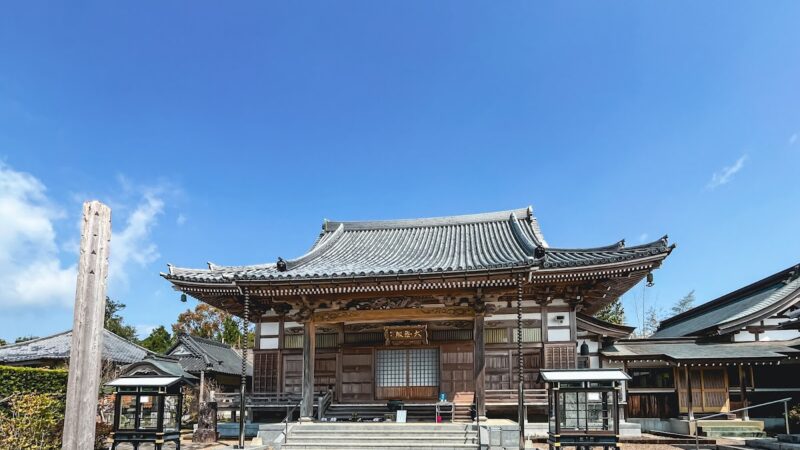
When visiting Kōsenji Temple, first pay attention to the exterior of the main hall.
- Roof Shape: The roof slope and eaves are characteristic of medieval temple architecture.
- Wood Texture: The unique color and texture of wood that has withstood over 500 years of wind and snow.
- Surrounding Environment: The natural environment surrounding the temple conveys the atmosphere of the past.
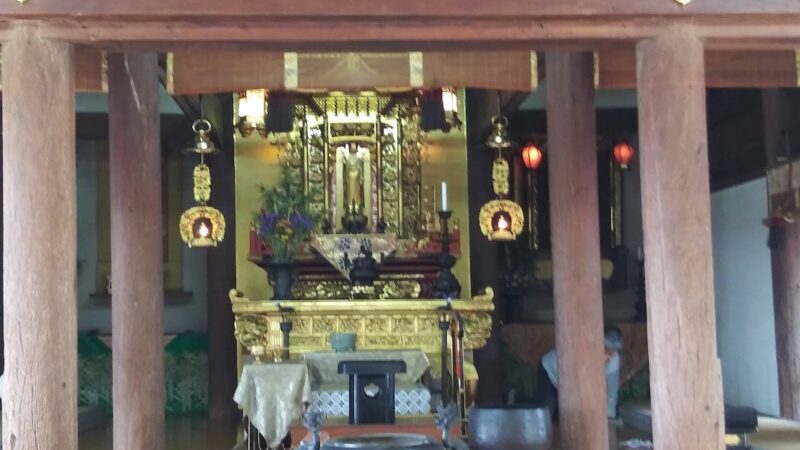
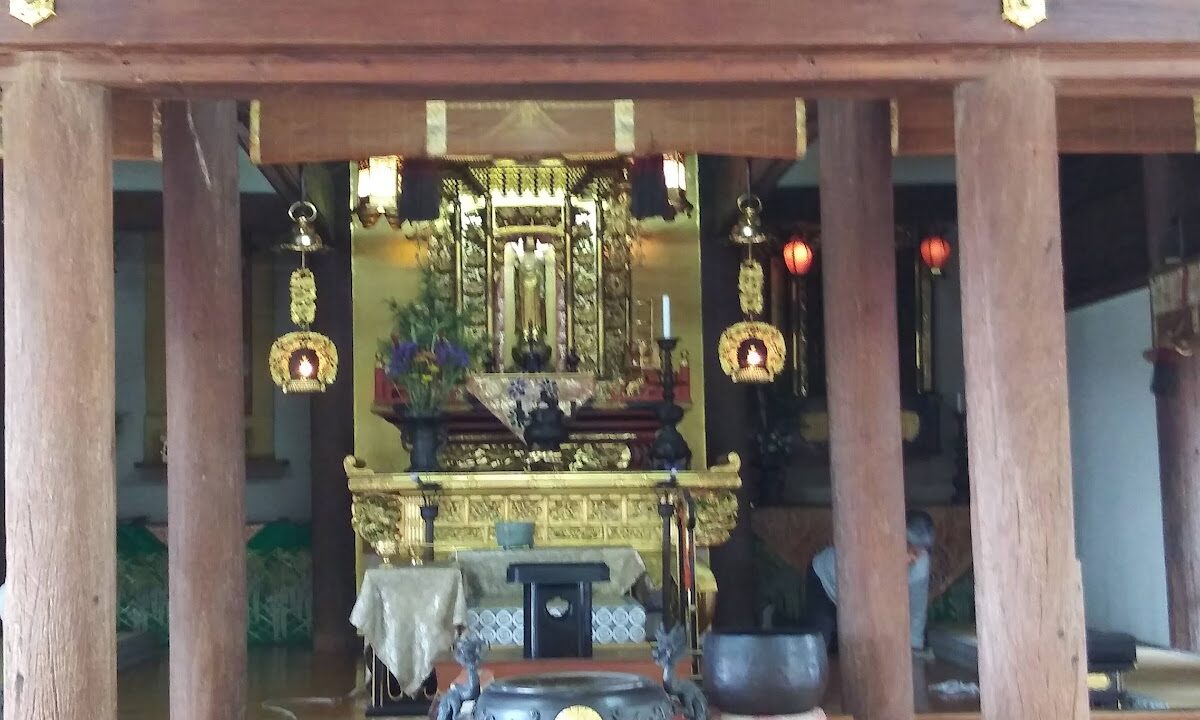
Viewing the Inner Sanctuary
The inner sanctuary is usually closed to the public, but it may be possible to visit during special openings or with prior notice. When visiting, please pay attention to the following points:
- Ceiling Decoration: Carefully observe the dragon painting and the carving of the birds of paradise.
- Condition of the Columns: How the original wood has been preserved.
- Atmosphere of the Space: The unique solemnity of a medieval religious space.
Photography
From the perspective of cultural property protection, there may be restrictions on photography in the inner sanctuary. We recommend calling ahead to confirm the areas where photography is permitted.
Access and Nearby Attractions
Access to Kōsenji Temple
Public Transportation:
- Approximately 30 minutes by taxi from JR Kyushu Shinkansen Sendai Station
- Bus service is limited, so please check the timetable in advance.
By Car:
- Approximately 15 minutes from Minami-Kyushu Expressway Satsuma-cho IC
- Approximately 40 minutes from Kyushu Expressway Kurino IC
- Parking: Several parking spaces are available on the temple grounds.
Address: 1175 Hirose, Satsuma-cho, Satsuma-gun, Kagoshima Prefecture
Nearby Attractions
When visiting Kōsenji Temple, we recommend also visiting other attractions around Satsuma-cho:
Miyanojo Onsenkyo (Miyanojo Hot Spring Village): Satsuma-cho is also known as a hot spring resort, offering high-quality hot springs. It’s perfect for relaxing after visiting Kōsenji Temple.
Bamboo Grove Park: Satsuma-cho’s bamboo grove is known for its beautiful scenery and is ideal for a stroll.
Satsumasendai City Tourist Attractions: If you venture towards Sendai, you’ll find historical sites in Satsumasendai City and Sendai Port, the gateway to Koshikijima Island.
Notes on Visiting Kōsenji Temple
Temple Etiquette
Kōsenji Temple is a temple that still conducts religious activities. Please observe the following manners when visiting:
- Be Quiet: Refrain from loud conversations and noisy behavior.
- Dress Code: Avoid overly revealing clothing and dress appropriately.
- No Unauthorized Entering: Do not enter the main hall or restricted areas without permission.
- Photography Permission: Always obtain permission before taking photographs.
Visiting Hours and Contact Information
If you wish to visit the inner sanctuary, we recommend contacting us by phone in advance.
Phone Number: 0996-53-1732
Please note that visits may not be possible during religious services or events. Prior contact is essential if you wish to guarantee a visit.
Preservation and Future of Kōsenji Temple
Cultural Property Protection Efforts
The inner sanctuary of Kōsenji Temple’s main hall is designated as a Kagoshima Prefecture Tangible Cultural Property and is being preserved and managed with the support of the prefecture and the town. Regular inspections and necessary repairs are being carried out to ensure that this valuable cultural property is passed on to future generations.
While wooden buildings inevitably deteriorate over time, proper maintenance can allow them to be preserved for hundreds of years to come. The preservation of Kōsenji Temple is one of the important issues in Kagoshima Prefecture’s cultural property protection administration.
Connection with the Community
Kōsenji Temple is a historical and cultural symbol of Satsuma Town and is cherished by the local residents. It is also used as a place for local history education and is a subject of local history studies for elementary and junior high school students.
Furthermore, its value as a tourist resource is recognized, and it is an important element in promoting tourism in Satsuma Town.
Kōsenji Temple: A Tale of Kagoshima’s History
Kōsenji Temple is more than just an old temple; it symbolizes the complex history of Kagoshima.
Having weathered the turbulent waves of history—the Buddhist culture of Satsuma in the Middle Ages, the relationship between the Shimazu clan and Buddhism, and the fierce anti-Buddhist movement of the Meiji Restoration—Kōsenji Temple embodies the very history of Kagoshima.
While many tourists visiting Kagoshima Prefecture are drawn to its natural beauty and hot springs, such as Sakurajima, Kirishima, and Ibusuki Onsen, visiting historical sites like Kōsenji Temple will allow for a deeper understanding of Kagoshima’s culture and history.
Summary: The Charm of Kōsenji Temple
Kōsenji Temple (Satsuma-cho, Satsuma-gun, Kagoshima Prefecture) is a temple worth visiting for the following reasons:
- Historical Value: Founded in 1297 (Einin 5), it is an ancient temple with a history of over 700 years.
- Architectural Value: The main hall’s inner sanctuary from the 15th century remains, making it one of the oldest wooden buildings in Kagoshima Prefecture.
- Cultural Property Value: A valuable medieval temple building protected as a prefecturally designated tangible cultural property.
- Historical Significance: An extremely rare temple that survived the anti-Buddhist movement of the Meiji era.
- Artistic Value: Medieval temple decorations remain, such as the dragon painting on the ceiling and the carvings of birds of paradise.
When visiting Kagoshima Prefecture, be sure to visit Kōsenji Temple and feel the weight of history conveyed by this valuable cultural property. Nestled in a tranquil mountain village, this ancient temple offers the perfect place to escape the hustle and bustle of modern life and reflect on Japanese history and culture.