Sugawara Shrine (Tokiyoshi, Satsuma-cho, Kagoshima Prefecture) Complete Guide
Sugawara Shrine, located in Tokiyoshi, Satsuma-cho, Kagoshima Prefecture, is a beloved local shrine. Dedicated to Sugawara no Michizane, known as the god of learning, it is a place of worship visited by students and those praying for academic success. This article provides a detailed explanation of Sugawara Shrine’s history, enshrined deities, blessings, highlights of the grounds, and access methods.
Basic Information on Sugawara Shrine
Location: Tokiyoshi, Satsuma-cho, Satsuma-gun, Kagoshima Prefecture
Enshrined Deity: Sugawara no Michizane
Main Blessings: Academic success, passing exams, improvement in literary arts, protection from evil
Sugawara Shrine is located in the heart of the Tokiyoshi district of Satsuma-cho and has long been a spiritual pillar of the local community, attracting the faith of local people. Nestled in a tranquil setting, the temple grounds offer a peaceful retreat from the hustle and bustle of everyday life, providing worshippers with a place to find peace and tranquility.
About the Enshrined Deity, Sugawara no Michizane
Who was Sugawara no Michizane?
Sugawara no Michizane (845-903) was a scholar, poet, and politician who flourished during the Heian period. He displayed exceptional talent from a young age, serving the imperial court as a scholar of literature. His outstanding learning and honest character led to his promotion to Minister of the Right, but he was exiled to Dazaifu due to political intrigue, where he spent the rest of his life.
After his death, a series of strange occurrences in the capital led to fears of Michizane’s vengeful spirit, and he eventually came to be worshipped as “Tenjin-sama.” Currently, his worship has shifted from that of a vengeful spirit to a nationwide reverence as the “god of learning,” drawing on his exceptional scholarship.
Why is there a Sugawara Shrine in Tokiyoshi?
While there are numerous Tenjin and Sugawara Shrines in Kagoshima Prefecture, the Sugawara Shrine in Tokiyoshi is also believed to have been founded as a symbol of the region’s emphasis on education and respect for learning. The Satsuma Domain was known for its emphasis on education, developing its own unique educational system, such as the Gochu education system. Within this culture of prioritizing culture and education, the faith in Sugawara no Michizane, the god of learning, took root.
Benefits of Sugawara Shrine
Academic Success and Prayer for Passing Exams
The most representative benefit of Sugawara Shrine is academic success and prayer for passing exams. During exam season, students preparing for high school and university entrance exams, and their families, visit to pray for success. Many worshippers pray for improved academic performance and passing exams, drawing on the outstanding knowledge of Sugawara no Michizane.
Improvement in Literary Arts and Calligraphy
Sugawara no Michizane is also known as an excellent Chinese poet and man of letters, and is worshipped by people who wish to improve their literary and calligraphic skills. Children learning calligraphy and people involved in writing professions pray for improvement in their skills.
Protection from Evil and Good Fortune
Tenjin-sama also has an aspect as a thunder god, and is believed to offer protection from evil and disaster. People facing turning points in their lives or in their unlucky years visit to pray for good health and safety for their families.
Sincerity and Honesty
Sugawara no Michizane is also known for his sincere and honest character, and some worshippers pray to cultivate a sincere heart and walk the right path, drawing on his virtues.
History of Sugawara Shrine
Circumstances of Founding
While detailed records of the exact founding date of Sugawara Shrine are not always available, it has a long history of being worshipped as the local guardian deity. As the Tokiyoshi district developed, it was nurtured as a spiritual center for the community.
Satsuma Domain and Tenjin Worship
Education was highly valued in the Satsuma Domain, and local schools and private academies were established throughout the region. In this culture that valued learning, faith in Sugawara no Michizane, the god of learning, naturally spread. Not only the children of samurai, but also commoners developed the custom of visiting Tenjin shrines to pray for their children’s academic success.
Connection with the Community
Sugawara Shrine, as the tutelary shrine of the Tokiyoshi district, was central to local festivals and annual events. During the spring and autumn festivals, local residents gathered to pray for a bountiful harvest and the peace and prosperity of the community. Even today, it functions as a place that strengthens the bonds of the local community.
Highlights of the Shrine Grounds
Main Hall
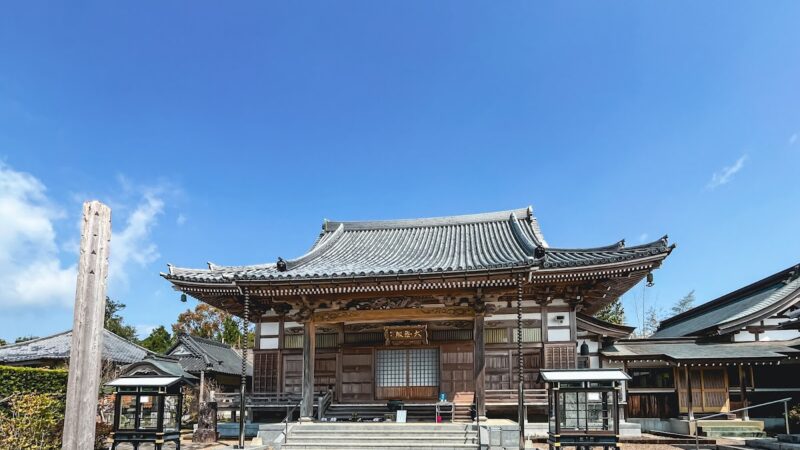
The main hall of Sugawara Shrine is built in the traditional style of shrine architecture. The shrine possesses a simple yet solemn atmosphere, quietly welcoming visitors. In front of the main hall, worshippers pay their respects to Sugawara no Michizane with the ritual of two bows, two claps, and one bow, and then convey their wishes.
Worship Hall
The worship hall, where worshippers offer their prayers, is kept clean and provides a comfortable environment for worship. Many ema (votive tablets) are dedicated on the ema rack, expressing prayers for success in exams and academic achievement.
Nature within the Shrine Grounds
The shrine grounds are planted with trees that display different appearances with each season. In spring, the fresh greenery is beautiful, and in autumn, the autumn leaves color the grounds. A stroll through the quiet grounds provides a refreshing and cleansing experience for the soul.
Cow Statue (Nade-ushi)
Many Tenjin and Sugawara shrines have statues of cows, which are closely associated with Michizane. There is a possibility that the Sugawara Shrine in Tokiyoshi also has a cow statue, and it is believed that stroking its head will bestow wisdom. It is also said that if you alternately stroke the same part of the cow statue as the part of your body that is ailing, your illness will be cured.
Annual Events and Festivals
First Shrine Visit of the New Year
At the start of the new year, local residents visit the shrine for their first shrine visit of the year, praying for safety throughout the year, the well-being of their families, and academic success. The shrine is bustling with many worshippers from New Year’s Day through the third day.
Spring Grand Festival
In spring, the grand festival is held to pray for a bountiful harvest and the development of the region. Local residents gather, and traditional Shinto rituals are solemnly performed.
Tenjin Festival (Summer Festival)
Sometimes, the Tenjin Festival is held around the anniversary of the death of Sugawara no Michizane (June 25th in the old lunar calendar). In some regions, it is celebrated grandly as a summer festival, with stalls lining the streets and events for children to enjoy.
Autumn Grand Festival
The Autumn Grand Festival is held to give thanks for the autumn harvest and to pray for a bountiful harvest in the following year. Traditional local performing arts are sometimes offered, making it a place for the preservation of local culture.
Special Visits During Exam Season
During the exam season from January to March, the number of students and their families visiting to pray for success increases. People can be seen offering ema (votive tablets) and receiving amulets for passing exams.
Etiquette and Manners for Visiting the Shrine
Basic Visiting Etiquette
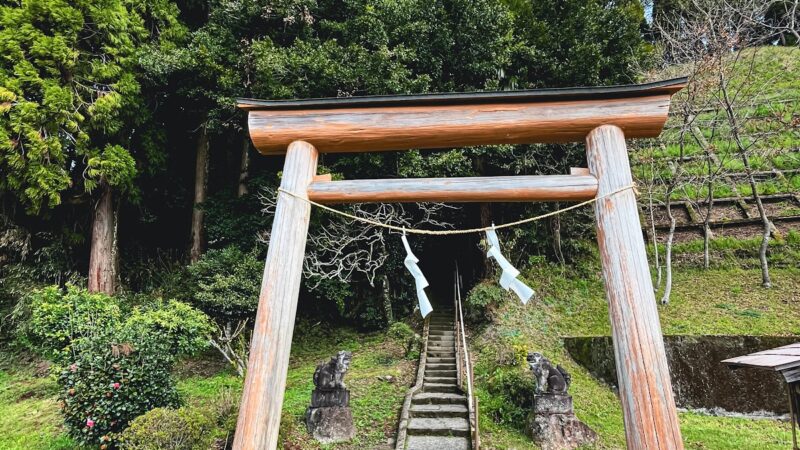
- Bow Before Passing Through the Torii Gate: Before entering the sacred area, bow before the torii gate.
- Purify at the Water Basin: Purify your hands and mouth at the water basin. Hold the ladle in your right hand and wash your left hand, then switch to your left hand and wash your right hand, then switch back to your right hand, receive water in your left hand, and rinse your mouth.
- Walk along the edge of the approach to the shrine: The center of the approach is considered the path for the gods, so walk along the edge.
- Worship at the main shrine: Quietly place your offering, ring the bell, and worship using the two bows, two claps, and one bow ritual.
- Bow when leaving: When leaving through the torii gate, turn around, bow once, and then leave.
How to dedicate an ema (votive tablet)
Ema can be obtained at the shrine office or gift shop. Write your wish and name on the ema and dedicate it on the ema rack. Due to privacy concerns, more people are now writing only initials or their first name instead of their full name.
How to obtain an amulet
Amulets for academic success and passing exams can be obtained at the shrine office. The term “receive” is used, rather than “buy.” Old amulets should be returned to the shrine or burned in a purification ceremony.
Access Methods
Access by Car
Access from the Kyushu Expressway:
- Approximately 30-40 minutes from the Kyushu Expressway’s “Kagoshima Kita IC” or “Satsumasendai Miyako IC” via National Route 267.
- From the center of Satsuma Town, take prefectural or town roads to the Tokiyoshi area.
Parking: There may be parking spaces for visitors near the shrine, but the size may be limited. Temporary parking may be provided during festivals.
Access by Public Transportation
If using JR:
- Get off at Kawauchi Station on the JR Kyushu Kagoshima Main Line.
- From Kawauchi Station, take a bus or taxi towards Satsuma Town.
- From Satsuma Town to the Tokiyoshi area, bus service is limited, so taking a taxi is recommended.
If using the bus:
- While there are bus services operated by companies such as Nangoku Kotsu, the number of services is limited, so it is recommended to check the timetable in advance.
- It is within walking distance from the nearest bus stop.
Notes
- Satsuma Town is located in the mountainous area of northern Kagoshima Prefecture, so public transportation is limited.
- Access by car is the most convenient.
- Please search for “Sugawara Shrine Tokiyoshi” or the address using a car navigation system or smartphone map app.
- Due to the mountainous area, roads may be icy in winter, so caution is required when driving.
About the Tokiyoshi Area of Satsuma Town
Overview of Tokiyoshi District
Satsuma Town is located in Satsuma District, in the northern part of Kagoshima Prefecture. It was formed in 2005 through the merger of Miyanojo Town, Tsuruta Town, and Satsuma Town. Tokiyoshi District is one of the oldest settlements within Satsuma Town, and is primarily an agricultural area.
Regional Characteristics
Tokiyoshi District is a quiet rural area surrounded by abundant nature. Rice cultivation and livestock farming are thriving, and a strong community has formed among the residents. Sugawara Shrine serves as the spiritual center of this region, deeply rooted in the lives of its inhabitants.
Nearby Tourist Attractions
Miyanojo Onsen: Located in the heart of Satsuma Town, Miyanojo Onsenkyo offers high-quality hot springs.
Shioyama: A sacred mountain with an elevation of 1,067 meters, offering opportunities for mountain climbing and hiking. The summit offers panoramic views of the Satsuma Peninsula.
Tsuruta Dam: A large-scale dam constructed on the Kawauchi River system, the area around the dam lake boasts a rich natural landscape.
Satsuma Town Historical Museum: A facility where you can learn about the local history and culture.
Guidelines for Visiting Sugawara Shrine
Have a Grateful Heart
Visiting a shrine is not just about making requests, but also about expressing gratitude for daily safety and health. It’s important to first express gratitude, and then pray for your wishes.
Continuous Effort
Even if you pray to the god of learning for success, that alone won’t guarantee success. Just as Sugawara no Michizane himself deepened his knowledge through extraordinary effort, it’s crucial that visitors themselves don’t neglect their daily studies and efforts. Have faith that the gods support those who strive.
Respect for the Community
Sugawara Shrine is the local guardian shrine. When visiting, show respect for the lives and beliefs of the local residents and pray quietly. It is important to observe proper etiquette, such as keeping the temple grounds and surrounding area clean and avoiding excessive noise.
Legends Associated with Sugawara no Michizane
Connection to Plum Blossoms
Sugawara no Michizane is known for his deep love of plum blossoms. He cherished a plum tree at his Kyoto home and composed the famous waka poem, “When the east wind blows, send forth your fragrance, plum blossoms; do not forget spring, even though your master is gone,” when he was exiled to Dazaifu. The “Flying Plum Blossom Legend,” which tells of this plum tree flying to Dazaifu overnight, is widely known. Therefore, plum trees are often planted at Tenjin shrines, and the plum blossom has become a symbol of Michizane.
Connection to Oxen
Michizane was born in the Year of the Ox and is said to have had a deep connection with oxen. Furthermore, there is a legend that when he died in Dazaifu, the ox-drawn cart carrying his body broke down midway, and he was buried at that spot. Because of this, statues of oxen are often placed at Tenjin shrines.
Aspect as a Thunder God
After the death of Sugawara no Michizane, thunderstorms and other unusual occurrences continued in Kyoto, leading to the belief that his vengeful spirit had transformed into a thunder god. Therefore, Tenjin-sama is also worshipped as a god of protection against lightning and misfortune.
The Role of Sugawara Shrine in Modern Times
Symbol of Educational Support
Even in modern times, Sugawara Shrine symbolizes the importance of education. During exam season, many students and their families visit to pray for academic success. The shrine goes beyond being a mere place of worship, fulfilling a social role in raising awareness of education.
Center of the Local Community
In rural areas facing depopulation and an aging population, shrines play a crucial role in maintaining community bonds. They provide opportunities for residents to gather and interact through festivals and cleaning activities.
Place for Cultural Transmission
Festivals and annual events at shrines are valuable opportunities to pass on local traditional culture to the next generation. By participating in festivals, children can learn about local history and culture and cultivate a love for their hometown. ## Summary
Sugawara Shrine, located in Tokiyoshi, Satsuma-cho, Satsuma-gun, Kagoshima Prefecture, is the local guardian shrine dedicated to Sugawara no Michizane, the god of learning. It is revered by many worshippers, especially students, for its blessings related to academic success, passing exams, and improvement in literary arts.
Nestled in a tranquil environment, the shrine grounds offer a peaceful retreat from the hustle and bustle of daily life, providing solace not only to local residents but also to visitors. When visiting Satsuma-cho, why not stop by Sugawara Shrine and offer your prayers to the god of learning?
When visiting, offer your prayers quietly with a grateful heart and respect for the community. Remember that alongside your prayers to the gods, your own efforts are the best way to realize your wishes.
We hope that Sugawara Shrine will continue to be revered for many years to come, serving as a spiritual pillar of the community and a source of comfort for those aspiring to academic pursuits.