Complete Guide to Satsuma Yakushiji Temple (Kagoshima Prefecture) | History and Charm of the 48th Temple of the Kyushu 88 Sacred Sites and 108 Temples Pilgrimage
Overview
Onsenzan Satsuma Yakushiji Temple is a Shingon Buddhist temple of the Koyasan sect located in Kyūmei, Satsuma-cho, Satsuma-gun, Kagoshima Prefecture. As the 48th temple of the Kyushu 88 Sacred Sites and 108 Temples Pilgrimage, it is known as a sacred site visited by many pilgrims.
Built in the rich natural environment of the northern part of the Satsuma Peninsula, this temple is relatively new, having been founded in 1996 (Heisei 8) by the head priest Ryōhōbō. However, despite its short history, it enshrines Yakushi Nyorai (the Medicine Buddha) as its principal deity and attracts many worshippers praying for healing from illness and longevity.
The temple’s most distinctive feature is that, despite being a temple, it has an attached hot spring facility. For visitors seeking healing of mind and body, this temple offers a unique space where Buddhist teachings and the therapeutic benefits of hot springs are integrated.
Basic Information about Satsuma Yakushiji Temple
Sect
Satsuma Yakushiji Temple belongs to the Koyasan Shingon Sect. The Shingon Sect is a branch of Esoteric Buddhism founded by Kobo Daishi Kukai, and teaches the goal of achieving Buddhahood in this lifetime through the chanting of mantras. With Koyasan as its head temple, it is one of the major Buddhist sects in Japan, with many branch temples throughout the country.
Mountain Name and Temple Name
- Mountain Name: Onsenzan
- Temple Name: Satsuma Yakushiji
The mountain name “Onsen” evokes the image of a hot spring and is deeply related to the temple’s presence of a hot spring facility. “On” signifies sacred sound in Shingon Buddhism, and “Sen” symbolizes healing water.
Alternative Names
Satsuma Yakushiji Temple is affectionately known locally as “Yakushi-san of Kyūmei” or “the Temple of the Hot Springs.” It is also known as the “48th Temple” on the Kyushu 88 Temple Pilgrimage.
Principal Image
Standing Statue of Yakushi Nyorai
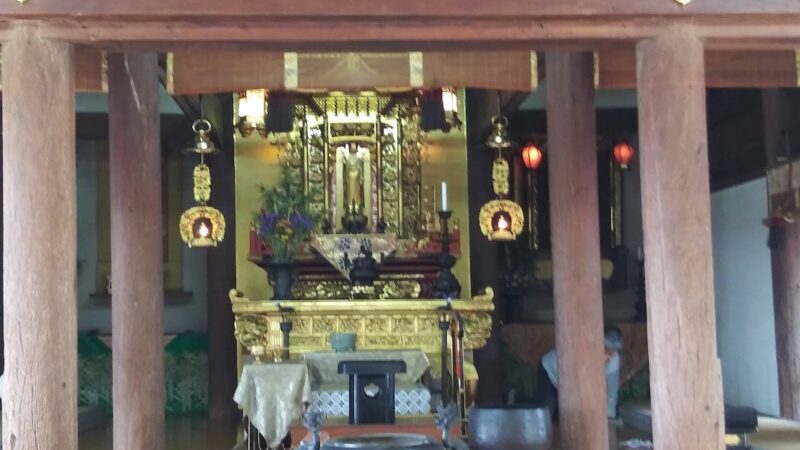
The principal image, a standing statue of Yakushi Nyorai, is a small Buddha statue, only 13 centimeters tall, but it is revered as a highly miraculous deity. Yakushi Nyorai, formally known as “Yakushi Rurikō Nyorai,” has been deeply worshipped since ancient times as the principal deity of the Eastern Pure Land of Lapis Lazuli, a Buddha who heals illnesses, extends life, and wards off disasters.
While the typical depiction shows Yakushi Nyorai holding a medicine jar in the left hand and forming the Abhaya Mudra with the right, this temple’s statue is a rare standing form. Visitors pray for recovery from illness, good health, and family safety. ### Buddhist Hymn
The Buddhist hymn of Satsuma Yakushi-ji Temple is designated as the 48th temple of the Kyushu Eighty-Eight Sacred Sites and One Hundred and Eight Pilgrimage. The hymn expresses Buddhist teachings and the temple’s history in the form of a waka poem, and it is believed that pilgrims accumulate merit by reciting it.
When visiting the temple, reciting this hymn while offering heartfelt prayers will lead to a deeper religious experience.
Access to Satsuma Yakushiji Temple
Location
570 Gumyo, Satsuma-cho, Satsuma-gun, Kagoshima Prefecture 895-1816
Phone Number
TEL: 0996-57-1282
Transportation Access
By Public Transportation
- Approximately 15 minutes by taxi from the former Miyanojo Station site
- Approximately 40 minutes by taxi from JR Kyushu Shinkansen “Sendai Station” or “Izumi Station”
By Car
- Head north on National Route 267 towards Oguchi City
- After passing Tsuruta Junior High School and Tsuruta Elementary School, there is a temple sign approximately 2 km ahead
- Approximately 30 minutes from Kyushu Expressway “Kurino IC”
- Approximately 40 minutes from Minami Kyushu West Bypass Expressway “Satsuma-Sendai Mizuhiki IC”
Parking
A parking lot for visitors is available on the temple grounds. It is free of charge.
Highlights of the Temple Grounds
Torii Gate and Stone Steps
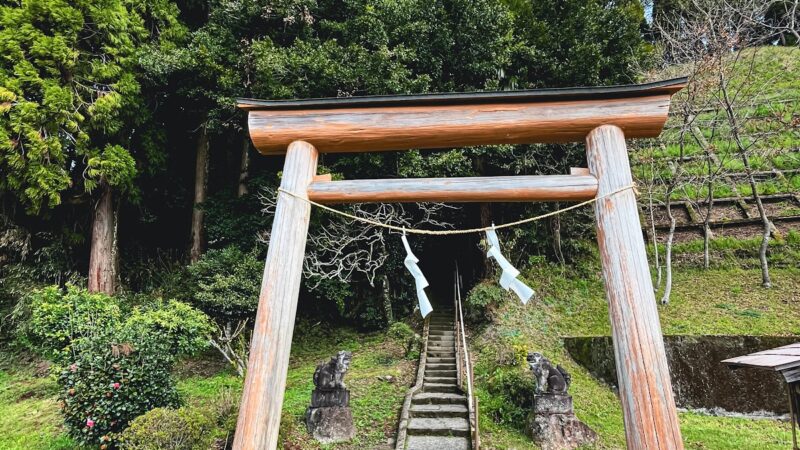
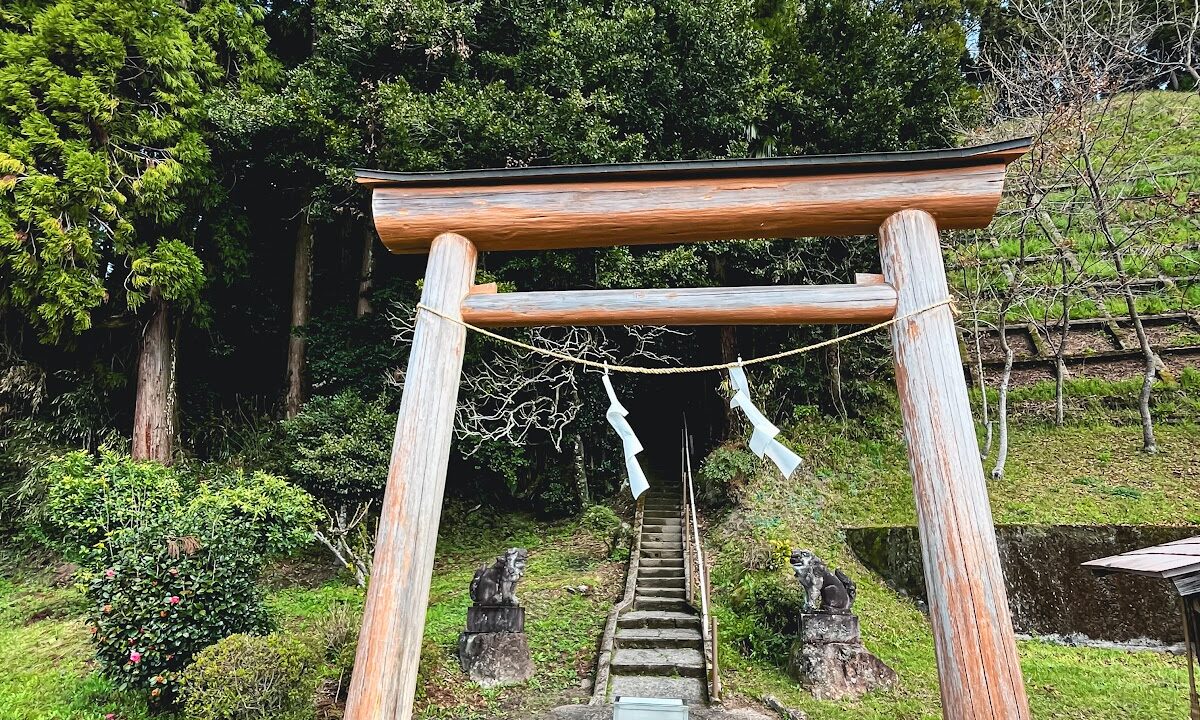
The first thing that catches your eye when visiting Satsuma Yakushi-ji Temple is the torii gate, a remnant of the syncretism of Shinto and Buddhism. Before the Meiji-era separation of Shinto and Buddhism, a form of worship that fused Shinto and Buddhism was common in Japan. The torii gate at this temple is a valuable relic that conveys this tradition to the present day.
Passing through the torii gate, stone steps lead to the main hall. Climbing these steps, step by step, shifts your mind from the secular world to a sacred space.
Guardian Hachiman Shrine
At the top of the stone steps is the guardian Hachiman Shrine, which enshrines a divided version of Tsurugaoka Hachimangu Shrine. Hachiman is known as the god of military fortune, but is also worshipped as the god of protection against misfortune and family safety.
At Satsuma Yakushi-ji Temple, the formal order of worship is to first visit the Hachiman Shrine, pray for the protection of the gods and Buddhas, and then proceed to the main hall. This can be seen as evidence that the spirit of syncretism of Shinto and Buddhism is still alive today.
Main Hall
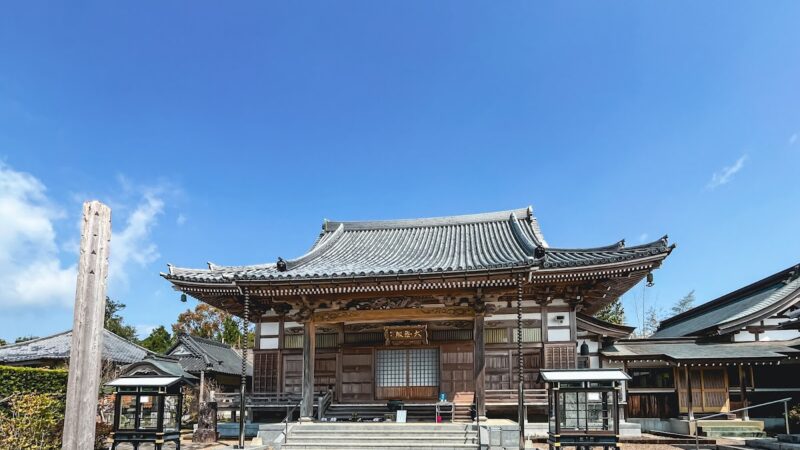
The main hall is a relatively new building, but it has a magnificent appearance incorporating traditional temple architectural styles. The principal image, a standing statue of Yakushi Nyorai (Medicine Buddha), is enshrined in the inner sanctuary, surrounded by statues of the Twelve Heavenly Generals.
The Twelve Heavenly Generals are warrior gods who serve as attendants of Yakushi Nyorai, protecting all sentient beings day and night. Each corresponds to one of the twelve zodiac signs, and there is a custom of praying especially to the general corresponding to one’s own zodiac sign.
Hot Spring Facility
The most distinctive feature of Satsuma Yakushi-ji Temple is the hot spring facility located within the temple grounds.
Temple with a Hot Spring Facility (Temple No. 48, Satsuma Yakushi-ji Temple)
Even looking at temples throughout Japan, temples with attached hot spring facilities are extremely rare. Satsuma Yakushiji Temple, based on the Buddhist philosophy of “mind and body as one,” aims to provide not only spiritual relief but also physical healing.
Hot Spring Benefits and Characteristics
The hot spring at Satsuma Yakushiji Temple is a natural hot spring that gushes from deep underground. The water is said to be effective for neuralgia, muscle pain, joint pain, frozen shoulder, paralysis, joint stiffness, bruises, sprains, chronic digestive diseases, hemorrhoids, cold sensitivity, post-illness recovery, fatigue recovery, and health promotion.
Because Yakushi Nyorai is the Buddha of healing, this hot spring is also called “Yakushi no Yu” (Yakushi’s Hot Spring) and is cherished as sacred water that heals the mind and body of worshippers.
Use of Hot Spring Facilities
Worshippers can use the hot spring facilities after their visit. By relieving the fatigue of the pilgrimage and refreshing both mind and body, they can prepare for their journey to the next temple.
The hot spring facility offers day-use bathing and is used by locals for health promotion. It also serves as a community space connecting the temple and the local area.
A Healing Space
The area surrounding Satsuma Yakushiji Temple is a quiet environment surrounded by abundant nature. The temple’s charm lies in its warmth, like returning to one’s hometown, and its approachable nature, making it easy to visit.
You can escape the hustle and bustle of the city, experience the luxury of connecting with Buddhism in nature, and heal your mind and body in the hot springs. For people weary of the stresses of modern society, it is a true place of healing.
About the Kyushu Eighty-Eight Temples and 108 Sacred Sites
Overview of the Sacred Sites
The Kyushu Eighty-Eight Temples and 108 Sacred Sites is a pilgrimage route modeled after the Shikoku Eighty-Eight Temples, involving visits to temples throughout Kyushu. It consists of 108 temples spanning seven prefectures: Fukuoka, Saga, Nagasaki, Kumamoto, Oita, Miyazaki, and Kagoshima. This sacred site was established for believers in Kyushu who found the Shikoku Pilgrimage difficult, and its focus is on the faith in Kobo Daishi (Kukai).
Role as the 48th Temple
Satsuma Yakushi-ji Temple is the 48th temple of the Kyushu 88 Temple Pilgrimage, a significant pilgrimage site within Kagoshima Prefecture. It plays a vital role in supporting the spiritual journey of pilgrims within its connections to the preceding and succeeding temples.
At the temple, pilgrims can receive a stamp in their pilgrimage notebook, which is cherished as proof of their pilgrimage.
Namu Daishi Henjo Kongo
“Namu Daishi Henjo Kongo” is a mantra praising Kobo Daishi Kukai. Pilgrims recite this mantra at each temple, praying for the protection of the Great Master.
“Namu” means to take refuge, “Daishi” refers to Kobo Daishi Kukai, and “Henjo Kongo” is Kukai’s initiation name (a name in Esoteric Buddhism). It is believed that by chanting this mantra, one can become one with Kobo Daishi and be guided by his teachings.
Pilgrims visiting Satsuma Yakushiji Temple also chant this mantra in front of the main hall, offering heartfelt prayers.
Annual Events at Satsuma Yakushiji Temple
New Year’s Visit and Shushō-e Ceremony
From January 1st to 3rd, the temple is bustling with visitors for their first shrine visit of the year. The Shushō-e ceremony, a New Year’s Buddhist service, is held, where prayers are offered for good health and safety for the family throughout the year.
Setsubun Ceremony
Around February 3rd, the Setsubun ceremony is held, where prayers for warding off evil are offered through bean-throwing. With the chant “Demons out, fortune in!”, people ward off misfortune and invite good fortune for the year.
Spring Equinox Service
The week centered around the spring equinox is when the Equinox service is held. Memorial services for ancestors are held, and many parishioners and believers visit to pay their respects.
Yakushi Nyorai Festival
The 8th of each month is considered the festival day of Yakushi Nyorai (Medicine Buddha), and a special memorial service is held. Worshippers visit to pray for recovery from illness and seek the protection of Yakushi Nyorai.
Autumn Equinox Service
The week centered around the autumn equinox is also when the Equinox service is held, offering gratitude and prayers to ancestors.
New Year’s Eve Bell Ringing
On New Year’s Eve, the New Year’s Eve bell is rung to cleanse away the 108 worldly desires. It is an important event for welcoming the new year with a pure heart.
Etiquette for Visiting Satsuma Yakushiji Temple
Basic Flow of Worship
- Bow at the Temple Gate (Torii): Bow before entering the temple grounds to compose yourself.
- Purify at the Water Basin: Cleanse your hands and mouth to purify yourself.
- Visit the Guardian Hachiman Shrine: First, visit the guardian shrine and pray for the protection of the gods and Buddhas.
- Worship at the Main Hall: Join your hands in prayer in front of the main hall, ring the bell, and chant “Namu Daishi Henjo Kongo.”
- Receive a Goshuin (temple stamp) at the Sutra Office: Receive a Goshuin in your sutra book.
- Stroll through the Temple Grounds: Stroll through the temple grounds quietly and reflect on the teachings of Buddhism.
Shingon Buddhist Etiquette
In Shingon Buddhism, the basic practice when visiting the main hall is to chant “Namu Daishi Henjo Kongo” three times. Chanting the Heart Sutra is also considered to bring merit.
The prayer beads are held in the left hand, and when joining hands in prayer, they are held between both hands. Shingon prayer beads consist of 108 beads, symbolizing the counting of worldly desires.
Nearby Attractions and Tourist Information
Satsuma Town Tourist Spots
Miyanojo Onsenkyo
A hot spring resort located about 15 minutes by car from Satsuma Yakushiji Temple. It has several hot spring facilities and is known for the quality of its spring water.
Shioyama
A sacred mountain with an elevation of 1,067 meters, it has been an object of mountain worship since ancient times. You can enjoy climbing and hiking there.
Tsuruta Dam
A large-scale dam constructed on the Sendai River, the surrounding area has been developed as a nature park.
Other Sacred Sites and Temples in Kagoshima Prefecture
When visiting Satsuma Yakushi-ji Temple, a deeper religious experience can be gained by visiting other sacred sites and temples in Kagoshima Prefecture.
Other Temples of the Kyushu Eighty-Eight Sacred Sites and 108 Temples
Temple No. 81 of the Kyushu Eighty-Eight Sacred Sites and 108 Temples: Nakadai-san Daisho-in
Daisho-in is an ancient Shingon Buddhist temple located in Miyazaki Prefecture, with Nakadai-san as its mountain name. Its principal image is Fudo Myoo, and it is known for its fire-walking rituals. As a temple that strongly preserves the traditions of Shugendo (mountain asceticism), it attracts many practitioners and worshippers.
The temple grounds contain a group of ancient stone Buddha statues, giving a sense of historical weight. It is one of the important temples among the Kyushu Eighty-Eight Sacred Sites and 108 Temples.
Kyushu 88 Sacred Sites, 108 Temples, Temple No. 29: Kounzan Kaiganji Temple
Kaiganji Temple is located in Fukuoka Prefecture and its mountain name is Kounzan. As its name suggests, it is built near the coast and is worshipped as a place of prayer for maritime safety and fishing prosperity.
The principal image is Kannon Bodhisattva, revered as a Buddha who saves all sentient beings with a compassionate heart. From the temple grounds, one can see the Genkai Sea, and the magnificent ocean view soothes the hearts of visitors.
Kyushu 88 Sacred Sites, 108 Temples, Temple No. 45: Kinryuzan Daikanji Temple
Daikanji Temple is a Shingon Buddhist temple located in Kumamoto Prefecture and its mountain name is Kinryuzan. The principal image is Amida Buddha, and it attracts devout believers who wish to attain rebirth in paradise.
The temple grounds have a magnificent main gate and main hall, where you can enjoy the beauty of traditional temple architecture. The garden, which blooms with flowers in every season, is also one of the highlights. ### Kyushu 88 Sacred Sites, 108 Temples, Temple No. 20: Kikyozan Sanmyoin
Sanmyoin is a Shingon Buddhist temple located in Saga Prefecture, with Kikyozan as its mountain name. Its principal image is Dainichi Nyorai, revered as the fundamental Buddha of Esoteric Buddhism.
The temple’s name, “Sanmyo,” represents the three wisdoms in Buddhism (Heavenly Eye, Destiny, and Extinction of Defilements), signifying the path to enlightenment. Nestled in a quiet mountain valley, it offers an environment suitable for meditation and spiritual practice.
Kyushu 88 Sacred Sites, 108 Temples, Temple No. 14: Myokenzan Torenji
Torenji is located in Fukuoka Prefecture, with Myokenzan as its mountain name. It possesses a unique form of worship that fuses Myoken faith with Buddhism, and enshrines Myoken Bodhisattva, the deification of the North Star.
The main hall also houses Yakushi Nyorai, and it is known as a place of prayer for healing from illness. Numerous old stone pagodas and stone Buddha statues remain on the temple grounds, testifying to its deep history.
Kyushu 88 Sacred Sites, 108 Temples, Temple No. 101: Naritasan Daishoji Temple
Daishoji Temple is a Shingon Buddhist temple located in Kagoshima Prefecture, with Naritasan as its mountain name. It was established as a branch temple of Naritasan Shinshoji Temple in Chiba Prefecture, and its principal deity is Fudo Myoo (Acala).
A Goma fire ritual is performed monthly, offering prayers to burn away worldly desires and fulfill wishes. As one of the temples nearing the end of the Kyushu 88 Sacred Sites, it attracts many pilgrims.
History and Future Prospects of Satsuma Yakushiji Temple
From Founding to the Present
Satsuma Yakushiji Temple was founded in 1996 (Heisei 8) by the head priest of Ryohobo Temple. Although our temple began as a newly established temple, it was quickly recognized as one of the 108 sacred sites of the Kyushu Eighty-Eight Temples Pilgrimage, welcoming many pilgrims.
Since its founding, the temple has valued its connection with the local community and has contributed to the health promotion of local residents through its hot spring facilities. The temple serves not merely as a religious institution, but also as a community center.
The Role of Temples in Modern Times
Satsuma Yakushiji Temple maintains its role as a traditional Buddhist temple while also demonstrating a flexible approach to meeting the needs of modern society. The addition of hot spring facilities is a symbolic example of this.
By providing integrated healing for both mind and body, we aim to offer comprehensive care for the stress and anxiety faced by modern people. This embodies the original vow of Yakushi Nyorai (Medicine Buddha) to “remove suffering and grant happiness.”
Future Prospects
Satsuma Yakushiji Temple will continue to be an important pilgrimage site of the Kyushu Eighty-Eight Temples Pilgrimage, serving as a spiritual haven for pilgrims. Furthermore, it is expected that the temple will continue its efforts to deepen its ties with the local community and apply Buddhist teachings to modern life.
Temples have a wide range of social roles to play, including spreading Buddhism to younger generations, participating in environmental protection activities, and preserving local culture. Satsuma Yakushi-ji Temple, with its pioneering efforts, will likely become a model for the future of temples.
Related Articles
For those who wish to learn more about other temples and shrines in Kagoshima Prefecture, including the other 88 sacred sites and 108 temples of Kyushu, please refer to the related articles below.
- How to Walk the Kyushu Pilgrimage: A Complete Guide from Preparation to Completion
- Pilgrimage to Sacred Sites in Kagoshima Prefecture: A Journey of History and Faith
- The History of Yakushi Nyorai Faith: The Buddha of Healing
- Hot Springs and Buddhism: The Philosophy of Mind-Body Unity
- The Teachings and Practices of the Koyasan Shingon Sect
Summary
Onsenzan Satsuma Yakushiji Temple is the 48th temple of the Kyushu 88 Sacred Sites and 108 Temples Pilgrimage, located in Satsuma Town, Kagoshima Prefecture. Although a relatively new temple, founded in 1996, it has the unique feature of having an attached hot spring facility, offering healing for both mind and body.
Belonging to the Koyasan Shingon sect, and enshrining Yakushi Nyorai as its principal deity, the temple attracts many worshippers praying for healing from illness and good health and longevity. It also retains a strong tradition of syncretism of Shinto and Buddhism, including the presence of a guardian Hachiman Shrine.
Satsuma Yakushiji Temple is a cherished place not only for pilgrims of the Kyushu 88 Temple Pilgrimage and 108 Sacred Sites, but also for local residents who visit for its hot springs. In a rich natural environment, you can experience the luxury of immersing yourself in Buddhist teachings and healing your mind and body in the hot springs.
When you visit Kagoshima, be sure to visit Satsuma Yakushiji Temple and experience its unique charm.
Comments
Please feel free to contact us with any questions or inquiries regarding your visit to Satsuma Yakushiji Temple. We also welcome testimonials and impressions from those who have actually visited.
The Kyushu pilgrimage is a precious opportunity to confront yourself and purify your soul. We hope that Satsuma Yakushiji Temple will be a helpful aid on your spiritual journey.
Namu Daishi Henjo Kongo