Saishoji Temple (Oiwa Bishamonten) Complete Guide | History, Benefits, and Visiting Information for One of Japan’s Three Great Bishamonten Temples in Ashikaga City, Tochigi Prefecture
Saishoji Temple, located in the western part of Ashikaga City, Tochigi Prefecture, is one of the leading sacred sites in the Kanto region, widely known by its common name, Oiwa-san Bishamonten. Along with Shigi-san in Nara and Kurama-san in Kyoto, it is counted as one of Japan’s Three Great Bishamonten Temples, boasting a history of over 1200 years as the oldest Bishamonten temple in the Kanto region. This article comprehensively explains information useful for visiting Saishoji Temple, including its historical background, benefits, annual events, and access methods.
Basic Information on Saishoji Temple (Oiwa-san Bishamonten)
Its official name is “Oiwa-san Tamon-in Saishoji Temple,” and it belongs to the Buzan branch of the Shingon sect. The main hall is located on the mountainside of Mt. Oiwa, with the head temple at the foot of the mountain. Because Bishamonten is also called Tamonten, the temple is named “Tamon-in.”
Location and Contact Information
- Address: 207 Oiwa-cho, Ashikaga City, Tochigi Prefecture
- Phone Number: 0284-21-8885
- Sect: Shingon-shu Buzan-ha
- Principal Deity: Bishamonten (Tamonten)
Located approximately 5km west of the center of Ashikaga City, surrounded by the rich natural environment of Mt. Oiwa. It is a place of worship, popular as one of the Ashikaga Seven Lucky Gods, and attracts many visitors.
History and Origins of Saishoji Temple
Founded in 745 AD
Saishoji Temple’s founding dates back to 745 AD. The origin of this temple lies in a legend from the Nara period, when the high-ranking Buddhist monk Gyōki Shōnin, while searching for a suitable sacred site to enshrine a pure gold statue of Bishamonten, had a divine being appear to him in a dream and guided him to Mount Ōiwa.
Gyōki Shōnin is known as a monk who traveled throughout Japan, contributing to the construction of bridges and temples. His establishment of a center for Bishamonten worship on Mount Ōiwa is considered an important step in the spread of Buddhism in the Kanto region. The Tenpyō era was the reign of Emperor Shōmu, a period when state Buddhism flourished.
Status as one of Japan’s Three Great Bishamonten Temples
Saishōji Temple is counted as one of Japan’s Three Great Bishamonten Temples, along with Shigi-san (Chōgosonshi-ji Temple) in Nara and Kurama-san (Kurama-dera Temple) in Kyoto. These three sacred sites have all flourished since ancient times as centers of Bishamonten worship, known for their blessings of military success, good fortune, protection from evil, and business prosperity.
In particular, Oiwayama Bishamonten is the oldest Bishamonten in the Kanto region and is considered the origin of Bishamonten worship in the Kanto area. Even after the Middle Ages, it attracted the faith of samurai and commoners alike, and was revered by samurai families, including the Ashikaga clan.
History of Oiwayama as a Sacred Site
Oiwayama has been revered as a sacred mountain since ancient times. Although its elevation is not particularly high at approximately 251 meters, its location overlooking Ashikaga city has made it an object of worship since ancient times. The entire mountain has been developed as a sacred site, with stone Buddha statues and stone pagodas scattered along the approach, conveying the atmosphere of Shugendo (mountain asceticism) to this day.
In the Middle Ages, it flourished as a training ground for Shugendo practitioners, and a unique religious culture was formed, fusing mountain worship and esoteric Buddhism. Even today, traces of the ascetic practices remain in the mountains, reflecting the deep history of this faith.
The Benefits and Faith of Bishamonten
What is Bishamonten?
Bishamonten is another name for Tamonten, one of the Four Heavenly Kings in Buddhism, and is a warrior god who guards the north. It originates from the Sanskrit word “Vaiśravana,” meaning “the one who listens well.” He is also identified with Kubera, the god of wealth, and is believed to bring blessings in both military fortune and financial prosperity.
In Japan, from the Heian period onward, he was deeply revered, especially among the samurai class, and became an object of prayer for victory in battle. He is also popular as one of the Seven Lucky Gods and is widely worshipped among commoners as a god of good fortune and prosperity.
Benefits Received at Saishoji Temple
The following benefits are believed to be received at Oiwayama Bishamonten:
- Good Fortune and Protection from Evil: To ward off misfortune and open up good luck.
- Academic Success: To receive wisdom and pray for academic success.
- Business Prosperity: To attract wealth and pray for business development.
- Long-lasting Military Fortune: To succeed in competitions and overcome difficulties.
- Family Safety: To pray for the health and peace of the family.
- Traffic Safety: To protect safe travels.
Especially known for its blessings of “Good Fortune and Protection from Evil” and “Academic Success,” the temple attracts many students and their parents during exam season. Many business owners also visit to pray for business prosperity, attracting a wide range of believers.
Annual Events and Unique Festivals of Saishoji Temple
Akutai Matsuri (Insult Festival)
The most famous event at Saishoji Temple is the “Akutai Matsuri”, held every year from midnight on New Year’s Eve to New Year’s Day. This unusual festival is a rare event nationwide, where worshippers hurl insults and abuse at monks.
Origin and Significance of the Insult Festival
There are several theories about the origin of the Insult Festival, but one theory suggests it began as part of the endurance training of ascetic monks. The festival symbolizes the purification of the mind by allowing worshippers to vent their daily frustrations and worldly desires, thus welcoming the new year with a pure heart.
No matter what insults are hurled at them by the worshippers, the monks endure silently, and finally respond with words of gratitude, saying, “Thank you.” This act embodies the Buddhist practice of patience (nin’niku).
Festival Flow
On New Year’s Eve, worshippers gather in the main hall and pour out their feelings to the monks. Words like “You monk!” and “Good-for-nothing!” are exchanged, but these are all part of the ritual to dispel worldly desires. Both worshippers and monks participate in the ceremony with smiles, creating a unique sense of unity.
The Waterfall Ritual
On the early morning of New Year’s Day, the “Waterfall Ritual” is held. This is a Shinto ritual to purify oneself and pray for good health throughout the year as one welcomes the new year. The ascetic practice of being struck by the waterfall in the bitter cold leaves a solemn impression on those who witness it, and it has become a deeply rooted New Year’s tradition in the community.
Other Annual Events
- Hatsumode (First Shrine Visit of the Year): The temple is bustling with many worshippers from New Year’s Day through the third day of the year.
- Setsubun Festival: Bean-throwing and prayers for warding off evil are held around February 3rd.
- Spring and Autumn Grand Festivals: Buddhist services to express gratitude and offer prayers to Bishamonten.
- Kanjin Shakyo-kai (Sutra Copying Session): An event to calm the mind through sutra copying.
- Gohonzon Bishamonten Ketsuen Daikaicho (Grand Opening of the Main Image of Bishamonten): The main image of Bishamonten is unveiled in special years.
The unveiling of the main image of Bishamonten is a rare opportunity that occurs only once every few years, attracting many believers from all over the country.
Highlights of Saishoji Temple
Main Hall (Oiwayama Bishamonten Main Hall)
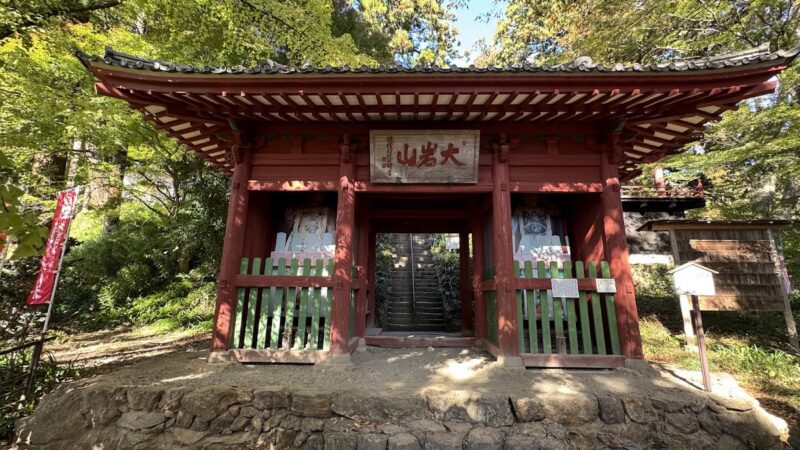
Located on the mountainside of Oiwayama, at an altitude of approximately 200 meters, the main hall is the central building of Saishoji Temple. This magnificent vermilion-painted building houses the principal image of Bishamonten. From the main hall, you can enjoy a panoramic view of Ashikaga city, and on clear days, you can even see as far as the Kanto Plain.
Saishoji Main Hall
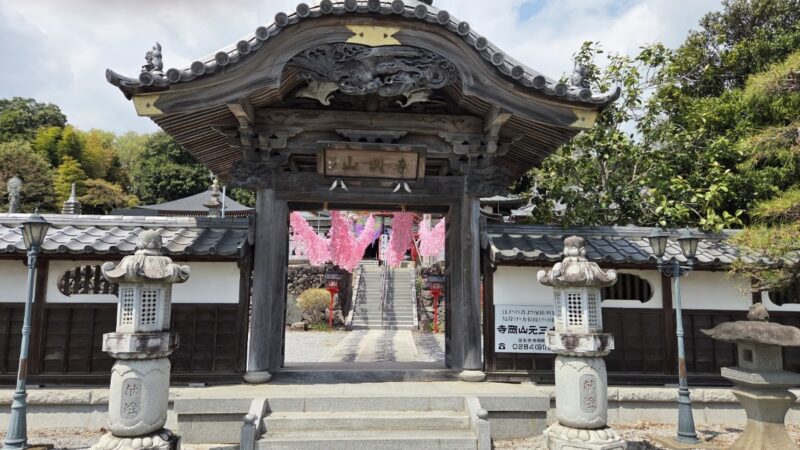
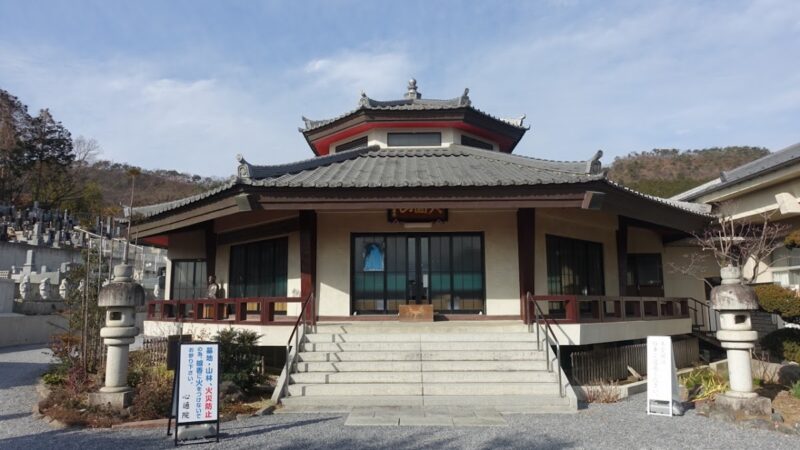
Located at the foot of Mt. Oiwa, the main hall functions as the head temple of the Oiwa-san Bishamonten main hall. This is where visitors are registered, goshuin (temple stamps) are issued, and various prayer requests are made. The grounds of the main hall are well-maintained, allowing visitors to enjoy seasonal flowers and plants.
Approach and Stone Buddhas
The approach leading from the foot of the mountain to the main hall is lined with numerous stone Buddhas and stone pagodas. These were donated between the Edo and Meiji periods and are valuable cultural assets that tell the history of faith. Walking along the approach and offering prayers to each stone Buddha provides a sense of spiritual cleansing.
Nature of Mt. Oiwa
Mt. Oiwa is blessed with abundant nature and is a popular hiking destination. You can enjoy the beautiful scenery of each season: cherry blossoms in spring, fresh greenery in early summer, and autumn leaves in fall. There’s also an observation deck near the summit, offering views of Ashikaga city, the Watarase River, and in the distance, Mount Akagi and the Nikko mountain range.
In 2021, a large-scale forest fire occurred in Ashikaga city, affecting the area around Mount Oiwa, but recovery is progressing thanks to the efforts of the local community.
Goshuin (Temple Seal)
Saishoji Temple offers goshuin as a memento of your visit. The goshuin, featuring the calligraphy and red seal of Bishamonten (Vaisravana), is popular among visitors. There’s also a goshuin as part of the Ashikaga Seven Lucky Gods pilgrimage, making it a great choice for those on the Seven Lucky Gods tour. Goshuin are available at the main hall, so please stop by during your visit.
Access Methods
Access by Train and Bus
From Ashikaga-shi Station (JR Ryomo Line/Tobu Isesaki Line)
- By Taxi: Approximately 15 minutes (Estimated fare: around 2,000 yen)
- By Local Bus: Take the Ashikaga City Community Bus “Matsuda Line” and get off at “Oiwayama Iriguchi” bus stop, then walk for approximately 20 minutes.
From Ashikaga-shi Station (Tobu Isesaki Line)
- Taking a taxi is convenient.
- Bus services are limited, so it is recommended to check the timetable in advance.
Access by Car
From Ashikaga IC (Kita-Kanto Expressway)
- Approximately 15 minutes (approximately 7 km)
- Take National Route 293 towards Oiwayama
From Sano-Fujioka IC (Tohoku Expressway)
- Approximately 30 minutes (approximately 20 km)
Parking
Free parking is available near the main hall of Saishoji Temple and the main hall of Oiwayama Bishamonten Temple. However, it becomes extremely crowded during events such as New Year’s visits and the Akuchi Matsuri festival, so using public transportation is recommended.
Map Information
You can find detailed locations by searching for “Oiwayama Bishamonten” and “Saishoji Temple” on the Ashikaga City Tourism Association map or various map apps. For car navigation systems, please search for “207 Oiwa-cho, Ashikaga City, Tochigi Prefecture” or the phone number “0284-21-8885”.
Nearby Tourist Attractions
Ashikaga School
Ashikaga School, known as the oldest school in Japan, is approximately a 20-minute drive from Saishoji Temple. It was an educational institution that produced many learned monks from the Muromachi period to the Edo period, and is designated as a national historical site.
Bannaji Temple
Bannaji Temple, known as the family temple of the Ashikaga clan, is a renowned temple boasting a National Treasure main hall. Located in the heart of Ashikaga City, it is frequently visited in conjunction with Saishoji Temple.
Ashikaga Orihime Shrine
Ashikaga Orihime Shrine, popular as a power spot for matchmaking, is another representative tourist spot in Ashikaga City. After climbing 229 stone steps, a spectacular panoramic view of Ashikaga city unfolds.
Watarase River
A promenade is maintained along the Watarase River, which flows through Ashikaga City, allowing visitors to enjoy walks and cycling. In spring, the cherry blossom trees create a beautiful scene, attracting many flower viewers.
Notes and Manners for Visiting
Visiting Hours
The main hall is usually open from 8:00 AM to 5:00 PM. Visiting the main hall of Oiwayama Bishamonten is recommended during daylight hours. For safety reasons, it is best to avoid visiting the temple at night or in the early morning.
Clothing and Belongings
Since you will need to climb slopes and stairs to reach the main hall of Oiwayama Bishamonten, comfortable shoes and clothing are recommended. Especially in winter, the roads may freeze, so choose shoes with good traction.
Photography
Photography is generally permitted within the temple grounds, but photography inside the main hall and of the principal image may be prohibited. Please check before taking photos and be considerate of other visitors.
Offerings and Money
When visiting, please prepare an offering. There is no set amount, but it is important to offer it sincerely. You can also offer incense and candles.
Cultural Properties and Restoration Projects of Saishoji Temple
Gratitude for Restoration Fundraising and Ongoing Projects
Saishoji Temple continuously carries out restoration projects for buildings and cultural properties damaged by years of weathering. These projects are supported by donations from parishioners and visitors, and are an important initiative for passing on the region’s cultural heritage to future generations.
The restoration projects include re-roofing the main hall, repairing the stone steps, and preserving the stone Buddha statues. Visitors can also contribute to these projects through sutra copying sessions and special prayers.
Recovery from the Ashikaga Forest Fire
The large-scale forest fire that occurred in Ashikaga City in February 2021 affected the area around Mt. Oiwa. Fortunately, the main buildings of Saishoji Temple were not severely damaged, but the surrounding forests were destroyed, and part of the approach to the temple was also damaged.
Since then, recovery work has been progressing with the cooperation of local residents, the government, and volunteers. Tree planting and maintenance of the approach to the temple have been carried out, and greenery is gradually returning. This experience has served as an opportunity to reaffirm the importance of preparing for natural disasters and protecting cultural properties.
Ashikaga Seven Lucky Gods Pilgrimage and Saishoji Temple
Saishoji Temple enshrines Bishamonten, one of the Ashikaga Seven Lucky Gods. The Ashikaga Seven Lucky Gods Pilgrimage is a popular route that visits seven temples and shrines scattered throughout Ashikaga City, attracting many visitors during the New Year.
Composition of the Ashikaga Seven Lucky Gods
- Bishamonten: Saishoji Temple (Oiwayama Bishamonten)
- Ebisu: Nishinomiya Shrine
- Daikokuten: Dainichi Daikokuten (Dainichi-sama)
- Benzaiten: Itsukushima Shrine
- Fukurokuju: Fukugonji Temple
- Jurojin: Jōnenji Temple
- Hotei: Kōtokuji Temple
While it’s possible to complete the Seven Lucky Gods pilgrimage in one day, it’s also recommended to take your time and experience the history and culture of each temple and shrine. Collecting Goshuin (temple/shrine stamps) from various temples and shrines on a special paper is believed to bring good fortune and prosperity.
Prayers and Memorial Services at Saishoji Temple
Various Prayers
Saishoji Temple accepts the following types of prayers:
- Prayer for Protection from Misfortune: Protection from misfortune for those in their unlucky year
- Prayer for Good Fortune: Wishing for improved luck
- Prayer for Academic Success: Passing exams, improving academic performance
- Prayer for Business Prosperity: Development of business
- Prayer for Family Safety: Health and peace for family members
- Prayer for Traffic Safety: Safety of vehicles and travel
- Prayer for Recovery from Illness: Recovery from illness
Advance reservations are recommended for prayers. You can apply by phone to the main temple building or visit in person to discuss.
Memorial Services and Ceremonies
Ancestral memorial services, memorial services for stillborn babies, and pet memorial services are also held. We also accept requests for memorial services on anniversaries of death and annual memorial services. Please contact the temple directly for details.
Summary: The Charms of Saishoji Temple (Oiwayama Bishamonten)
Saishoji Temple (Oiwayama Bishamonten) in Ashikaga City, Tochigi Prefecture, boasts a history of over 1200 years and is one of Japan’s three great Bishamonten temples and the oldest sacred site in the Kanto region, continuing to attract the faith of many people. Founded in 745 AD by Gyoki Shonin, this temple is known for its wide range of blessings, including good fortune, protection from evil, academic success, and business prosperity.
The unique festivals held from New Year’s Eve to New Year’s Day, such as the “Insult Festival” and the “Waterfall Ceremony,” attract attention as rare events nationwide, drawing many visitors. Furthermore, the temple grounds, surrounded by the rich nature of Oiwayama Mountain, offer a healing space where visitors can enjoy the beautiful scenery of each season.
When visiting Ashikaga City, be sure to stop by Saishoji Temple and experience its long history and the spirit of faith. Visiting nearby tourist spots such as Ashikaga School and Bannaji Temple will allow you to gain a deeper understanding of Ashikaga’s history and culture.
Through your visit, you can calm your mind and receive the blessings of Bishamonten, gaining the strength to take a new step forward. Saishoji Temple is a representative sacred site in the Kanto region, bringing good fortune and blessings to all who visit.