Banshoji Temple (Shizuoka Prefecture) Complete Guide: History, Goshuin (Temple Seal), and Access Information Explained in Detail
Banshoji Temple, located in Shimizu Ward, Shizuoka City, Shizuoka Prefecture, is a historical temple deeply rooted in the local community. This article provides a detailed explanation of everything you need to know before visiting, from the temple’s historical background and highlights within its grounds to visiting information and access methods.
Basic Information on Banshoji Temple
Banshoji Temple is a Buddhist temple located in Komagoshi-Nishi, Shimizu Ward, Shizuoka City, and has long been a place of worship for local residents. Shimizu Ward has flourished as a port town since ancient times and is a historical area dotted with many temples and shrines.
Location and Contact Information
- Address: 2-9-5 Komagoshi-Nishi, Shimizu-ku, Shizuoka City, Shizuoka Prefecture
- Sect: Soto Zen (※Confirmation required)
- Mountain Name: (Please contact the temple for details)
The Komagoshi-Nishi area of Shimizu-ku is located in the southern part of Shizuoka City and is an area where old residential areas and newer residential areas coexist. Banshoji Temple, nestled in a quiet environment, functions as a spiritual center for the community.
History and Origin of Banshoji Temple
Background of Founding
While the exact founding date of Banshoji Temple requires detailed research of local historical materials and temple records, many temples in the Shimizu area were established during the Edo and Meiji periods, and it is believed that Banshoji Temple was also established as a center of faith in the community during this time.
The temple name “Bansho” (万象) embodies the meaning of “all phenomena” and “all things in the universe,” reflecting the profound idea that Buddhist teachings apply to all phenomena in the universe. This name reflects the founder’s deep understanding of Buddhism and his desire to bring salvation to a wide range of people.
Shimizu Area and Buddhist Culture
Shimizu Ward developed as a port town facing Suruga Bay, and many people engaged in shipping and fishing lived there. For people living in the uncertain environment of the sea, temples were important places to find peace of mind. It is presumed that Banshoji Temple also played an important role as a place where local residents prayed for safe voyages and family safety.
During the Edo period, the Tokaido road was developed, and Shimizu flourished as a post town. During this period, many temples were established under the danka system (parishioner system) and came to play a central role in the local community.
Highlights and Grounds Guide of Banshoji Temple
Main Hall
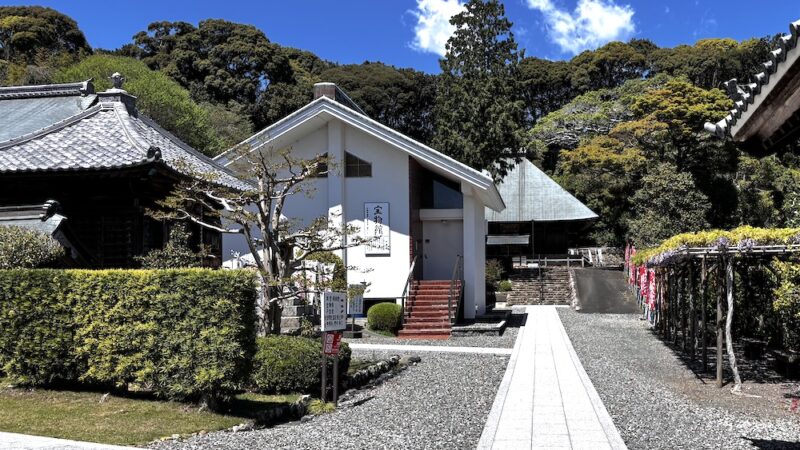
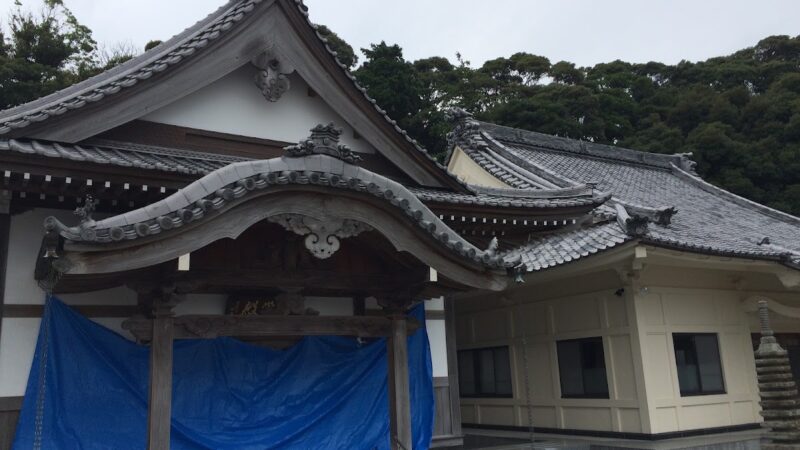
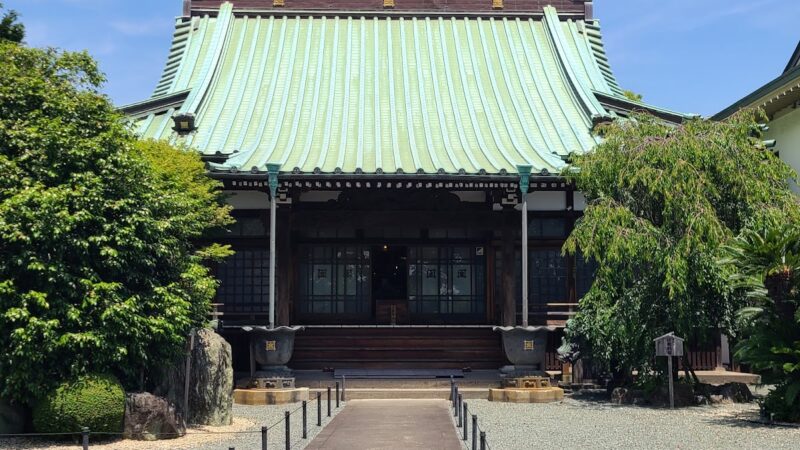
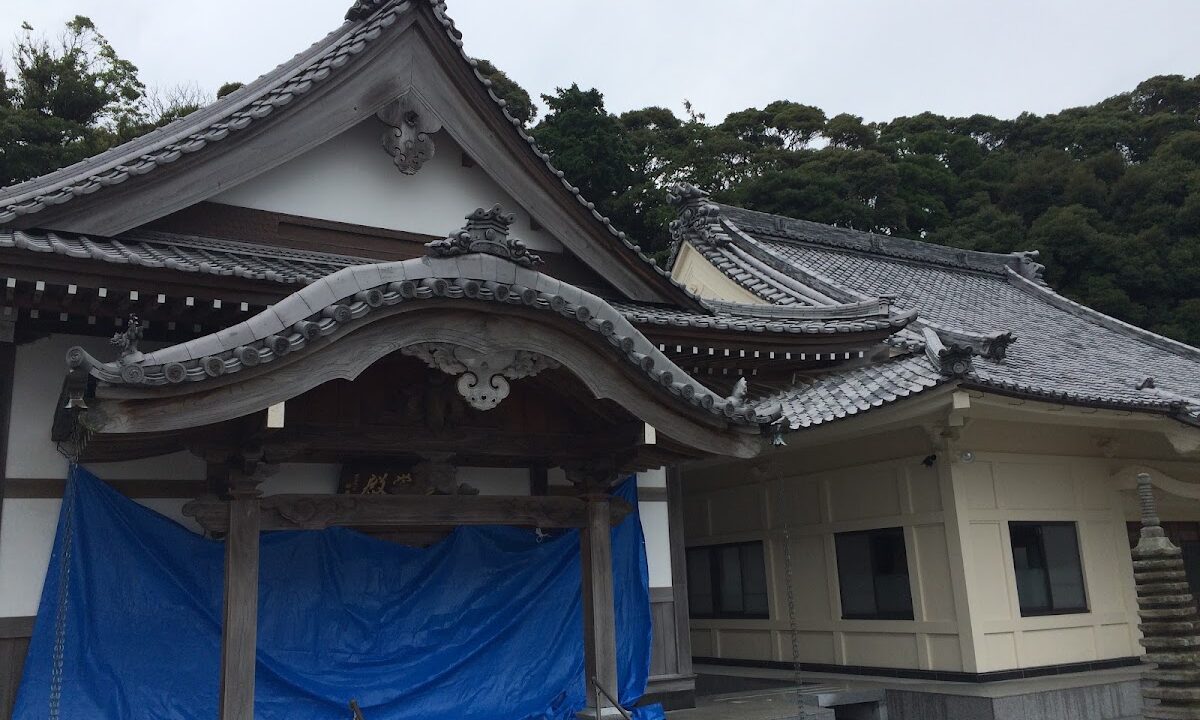
The main hall of Banshoji Temple is a building in the style of traditional Japanese architecture. The main hall, where the principal image is enshrined, is cherished as a space where worshippers can quietly put their hands together in prayer and find peace of mind.
Inside the main hall, Buddhist statues and implements are meticulously arranged, creating a solemn atmosphere. Regular memorial services and events are held here, making it a gathering place for parishioners and local residents.
Atmosphere of the Temple Grounds
Despite being located in a residential area, the grounds of Banshoji Temple are enveloped in tranquility. Well-maintained landscaping and stone paving give visitors a peaceful impression.
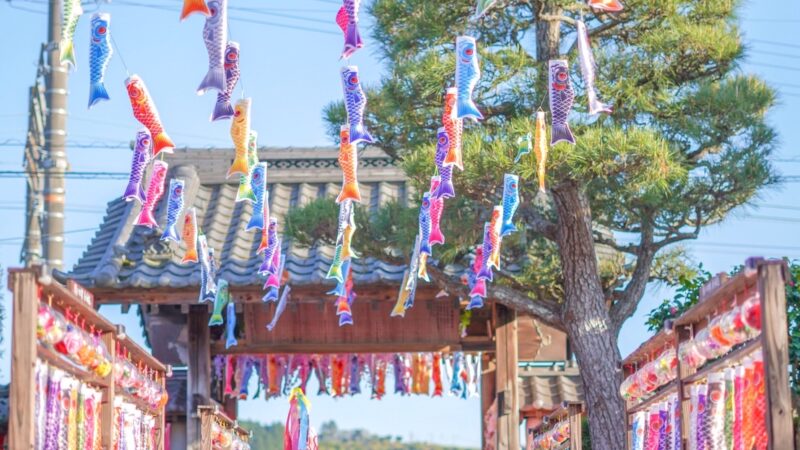
The temple grounds change with the seasons; cherry blossoms and fresh greenery adorn the grounds in spring, and autumn leaves in fall. Being able to visit while experiencing the changing seasons is one of the charms of Banshoji Temple.
Cemetery and Memorial Facilities
Like many temples, Banshoji Temple has a cemetery. The graves of families who have lived in this area for generations line the grounds, telling the story of the region’s history. Many visitors come during Obon and Higan to pay respects to their ancestors.
How to Visit and Manners at Banshoji Temple
Basic Visiting Etiquette
Visiting a temple has different etiquette than visiting a shrine. When visiting Banshoji Temple, please observe the following basic manners:
- Bow at the Temple Gate: Before entering the temple grounds, bow at the temple gate. This shows respect to the Buddha.
- Proper Hand-Washing Etiquette: If there is a hand-washing station, cleanse your hands and mouth. Cleanse your left hand, then your right hand, then your mouth, and finally rinse the handle of the ladle.
- Worship at the Main Hall: Quietly join your hands in prayer and bow in front of the main hall. If offering a monetary donation, do so quietly, and if there is a bell, ring it. Afterwards, join your hands in prayer and offer a silent prayer.
- Bow Upon Departure: When leaving the temple grounds, turn around and bow to show your gratitude.
Clothing and Belongings
No special clothing is required, but it is preferable to avoid revealing or flashy clothing and wear modest attire. Even in summer, try to wear clothing that covers your shoulders and knees. Regarding what to bring, please bring small change for offerings, a goshuincho (stamp book) if you wish to receive a goshuin (temple stamp), and prayer beads for added courtesy.
Goshuin Information
Availability of Goshuin
It is recommended to check in advance whether Banshoji Temple offers goshuin. Smaller temples may not always offer them, so it’s best to inquire by phone before visiting.
Manners for Receiving a Goshuin
Goshuin are not merely stamps; they are sacred items given as proof of worship. Please observe the following manners:
- Complete your prayers before receiving the goshuin.
- Present your goshuincho with both hands.
- Wait quietly while the goshuin is being written.
- Prepare the goshuin fee (usually 300-500 yen).
- Receive the goshuin with both hands and express your gratitude.
Access to Banshoji Temple
Access by Train and Bus
The following routes are convenient when using public transportation.
If using the JR Tokaido Main Line:
- Get off at JR Shimizu Station
- Take a bus or taxi from the station
- It’s about 3-5 km from Shimizu Station
If using the Shizuoka Railway Shizuoka-Shimizu Line:
- Walk or take a bus from the nearest station
- Check the Shizuoka Railway bus route map for specific bus routes
The Komagoe-Nishi area is a residential area, so you may need to walk a short distance from the bus stop. We recommend checking bus routes and timetables in advance.
Access by Car and Parking
If visiting by private car, please refer to the following routes.
From the Tomei Expressway:
- Exit at Shimizu IC
- Head towards National Route 1
- Proceed towards Komagoe-Nishi
From Shizuoka City Center:
- Take National Route 1 towards Shimizu
- Head towards Komagoe-Nishi area
We recommend checking with the temple in advance regarding parking availability and capacity. Smaller temples may not have their own parking lots, so please consider using nearby coin-operated parking facilities.
Landmarks in the Area
When visiting the temple at the address Komagoshi Nishi 2-9-5, it is convenient to use a car navigation system or a smartphone map app. Since it is located in a residential area, signs may be small.
Annual Events and Memorial Services
Main Annual Events
Buddhist temples hold various events and memorial services throughout the year. The following events may also be held at Banshoji Temple.
Spring Events:
- Spring Equinox Memorial Service (March)
- Flower Festival (Buddha’s Birthday) (Around April 8th)
Summer Events:
- Obon Festival (August)
- Segaki Memorial Service
Autumn Events:
- Autumn Equinox Memorial Service (September)
- Ten Nights Memorial Service (Around November)
Winter Events:
- New Year’s Eve Bell Ringing (December 31st)
- New Year’s Day Ceremony (January)
For specific dates and details, please contact the temple directly.
Special Memorial Services
Regular memorial services are held for parishioners and local residents. Individual memorial services, such as memorial services for the deceased or memorial services for stillborn babies, may also be available upon consultation.
Comparison with Famous Temples in Shizuoka Prefecture
Shizuoka Prefecture has many historically important temples. While Banshoji Temple is a community-oriented temple, comparing it with other prominent temples in Shizuoka Prefecture will clarify its unique characteristics. ### Ryōtanji Temple (Hamamatsu City)
Ryōtanji Temple is a renowned temple associated with the Ii family and is a tourist temple with a nationally designated scenic garden. It also attracted attention as the setting for the historical drama “Onna Jōshu Naotora” (The Lady Warlord Naotora).
Shūzenji Temple (Izu City)
A representative ancient temple of Izu, located in the heart of the hot spring town. It has high historical value as a temple associated with Minamoto no Yoriie and attracts many tourists.
Hōkōji Temple (Hamamatsu City)
The head temple of the Hōkōji branch of the Rinzai school, it is a Zen temple with vast grounds and magnificent temple buildings. It also functions as a training dojo.
Honkōji Temple (Fuji City)
An important temple of the Nichiren sect, it houses numerous nationally important cultural properties.
Compared to these tourist temples, Banshōji Temple has a stronger character as a “temple in daily life,” closely connected to the everyday faith of the local people. While not flashy, it plays an important role as a warm and welcoming temple deeply rooted in the local community.
History and Cultural Background of Shimizu Ward
Shimizu Port and Buddhist Culture
Shimizu Ward has flourished as a port town since ancient times, and during the Edo period, it developed as a post town on the Tokaido road. In this region, where the shipping industry was thriving, the belief in praying for safe voyages was deeply rooted, and many temples and shrines were built.
Around Shimizu Port, known for Shimizu Jirocho, there are numerous temples that attracted the faith of fishermen and sailors. Banshoji Temple has also served as a spiritual support for residents within this local religious culture.
Characteristics of the Komagoe District
The Komagoe district is a relatively quiet residential area within Shimizu Ward. Long-time and new residents coexist, creating an area where tradition and modernity harmonize.
The temples in this area have contributed to maintaining the local community through the danka system (parishioner system). They have a history of functioning not only as places for funerals and memorial services, but also as places for community gatherings and children’s education.
Tourist Attractions Around Banshoji Temple
When visiting Banshoji Temple, exploring the surrounding tourist attractions will allow you to experience the charm of Shimizu more deeply.
Shimizu Port
Shimizu Port, considered one of Japan’s three most beautiful ports, is a scenic spot offering breathtaking views of Mount Fuji. It also boasts numerous tourist facilities, including the S-Pulse Dream Plaza and the Shimizu Fish Market.
Nihondaira
From Nihondaira, designated a national scenic spot, you can enjoy a magnificent panoramic view of Suruga Bay and Mount Fuji. You can also access Kunozan Toshogu Shrine via the Nihondaira Ropeway.
Miho no Matsubara
Miho no Matsubara, one of the constituent assets of the World Cultural Heritage site “Mount Fuji,” is a beautiful coastline with white sand and green pines. It is also known as the setting for the legend of the celestial maiden’s robe.
Kiyomizu-ji Temple
Kiyomizu-ji Temple, known as a famous temple on the Tokaido road, is associated with Tokugawa Ieyasu and features beautiful gardens and historical buildings.
Precautions for Visiting
Opening Hours and Visiting Hours
We recommend checking the opening hours and visiting hours of Banshoji Temple in advance. Generally, temples are open for visits during the day, but restrictions may apply during religious services or events.
Photography
Photography is generally permitted on the temple grounds, but photography inside the main hall or of Buddha statues may be prohibited. Please check beforehand and be considerate of other visitors when taking photographs.
Respectful Visiting
Temples are places of prayer and spiritual practice. Please refrain from speaking loudly or running around, and visit quietly. Maintaining silence is especially important during religious services.
Banshoji Temple and the Local Community
The Danka System and Temple Management
Many temples in Japan are supported by the Danka system. Banshoji Temple is also maintained and managed by local parishioners, and it has built deep relationships with them through funerals and memorial services.
The Danka system (parishioner system) originated from the temple registration system of the Edo period and remains an important foundation for many temples today. A reciprocal relationship exists where parishioners bear the maintenance costs of the temple, and the temple performs ancestral memorial services and funerals for the parishioners.
Role as a Local Community
In modern society, temples are not merely religious institutions but also play a role as the core of local communities. Banshoji Temple is also considered to function as a place for interaction among local residents and as a spiritual anchor.
In aging communities, temples are expected to play a social role, such as preventing lonely deaths and monitoring the elderly. Providing opportunities for local residents to meet through regular memorial services and events is also an important function of temples.
Buddhism and Daily Life
Significance of Temple Visits
What significance does visiting a temple hold for modern people? In the midst of daily hustle and bustle, visiting a temple provides a precious time to calm the mind and reflect on oneself.
By joining hands in prayer in the tranquil temple grounds, one can escape the hustle and bustle of everyday life and find spiritual peace. Furthermore, renewing feelings of gratitude towards one’s ancestors is one of the important meanings of visiting a temple.
Buddhist Teachings and Modern Society
Although Buddhist teachings were expounded over 2500 years ago, their essence contains universal wisdom that is still relevant to modern society.
The teaching of “impermanence” illustrates the truth that all things are constantly changing, teaching us how to maintain a flexible mindset in our rapidly changing modern society.
The concept of “dependent origination” posits that all things exist in relation to one another, offering an important perspective when considering modern environmental and social issues.
Challenges and the Future of Temple Maintenance
Challenges Facing Modern Temples
Japanese temples are currently facing various challenges. The decline in parishioners due to the low birthrate and aging population, a lack of successors, and the deterioration of buildings are common problems for many temples.
It is believed that community-based temples like Banshoji are also affected by these social changes. However, precisely because of this, it is crucial to cherish ties with the community and explore new roles as an open temple. ### New Initiatives at Temples
Temples across Japan are undertaking new initiatives while preserving tradition. Efforts are being made to increase connections with local communities through diverse activities such as experiential programs like Zen meditation and sutra copying sessions, temple café operations, and end-of-life planning seminars.
It’s possible that Banshoji Temple is also undertaking similar initiatives to adapt to changing times. Please contact the temple directly for details.
Summary
Banshoji Temple is a community-oriented temple located in Shimizu Ward, Shizuoka City, Shizuoka Prefecture. While not a glamorous tourist temple, it plays a vital role as a spiritual anchor, closely intertwined with the faith and lives of local residents.
In this region, steeped in the history and culture of Shimizu Port, Banshoji Temple quietly but surely continues to support the hearts of people. Through a visit, you can escape the hustle and bustle of everyday life and spend time finding peace of mind.
When visiting Shimizu, why not visit not only famous tourist spots but also these community-based temples? There, you’ll likely see the true face of the region, something not found in tourist guides.
When visiting the temple, please observe basic etiquette and offer your prayers quietly and sincerely. For information regarding temple stamps (Goshuin) and special events, we recommend checking with the temple in advance.
May your visit to Banshoji Temple be a time of peace and tranquility.