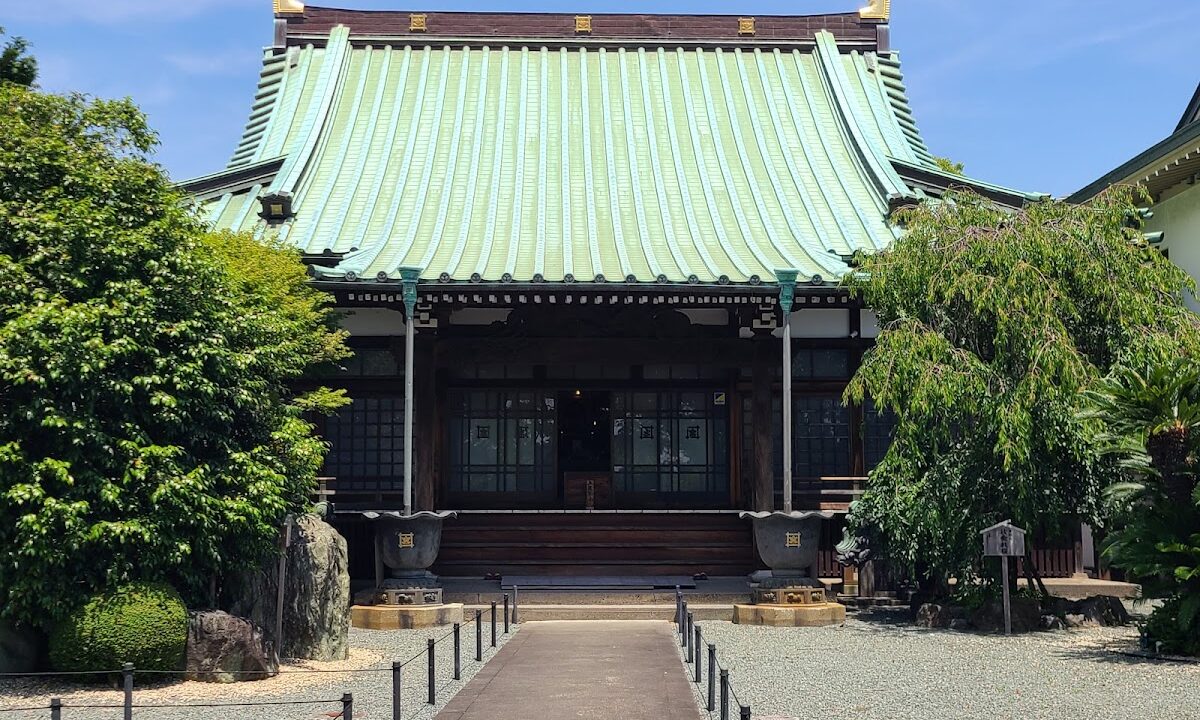
Kaichoji Temple (Shizuoka Prefecture) Complete Guide: History, Treasures, Goshuin (Temple Seals), and Access Information for the Nichiren Sect Head Temple
Located in Muramatsu, Shimizu Ward, Shizuoka City, Shizuoka Prefecture, Kaichoji Temple is a historic temple boasting a history of approximately 1,200 years as a head temple (historically significant temple) of the Nichiren sect. From its founding in the Heian period to its conversion to the Nichiren sect and up to the present day, it has been cherished by many as a center of faith in the region. This article comprehensively introduces all the information you need to know before visiting Kaichoji Temple, including its detailed history, valuable temple treasures, visiting information, and access methods.
Table of Contents
- Basic Information about Kaichoji Temple
- History and Background of Kaichoji Temple
- Status as a Head Temple
- Highlights of the Temple Grounds and the Main Hall
- Numerous Valuable Temple Treasures
- Information on Goshuin (Temple Seals)
- Annual Events and Announcements
- Access and Visitor Information
- About Former Branch Temples
- Nearby Tourist Spots
Basic Information about Kaichoji Temple
Official Name: Ryusuizan Kaichoji Temple
Sect: Nichiren Buddhism
Temple Rank: Head Temple (Historical Temple)
Mountain Name: Ryusuizan
Address: 299 Muramatsu, Shimizu-ku, Shizuoka City, Shizuoka Prefecture 424-0926
Phone Number: 054-334-1959
Founder: Ennin (Jikaku Daishi) / Converted to Nichiren Buddhism Founder: Nichii Shonin Founded: 852 (Ninju 2)
Kaichoji Temple is a temple nestled in a quiet environment, despite being located in a residential area of Shimizu Ward, Shizuoka City. As a head temple of the Nichiren sect, it is known as an important sacred site in the central Shizuoka prefecture.
History and Background of Kaichoji Temple
Founded in the Heian Period
The history of Kaichoji Temple dates back to the early Heian period. In 852 (Ninju 2), it was founded as Muramatsu-san Gakuji in the Yatsuhara area of Utoyama, with Ennin (Jikaku Daishi), a high-ranking priest of the Tendai sect, as its founder. Ennin was a renowned monk who served as the third head priest of Enryakuji Temple on Mount Hiei and is known for establishing many temples throughout Japan, including in the Tohoku region.
Initially, it was a Tendai sect temple that attracted the faith of the local community.
Relocation due to Mountain Tsunami
In 1011 (Kankō 8), a massive mountain tsunami destroyed the temple located in Yatsuhara, Utoyama. Following this disaster, the temple was relocated to its current location in Muramatsu. This relocation was a crucial event that determined the current location of Kaichōji Temple.
Conversion to Nichiren Buddhism
In 1274 (Bun’ei 11) or 1272 (Bun’ei 9), the most important turning point in the history of Kaichōji Temple occurred. Nichii Shōnin, a senior disciple of Nichiren Shōnin, visited the area to spread the teachings.
Due to Nichii Shōnin’s fervent teachings, the then head priest, Jishō Sonja, converted to Nichiren Buddhism and changed his Buddhist name to Nichiju. As a result, Gakuji Temple became a Nichiren Buddhist training center, and its mountain name was changed to Ryusuizan Kaijoji. Nichii Shonin was revered as the founder, and Nichiju Shonin listened to lectures and deeply studied the teachings of the Nichiren sect.
Development during the Edo Period
During the Tokugawa period, the temple’s name was changed from Kaijoji to Kaichoji. While there are various theories regarding the detailed circumstances of this name change, it is believed to be related to the Edo shogunate’s temple policies and local circumstances.
During this period, Kaichoji Temple established its position as the head temple of the Nichiren sect and developed into a powerful temple with many branch temples. The collection of temple treasures and the development of the temple grounds progressed, forming the foundation of the temple as it is today.
Kaichoji Temple in Modern Times
Despite being affected by the anti-Buddhist movement of the Meiji era, Kaichoji Temple continued to exist as a center of local faith. From the Showa and Heisei eras to the present day, Kaichoji Temple has maintained its status as a head temple of the Nichiren sect while continuing its temple activities rooted in the local community.
Status as a Head Temple
Kaichoji Temple holds the status of a head temple (historically significant temple) within the Nichiren sect. While the Nichiren sect has numerous head temples throughout Japan, with Minobu-san Kuonji Temple as its main temple, Kaichoji Temple is positioned as an important temple with a long history and distinguished lineage.
As a head temple, Kaichoji Temple plays a central role in the Nichiren sect in the central Shizuoka prefecture region, attracting many believers and worshippers. It is also under the jurisdiction of the Nichiren sect’s Shizuoka Prefecture Central Affairs Office and maintains close ties with other Nichiren sect temples in the area.
Highlights of the Temple Grounds and the Main Hall
Main Hall
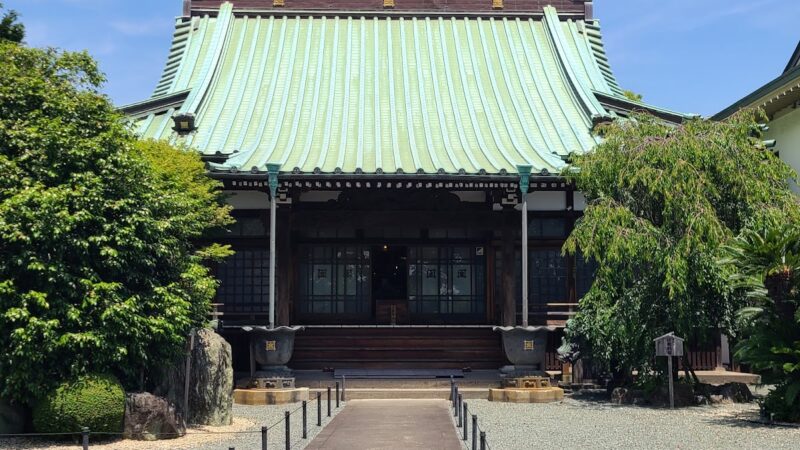
Kaichoji Temple’s main hall is a magnificent structure befitting a Nichiren sect temple. The principal image is enshrined within the main hall, where daily services and religious ceremonies are held. Visitors can quietly offer their prayers in the main hall, seeking inner peace.
The architectural style of the main hall incorporates traditional elements dating back to the Edo period, giving it a historical and serene atmosphere.
Atmosphere of the Temple Grounds
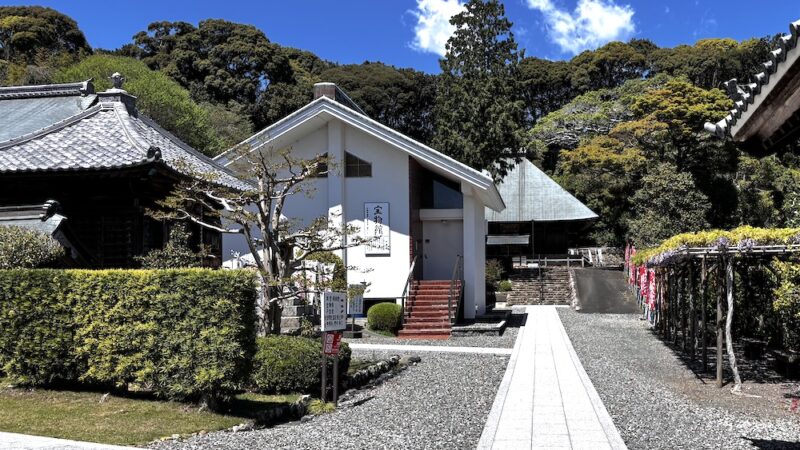
Despite being located in a residential area of Shimizu Ward, Shizuoka City, the grounds of Kaichoji Temple offer a tranquil space surrounded by trees. As you proceed along the approach, you’ll find stone monuments and lanterns that evoke a sense of history, welcoming visitors.
The temple grounds also feature a well-maintained garden, allowing visitors to enjoy the beauty of nature throughout the seasons. The scenery is particularly beautiful during the cherry blossom season in spring and the autumn foliage season.
Numerous Precious Temple Treasures
Kaichoji Temple possesses numerous temple treasures that have been collected and preserved over its long history. These are invaluable resources for understanding the faith of the Nichiren sect and the cultural history of Japan.
The Founder’s Original Manuscript (Ten Realms Mandala)
One of the most important treasures held by Kaichoji Temple is the Founder’s Original Manuscript (a manuscript written by Nichiren Shonin himself). A scroll of the Ten Realms Mandala, written by Nichiren Shonin himself, has been preserved and is carefully kept as a sectarian treasure of the Nichiren sect.
The Ten Realms Mandala is a visual representation of the teachings of the Lotus Sutra by Nichiren Shonin, with the title “Namu Myoho Renge Kyo” written largely in the center, surrounded by the names of various Buddhas and deities. This original manuscript serves as the center of faith at Kaichoji Temple and is sometimes unveiled during special religious ceremonies.
Iron Hanging Lantern
This iron hanging lantern, believed to have been created in Tenpuku 1 (1233), is a valuable cultural artifact representing the craftsmanship of the Kamakura period. It demonstrates the high level of casting technology of the time and is an important relic that tells the history of the temple, dating back to the time of Gagaku-ji, the predecessor of Kaicho-ji.
The hanging lantern is suspended inside the main hall and lit during religious services, creating a solemn atmosphere.
Lotus Sutra in Plain Ink on Dark Blue Paper
The Lotus Sutra in Plain Ink on Dark Blue Paper, copied in Gentō 1 (1333), is a valuable scripture from the Nanboku-chō period. The Lotus Sutra is beautifully written in gold ink on dark blue paper, making it an artistic masterpiece showcasing the pinnacle of sutra copying techniques of the time.
This scripture is carefully preserved in the treasure house of Kaichoji Temple and is not usually open to the public, but it may be possible to view it on special occasions.
Calligraphy attributed to Empress Komyo
The temple also possesses calligraphy attributed to Empress Komyo of the Nara period. Empress Komyo was the empress of Emperor Shomu and is known for her deep devotion to Buddhism. Further research is needed to determine if it is an authentic work, but it is cherished as a valuable temple treasure passed down through generations.
Statues of Toto Tenjin and Ganman Soshi
The treasure house of Kaichoji Temple houses two important Buddhist statues: the Statue of Toto Tenjin and the Statue of Ganman Soshi.
The Statue of Toto Tenjin is a rare image based on the legend that Sugawara no Michizane traveled to Tang China, and it is revered as the god of learning. The Ganman Soshi statue is a statue of Nichiren Shonin, believed to grant wishes, and many worshippers offer prayers before it.
These statues are sometimes displayed during special viewings, attracting attention from believers and art lovers alike.
Other Temple Treasures
In addition to the above, Kaichoji Temple houses numerous cultural artifacts, including calligraphy and paintings by successive chief priests, and ancient documents. These are valuable resources for understanding the history of Kaichoji Temple, and are being investigated by researchers.
Goshuin Information
Kaichoji Temple bestows Goshuin (temple stamps) upon visitors. Goshuin are popular among many worshippers as proof of their visit to the temple and as a record of their faith.
Goshuin Contents
Kaichoji Temple’s Goshuin features the mountain name “Ryusuizan” and the temple name “Kaichoji” written in ink in the center, followed by a red seal. As is typical for Nichiren Buddhist temples, the title “Namu Myoho Renge Kyo” is sometimes inscribed. The calligraphy is powerful and reflects the dignified atmosphere of this historic head temple.
How to Receive a Goshuin (Temple Seal)
You can receive a Goshuin at the temple office after your visit. Bring your Goshuincho (stamp book) and politely request it; the head priest or temple staff will write it for you.
The offering fee (for the Goshuin) is usually around 300-500 yen, but this may change, so please check on the day of your visit.
Manners for Visiting
A Goshuin is not merely a commemorative stamp, but a symbol of faith. First, offer your prayers sincerely at the main hall, and then receive your Goshuin. Also, remember to be respectful and grateful to the temple staff.
Annual Events and Announcements
Kaichoji Temple holds various Buddhist services and events throughout the year.
Main Annual Events
- First three days of the New Year: New Year’s prayer service, first shrine visit of the year
- February: Setsubun festival
- Spring and Autumn equinox: Equinox memorial service
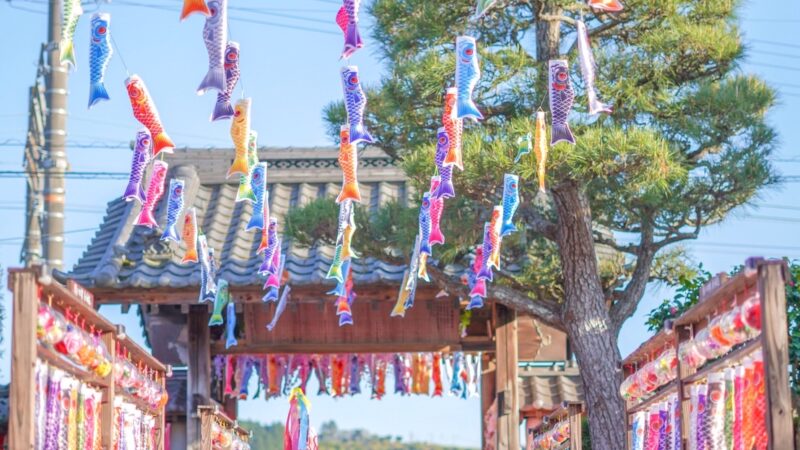
- April: Flower Festival (Buddha’s birthday celebration)
- July: Obon memorial service
- October 13th: Nichiren Shonin Memorial Service
- December: New Year’s Eve bell ringing
Especially as a Nichiren Buddhist temple, the Oeshiki service on October 13th is one of the most important events. A grand memorial service is held to commemorate the anniversary of Nichiren Shonin’s death.
How to check announcements
For the latest information and event schedules of Kaichoji Temple, please check the Nichiren Buddhist Shizuoka Prefecture Central Office website or the temple’s bulletin board. You can also inquire by phone (054-334-1959).
Access and Visiting Information
Access by Public Transportation
Train/Bus
- Approximately 2.4km from Shizuoka Railway Shizuoka-Shimizu Line “Shin-Shimizu Station” (approximately 30 minutes on foot, 7 minutes by taxi)
- Approximately 3 minutes on foot from the Shizutetsu Justline bus stop “Hitachi Factory Entrance”
Taking the bus from Shin-Shimizu Station is the most convenient option. We recommend checking the bus timetable in advance.
Access by Car
Tomei Expressway
- Approximately 15 minutes from “Shimizu IC”
- Approximately 25 minutes from “Shizuoka IC”
Access is also possible from National Route 1**. Aim for the Muramatsu area of Shimizu Ward.
Parking
Kaichoji Temple has parking spaces for visitors, but the number of spaces is limited, so congestion is expected during memorial services and events. We recommend using public transportation whenever possible.
Visiting Hours
Visiting the temple grounds is generally possible during daytime hours. If you wish to receive a Goshuin (temple stamp) or have services at the temple office, it is recommended to confirm by phone in advance.
Contact Information: 054-334-1959
About Former Branch Temples
Kaichōji Temple, as a head temple of the Nichiren sect, once had many branch temples (matsuji). Branch temples are temples under the jurisdiction of the head temple and played an important role in the temple system during the Edo period.
Kaichōji Temple’s former branch temples are mainly distributed within Shizuoka Prefecture, and many temples continue to uphold the Nichiren sect’s faith. These temples have historical ties to Kaichōji Temple, and exchanges continue during religious services and events.
Details about the former branch temples can be found in the Nichiren sect’s temple register and in research on local religious history.
Nearby Tourist Attractions
When visiting Kaichōji Temple, you can also visit nearby tourist attractions.
Shimizu Port
Shimizu Ward in Shizuoka City is famous for Shimizu Port, one of Japan’s leading trading ports. Located about 15 minutes by car from Kaichoji Temple, you can enjoy the port scenery and fresh seafood dishes.
S-Pulse Dream Plaza
Adjacent to Shimizu Port is a multi-purpose commercial complex offering shopping, dining, and the Shimizu Sushi Museum. It’s a popular spot for families.
Miho no Matsubara
Miho no Matsubara, a component of the World Cultural Heritage site “Mount Fuji,” is a representative scenic spot in Shimizu Ward. The spectacular view of Mount Fuji through the pine forest is a must-see.
Nihondaira
A scenic spot spanning Shizuoka City and Shimizu Ward, it features an observation deck offering panoramic views of Mount Fuji and Suruga Bay. It’s also accessible to Kunozan Toshogu Shrine via the Nihondaira Ropeway.
Faith and Modern Times at Kaichoji Temple
Kaichoji Temple, with its nearly 1,200-year history, continues to attract the faith of local people even today. People seeking peace of mind and happiness visit the temple daily, chanting the mantra “Namu Myoho Renge Kyo,” a teaching of the Nichiren sect.
About Perpetual Memorial Services and Cemeteries
In addition to general cemeteries, Kaichoji Temple also offers perpetual memorial graves and columbariums. In today’s society, characterized by declining birth rates, an aging population, and the rise of nuclear families, this system allows the temple to continue providing perpetual memorial services for those who find it difficult to inherit a family grave.
Those interested in perpetual memorial services can inquire at the temple office for detailed explanations and to schedule a visit.
Engagement with the Local Community
Kaichoji Temple functions not only as a religious institution but also as a center of the local community. It deepens its ties with the community through participation in local events and the public display of its cultural assets.
Summary
Located in Shimizu Ward, Shizuoka City, Shizuoka Prefecture, Kaichoji Temple is a head temple of the Nichiren sect, boasting a history of approximately 1,200 years, from its founding in the Heian period to its conversion to the Nichiren sect. The history of Kaichoji Temple, which began as a Tendai sect temple founded by Ennin and later became a Nichiren sect training center through the propagation of Nichii Shonin, is a fascinating example in the history of Japanese Buddhism.
The temple’s precious treasures, including the principal image written by the sect’s founder, the magnificent main hall, and the tranquil grounds offer visitors deep spiritual peace. Many visitors seek Goshuin (temple stamps), making it a temple where one can feel the faith of Nichiren Buddhism firsthand.
When visiting Shimizu Ward, be sure to visit Kaichoji Temple and experience its long history and tradition. By quietly joining your hands in prayer, you will find inner peace away from the hustle and bustle of everyday life.
Address: 299 Muramatsu, Shimizu-ku, Shizuoka City, Shizuoka Prefecture 424-0926
Phone: 054-334-1959
Access: 3-minute walk from “Hitachi Factory Entrance” bus stop (Shizutetsu Justline Bus)
Sect: Nichiren Buddhism (Head Temple)
Mountain Name: Ryusuizan
When visiting, please observe proper etiquette and pray quietly and sincerely.