Complete Guide to Makaya-ji Temple (Shizuoka Prefecture) | Exploring the Oldest Garden in the Tokai Region and National Treasure-Class Buddhist Statues
Makaya-ji Temple, located in Mikkaichi-cho, Hamana-ku, Hamamatsu City, Shizuoka Prefecture, is an ancient temple of the Koyasan Shingon sect with a history of nearly 1300 years. Founded by the renowned Nara period monk Gyoki, this temple continues to fascinate many visitors and garden enthusiasts with its oldest Japanese garden in the Tokai region, its collection of precious Buddhist statues from the Heian period, and its reputation as a sacred site for warding off evil.
This article provides a detailed explanation of this ancient temple, including its rich history, highlights, cultural assets, the charm of its garden, and useful access information for your visit.
The History of Makaya-ji Temple | A 1300-Year Trajectory of Faith
Founding in the Nara Period and the Shintatsu-ji Era
The history of Makaya-ji Temple dates back to the 3rd year of the Jinki era (726 AD). It is believed to have begun when the renowned monk Gyoki Bodhisattva founded “Shintatsu-ji Temple” on Mount Tomaku (near the present-day border with Aichi Prefecture) at the behest of Emperor Shomu.
Gyoki was a leading monk of the Nara period, known for establishing temples and social welfare facilities throughout Japan. Makaya-ji Temple was one of these, initially functioning as a training ground for Shingon Esoteric Buddhism, linked to mountain worship. Due to its location in the mountainous region of Mount Tomaku, it is thought to have also had strong elements of Shugendo (mountain asceticism).
Relocation and Renaming to Makaya-ji Temple in the Heian Period
In the mid-Heian period, Shintatsu-ji Temple was relocated to a place called Kannon-iwa on Sentōgamine, near its current location. At this time, the temple’s name was also changed to “Makaya-ji Temple.” The name “Makaya” is said to originate from either the “Makaya” plant that grew in the area, or from the place name.
During this period, temples developed as centers of local faith and under the patronage of nobles and samurai. Makaya-ji Temple was no exception, and by the end of the Heian period, it strengthened its ties with the imperial court, becoming an imperial prayer temple of Emperor Ichijō.
Further Relocation in the Late Heian Period and the Birth of Makaya-ji Temple
At the end of the Heian period, the temple was relocated to its current location by imperial decree of Emperor Ichijō. At this time, the emperor bestowed upon it the temple name “Makaya-ji Temple.” The name “Makaya” is believed to originate from the Sanskrit word “Mahayana,” signifying its role as a temple dedicated to spreading the teachings of Mahayana Buddhism.
Its official name is “Daijozan Hōchiin Makaya-ji,” and the mountain name “Daijozan” also reflects the meaning of “Makaya (Mahayana).” Furthermore, the temple name “Hōchiin” seems to foreshadow the beautiful pond garden that would later be constructed.
Development from the Kamakura to the Edo Period
During the Kamakura period, Makaya-ji constructed the scenic garden that still exists today. This period saw the establishment of the samurai government and the spread of new forms of Buddhism, including Zen Buddhism. Makaya-ji, an ancient Shingon Buddhist temple, also prospered with the support of influential local figures.
From the Muromachi period to the Sengoku period, it continued to preserve its Buddhist traditions despite the turmoil of war. This region was the stage for power struggles between clans such as the Imagawa, Takeda, and Tokugawa, but the temple remained a place of worship.
The current main hall was built in 1632 during the Edo period. This main hall is a valuable structure that preserves the architectural style of the early Edo period, and its ceiling features beautiful paintings of flowers and birds by Hokkyo Kanchu.
Preservation and Re-evaluation in Modern Times
Despite the impact of the anti-Buddhist movement of the Meiji era, Makaya-ji Temple continued to exist as a center of local faith. In the Showa era, the historical value of the garden was re-evaluated, and in 1968, it was designated a Shizuoka Prefecture Designated Place of Scenic Beauty.
Even in the Heisei era, efforts have been made to preserve and open to the public the cultural property. Currently, it welcomes many visitors and researchers as a representative historical temple of Shizuoka Prefecture and a tourist attraction with one of the oldest gardens in the Tokai region.
Makaya-ji Temple Garden | One of the Oldest Pond-Centered Stroll Gardens in the Tokai Region
Garden Overview and Historical Value
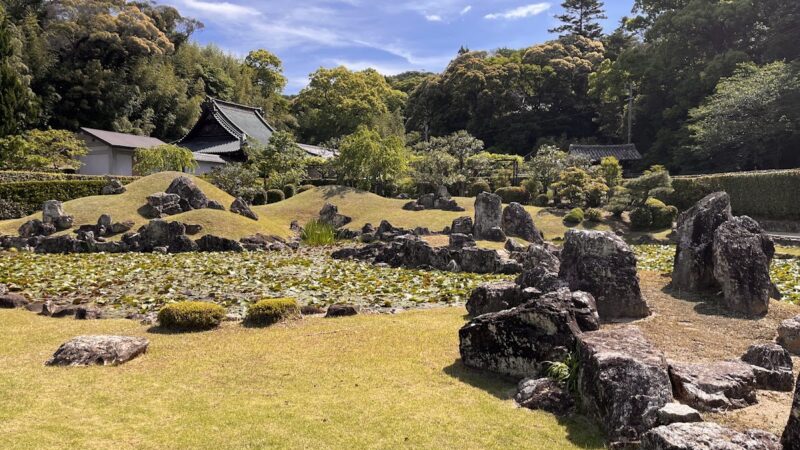
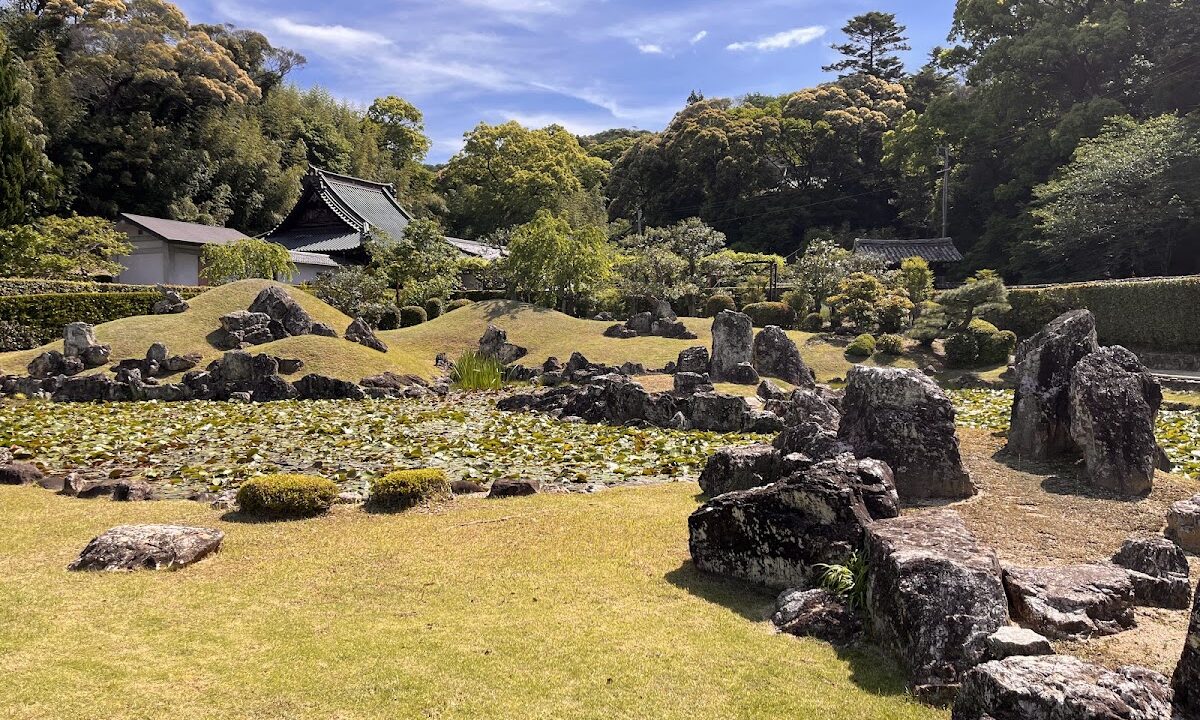
Makaya-ji Temple Garden is a pond-centered stroll garden estimated to have been created in the late Heian period to the early Kamakura period (late 12th to early 13th century). It is a valuable Japanese garden, considered the oldest in Shizuoka Prefecture and one of the oldest in the Tokai region, and was designated a Shizuoka Prefecture Designated Place of Scenic Beauty in 1968.
This garden incorporates elements of both “seated viewing” and “stroll gardens,” with its design carefully considering both the view from the main hall and the scenery enjoyed while walking through the garden. As a masterpiece representing medieval Japanese gardens, it holds an important position in garden history research.
Garden Composition and Characteristics
Pond Arrangement
At the center of the garden is a pond called “Hōchi” (Treasure Pond), which is the origin of the temple’s name, “Hōchi-in.” The pond has an irregular shape, naturally curving, and possesses a complex form with multiple inlets and protruding capes. The water’s surface reflects the surrounding landscape, functioning as a “mirror pond” that changes its appearance depending on the season and time of day.
Artificial Hills and Stone Arrangements
Artificial hills are placed around the pond, and the northern hill in particular features beautiful curves, as if a natural mountain has been incorporated directly into the garden. This curved beauty is considered an expression of Japanese aesthetics influenced by “Yamato-e” painting, and exhibits characteristics of garden styles from the late Heian period to the Kamakura period.
The stone arrangements are skillfully placed, employing various techniques such as waterfall stone arrangements, revetment stone arrangements, and island stone arrangements. In particular, stone arrangements with Buddhist and Shinto-inspired meanings, such as the three-stone arrangement and the crane and turtle arrangement, can be seen throughout.
Planting and Seasonal Landscapes
The garden features plantings such as pine, maple, cherry, and azalea, creating beauty that changes with the seasons. Especially during the autumn foliage season, the reflection of maple leaves in the pond is magnificent. In spring, cherry blossoms bloom in profusion; in early summer, the fresh greenery is dazzling; and in winter, the snow-covered garden exudes a serene beauty.
Garden Design Techniques and Aesthetics
The design of the Makaya-ji Temple garden incorporates techniques described in the Heian period gardening treatise, “Sakuteiki.” The placement of elements such as “standing stones,” “reclining stones,” and “stone bridges” is based on the principles of Yin-Yang and the Five Elements, as well as Feng Shui, and incorporates not only aesthetic considerations but also religious and philosophical meanings.
Particularly noteworthy is the concept of “miniature landscapes.” Techniques are employed to condense and express natural landscapes such as seas, mountains, rivers, waterfalls, and islands within a limited space, creating a microcosm of the entire garden.
Points to Note When Appreciating the Garden
View from the Main Hall
The basic way to appreciate this garden is through “seated viewing,” where you sit on the veranda of the main hall and admire the garden. The view from the main hall is composed in the most carefully calculated way, allowing you to enjoy the picturesque beauty of the pond, artificial hills, stone arrangements, and plantings working together as one.
Discoveries from the Circular Path
As you walk along the circular paths within the garden, the scenery changes with your shifting viewpoint, revealing various “points of interest” one after another. There is beauty that can only be discovered by walking, such as the details of the stone arrangements, the expressions on the water’s surface, and the views seen through the trees.
Seasonal Expressions
Spring offers cherry blossoms and fresh greenery; summer offers deep green and the sound of water; autumn brings vibrant autumn leaves; and winter presents snowscapes. Each season has its own unique beauty. Furthermore, the garden’s appearance changes depending on the time of day—the tranquility of early morning, the brightness of midday, and the ethereal beauty of twilight.
Cultural Properties | Nationally Designated Important Cultural Properties and Prefecturally Designated Cultural Properties
Nationally Designated Important Cultural Properties
Wooden Standing Statue of the Thousand-Armed Kannon
This is a Buddhist statue carved from a single piece of cypress wood during the Heian period and is designated as a Nationally Important Cultural Property. The statue is approximately 150 centimeters tall and is a valuable work that strongly retains the style of the mid-Heian period. The Thousand-Armed Kannon is a Bodhisattva said to have literally a thousand arms, and is considered a symbol of compassion that saves all sentient beings.
This statue is in excellent condition, and traces of the original coloring and gold leaf remain, demonstrating the high level of skill in Heian period Buddhist sculpture. It can be viewed in the Treasure Hall.
Wooden Standing Statue of Fudo Myoo (Wave-Cutting Fudo)
This is a statue of Fudo Myoo created during the Kamakura period and is also a Nationally Important Cultural Property. It is affectionately known as “Wave-Cutting Fudo” and has attracted worshippers seeking safety at sea and protection from wave-related disasters. Because Mikkaichi Town faces Lake Hamana, it is said that the town was deeply revered by fishermen and sailors.
The statue is characterized by its wrathful expression and powerful posture, and is an excellent example of the realistic sculptural style of the Kamakura period. Fudo Myoo is an important deity in Esoteric Buddhism, believed to sever worldly desires and guide people to enlightenment.
Shizuoka Prefecture Designated Cultural Property
Wooden Seated Amida Buddha Statue
This seated Amida Buddha statue, believed to be from the late Heian period, is a Shizuoka Prefecture designated cultural property. It features a serene expression and is depicted with the Jōin mudra (meditation mudra). Carved from a single piece of cypress wood, it is an important document illustrating the spread of Amida worship during the Heian period.
Amida Buddha is the principal deity of the Western Pure Land, believed to guide those who chant the Nembutsu to paradise, and was widely worshipped from the late Heian period to the Kamakura period.
Makaya-ji Temple Garden
As mentioned above, the garden itself is designated as a cultural property and a Shizuoka Prefecture designated scenic spot. As one of the oldest pond-centered strolling gardens in the Tokai region, it holds an extremely important position in the history of gardens.
Main Hall and Ceiling Paintings
Edo Period Main Hall Architecture
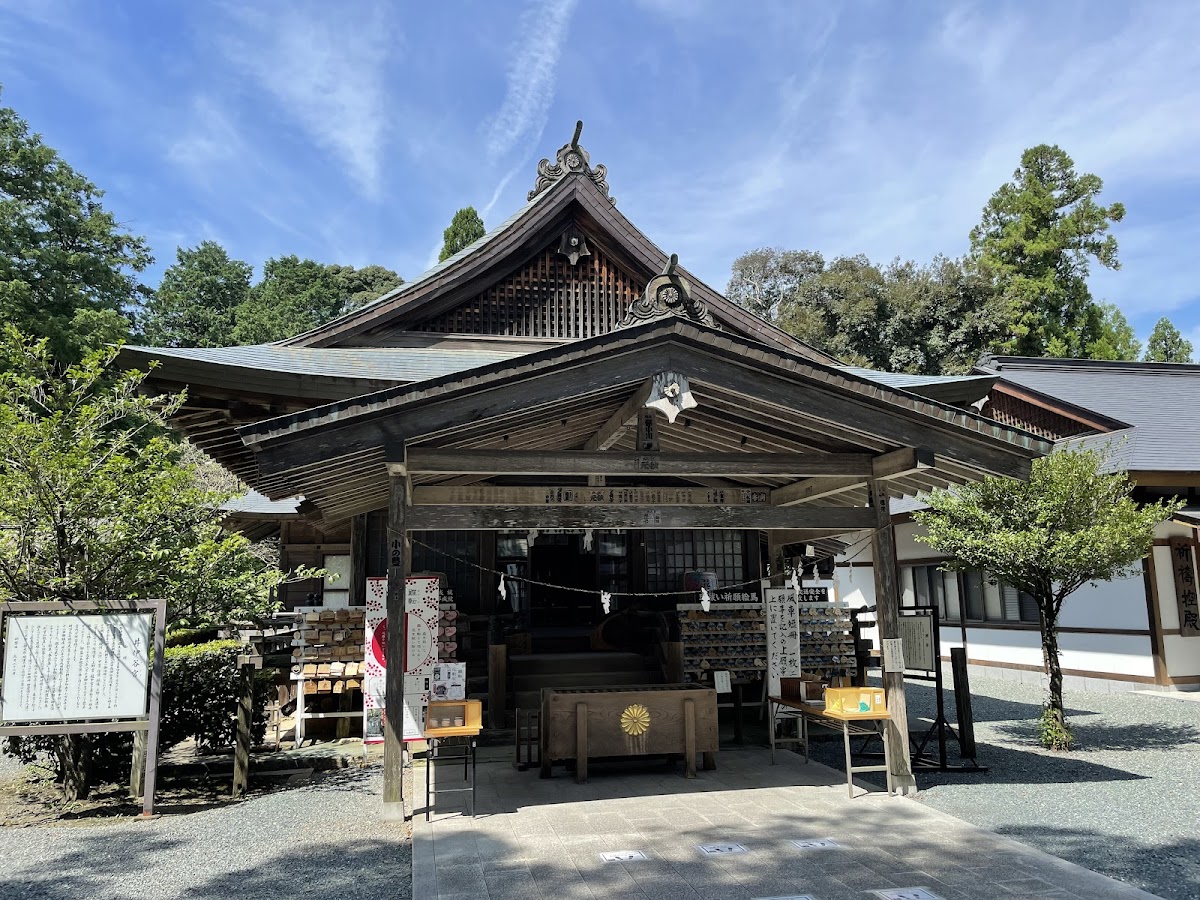
The main hall, built in 1632 (Kanei 9), is a building that exhibits the characteristics of early Edo period temple architecture. With its hipped roof, imposing pillars, and intricate joinery, it is a building that embodies the pinnacle of architectural technology of the time.
Ceiling Paintings by Hokkyo Kanchu
The ceiling of the main hall’s inner sanctuary features paintings of flowers and birds by Hokkyo Kanchu. Hokkyo is one of the ranks given to Buddhist monks, and Kanchu was a Buddhist painter who was active in the early Edo period.
The ceiling paintings vividly depict mythical birds such as phoenixes, dragons, cranes, and peacocks, as well as flowers such as peonies, chrysanthemums, plums, and cherry blossoms, expressing the solemnity of the Pure Land. These paintings retain their beauty even after nearly 400 years.
Principal Image: Yakuyoke Shōkanzeon Bodhisattva
The principal image of Makaya-ji Temple is the “Yakuyoke Shōkanzeon Bodhisattva,” which has been protected as a secret Buddha for over 1300 years since the temple’s founding in the Nara period. It remains closed to the public and is only unveiled during special religious ceremonies.
This Kannon statue is believed to have miraculous powers in warding off evil, and has long attracted the faith of worshippers in their unlucky years and those praying for recovery from illness. It is affectionately known as the “Yakuyoke Kannon” by the local people, and many worshippers visit every year.
Public Display at the Treasure Hall
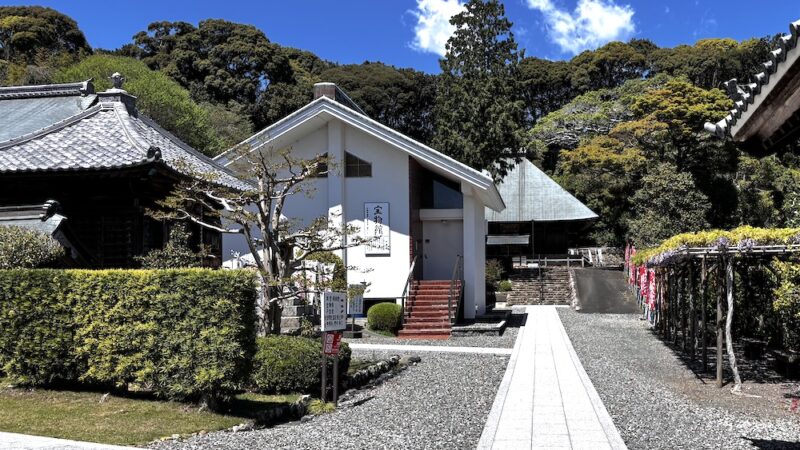
Two nationally designated Important Cultural Properties and one prefecturally designated Cultural Property, both Buddhist statues, are on permanent display at the temple’s Treasure Hall (admission fee required). In addition to these statues, the Treasure Hall also exhibits other temple treasures such as ancient documents, Buddhist implements, and paintings, allowing visitors to gain a deeper understanding of the history and culture of Makaya-ji Temple.
Highlights and Events at Makaya-ji Temple
Highlights of the Temple Grounds
Temple Gate
The temple gate, the entrance to the grounds, is simple yet dignified, quietly welcoming visitors. Passing through the gate, one is led into a lush, green space, a tranquil haven away from the secular world.
Bell Tower
A magnificent bell tower stands on the temple grounds, housing a temple bell. On New Year’s Eve, local people gather for a traditional event to welcome the new year.
Stone Buddha Statues
Throughout the temple grounds are numerous stone Buddha statues donated from the Edo period to modern times. Various Buddhist figures, including Jizo Bodhisattva, Kannon Bodhisattva, and Fudo Myoo, watch over visitors.
Annual Events
New Year’s Visit (January 1st-3rd)
Many visitors come to pray for protection from evil and good fortune in the new year. For those in their unlucky years, visiting Makaya-ji Temple, known as the Kannon of厄除け (yakuyoke – protection from evil), holds particular significance.
Setsubun Festival (around February 3rd)
During Setsubun, events such as bean-throwing are held to pray for good health throughout the year. It is a beloved traditional event where local people gather.
Spring and Autumn Grand Festivals
Grand festivals are held in spring and autumn, featuring various events along with religious services. The autumn festival, in particular, coincides with the autumn foliage season and attracts many visitors.
New Year’s Eve Bell Ringing (December 31st)
On New Year’s Eve, the temple bell is rung in a traditional ceremony to cleanse away the 108 worldly desires. Visitors can also ring the bell, welcoming the new year with a pure heart.
Goshuin (Temple Seal)
Goshuin (temple seals) are available at Makaya-ji Temple. The goshuin of the principal deity, the Yakuyoke Shokanzeon Bodhisattva, is characterized by its powerful calligraphy and red seal, making it popular among goshuin collectors. Bringing a goshuincho (stamp book) is recommended as a memento of your visit and a testament to your faith.
Visiting Information and Access
Basic Information
Official Name
Daijozan Hochiin Makayaji Temple
Sect
Koyasan Shingon Buddhism
Principal Image
Yakuyoke Shokanzeon Bosatsu (Secret Buddha)
Address
421 Makaya, Mikkaichi-cho, Hamana-ku, Hamamatsu City, Shizuoka Prefecture 431-1405
Phone Number
053-525-0027
Visiting Hours
9:00 AM – 4:00 PM (Gate closes at 4:30 PM)
Admission Fee
Garden and Treasure Hall: Adults 500 yen, Junior and Senior High School Students 300 yen, Elementary School Students 200 yen
(Group discounts available)
Closed Days Irregular closing days (closed August 10th, August 14th-15th)
*We recommend calling ahead to confirm before visiting.
Access
Access by Train
- Approximately 25 minutes on foot (approx. 2km) from Tenryu Hamanako Railway “Mikkabi Station”
- Approximately 5 minutes by taxi from Mikkabi Station
Approximately 60 minutes by Enshu Railway bus “bound for Mikkabi” from JR Tokaido Main Line “Hamamatsu Station,” then approximately 20 minutes on foot from the “Mikkabi” bus stop.
Access by Car
- Approximately 10 minutes (approx. 5km) from Tomei Expressway “Mikkabi IC”
- Approximately 30 minutes from Shin-Tomei Expressway “Hamamatsu Hamakita IC”
- Located along National Route 362, with directional signs.
Parking
Free parking available (approx. 30 regular cars)
Large buses can also be parked (advance notice required)
Nearby Tourist Attractions
Lake Hamana
Lake Hamana, located about 10 minutes by car from Makaya-ji Temple, is a representative tourist destination in Shizuoka Prefecture. You can enjoy various activities such as lake cruises, eel dishes, and hot springs.
Mikkabi Mandarin Orange Farms
Mikkabi Town is a nationally famous mandarin orange producing area. Many farms offer mandarin orange picking from autumn to winter.
Honzaka Pass/Hime Kaido Road
Honzaka Pass, through which the “Hime Kaido Road,” a secondary highway from the Edo period, passes, is a popular hiking course where you can feel the romance of history.
Inohana Lake Shrine
This shrine stands as if floating on an inlet of Lake Hamana, and its water-based torii gate creates a beautiful landscape.
Notes for Visitors
- There are areas in the garden where shoes are not allowed. Slippers are provided.
- Photography is permitted, but photography of Buddhist statues inside the treasure hall is prohibited.
- Please refrain from touching the plants and stone arrangements in the garden.
- Please maintain silence and be considerate of other visitors.
- In the summer, there are many insects such as mosquitoes, so we recommend taking precautions against insects.
- In rainy weather, some parts of the garden can become slippery, so please watch your step.
Recommended Time to Visit
Spring (March-May)
The garden is beautifully colored during the cherry blossom season (late March to early April). May, with its beautiful fresh greenery, is also recommended.
Autumn (November-Early December)
The best time to see the autumn leaves is from mid-November to early December. The maple trees in the garden turn red, and the reflection of the autumn leaves in the pond creates a spectacular view.
Early Summer (June)
During the rainy season, there are fewer visitors, allowing you to quietly appreciate the garden. The rain-soaked greenery is beautiful, creating a tranquil atmosphere.
Winter (January-February)
The garden is exceptionally beautiful after a snowfall. Furthermore, visiting the temple in the crisp winter air is a truly refreshing experience.
The Charm of Makaya-ji Temple | Why You Should Visit
High Historical Value
With a history of nearly 1300 years since its founding in the Nara period, Makaya-ji Temple is one of the oldest temples in Shizuoka Prefecture. Founded by Gyoki, a key figure in Japanese Buddhist history, and beginning as an imperial temple of Emperor Shomu, its prestigious status speaks volumes about its status.
Cultural artifacts from the Heian, Kamakura, and Edo periods still exist, making it a valuable place to trace the evolution of Japanese Buddhist culture within a single temple.
The Artistry of the Garden
The oldest pond-centered strolling garden in the Tokai region occupies an important position in the history of Japanese gardens. This garden is a living textbook of garden design techniques from the late Heian period to the early Kamakura period, a time of great development in Japanese gardens.
The garden’s beauty, a perfect harmony of nature and artificial elements, displays different expressions depending on the season and time of day, offering new discoveries with every visit. It is a must-see garden for garden enthusiasts.
A Treasure Trove of Buddhist Art
You can admire high-quality Buddhist art, including two nationally designated important cultural properties and one prefecturally designated cultural property, as well as ceiling paintings in the main hall. You can witness the evolution of Buddhist sculpture from the Heian to the Kamakura period, making it a valuable experience from an art historical perspective.
A Space of Tranquility and Healing
Located in the quiet mountains of Mikkaichi Town, Makaya-ji Temple is a healing space away from the hustle and bustle of the city. You can find peace of mind by meditating while gazing at the garden or taking a leisurely stroll.
In today’s stressful society, spending time in such a tranquil space has a significant effect on refreshing both mind and body. ### A Sacred Site for Protection Against Misfortune
The principal image, the Yakuyoke Shokanzeon Bodhisattva, has been prayed to for protection against misfortune for over 1300 years. It attracts many believers, not only during unlucky years, but also as a sacred site to visit at life’s turning points and when facing difficulties.
Summary | The Significance of Visiting Makaya-ji Temple
Makaya-ji Temple in Hamamatsu City, Shizuoka Prefecture, is a representative ancient temple of Shizuoka Prefecture, possessing three major attractions: a 1300-year history, one of the oldest scenic gardens in the Tokai region, and a collection of Buddhist statues designated as important national cultural properties.
Since its founding by Gyoki in the Nara period, it has survived as a center of local faith and a treasure trove of cultural assets, witnessing the history of each era, including its relocation in the Heian period, the construction of its garden in the Kamakura period, and the construction of its main hall in the Edo period.
In particular, its garden occupies an important position in the study of garden history as a masterpiece representing Japanese medieval gardens. The landscape, woven from the pond-centered strolling garden design, skillful stonework, and seasonal plantings, deeply touches the hearts of visitors.
The standing statues of Senju Kannon and Namikiri Fudo Myoo, designated as National Important Cultural Properties, and the seated statue of Amida Nyorai, designated as a Prefectural Cultural Property, are masterpieces showcasing the finest Buddhist sculpture from the Heian to Kamakura periods, and can be viewed up close in the treasure hall.
The flower and bird paintings by Hokkyo Kanchu adorning the ceiling of the main hall convey the beauty of early Edo period Buddhist painting, and the faith in the principal image, the Yakuyoke Shokanzeon Bodhisattva, a hidden Buddha, has continued unabated for over 1300 years.
When visiting Hamamatsu City or sightseeing around Lake Hamana, be sure to visit Makaya-ji Temple. You will surely experience the weight of history, the beauty of the garden, the solemnity of the Buddhist statues, and the peace of mind found in its tranquility.
Whether you’re seeking protection from evil, admiring the gardens, visiting cultural artifacts, or simply looking for peace of mind, Makaya-ji Temple is a precious cultural heritage site that can be visited for a variety of purposes. It quietly speaks to us, living in the modern age, about the splendor of traditional Japanese culture and the power of faith.