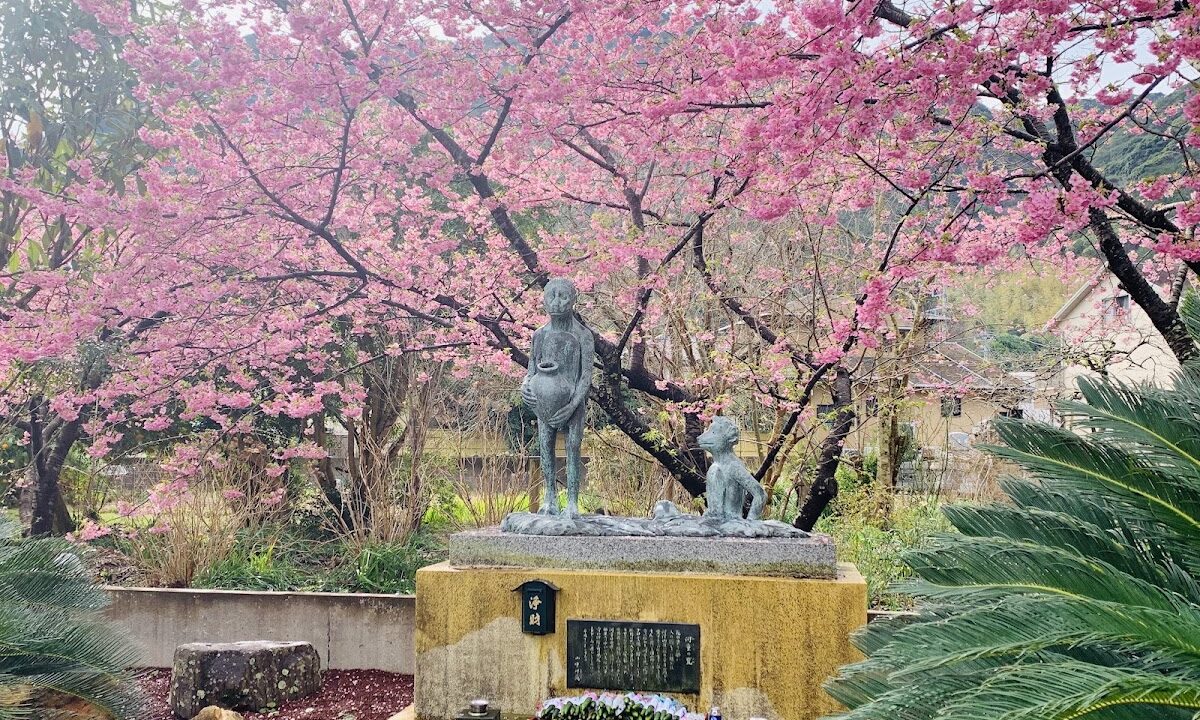
Gyōrenji Temple (Ito City, Shizuoka Prefecture) Complete Guide | History, Cultural Assets, and Records of the Great Kanto Earthquake
Gyōrenji Temple, located in Usami, Ito City, Shizuoka Prefecture, is a historic temple belonging to the Nichiren sect. This temple possesses valuable records that convey the height of the tsunami caused by the Great Kanto Earthquake, and has played an important role as a center of local history and faith. This article provides a detailed guide to Gyōrenji Temple, including its history, cultural assets, points of interest, and access information.
Table of Contents
- Basic Information about Gyōrenji Temple
- History of Gyōrenji Temple
- Records of the Great Kanto Earthquake and Tsunami
- Cultural Assets and Points of Interest of the Temple
- About the Nichiren Sect
- Religious Activities of Gyōrenji Temple
- Access and Visiting Information
- Nearby Nichiren Sect Temples
- Summary
Basic Information about Gyōrenji Temple
Gyōrenji Temple is a Nichiren sect temple located in Usami, Ito City, Shizuoka Prefecture, and is an important religious facility that conveys the teachings of Nichiren Shonin to the present day.
Temple Name: Gyōrenji Temple
Sect: Nichiren Buddhism
Location: Usami, Ito City, Shizuoka Prefecture
Former Head Temple: Yanase Jitsunari-ji Temple
Dharma Lineage: Kōtō Dharma Lineage
Gyōrenji Temple is a Nichiren Buddhist temple that considers the Lotus Sutra as its fundamental scripture and conducts religious activities based on the teachings of Nichiren Shonin. It belongs to the Kōtō Dharma Lineage and is a historically significant temple with Yanase Jitsunari-ji Temple as its former head temple.
History of Gyōrenji Temple
Founding and Development
While detailed records regarding the founding date and the first abbot of Gyōrenji Temple are limited, it is known to have a long history as a Nichiren Buddhist temple. The Nichiren Buddhist sect was founded by Nichiren Shonin during the Kamakura period and has developed its own unique doctrines centered on the teachings of the Lotus Sutra.
Nichiren Shonin was born in 1222 and dedicated his life to spreading the teachings of the Lotus Sutra. The teachings spread throughout Japan through the disciples, and many Nichiren Buddhist temples were established in the Tokai region, including Shizuoka Prefecture. It is believed that Gyōrenji Temple was also established within this Nichiren Buddhist missionary activity and developed as a center of local faith.
Edo and Meiji Periods
During the Edo period, under the danka system (parishioner system), it functioned as the family temple of local residents, playing a religious role as a center for funerals, memorial services, and annual events. The Usami region developed as a fishing village on the east coast of the Izu Peninsula, supporting the faith of people who lived in harmony with the sea.
Despite the impact of the Meiji Restoration’s separation of Shinto and Buddhism and the anti-Buddhist movement, Gyōrenji Temple continued to protect local faith and continued its activities as a Nichiren Buddhist temple.
Taisho Era and the Great Kanto Earthquake
A noteworthy event in the history of Gyōrenji Temple is the Great Kanto Earthquake, which occurred on September 1, 1923 (Taisho 12). This massive earthquake caused immense damage to the Kanto region, and the Usami region of Ito City was no exception.
Records of the Great Kanto Earthquake and Tsunami
The Great Kanto Earthquake of 1923
At 11:58 AM on September 1, 1923 (Taisho 12), a massive earthquake with a magnitude of 7.9 struck Sagami Bay. This Great Kanto Earthquake caused catastrophic damage to the Kanto region, including Tokyo and Yokohama.
The Usami area, located on the east coast of the Izu Peninsula, was also struck by strong shaking and a tsunami. Gyōrenji Temple was also affected, suffering significant damage to its buildings and grounds.
Tsunami Records Carved on Stone Steps
One of the most important historical values of Gyōrenji Temple is the stone steps that record the height of the tsunami during the Great Kanto Earthquake. The height reached by the tsunami is carved into these steps, making them a valuable document that conveys the scale of the disaster to the present day.
Tsunami records play an important role in passing on the lessons of natural disasters to future generations. In recent years, since the Great East Japan Earthquake, the importance of past tsunami records has been re-recognized, and the stone steps of Gyōrenji Temple are attracting attention as valuable historical materials for disaster prevention education and research into the region’s disaster history.
Recovery from the Earthquake
After the Great Kanto Earthquake, Gyōrenji Temple was rebuilt with the support of local residents and the Nichiren sect. Damaged buildings were repaired, and the temple regained its function. During this reconstruction process, efforts were made to prevent the memory of the disaster from fading by preserving tsunami records on the stone steps.
Cultural Assets and Highlights of the Temple
Main Hall and Temple Grounds
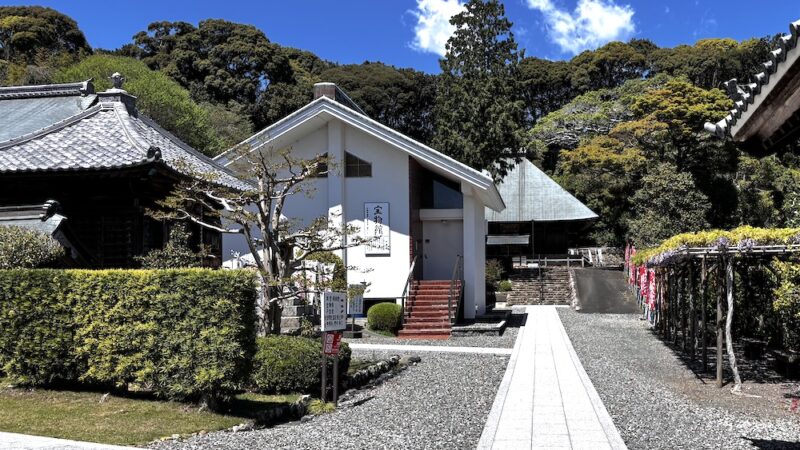
The main hall of Gyōrenji Temple is a building in the traditional architectural style of Nichiren sect temples. The principal image is enshrined inside the main hall, and daily services and religious ceremonies are held there. The temple grounds have a quiet and peaceful atmosphere, providing a space where visitors can quietly offer their prayers.
Stone Steps Recording the Tsunami
As mentioned above, the stone steps that record the height of the tsunami during the Great Kanto Earthquake are one of the most important sights at Gyōrenji Temple. These steps not only function as a simple approach to the temple, but also hold historical value and serve to raise disaster preparedness awareness among visitors.
Temple Treasures and Buddhist Statues
As a Nichiren Buddhist temple, Gyōrenji Temple is believed to possess scriptures related to the Lotus Sutra and temple treasures associated with Nichiren Shonin. It is also possible that Buddhist art objects, such as statues of Shakyamuni Buddha and Nichiren Shonin, are enshrined there.
About the Nichiren Sect
Doctrines of the Nichiren Sect
The Nichiren sect, to which Gyōrenji Temple belongs, is a Buddhist sect founded by the Kamakura period monk Nichiren Shonin (1222-1282). The core of Nichiren Buddhism is the Lotus Sutra (Myoho Renge Kyo), and it holds the doctrine that by chanting the title “Namu Myoho Renge Kyo,” anyone can attain Buddhahood and gain the wisdom of the Buddha.
Nichiren Shonin was convinced that the Lotus Sutra was the true teaching of Shakyamuni Buddha, and he dedicated his life to spreading its teachings. The teachings of the Lotus Sutra expound on the universal idea of salvation, stating that all people equally possess Buddha-nature and can attain Buddhahood.
Practice of Nichiren Buddhism
The core of Nichiren Buddhism’s faith practice is “chanting the title,” that is, chanting the title “Namu Myoho Renge Kyo.” It is believed that by chanting this title, one can feel the merits of the Lotus Sutra firsthand and experience the wisdom and compassion of the Buddha.
Furthermore, in Nichiren Buddhism, the recitation of the Lotus Sutra, copying of sutras, and the study of Nichiren Shonin’s writings are also considered important practices. Temples regularly hold Dharma talks and study sessions, providing opportunities for believers to learn about Buddhist teachings together.
Sectarian Holy Days and Annual Events
The Nichiren sect has important commemorative days called “Sectarian Holy Days.” Major holy days include the birthday of Nichiren Shonin (February 16th), the day of the founding of the sect (April 28th), the day of his persecution (September 12th), and the day of his death (October 13th), and memorial services are held at each temple.
At Gyōrenji Temple, memorial services and events are held in accordance with these Sectarian Holy Days, providing an opportunity for parishioners to gather, remember Nichiren Shonin, and learn about the teachings of the Lotus Sutra.
Religious Activities at Gyōrenji Temple
Daily Services and Memorial Services
At Gyōrenji Temple, daily morning and evening services are held. The head priest and monks chant sutras in the main hall, praying for the peace and well-being of parishioners and for the repose of their ancestors. Furthermore, memorial services are held as needed, such as monthly memorial services and annual memorial services, according to the requests of the parishioners.
Funerals and Memorial Services
As a Nichiren Buddhist temple, Gyōrenji plays an important role in conducting funerals and memorial services for its parishioners. Nichiren Buddhist funerals are based on the teachings of the Lotus Sutra and are rituals praying for the deceased to be reborn in the Pure Land of Ryōzen and to walk the Buddhist path.
Connections with the Community
Gyōrenji, as the religious center of the Usami area, has deep ties with the local community. Through participation in local festivals and events, and interaction with parishioners, the temple continues to spread Buddhist teachings in an accessible way.
Access and Visiting Information
Location
Address: Usami, Ito City, Shizuoka Prefecture
Gyōrenji is located in the Usami district on the east coast of the Izu Peninsula. Usami is also known as a hot spring resort and is a scenic area along the coast.
Access
Access by Train:
- Within walking distance from JR Ito Line “Usami Station”
- Relatively close to Ito Station, accessible by bus or taxi.
Access by Car:
- Use National Route 135 (Higashi-Izu Road)
- Approximately 10 minutes by car from Ito city center.
Visiting Hours and Precautions
Visiting the temple is generally recommended during daytime hours. It is recommended to contact the temple in advance for memorial services or events. Please maintain silence on the temple grounds and observe the proper etiquette of gassho (palms together in prayer) and bowing.
Regarding photography, it is advisable to refrain from taking pictures inside the main hall or in religiously significant areas, or to obtain permission in advance. While documenting the tsunami record stone steps is meaningful from a disaster prevention education perspective, it is important to treat them with respect.
Nearby Nichiren Buddhist Temples
Nichiren Buddhist Temple Network in Shizuoka Prefecture
Numerous Nichiren Buddhist temples exist in Shizuoka Prefecture, each supporting local faith. The Nichiren-shu portal site’s “Map of All Nichiren-shu Temples” allows you to search for Nichiren-shu temples in Shizuoka Prefecture.
Temples around Ito City
In addition to Gyōren-ji Temple, several other Nichiren-shu temples exist in Ito City and the surrounding area. These temples cooperate with each other, sometimes jointly conducting sectarian activities and local religious events.
Other Temples and Related Organizations
There are also many temples of Buddhist sects other than Nichiren-shu in Shizuoka Prefecture. For example, in Aoi Ward, Shizuoka City, there is Ren’ei-ji Temple, which has ties to the Mito Tokugawa family, and houses the memorial tower for Lady Oman and the grave of Katsu Kaishū’s mother. Also, in Fukuroi City, there is Renge-ji Temple (Hagi-dera), said to have been founded by Gyōki, and is known as a famous spot for bush clover.
The Nichiren-shu sect’s administrative offices and various consultation offices also provide support to believers, explanations of Buddhist terminology, and Dharma talks, offering opportunities to experience Buddhist wisdom firsthand.
Summary
Gyōrenji Temple, located in Usami, Ito City, Shizuoka Prefecture, is a Nichiren Buddhist temple with a long history and has played an important role as a center of faith in the region. In particular, the fact that it records the height of the tsunami caused by the Great Kanto Earthquake of 1923 on its stone steps is extremely valuable both historically and from a disaster prevention education perspective.
Based on the spirit of the Lotus Sutra, the teachings of the Nichiren sect, the temple continues to convey the universal idea of salvation, that all people can attain the wisdom of Buddha by chanting the title “Namu Myōhō Renge Kyō.” Gyōrenji Temple’s activities, which transmit the teachings of Shakyamuni Buddha as discovered by Nichiren Shonin in the Lotus Sutra to the present day, are invaluable to the local community.
When you visit Usami, please be sure to stop by Gyōrenji Temple, join your hands in prayer in its historic grounds, and learn from the experience and wisdom of our ancestors by encountering the records of the Great Kanto Earthquake. In the tranquil atmosphere of the temple, reflecting on the life and teachings of Nichiren Shonin and encountering the profound wisdom of the Lotus Sutra will be a deeply meaningful spiritual experience.
Gyorenji Temple is not merely a religious facility; it is an important cultural asset that conveys the history of the region, raises disaster prevention awareness, and serves as a spiritual anchor for people. It will continue to walk hand in hand with the community and pass on the teachings of the Nichiren sect.
Frequently Asked Questions (FAQ)
Q1: Where is Gyorenji Temple located?
A1: Gyorenji Temple is a Nichiren sect temple located in Usami, Ito City, Shizuoka Prefecture. It is within walking distance from Usami Station on the JR Ito Line.
Q2: What are the tsunami records from the Great Kanto Earthquake?
A2: The height of the tsunami that struck Usami during the Great Kanto Earthquake of 1923 is recorded on the stone steps of Gyorenji Temple. This record is a valuable historical document that conveys the lessons of the disaster to future generations.
Q3: Is it possible to visit Gyōrenji Temple?
A3: Yes, Gyōrenji Temple is open to visitors. Please visit during daytime hours, maintain silence on the temple grounds, and observe the proper etiquette of joining hands in prayer. If you wish to participate in a memorial service or event, it is recommended that you contact the temple in advance.
Q4: What kind of Buddhist sect is Nichiren Buddhism?
A4: Nichiren Buddhism is a Buddhist sect founded by Nichiren Shonin during the Kamakura period. Its fundamental scripture is the Lotus Sutra, and its practice of faith centers on chanting the mantra “Namu Myōhō Renge Kyō.”
Q5: Does Gyōrenji Temple have any cultural assets?
A5: The most important historical asset is the stone steps inscribed with records of the tsunami from the Great Kanto Earthquake. Furthermore, as a Nichiren Buddhist temple, it is believed to possess treasures and Buddhist statues related to the Lotus Sutra.
Q6: How can I find out about other Nichiren Buddhist temples in Shizuoka Prefecture?
A6: You can search for Nichiren Buddhist temples in Shizuoka Prefecture on the Nichiren Buddhist portal site’s “Map of All Nichiren Buddhist Temples.” There are numerous temples throughout the prefecture, including in Aoi Ward, Shizuoka City.
Q7: Can I request memorial services or rites at Gyōrenji Temple?
A7: Temple parishioners can request memorial services and rites. It may also be possible for non-parishioners to inquire, so please contact the temple directly.