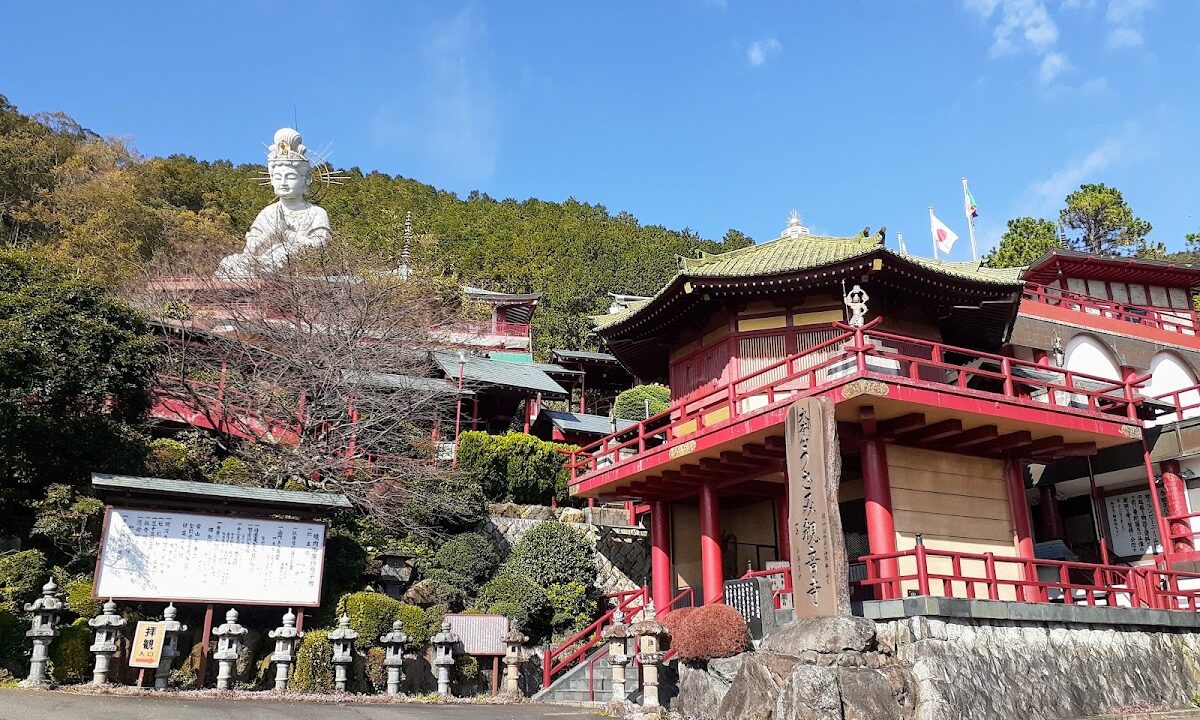
Usami Kannon-ji Temple (Ito City, Shizuoka Prefecture) Complete Guide | 50-meter-tall Great Kannon Statue, Highlights, Goshuin (Temple Seal), and Access Information
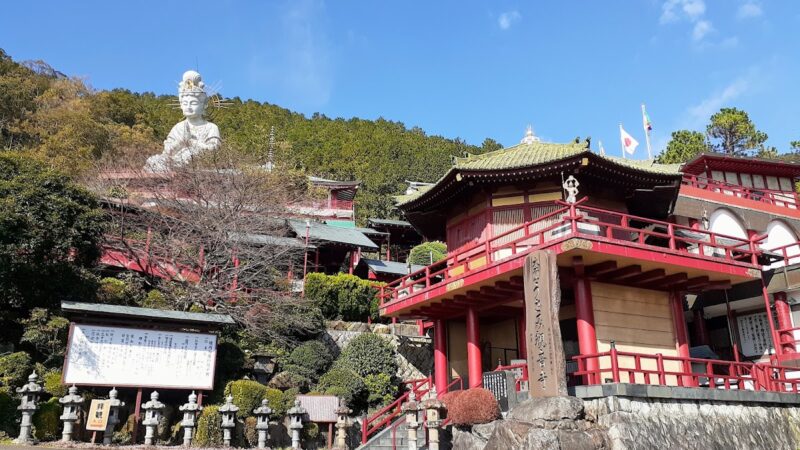
Usami Kannon-ji Temple, located on a hill overlooking Sagami Bay in the Usami district of Ito City, Shizuoka Prefecture, is known for its colossal 50-meter-tall Great Kannon Statue for World Peace. Its gleaming white form can be seen from the platform of JR Usami Station, attracting the attention of many visitors to the Izu Peninsula.
This article provides detailed information you should know before visiting Usami Kannon-ji Temple, including its history, highlights, goshuin (temple seal) information, access methods, and nearby tourist spots.
About Usami Kannon-ji Temple
History and Origin
Usami Kannon-ji Temple belongs to the Shin-Hokke sect and its history dates back over 750 years. The vermilion-lacquered main hall houses precious Buddhist statues that have been preserved since the temple’s founding, and it has been cherished as a center of local faith for many years.
The temple took its current form in 1982 (Showa 57), when a 50-meter-tall statue of the Great Kannon Bodhisattva for World Peace was erected to commemorate world peace. This statue represents the Holy Kannon Bodhisattva and is the largest seated statue of its kind in Japan.
Temple Features
The most striking feature of Usami Kannon-ji Temple is undoubtedly its location and scenery. Situated on a hill overlooking the town of Usami, the temple grounds offer a magnificent panoramic view of Sagami Bay. On clear days, it’s known as a scenic spot where you can even see Izu Oshima Island and the Boso Peninsula.
The principal image is the Holy Kannon Bodhisattva, and the temple welcomes many worshippers as a place to pray for world peace and the happiness of people. The temple grounds contain numerous points of interest, including a large stupa and 20,000 statues of the Compassionate Mother Kannon.
Highlights of Usami Kannon-ji Temple
World Peace Kannon Statue
The World Peace Kannon Statue, a symbol of Usami Kannon-ji Temple, boasts an overwhelming scale of 50 meters in height. The white Kannon statue sits facing Sagami Bay, gently watching over visitors.
This Kannon statue, one of the largest seated statues in Japan, can be seen from the platform of Usami Station and is a beloved landmark of Ito City. On sunny days, its gleaming white form against the blue sky is beautiful, making it a popular photo spot.
The interior of the Kannon statue is open to visitors, allowing them to worship the Buddha statues enshrined on each floor as they ascend the stairs. From the top floor, a 360-degree panoramic view unfolds, allowing visitors to enjoy the natural beauty of the Izu Peninsula.
Vermilion-Painted Grand Hall
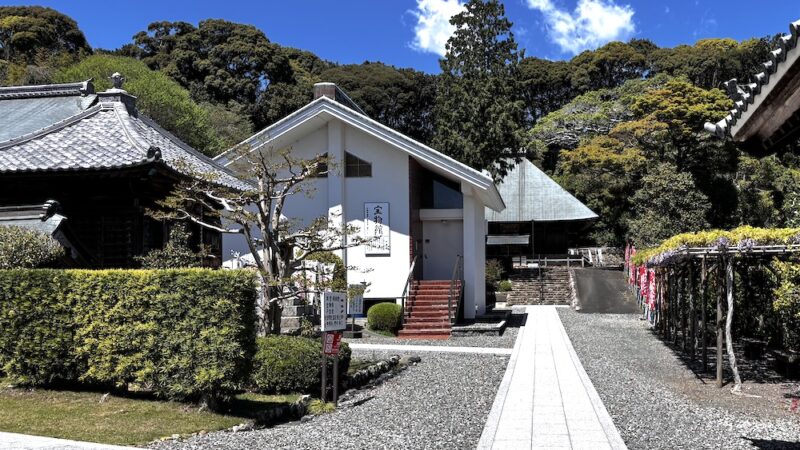
Located in the center of the temple grounds, the vermilion-painted Grand Hall is an impressive building with its vibrant vermilion color. The hall houses precious Buddhist statues created over 750 years ago, conveying a sense of historical weight.
The hall is enveloped in a tranquil atmosphere, allowing visitors to calm their minds and offer prayers accompanied by the scent of incense. The decorations on the ceiling and pillars are magnificent, making it a worthwhile visit for anyone interested in Buddhist art.
Great Buddha Stupa
A magnificent Great Buddha Stupa stands within the temple grounds. This tower, containing the Buddha’s relics (the remains of Shakyamuni Buddha), is considered one of the most sacred places in Buddhism.
The white stupa stands out beautifully against the blue sky, and its majestic presence leaves a deep impression on visitors. The area surrounding the stupa is a well-maintained garden, allowing for a peaceful stroll and a sense of purification.
20,000 Statues of the Compassionate Mother Kannon
One of the distinctive highlights of Usami Kannon-ji Temple is the 20,000 statues of the Compassionate Mother Kannon enshrined within the temple grounds. The sight of the small Kannon statues lined up in order is breathtaking, each one imbued with the wishes of the people who dedicated them.
These Kannon statues were donated by people praying for child-rearing and the safety of their families, and their expressions are full of compassion, symbolizing motherhood. Standing before the statues and offering prayers fills you with a warm feeling.
Couple’s Bell
Within the temple grounds is a bell called the “Couple’s Bell,” and it is said that ringing it together when visiting as a couple or married couple will deepen your bond. The sound of the bell ringing amidst the spectacular view of Sagami Bay will be a special and moving experience.
Seven Lucky Gods Statues
Statues of the Seven Lucky Gods are also placed within the temple grounds, and it is believed that praying to each god will bestow seven blessings. Ebisu, Daikokuten, Bishamonten, Benzaiten, Fukurokuju, Jurojin, and Hotei—the seven deities—welcome visitors with smiles.
Water-Pouring Kannon
The Water-Pouring Kannon is an object of worship where people pour water over Kannon (Goddess of Mercy) while making wishes. It is believed that pouring water purifies the mind and body, and thus grants wishes. It is particularly popular with worshippers praying for good health and recovery from illness.
Buddhist Museum
The temple grounds also house a Buddhist museum, displaying various materials and works of art related to Buddhism. It is a valuable facility where one can learn about Buddhist culture, including Buddhist statues, paintings, and scriptures.
Some of the exhibits are of high historical value, making it especially recommended for those interested in Buddhist art. Visiting the museum will allow you to gain a deeper understanding of the history of Usami Kannon-ji Temple and the teachings of Buddhism.
Usami Kannon-ji Temple’s Goshuin (Temple Seal) Information
Types and Designs of Goshuin
Usami Kannon-ji Temple offers Goshuin. The Goshuin features the temple name and an image of the principal deity, the Holy Kannon Bodhisattva, in calligraphy, and is stamped with a red seal. Characterized by its simple yet powerful brushwork, the Goshuin (temple stamp) is a popular souvenir for visitors.
Goshuin Reception Hours and Location
Goshuin can be received at the reception area during visiting hours (8:30 AM to 4:30 PM). You can bring your own Goshuincho (stamp book) or receive a pre-printed Goshuin.
This temple is still open to visitors, so it is recommended to check the latest information before visiting. Although some media outlets have reported it as an “abandoned temple,” it actually accepts visitors and still issues Goshuin.
About Goshuincho
It is recommended to check upon arrival whether Usami Kannonji Temple has its own original Goshuincho. If you bring your own Goshuincho, it will be stamped in that.
Basic Information about Usami Kannon-ji Temple
Visiting Hours and Fees
- Visiting Hours: 8:30 AM – 4:30 PM
- Admission Fee: 300 yen (Adults)
- Closed Days: Open all year round (Subject to change due to weather, etc.)
The admission fee is a reasonable 300 yen, allowing you to visit many of the temple’s highlights. Visiting hours may change depending on the season, so it is recommended to check before visiting.
Location and Contact Information
- Address: Usami, Ito City, Shizuoka Prefecture
- Sect: Shin-Hokke-shu (Independent)
- Principal Image: Holy Kannon Bodhisattva
Facilities and Equipment
The temple grounds have a parking lot for visitors. Restrooms are also available, making for a comfortable visit. However, as it is located on a hill, there are many stairs and slopes, so comfortable walking shoes are recommended.
Access to Usami Kannon-ji Temple
Access by Train
Usami Kannon-ji Temple is located on a hill, making access by public transport somewhat inconvenient. The nearest station is Usami Station on the JR Ito Line, but it takes more than an hour to walk from the station to the temple.
The distance from Usami Station to the temple is approximately 3 kilometers, and you will need to climb a continuous uphill slope. This is a good option for those confident in their physical fitness or who enjoy hiking, but most visitors use private cars or taxis.
Access by Taxi
Taking a taxi from Usami Station will get you there in about 10 minutes. Since taxis may not always be stationed in front of the station, it’s best to request one in advance. It’s also recommended to call a taxi from the temple after your visit.
Access by Private Car
Visiting by private car is the most convenient option. The route involves climbing a mountain road from National Route 135. The road is narrow in some places, so caution is required while driving.
- Tomei Expressway: Approximately 1 hour 30 minutes from Atsugi IC
- Odawara-Atsugi Road: Approximately 1 hour from Odawara-Nishi IC
- Izu Skyline: Approximately 30 minutes from Kameishi-toge IC
You can arrive without any problems by entering the address into your car navigation system. There is a free parking lot on the temple grounds with space for several dozen cars.
Notes for Visitors
Because it is located on a hill, fog may occur or strong winds may blow depending on the weather. Especially in winter, be sure to take proper precautions against the cold. Also, the temple grounds are large and have many stairs and slopes, so we recommend wearing comfortable shoes and clothing.
Current Status of Usami Kannon-ji Temple
Some media outlets and the internet describe Usami Kannon-ji Temple as an “abandoned temple” or “ruin,” but this is a misunderstanding. While there are certainly some areas where the buildings show signs of aging, it is currently operating as a temple that is open to visitors.
The head priest is always present and handles the issuance of Goshuin (temple stamps) and the reception of visitors. Visitor reviews include positive comments such as “The head priest is friendly and easy to talk to” and “The temple is very clean.”
However, it is true that more than 40 years have passed since its construction in 1982, and there are challenges in terms of maintenance. When visiting, it is important to show respect as it is an active temple.
Recommended Tourist Spots Around Usami Kannonji Temple
Ito Onsen
Ito Onsen, located about 15 minutes by car from Usami Kannonji Temple, is one of Shizuoka Prefecture’s leading hot spring resorts. It boasts abundant hot spring water and has many hot spring inns and day-trip bathing facilities. Relaxing in the hot springs after visiting the temple is highly recommended.
Jogasaki Coast
Jogasaki Coast, a scenic spot on the east coast of the Izu Peninsula, is located about 20 minutes by car from Usami Kannonji Temple. This lava coastline, formed by the eruption of Mount Omuro approximately 4,000 years ago, boasts a beautiful landscape with a striking contrast between towering cliffs and the blue sea.
The Kadowaki Suspension Bridge is 48 meters long and 23 meters high, offering a thrilling experience. A promenade is also maintained, allowing visitors to enjoy a stroll along the coast.
Izu Kogen
The Izu Kogen area is dotted with various art museums and museums. Many unique facilities, such as the Izu Teddy Bear Museum, the Izu Glass and Craft Museum, and the Mysterious Boy and Girl Museum, are enjoyable for families.
Furthermore, the area around Izu Kogen Station has many stylish cafes and restaurants, making it an ideal base for sightseeing.
Mount Omuro
Mount Omuro, at an elevation of 580 meters, is a beautifully shaped volcano resembling an inverted bowl. A lift takes you to the summit, where you can enjoy a 360-degree panoramic view. At the summit, there’s a walking trail called “Ohatameguri” that circles the crater, offering panoramic views of Mount Fuji, the Izu Islands, and Sagami Bay.
Izu Shaboten Animal Park
Located at the foot of Mount Omuro, Izu Shaboten Animal Park is a popular tourist spot where visitors can interact with various animals, including cacti and succulents from around the world, as well as capybaras and squirrel monkeys. The “Original Capybara Open-Air Bath” in winter is particularly famous and attracts many tourists.
Ippeki Lake
Ippeki Lake, also known as the “Eye of Izu,” is a beautiful lake with a circumference of approximately 4 kilometers. A walking trail is maintained along the lakeshore, allowing visitors to enjoy the changing seasons while strolling. Boating and fishing are also available, making it ideal for those seeking a peaceful getaway.
Recommended Gourmet Around Usami Kannonji Temple
Seafood Cuisine
Ito City is a port town facing Sagami Bay, boasting an abundance of fresh seafood. Around Ito Port, there are many seafood restaurants where you can enjoy the unique flavors of Izu, such as sashimi set meals, seafood bowls, and simmered splendid alfonsino.
Splendid alfonsino, in particular, is a specialty of Izu and is served in various ways, including simmered, grilled with salt, and shabu-shabu. The refined taste of fatty splendid alfonsino is an unforgettable deliciousness.
Dried Fish of Izu
Dried fish is also a specialty of Ito City. Various types of dried fish are made, including horse mackerel, mackerel, barracuda, and splendid alfonsino, and are popular as souvenirs. Some local dried fish shops offer freshly grilled dried fish over charcoal, allowing you to fully enjoy the fragrant aroma and delicious flavor of the fish.
Cafes around Izu Granpal Park
The Izu Kogen area has many stylish cafes. Cafes with terrace seating overlooking the sea, or secluded cafes nestled in the forest, each have their own unique character. You can enjoy a relaxing time while savoring lunches and sweets made with local ingredients.
Restaurants in Ito Marine Town
Ito Marine Town is a complex adjacent to Ito Port, housing restaurants, shops, and a day-trip hot spring facility. With a variety of eateries including seafood restaurants, Italian restaurants, and cafes, it’s convenient for a stop during sightseeing.
Hotels and Accommodations near Usami Kannonji Temple
Ryokans (Japanese Inns) in Ito Onsen
Ito Onsen offers a variety of accommodations, from long-established hot spring inns to modern hotels. Many accommodations offer open-air baths overlooking the sea and kaiseki cuisine using local ingredients, allowing you to fully enjoy a relaxing hot spring trip.
There are also many historic inns such as “Yokikan,” “Tokaikan,” and “Hatoya Hotel,” where you can enjoy a Showa-era retro atmosphere.
Pensions in Izu Kogen
The Izu Kogen area has many unique pensions. The charm lies in the owner’s carefully prepared cuisine and the homey atmosphere. Many accommodations are pet-friendly, making them ideal for those who want to travel with their beloved dogs.
Resort Hotels
Resort hotels are scattered around Izu Kogen and Jogasaki Coast. You can enjoy a special holiday at luxury resort hotels equipped with ocean-view rooms, extensive spa facilities, and swimming pools.
Business Hotels
There are also reasonably priced business hotels around Ito Station. These accommodations are a good option for those whose itinerary focuses more on temple visits than sightseeing, or for those who want to keep their budget down.
Events Held Around Usami Kannonji Temple
Ito Onsen Fireworks Festival
Ito City hosts several fireworks festivals, mainly during the summer. The “Anjin Festival Sea Fireworks Festival,” held in August, is Ito’s largest fireworks display, with approximately 10,000 fireworks illuminating the night sky. The fireworks, launched from Ito Port, are clearly visible from the city center and attract many tourists.
Furthermore, the “Ito Onsen Chopstick Festival Fireworks Display,” held every Saturday from July to August, features approximately 1500 fireworks, illuminating the summer nights.
Ito Onsen Bamboo Lanterns
Held from autumn to winter, the “Ito Onsen Bamboo Lanterns” event illuminates the town with bamboo lanterns. Bamboo lanterns are placed throughout the hot spring town, creating a magical atmosphere. Visitors can enjoy the charm of the hot spring town while strolling through the evening.
Omuroyama Mountain Burning
Held every February, the Omuroyama Mountain Burning is a winter tradition in Ito. The sight of the entire mountain engulfed in flames is breathtaking, attracting many tourists and photography enthusiasts. After the burning, Omuroyama Mountain turns black, and in spring, new greenery begins to sprout.
Ito Sukechika Festival
Held in May, the “Ito Sukechika Festival” commemorates Ito Sukechika, the ancestor of the Ito clan. Warrior processions, Ito Odori dances, and various other events are held, allowing visitors to experience the region’s history and culture.
Visitor Trends at Usami Kannon-ji Temple
Characteristics of Visitors
Usami Kannon-ji Temple, with its gigantic Kannon statue and stunning views from its hilltop location, attracts visitors with a variety of purposes.
- Visitors for Faith: Visitors praying for world peace and family safety
- Tourists: Tourists visiting as part of sightseeing in Ito Onsen or Izu Kogen
- Goshuin Collectors: Goshuin enthusiasts who visit temples and shrines throughout Shizuoka Prefecture
- Photography Enthusiasts: Photographers capturing the gigantic Kannon statue and the scenery of Sagami Bay
- B-Grade Spot Explorers: Explorer-type travelers seeking unique tourist destinations
Best Season to Visit
Usami Kannon-ji Temple is open year-round, but each season offers a different charm.
- Spring (March-May): The mild climate is ideal for visiting. The surrounding mountains are beautiful during cherry blossom season.
- Summer (June-August): The sea breeze is pleasant, and the blue of Sagami Bay stands out. However, the sun is strong, so heatstroke prevention is necessary.
- Autumn (September-November): The air is clear, allowing for expansive views. The surrounding mountains are ablaze with autumn colors.
- Winter (December-February): Fewer tourists, allowing for a peaceful visit. The air is clear, and Mount Fuji is clearly visible. Warm clothing is essential.
Estimated Time Required
If you want to leisurely explore the temple grounds, allow 1 to 1.5 hours. This is enough time to view the interior of the Kannon statue, see the various points of interest, and enjoy the scenery.
If you plan to take photos or visit the Buddhist museum, we recommend allocating about 2 hours.
Recommended Shrines and Temples to Visit Together
Shrines and Temples in Ito City
Otonashi Shrine
Located in the heart of Ito City, Otonashi Shrine is known for its connection to the love story of Minamoto no Yoritomo and Hojo Masako. Within the shrine grounds is a quiet forest called “Otonashi no Mori,” where you can forget the hustle and bustle of the city and enjoy a peaceful time. It is believed to bring good fortune in matchmaking, and is a popular shrine for couples and married couples.
Kuzumi Shrine
Kuzumi Shrine in Ito City has been worshipped as the local guardian shrine for centuries. The grounds are home to centuries-old trees, creating a sacred atmosphere. It is a quiet shrine beloved by locals, offering a peaceful place to worship.
Famous Temples of the Izu Peninsula
Shuzenji Temple
Shuzenji Temple in Izu City is a representative and famous temple of the Izu Peninsula. It is said to have been founded in 807 by Kobo Daishi, and boasts a long history. Located in the heart of the Shuzenji Onsen hot spring resort area, it can be visited in conjunction with a hot spring trip. Known as a famous spot for autumn foliage, it attracts many tourists in the fall. Within the temple grounds, there are attractions such as the Tokko-no-Yu hot spring associated with Kobo Daishi and the tomb of Minamoto no Yoriie.
Shrines near Ryugu-kutsu
Near Ryugu-kutsu in Shimoda City, there are several small shrines. They can be visited in conjunction with a drive along the coast, allowing you to experience the connection between the nature of the Izu Peninsula and religious beliefs.
Manners and Precautions When Visiting Usami Kannon-ji Temple
Manners for Worship
Usami Kannon-ji Temple is an active temple, so please observe the following manners when visiting.
- Attire: Please avoid revealing clothing and dress appropriately when visiting the temple.
- Photography: Photography is generally permitted on the temple grounds, but please be considerate of those inside the hall and other visitors.
- Smoking: Smoking is strictly prohibited except in designated areas.
- Litter: Please take all your trash with you.
- Noise: Please refrain from loud conversations and disruptive behavior.
Safety Precautions
- Stairs and Slopes: There are many stairs and slopes on the temple grounds, so please wear comfortable shoes.
- Weather: The ground can be slippery in rainy weather. Please avoid unnecessary activity.
- Heatstroke Prevention: The sun is strong in summer, so please bring a hat and drinks.
- Cold Weather Protection: It is windy and cold in winter due to the elevated location. Please prepare warm clothing.
Regarding offerings and donations
The entrance fee is 300 yen, but if you request a special prayer, an additional offering may be required. You can donate any amount you feel is appropriate, but 5-yen coins (representing good fortune) and 50-yen coins (representing fivefold good fortune) are considered auspicious.
Frequently Asked Questions about Usami Kannon-ji Temple
Is there parking?
Yes, there is a free parking lot on the temple grounds. It can accommodate several dozen cars, but it may be full during busy times.
Is it possible to visit in a wheelchair?
There are many stairs and slopes on the temple grounds, making it difficult to visit in a wheelchair. While it may be possible with assistance, it is recommended to consult with the temple in advance.
Are pets allowed?
For visiting with small dogs or other pets, it is recommended to check directly with the temple. Generally, temples and shrines often require pets to be kept in cages or carriers.
Can I definitely get a Goshuin (temple stamp)?
Generally, you can receive a Goshuin during visiting hours, but the head priest may be absent due to religious services, etc. If you want to be sure to receive a Goshuin, we recommend calling ahead to confirm.
Is it really open for viewing? Is it not a ruined temple?
Usami Kannon-ji Temple is currently open for viewing. Some media outlets and websites describe it as a “ruined temple,” but this is a misunderstanding. A visit will confirm that the head priest is always present and that they accept visitors.
Can I enter the interior of the Kannon statue?
You can view the interior of the World Peace Kannon statue. You can climb the stairs, paying your respects to the Buddha statues on each floor, and enjoy a spectacular view from the top floor. However, it requires physical stamina, so please consider your physical condition before visiting.
Are there any places to eat nearby?
There are very few restaurants around the temple. You will need to descend to the town of Ito, so it is recommended that you eat before your visit or bring drinks and snacks.
Can I walk there from Usami Station?
While it is possible to walk, it involves an uphill climb of approximately 3 kilometers, taking over an hour. Unless you are confident in your physical fitness or enjoy hiking, we recommend taking a taxi or private car.
Summary
Usami Kannon-ji Temple is a temple that boasts a 50-meter-tall statue of the Great Kannon of World Peace and a spectacular view overlooking Sagami Bay. With a history of over 750 years, it took its current form in 1982 and welcomes many visitors as a temple praying for world peace.
The temple grounds offer numerous sights to see, including 20,000 statues of the Compassionate Mother Kannon, a large stupa, a couple’s bell, and statues of the Seven Lucky Gods, making it well worth taking your time to explore. Goshuin (temple stamps) are also available, making it a great place to visit as part of a goshuin pilgrimage.
Access is convenient by private car or taxi, and it can be visited in conjunction with sightseeing in Ito Onsen or Izu Kogen. There are many popular tourist spots nearby, such as Jogasaki Coast, Mount Omuro, and Izu Shaboten Animal Park, making for a fulfilling Izu trip.
Although there is some misunderstanding that it is an abandoned temple, it is still operating as a temple open to visitors. When visiting, please show respect as it is an active temple and fully appreciate the charm of Usami Kannon-ji Temple, a hidden gem in Ito City, Shizuoka Prefecture.