Renchakuji Temple (Ito City, Shizuoka Prefecture) Complete Guide | A Sacred Site Associated with Nichiren Shonin and a Nationally Designated Natural Monument, the Bayberry Tree
Renchakuji Temple, located near the Jogasaki Coast in Ito City, Shizuoka Prefecture, is a sacred site and branch temple of the Hokke-shu Jinmon-ryu sect, and has played an important role in the history of Nichiren Buddhism. Known as the site of the Izu Persecution, one of Nichiren Shonin’s “Three Great Persecutions,” a large bayberry tree, a nationally designated natural monument said to be over a thousand years old, continues to protect the temple grounds. This article comprehensively introduces information you should know before visiting Renchakuji Temple, including its history, highlights within the grounds, access methods, and surrounding spots.
History and Origin of Renchakuji Temple
The Legend of Nichiren Shonin’s Izu Persecution and the Manaita-iwa Rock
The history of Renchakuji Temple dates back to 1261 (Kōchō 1) during the Kamakura period. Nichiren Shonin, the founder of the Nichiren sect, was reprimanded for criticizing the Kamakura shogunate and sentenced to exile in Ito, Izu Province. This is a significant event in the history of the Nichiren sect, known as the “Izu Persecution.”
According to tradition, Nichiren Shonin was abandoned on Manaita-iwa, a rock formation offshore from what is now Nichiren Cape. Manaita-iwa is a reef located about 500 meters south of the present-day Renchaku-ji Temple, and was sometimes used as an execution ground at the time. Nichiren Shonin’s journey through this harsh ordeal forms the origin of the founding of Renchaku-ji Temple.
Founding and Development of Renchaku-ji Temple
There are several theories regarding the founding of Renchaku-ji Temple. One theory suggests that it was founded during the Muromachi period by Shojoin Nichiun Shonin, a disciple of Nichiro. Furthermore, there are records indicating that around 1508, Imamura Wakasa-no-kami, a retainer of the Odawara Hojo clan who ruled this area at the time, built a founder’s hall in honor of Nichiren Shonin and donated 70 chobu (approximately 70 hectares) of land nearby, marking the beginning of Renchaku-ji Temple.
The temple’s mountain name is “Soganzan,” indicating its deep connection to Manaita-iwa, the rock formation where Nichiren Shonin was abandoned. The principal image is the Great Mandala established by Nichiren Shonin, and the temple continues to attract many worshippers as a sacred site and branch temple of the Hokke-shu Jinmon-ryu sect.
Highlights of the Temple Grounds
National Natural Monument: Myrica rubra
A must-see when visiting Renchaku-ji Temple is the towering Myrica rubra tree within the temple grounds. This giant tree is designated a national natural monument and is said to be over a thousand years old. The sight of its branches, extending approximately 22 meters to the left and right, is breathtaking and continues to captivate visitors.
Located to the right of the main hall, this bayberry tree is a living witness to the history of Renchaku-ji Temple. It displays different expressions throughout the seasons: fresh green leaves from spring to early summer, deep green in summer, and vibrant autumn foliage. In particular, its red berries in early summer add color to the temple grounds.
The Pine Tree with the Robe and the Stone-Eating Holly Tree
Besides the bayberry tree, other interesting trees are scattered throughout the vast temple grounds. The “Pine Tree with the Robe” is a pine tree with a legend that Nichiren Shonin hung his robe on it, and it is cherished as an object of worship.
The “Stone-Eating Holly Tree,” as its name suggests, is a rare holly tree that has grown to envelop a stone, and is one of the highlights that evokes a sense of natural mystery. These trees tell the story of Renchaku-ji Temple, which is not merely a historical building, but a sacred place where nature and faith are in harmony. ### Statue of Nichiren Daishonin and Main Hall
Near the entrance to the temple grounds stands a statue of Nichiren Daishonin. This statue serves as a symbol of Renchaku-ji Temple’s connection to Nichiren Daishonin, welcoming visitors.
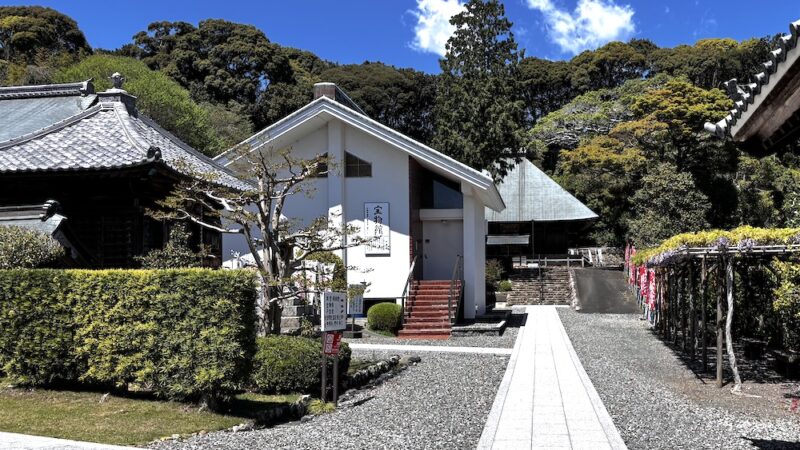
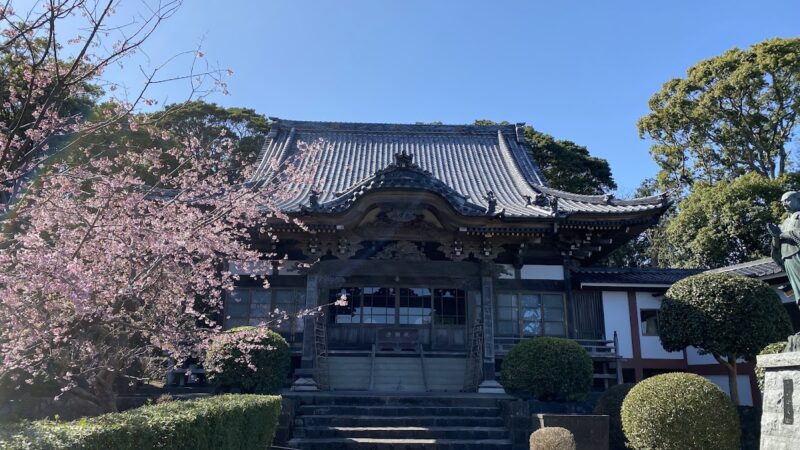
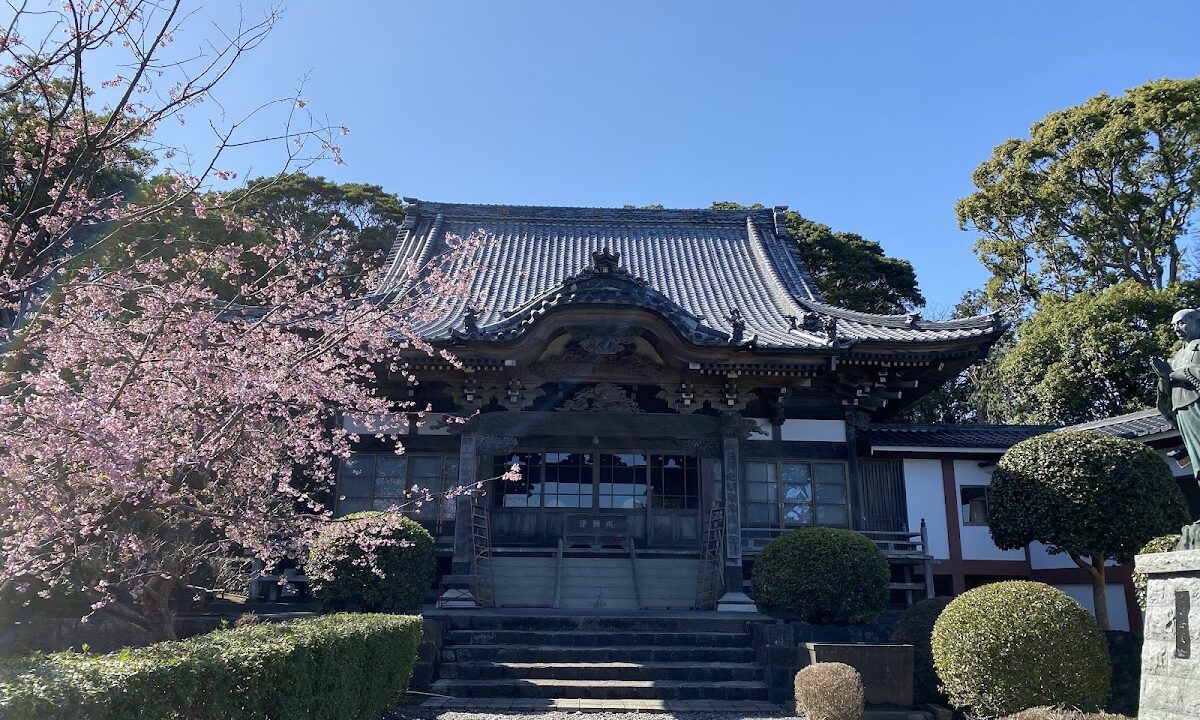
The main hall, positioned at the front, presents a simple yet majestic presence. Inside, the Great Mandala, the principal image of worship established by Nichiren Daishonin, is enshrined, offering a tranquil space for worship. The entire temple grounds are spacious, providing a relaxing environment for visitors.
Relationship with Jogasaki Coast
Entrance to the Jogasaki Nature Trail
Renchaku-ji Temple is located along the Jogasaki Coast, at the entrance to the Jogasaki Nature Trail. This location allows for sightseeing that combines coastal walks with temple visits. Renchaku-ji Temple can also be accessed via a promenade from Jogasaki Coast, making it an excellent location to enjoy both the sea and mountains simultaneously.
Access to Nichiren Cape and Manaita Rock
Approximately 500 meters south of Renchaku-ji Temple lies Manaita Rock, where Nichiren Shonin is said to have been abandoned. This area, now known as Nichiren Cape, is a scenic spot offering panoramic views of the beautiful coastline of the Izu Peninsula. When visiting Renchaku-ji Temple, we highly recommend extending your trip to trace Nichiren Shonin’s footsteps.
Access Information
Access by Train
If visiting Renchaku-ji Temple by train, the nearest station is Jōgasaki-kaigan Station on the Izu Kyuko Line. While it’s possible to walk from the station, the distance is considerable, so consider taking a bus or taxi. It’s also accessible from Izu-Kōgen Station, from which buses or taxis are the usual options.
Access by Car
If traveling by car, it takes approximately 1 hour and 30 minutes from the Atsugi Interchange on the Tomei Expressway, or approximately 1 hour and 15 minutes from the Numazu Interchange. Take National Route 135 towards Ito City and head towards the Futo area.
The address is 835 Futo, Ito City, Shizuoka Prefecture. Entering this address into your car’s navigation system should allow for relatively smooth access. It is recommended to check parking availability in advance.
Access by Bus
You can also take a local bus from Izu Kogen Station or Jogasaki Kaigan Station. Tokai Bus operates routes, and you can get off at “Renjakuji” or a nearby bus stop. However, since bus services may be limited, it is important to check the timetable in advance.
Visiting Information
Opening Hours and Admission Fee
While you can generally visit the grounds of Renjakuji Temple freely, there may be restrictions on viewing the interior of the buildings. General visiting hours are during daylight hours, but it is recommended to check the detailed opening hours before visiting.
Regarding admission fees, entry to the grounds is free, but separate fees may be required for special events or interior viewing.
About Goshuin (Temple Seals)
You can receive a Goshuin at Renchakuji Temple. As a sacred site branch temple of the Hokke-shu Jinmon-ryu sect, the Goshuin of this temple associated with Nichiren Shonin is a valuable item for pilgrims and Goshuin collectors. When receiving a Goshuin, please bring your Goshuincho (stamp book) and make your request politely.
Goshuin are only available during the temple office’s opening hours, so it’s best to contact them in advance if you want to be sure to receive one.
Recommended Spots Around Renchakuji Temple
Jogasaki Coast
Jogasaki Coast, within walking distance of Renchakuji Temple, is one of the most representative scenic spots on the Izu Peninsula. It features a magnificent coastline stretching approximately 9 kilometers, formed by lava flows from the eruption of Mount Omuro about 4,000 years ago.
The Kadowaki Suspension Bridge, spanning a sheer cliff, is approximately 23 meters high and 48 meters long, offering a thrilling experience. The view of the deep blue sea and rugged reefs from the suspension bridge is breathtaking. Two walking trails, the approximately 3-kilometer-long “Picnic Course” and the approximately 6-kilometer-long “Nature Research Trail,” are also maintained along the coast, allowing visitors to enjoy hiking while admiring the beautiful coastline.
Izu Ocean Park
Located about 10 minutes by car from Renchakuji Temple, Izu Ocean Park is known as a mecca for diving and snorkeling. The crystal-clear waters are popular with a wide range of divers, from beginners to advanced.
The park also has an area for exploring tide pools, making it enjoyable for families. Furthermore, the observation deck offers a panoramic view of Sagami Bay, and on clear days, you can even see Izu Oshima Island and the Boso Peninsula.
Izu Teddy Bear Museum
Located about 5 minutes by car from Renchakuji Temple, the Izu Teddy Bear Museum is a specialized museum showcasing teddy bears from around the world. Approximately 1000 teddy bears, ranging from antiques to contemporary pieces, are on display, making it a popular spot for teddy bear enthusiasts and families alike.
The museum’s interior, recreating a British atmosphere, makes you feel as if you’ve stepped into a picture book. Original teddy bears and other goods can be purchased at the museum shop.
Glass Marelei Museum
For those interested in glass art, the Glass Marelei Museum is highly recommended. Located about a 7-minute drive from Renchakuji Temple, it offers a fantastical world of glass art.
The museum displays various glass art pieces, including stained glass and glass sculptures. Glassmaking workshops are also available, allowing you to create your own original piece.
J-GARDEN (Izu Kogen Antique Jewelry Museum)
In the Izu Kogen area, there is also J-GARDEN, which exhibits antique jewelry. Located about a 10-minute drive from Renchakuji Temple, it offers a valuable collection of jewelry, primarily from the Victorian era.
The beautiful gardens are one of the highlights, welcoming visitors with flowers that change with the seasons. It’s a spot where you can enjoy both art and nature in an elegant atmosphere.
Recommended Restaurants near Renchakuji Temple
Italian Restaurant Delfino
If you’re looking for lunch or dinner near Renchakuji Temple, we recommend “Delfino,” where you can enjoy authentic Italian cuisine. The dishes, made with fresh local ingredients, are simple yet profound, highlighting the natural flavors of the ingredients.
The pasta and pizza made with seafood from Izu are especially exquisite, and enjoying a meal on the ocean-view terrace will give you a true resort feel.
Seafood Restaurants
Ito City is a region rich in fresh seafood. Around Renchakuji Temple, there are many seafood restaurants using fish and shellfish caught locally. In particular, the simmered splendid alfonsino and sashimi set meals are must-try dishes when visiting Izu.
Cafes & Sweets
The Izu Kogen area boasts numerous stylish cafes and sweets shops. A stop during your stroll allows you to enjoy sweets made with local ingredients and carefully selected coffee. Cafes offering tea time with ocean views are especially perfect for unwinding after a day of sightseeing.
Hotels and Accommodations near Renchakuji Temple
Hot Spring Ryokans in Izu Kogen
Near Renchakuji Temple, there are many accommodations where you can enjoy the Izu Kogen hot springs. Ryokans with open-air baths overlooking the ocean offer a luxurious experience of soaking in the hot springs while admiring the breathtaking scenery. Kaiseki cuisine featuring abundant local seafood and mountain delicacies is another attractive feature.
Resort Hotels
The Izu Kogen area also offers a wide selection of hotels offering a resort-like stay. Facilities with pools and spas allow you to enjoy not only sightseeing but also the hotel stay itself. A variety of accommodations are available, from family-friendly options to those catering to couples.
Pensions & Guesthouses
For those seeking a homey atmosphere, pensions and guesthouses are also recommended. You can enjoy interacting with the owners and gain local information. They are relatively affordable, making them suitable for long-term stays.
Points to Note and Manners When Visiting
Manners for Worship
Renchakuji Temple is a temple that still functions as a place of worship. When visiting, please observe the following manners:
- Be quiet on the temple grounds and refrain from loud conversations.
- Take photographs only in designated areas.
- Remove your hat inside the main hall and other buildings.
- Always take your trash with you.
- Do not touch or damage trees or plants.
Protection of Nationally Designated Natural Monuments
The bayberry trees on the temple grounds are designated as a national natural monument. To preserve this precious tree for future generations, please observe the following:
- Do not climb the tree or break its branches.
- Do not trample around the base of the tree.
- Do not take fallen fruits or branches without permission.
Seasonal Clothing
Renchakuji Temple is located along the coast, so the climate changes significantly with the seasons. In summer, the sun is strong, so a hat and sunscreen are essential. In winter, the sea breeze is cold, so be sure to dress warmly. Also, the temple grounds are large, so if you plan to combine your visit with a stroll along the Jogasaki Coast promenade, we recommend wearing comfortable walking shoes.
Annual Events at Renchakuji Temple
Major Ceremonies and Events
Renchakuji Temple holds various ceremonies and events throughout the year. Ceremonies related to Nichiren Shonin are particularly important and attract many believers.
A special ceremony may be held around October 13th, the anniversary of Nichiren Shonin’s death. Furthermore, memorial services are held during the spring and autumn equinoxes and the Obon festival, attracting many visitors.
Special Openings and Events
Normally, areas and treasures that are not open to the public are sometimes specially opened to the public at certain times. Checking the temple’s website or local tourism information before your visit may allow you to have a special experience.
Summary
Renchakuji Temple is a sacred site associated with the historical event of Nichiren Shonin’s persecution in Izu. A nationally designated natural monument, a bayberry tree said to be a thousand years old, protects the temple grounds, making it a special place where history and nature harmonize. Located at 835 Futo, Ito City, Shizuoka Prefecture, its location, which can be combined with a visit to the beautiful scenery of Jogasaki Coast, is also one of its attractions.
As a sacred branch temple of the Hokke-shu Jinmon-ryu sect, Renchakuji Temple continues to attract many followers and is an important temple for learning about the history of Nichiren Buddhism. The temple grounds are dotted with sights to see, such as the legend of the Manaita-iwa rock, the pine tree where the monk hung his robe, and the stone-eating mochi tree, allowing visitors to feel the weight of history and experience a sense of tranquility.
Conveniently located as a base for sightseeing in the Izu Kogen area, the surrounding area boasts numerous cultural facilities such as the Izu Teddy Bear Museum, the Glass Marelai Museum, and J-GARDEN, as well as gourmet spots including the Italian restaurant Delfino, and a wealth of accommodations including hot spring inns and resort hotels.
It is accessible by various means of transport, including train, bus, and car, and can be reached from Jogasaki-kaigan Station and Izu Kogen Station. When visiting, please observe proper temple etiquette and show respect for the bayberry tree, a nationally designated natural monument.
As a destination for a journey tracing the footsteps of Nichiren Shonin and experiencing the history and nature of Izu, Renchaku-ji Temple is well worth a visit. The time spent calming your mind in the tranquil grounds and contemplating the ancient bayberry tree that has lived for over a thousand years will be a special experience away from everyday life.