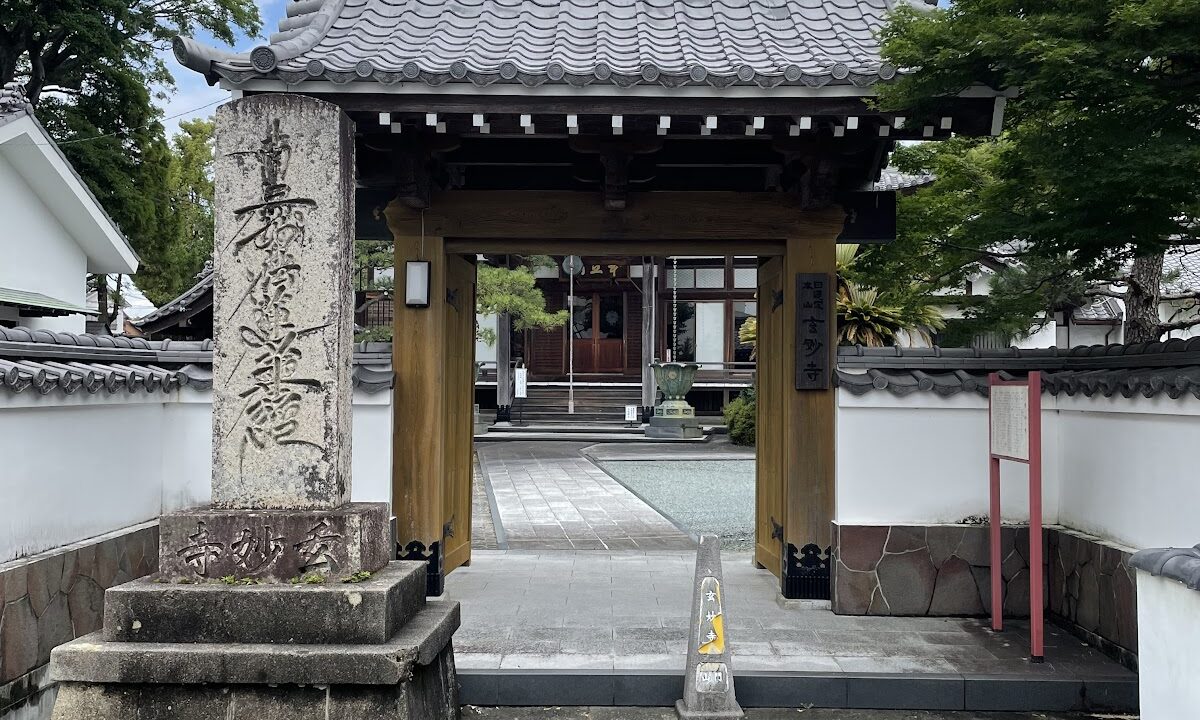
Genmyoji Temple (Iwata City, Shizuoka Prefecture) Complete Guide: History and Highlights of the Nichiren Sect Head Temple Founded by Nichijū Shōnin
About Genmyoji Temple
Genmyoji Temple is a head temple (historical temple) of the Nichiren sect located in Mitsuke, Iwata City, Shizuoka Prefecture. Its mountain name is Honryūzan, and it was founded by Genmyō Ajari Nichijū Shōnin, the founder of the Nichijū school. Established in the early Muromachi period, in the second year of Genchū (second year of Shitoku in the Northern Court, 1385), it boasts a history of over 630 years and is known as a prestigious temple located in Mitsuke-juku along the old Tōkaidō road.
Within the temple grounds are a sutra repository, gateposts, and walls designated as nationally registered tangible cultural properties, and their value as historical buildings is highly regarded. It is located about a 30-minute walk from Iwata Station and is adjacent to Jionji Temple of the Rinzai sect, Myōshinji school.
History and Background of Genmyoji Temple
Origin of the Temple
The history of Genmyoji Temple dates back to Eitoku 3 (1383). In that year, on his way to Kyoto, Nichijū Shōnin stopped at Mitsuke in Tōtōmi Province (present-day Mitsuke, Iwata City) and built a small hermitage. This is the origin of Genmyoji Temple.
Two years later, in Genchū 2 (1385), Nichijū Shōnin formally established this hermitage as a temple and named it Genmyoji. Nichijū Shōnin is known as the founder of the Nichijū school, which particularly emphasized scholarship within the Nichiren sect, and he laid the foundation for his missionary work in this area before expanding his activities in Kyoto.
From the Muromachi Period to the Edo Period
Throughout the Muromachi period, Genmyoji Temple developed as an important center of the Nichiren sect in Tōtōmi Province. The temple’s influence expanded through the disciples who inherited the teachings of Nichijū Shōnin, establishing its position as a head temple with many branch temples.
During the Edo period, its location in Mitsuke-juku, one of the fifty-three stations of the Tōkaidō, made it a popular stop for travelers and pilgrims. Under the protection of the shogunate, it played a vital role as a center of local faith.
Developments since the Modern Era
Despite the impact of the anti-Buddhist movement after the Meiji Restoration, Genmyōji Temple survived thanks to the support of devout local believers. In the early Showa period, the temple grounds were renovated, and the sutra repository, gateposts, and walls, now registered as national tangible cultural properties, were constructed.
Having weathered the turbulent times from before to after World War II, it continues to welcome many believers and pilgrims as a head temple (a historically significant temple) of the Nichiren sect.
About Nichijū Shōnin and the Nichijū School
The Life of Nichijū Shōnin
Genmyō Ajari Nichijū Shōnin was a high-ranking priest of the Nichiren sect and is known as the founder of the Nichijū school. He valued scholarship and particularly devoted himself to the study of the Lotus Sutra and the deepening of its teachings. Through his missionary activities in Kyoto, he trained many disciples and made a great contribution to the development of the Nichiren sect.
It is said that Nichijū Shōnin stopped in Iwata on his way to Kyoto and, impressed by the deep faith of the people there, founded Genmyō-ji Temple. Later, he opened Honpō-ji Temple in Kyoto, making it a center for the study of Nichiren Buddhist teachings.
Characteristics of the Nichijū School
The Nichijū school developed as a school within the Nichiren sect that particularly emphasizes scholarship and teachings. It values a deep understanding and practice of the Lotus Sutra and has produced many learned monks. Genmyoji Temple, as one of the early base temples of the Nichijū school, continues this tradition to this day.
Highlights of the Temple Grounds
Main Hall
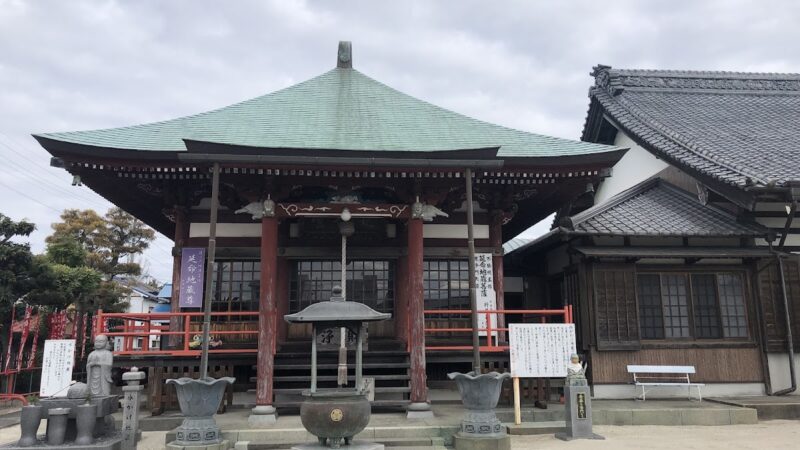
Genmyoji Temple’s main hall is a traditional Nichiren Buddhist temple building with a solemn atmosphere. The main image of Nichiren Shonin, a mandala, is enshrined inside, and daily services are performed. Visitors can find peace of mind and offer prayers in this tranquil space.
Sutra Repository (Nationally Registered Tangible Cultural Property)
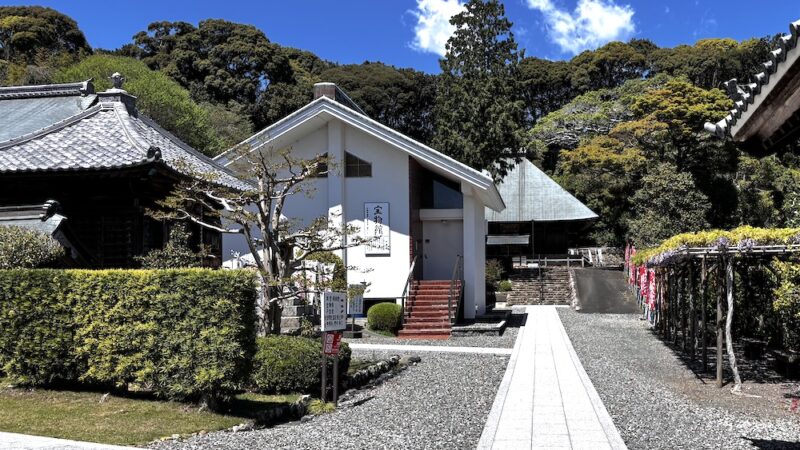
Built in 1934, the sutra repository is a single-story reinforced concrete building with a tiled roof, covering an area of 13 square meters. While utilizing modern architectural techniques from the early Showa period, it incorporates traditional temple architectural styles, making it a valuable building designated as a Nationally Registered Tangible Cultural Property.
The sutra repository is a building for storing Buddhist scriptures and is an important facility symbolizing the temple’s academic tradition. The sutra repository of Genmyoji Temple is a historical building that conveys the Nichijū school’s emphasis on scholarship.
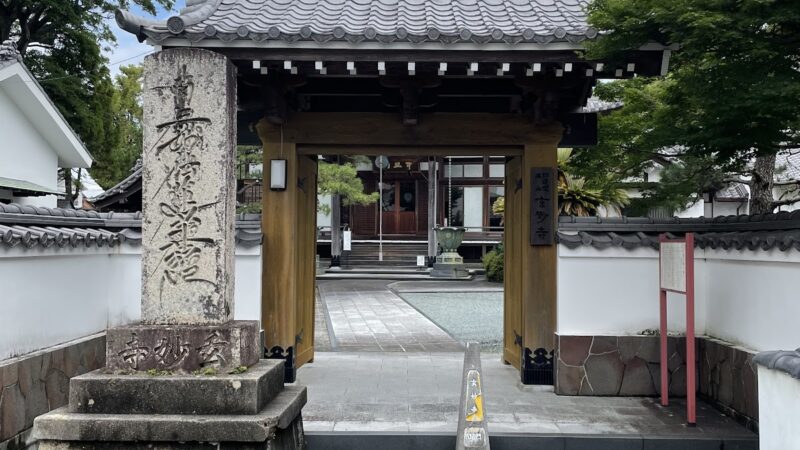
Gateposts and Wall (Nationally Registered Tangible Cultural Property)
The earthen wall, built in the early Showa period (1926-1945), surrounds the temple grounds for 16 meters. Its robust structure, utilizing traditional earthen wall construction techniques, demonstrates the temple’s status and contributes to the historical landscape.
Designated as a Nationally Registered Tangible Cultural Property along with the gateposts, it is a valuable cultural asset that well preserves the characteristics of temple architecture from the Showa period.
Atmosphere of the Temple Grounds
Located along the old Tōkaidō road, the grounds of Genmyoji Temple are enveloped in a solemn and tranquil atmosphere. Amidst the urbanization of Iwata City, a calm space imbued with a sense of history is maintained, allowing visitors to escape the hustle and bustle of everyday life and find peace of mind.
The temple grounds also feature ancient trees, allowing visitors to enjoy the changing seasons.
About Goshuin (Temple Seals) and Head Temple Cards
Goshuin Information
Genmyoji Temple offers Goshuin (temple seals). You can receive a Goshuin with the inscription “Honryuzan Genmyoji” in a powerful calligraphic style characteristic of Nichiren Buddhist temples. Goshuin are cherished by many visitors as proof of their visit and as a way to forge a connection with the temple.
When receiving a Goshuin, please visit the main hall first and then speak to the temple office. Even if you do not have a Goshuin notebook, you may be able to receive a pre-printed Goshuin.
Head Temple Cards
As Genmyoji Temple is a head temple (historically significant temple) of the Nichiren sect, Head Temple Cards are also issued. Head Temple Cards are popular as souvenirs of visits to important Nichiren sect temples, and the cards, which describe the history and characteristics of the temples, are cherished as mementos of visits.
About Former Branch Temples
As a head temple, Genmyoji Temple once had many branch temples. Centered in Tōtōmi Province, Genmyōji Temple has played a central role in the Nichiren Buddhist faith of the region, serving as a base temple for spreading the teachings of the Nichijū school.
Within the temple system of the Edo period, Genmyōji Temple was connected to many temples through its head-branch relationship, fulfilling its responsibilities as a head temple, including guidance in doctrinal studies and training of monks. Although the head-branch relationship was dissolved due to changes in the religious system after the Meiji Restoration, it still maintains its status as a historically significant temple of the Nichiren sect.
Access to Genmyōji Temple
Location
2440-1 Mitsuke, Iwata City, Shizuoka Prefecture 438-0086
Access by Train
Approximately 30 minutes on foot from JR Tōkaidō Main Line “Iwata Station”. From the station, head towards the old Tōkaidō road and enjoy the historical townscape of Mitsuke-juku while walking.
By taxi, it takes about 10 minutes from Iwata Station.
Access by Car
Approximately 15 minutes from Tomei Expressway “Iwata IC”. From National Route 1, turn towards the old Tokaido Road and head towards the Mitsuke area.
Regarding parking, we recommend contacting the temple office before your visit.
Nearby Attractions
Genmyoji Temple is located in Mitsuke-juku, a post town on the old Tokaido Road, so there are many historical sites in the surrounding area. Visiting the adjacent Jionji Temple (a Rinzai Zen temple of the Myoshinji school) and other historical sites that tell the history of Mitsuke-juku will allow you to enjoy a more fulfilling historical walk.
Visiting Etiquette and Precautions
Visiting Hours
Genmyoji Temple is a temple, so visiting during daylight hours, from early morning to evening, is the basic rule. We recommend checking specific visiting hours and events in advance.
Etiquette for Visiting Temples
When visiting a temple, please observe the following etiquette:
- Bow at the main gate before entering the temple grounds.
- Worship quietly and avoid disturbing other worshippers.
- Take photographs only in designated areas.
- Refrain from eating, drinking, or smoking on the temple grounds.
- Always take your trash with you.
Notes on Receiving a Goshuin (Temple Seal)
A Goshuin is given as proof of your visit. Always visit the main hall first before requesting a Goshuin at the temple office. The Goshuin fee is used for the maintenance and management of the temple, so please offer it with gratitude.
Annual Events at Genmyoji Temple
Genmyoji Temple, a Nichiren Buddhist temple, holds various memorial services and events throughout the year.
Main Annual Events
- Oeshiki: An important memorial service held around October 13th, the anniversary of Nichiren Shonin’s death.
- Setsubun Festival: A Buddhist service is held during Setsubun in February to pray for protection from evil and good fortune.
- Spring and Autumn Equinox Festivals: Memorial services for ancestors are held around the spring and autumn equinoxes.
For specific dates and details, please contact the temple directly.
History of Iwata City and Mitsuke-juku
Historical Importance of Mitsuke-juku
Mitsuke, where Genmyoji Temple is located, flourished as the 28th post town on the Tokaido highway during the Edo period. It has a history as the location of the provincial capital of Totomi Province and has long been the political, economic, and cultural center of the Totomi region.
Historical streetscapes remain along the old Tokaido highway, with temples and shrines, including Genmyoji Temple, scattered throughout. The townscape, which retains the atmosphere of Mitsuke-juku, is an ideal area for historical walks.
Cultural Properties of Iwata City
Iwata City boasts numerous cultural properties, including the sutra repository, gateposts, and walls of Genmyo-ji Temple. The city is home to many nationally designated important cultural properties, prefecturally designated cultural properties, and city-designated cultural properties, making it a region rich in history and culture.
About Nichiren Buddhism
Teachings of Nichiren Buddhism
Nichiren Buddhism is a Buddhist sect founded by Nichiren Shonin, a monk during the Kamakura period. Its fundamental scripture is the Lotus Sutra (Myoho Renge Kyo), and its practice centers on chanting the mantra “Namu Myoho Renge Kyo.”
Nichiren Shonin wrote “Rissho Ankoku Ron” (Treatise on Establishing Righteousness and Securing the Peace of the Nation), in which he taught that national peace and the happiness of the people would be realized through the teachings of the Lotus Sutra. This spirit has been passed down to the present day, and the sect has developed as one that wishes for social peace and the happiness of its people.
Head Temple System and Historic Temples
Nichiren Buddhism has many head temples, each with its own unique history and tradition. Genmyoji Temple, as one of the historically significant temples (head temples) of the Nichiren sect, continues to uphold the traditions of the Nichijū school.
Head temples have historically played crucial roles in doctrinal research, training of monks, and guidance of believers. Genmyoji Temple, as a head temple, continues to be a central presence supporting local faith.
Cultural Value of Genmyoji Temple
Significance of Registered Tangible Cultural Property
Genmyoji Temple’s sutra repository, gateposts, and wall are designated as nationally registered tangible cultural properties. The registered tangible cultural property system is a system for preserving modern buildings for future generations, aiming to protect buildings of historical and cultural value.
These buildings, constructed in the early Showa period, are valuable examples demonstrating the fusion of the architectural technology of the time and traditional temple architectural styles. A distinctive feature is that while using modern structural materials such as reinforced concrete, the exterior maintains a traditional style.
Preservation and Utilization
Buildings designated as cultural properties require appropriate preservation and management. Genmyoji Temple maintains these cultural assets in excellent condition while providing visitors with opportunities to experience historical buildings.
Efforts continue to pass on historical heritage to future generations while balancing the preservation and utilization of cultural assets.
Genmyoji Temple and the Local Community
As a Center of Local Faith
For over 630 years since its founding, Genmyoji Temple has served as a center of faith for the local people. Many local residents still visit Genmyoji Temple at important life events, such as ancestral memorial services and various prayers, making it a temple deeply connected to the local community.
Cultural Role
Temples are not merely religious facilities; they also play an important role in conveying local culture and history. The grounds and buildings of Genmyoji Temple are valuable cultural resources that tell the history of Iwata City and are part of the region’s identity.
Genmyoji Temple remains open to the local community, serving as a place for historical walks, cultural asset viewing, and a place for quiet contemplation.
Message to Visitors
Genmyoji Temple is a historic temple that has inherited the aspirations of Nichijū Shōnin and preserved and passed down the teachings of the Lotus Sutra. For over 630 years, it has received the prayers of many people and provided peace of mind.
In the hustle and bustle of modern society, time to quietly reflect on oneself is precious. Having time to offer prayers quietly, while feeling the weight of history within the grounds of Genmyoji Temple, will surely nourish your soul.
Please visit Genmyoji Temple along with the historic townscape of the old Tōkaidō road. You will be able to experience both the dignified atmosphere of a Nichiren sect head temple and the warm, community-rooted feel of a temple.
Summary
Located in Mitsuke, Iwata City, Shizuoka Prefecture, Genmyoji Temple is a head temple (historic temple) of the Nichiren sect, founded in 1385 by Nichijū Shōnin. With over 630 years of history, it is known as a dignified temple that continues the traditions of the Nichijū school.
The temple grounds contain a sutra repository, gateposts, and walls designated as nationally registered tangible cultural properties, and are highly valued as historical buildings. Located in Mitsuke-juku on the old Tokaido road, it, along with the surrounding historical townscape, is an important cultural resource of Iwata City.
The temple also offers Goshuin (temple stamps) and Honzan cards, making it an important pilgrimage site for those visiting Nichiren Buddhist temples. It is easily accessible, approximately 30 minutes on foot from JR Iwata Station and about 15 minutes by car from the Iwata Interchange.
Genmyoji Temple, steeped in history and tradition, is one of Iwata City’s representative temples, offering visitors a sense of peace and the weight of history.