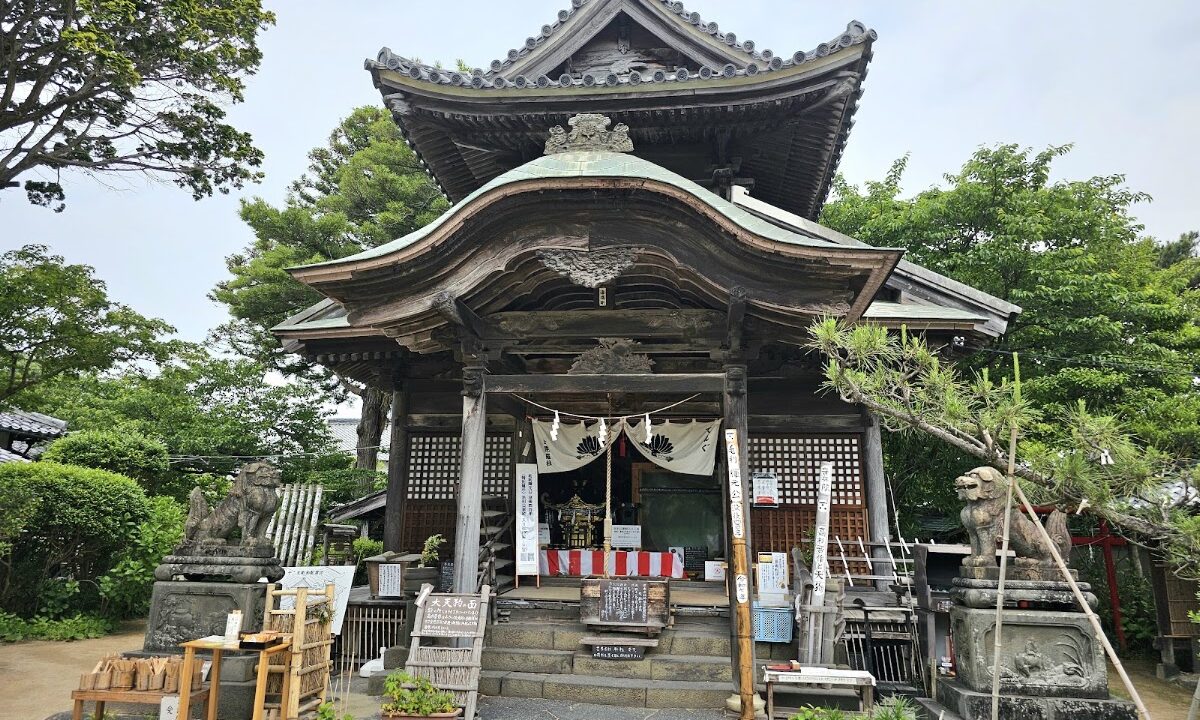
Enseiji Temple (Yamaguchi Prefecture) Complete Guide: Exploring the Tengu Mask Associated with Takasugi Shinsaku and the History of Shinto-Buddhist Syncretism
Enseiji Temple, nestled in the old townscape of Hagi City, Yamaguchi Prefecture, is a rare temple that still preserves the image of Shinto-Buddhist syncretism, featuring a giant Tengu mask. Known as a place where the late Edo period patriots Takasugi Shinsaku and Ito Hirobumi studied and played in their childhood, it is located in a corner of the Hagi Castle Town, a component of the World Heritage Site “Sites of Japan’s Meiji Industrial Revolution.”
This article comprehensively covers information you should know before visiting Enseiji Temple, including its history, highlights, access methods, and its relationship with Yamaguchi City.
What is Enseiji Temple?: An Ancient Temple in Hagi that Preserves Shinto-Buddhist Syncretism
Enseiji Temple belongs to the Omuro branch of the Shingon sect, and its official name is “Tsukinowa-zan Enseiji.” The most distinctive feature is that it maintains a form of “syncretism of Shinto and Buddhism,” with a Konpira Shrine coexisting within its grounds.
While many temples and shrines throughout Japan separated Shinto and Buddhism due to the Meiji-era decree separating Shinto and Buddhism, Enseiji Temple still retains the pre-Edo period style of entering the temple by passing through a stone torii gate. This rare form attracts many visitors and history enthusiasts as a valuable place to experience the history of Japanese religious culture.
Founding and History of Enseiji Temple
The history of Enseiji Temple dates back to the Kamakura period. A bronze bell (waniguchi) bearing an inscription from Kencho 6 (1254) is housed as a nationally designated important cultural property, suggesting that the temple was founded around this time.
Initially, Enseiji Temple was built in what is now Enseiji-cho, Yamaguchi City, Yamaguchi Prefecture. This place name originates from the name of a temple, and the name “Enseiji” still remains today as a town name (postal code 753-0036). During the time it was part of Yamaguchi City, Enseiji flourished as a prayer temple for the Ouchi clan, a powerful daimyo family in the Chugoku region.
The Ouchi clan brought Kyoto culture to Yamaguchi, building a cultural city known as “Kyoto of the West.” Under their patronage, Enseiji functioned as an important religious institution in Yamaguchi.
Relocation to Hagi and the Stage of the Bakumatsu and Meiji Restoration
Enseiji relocated to its current location in Minami-Furuhagi-cho, Hagi City, in 1870 (Meiji 3). Due to the effects of the anti-Buddhist movement after the Meiji Restoration and the resulting social changes, temples moved to the Hagi castle town.
This relocation deeply connected Enseiji to the history of Hagi. Especially during the Bakumatsu period, this area was the center of the Choshu Domain, a place where many patriots were active. Enseiji Temple also plays an important role as a witness to that history.
Highlights of Enseiji Temple: From the Giant Tengu Mask to Cultural Assets
The Impressive Giant Tengu Mask
What inevitably captivates visitors to Enseiji Temple is the gigantic Tengu mask enshrined in the main hall. Boasting an overwhelming size of approximately 2.6 meters in height and 1.8 meters in width, its powerful expression leaves a strong impression on worshippers.
This Tengu mask is not merely a decorative item, but an object of worship deeply connected to the temple’s history. Tengu have been associated with mountain worship and Shugendo (mountain asceticism), and have been revered as beings possessing supernatural powers. The Tengu mask at Enseiji Temple is thought to be related to the practices and beliefs of Shingon Esoteric Buddhism.
Konpira Shrine: A Symbol of Shinto-Buddhist Syncretism
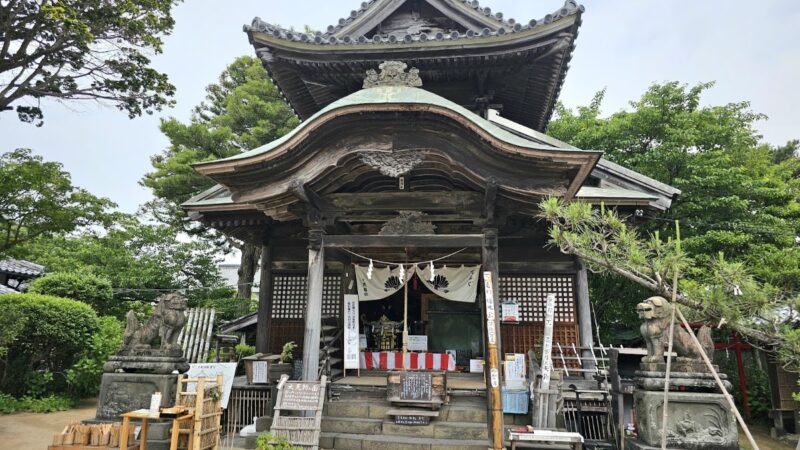
Passing through the stone torii gate (a designated tangible cultural property of Hagi City), you will find the Konpira Shrine building (also a designated tangible cultural property of the city) within the temple grounds. While Konpira worship spread nationwide as a deity of maritime safety and business prosperity, the Konpira Shrine at Enseiji Temple is a classic example of Shinto-Buddhist syncretism, where a Shinto shrine coexists within a temple grounds.
Originally, Konpira Gongen was a Buddhist deity of protection and had strong ties to the Shingon sect. This traditional form of worship is still preserved at Enseiji Temple, creating a unique landscape where the stone torii gate and the main hall coexist.
Nationally Designated Important Cultural Property: Waniguchi (Bell)
The waniguchi, bearing an inscription from Kencho 6 (1254), is the most important cultural property owned by Enseiji Temple. The waniguchi (a type of Buddhist bell) is a Buddhist implement hung from the eaves of temples and shrines and struck during worship. The inscription on this waniguchi is a valuable historical document that reveals the founding date of Enseiji Temple.
This waniguchi, which showcases the craftsmanship of the Kamakura period, is designated a National Important Cultural Property, proving that Enseiji Temple is an ancient temple with a long history.
A Place Associated with Takasugi Shinsaku and Ito Hirobumi
Enseiji Temple has deep ties to the patriots of the late Edo period. In particular, Takasugi Shinsaku and Ito Hirobumi are said to have studied and played at this temple during their childhood.
Takasugi Shinsaku founded the Kiheitai (a militia) and was a revolutionary who led the Choshu Domain during the late Edo period. Ito Hirobumi, on the other hand, became the first Prime Minister after the Meiji Restoration, laying the foundation for modern Japan. As a place where these two great figures spent their childhood, Enseiji Temple holds special significance as a sacred site for history enthusiasts.
The temple grounds retain an atmosphere that evokes the past, allowing visitors to feel the spirit of the late Edo period and the Meiji Restoration.
Hagi Castle Town and Enseiji Temple, a World Heritage Site
The Hagi Castle Town, where Enseiji Temple is located, is registered as a World Heritage Site as part of the “Sites of Japan’s Meiji Industrial Revolution.” It is also part of the nationally designated historic site “Hagi Castle Town,” a valuable historical district where the Edo period town layout remains intact.
Historical Value of Hagi Castle Town
Hagi is a castle town built by the Mori clan after their relocation from Hiroshima following the Battle of Sekigahara. The grid-like town layout, samurai residences, and merchant houses have been preserved as they were, conveying the urban structure of the Edo period to the present day.
Around Enseiji Temple, there are numerous historical sites related to the late Edo period and the Meiji Restoration, such as the former residence of Kido Takayoshi, the birthplace of Takasugi Shinsaku, and the Hagi Museum, making it an ideal base for historical exploration.
The Role of Enseiji Temple in Hagi Tourism
For tourists visiting Hagi, Enseiji Temple is a must-see spot. Its religious and historical value as a syncretic Shinto-Buddhist site, its unique feature of the large Tengu mask, and its historical significance as a place associated with Takasugi Shinsaku and Ito Hirobumi combine to create a diverse and appealing tourist destination.
Visiting it in conjunction with other World Heritage sites such as Hagi Castle Ruins, Shokasonjuku School, and Hagi Reverberatory Furnace allows for a comprehensive understanding of Japan’s major transformation period from the end of the Edo period to the Meiji era.
Relationship with Enseiji-cho, Yamaguchi City
The name “Enseiji” remains in present-day Yamaguchi City, Yamaguchi Prefecture (postal code 753-0036). This place name originates from the fact that Enseiji Temple once existed in this area.
The Current State of Enseiji, Yamaguchi City
Enseiji-cho in Yamaguchi City is a residential area located in the center of Yamaguchi City. While the temple itself no longer exists, the name Enseiji continues to be used as a place name. This area is adjacent to Kameyama-cho in Yamaguchi City and has convenient transportation access.
Enseiji Temple, during its time in Yamaguchi City, flourished as a prayer temple for the Ouchi clan. However, after the fall of the Ouchi clan, the turmoil of the subsequent Sengoku period, and the dramatic events of the Meiji Restoration, it eventually relocated to Hagi.
A Journey to Visit the Two “Enseiji Temples”
Those interested in history can experience the more than 600-year history of a single temple by visiting both the current Enseiji Temple in Hagi City and Enseiji-cho in Yamaguchi City. In Yamaguchi City, you can feel the prosperity of Ouchi culture, while in Hagi City, you can sense the turmoil of the Bakumatsu and Meiji Restoration periods.
Basic Information about Enseiji Temple
Location and Contact Information
Address: 6-1 Minami-Furuhagi-cho, Hagi City, Yamaguchi Prefecture
Sect: Shingon-shu Omuro-ha
Mountain Name: Getsurinzan
Founded: Around Kencho 6 (1254)
Principal Image: Fudo Myoo (estimated)
Visiting Information
Visiting Hours: Grounds are freely accessible (please check for entry to the main hall)
Admission Fee: Free (donations welcome)
Parking: Parking available nearby for Hagi Castle Town tourists
Cultural Properties and Designations
- Nationally Designated Important Cultural Property: Waniguchi (bell with Kencho 6 inscription)
- Hagi City Designated Tangible Cultural Property: Stone Torii Gate, Konpira Shrine
- Nationally Designated Historic Site: Hagi Castle Town (component)
- World Heritage Site: Heritage of Japan’s Meiji Industrial Revolution (as Hagi Castle Town)
Access Methods
Access by Public Transportation
By JR:
- Get off at Higashi-Hagi Station or Tamae Station on the JR San’in Main Line
- Approximately 20 minutes on foot from Higashi-Hagi Station
- Approximately 15 minutes on foot from Tamae Station
By Bus:
- Get off at Hagi Castle Ruins/Shizuki Park Entrance on the Hagi Loop Maaru Bus, approximately 5 minutes on foot
- Both the westbound and eastbound routes are available
Access by Car
From the Chugoku Expressway:
- Approximately 1 hour from Mine-Higashi JCT via the Ogori-Hagi Road
- From Edo IC via National Route 262 to Hagi city center
From Yamaguchi City:
- Approximately 1 hour via National Route 262
Parking:
- Approximately 10 minutes on foot from the Hagi Castle Ruins Shizuki Park parking lot (paid)
- Use tourist parking lots around Hagi Castle Town
Sightseeing Model Course
Half-Day Course:
- Hagi Castle Ruins → Enshoji Temple → Former Residence of Kido Takayoshi → Kikuya Yokochō → Birthplace of Takasugi Shinsaku
1-Day Course:
- Matsushita Village School → Hagi Museum → Hagi Castle Ruins → Enshoji Temple → Stroll through the Castle Town → Hagi Reverberatory Furnace
Nearby Tourist Spots
Hagi Castle Ruins (Shizuki Park)
Located about a 10-minute walk from Enshoji Temple, the Hagi Castle Ruins were the residence of the Mōri clan. Currently, the stone walls and moat remain, and the area has been developed into Shizuki Park. It is also known as a famous cherry blossom viewing spot in spring.
Matsushita Village School
A private school founded by Yoshida Shōin, it produced many central figures of the Meiji Restoration, including Takasugi Shinsaku, Itō Hirobumi, and Yamagata Aritomo. It is one of the World Heritage Site components and a highlight of Hagi sightseeing.
Hagi Museum
A museum comprehensively exhibiting the history and culture of Hagi. The temple boasts a wealth of materials related to the Bakumatsu and Meiji Restoration periods, and visiting before or after your visit to Enseiji Temple will deepen your understanding.
Kikuya Yokochō
This beautiful street, lined with white walls and black wooden fences, retains a strong atmosphere of Edo-period samurai residences. It’s a popular photogenic spot.
Goshuin (Temple Stamp) Information
You can receive a Goshuin at Enseiji Temple. As a temple where Shinto and Buddhism are syncretized, it features a unique Goshuin that combines elements of both temples and shrines.
If you wish to receive a Goshuin, please speak to someone at the main hall or temple office. It’s recommended to check in advance, as they may have pre-printed stamps. Bring your Goshuincho (stamp book) and make your request politely.
Points to Note When Visiting Enseiji Temple
Visiting Manners
As this is a temple where Shinto and Buddhism are syncretized, bow slightly when passing through the torii gate and avoid walking in the center of the path. When praying at the main hall, clasp your hands together and offer your prayers quietly.
Photography Guidelines
Photography is generally permitted within the temple grounds and on the Tengu mask, but there may be restrictions inside the main hall or during special ceremonies. Please check before taking photos or follow the instructions on the signs.
Clothing and Belongings
Since Hagi Castle Town has many cobblestone and uneven paths, comfortable walking shoes are recommended. In summer, the sun is strong, so don’t forget a hat or parasol; in winter, bring warm clothing.
Seasonal Attractions of Hagi
Spring (March-May)
The cherry blossoms at Hagi Castle ruins are in full bloom, enveloping the entire castle town in a vibrant atmosphere. The area around Enseiji Temple is also beautiful with spring flowers, making it an ideal season for a stroll.
Summer (June-August)
Summer in Hagi is the season to enjoy fresh seafood from the Sea of Japan. After sightseeing, savor Hagi’s seafood cuisine. Summer festivals and events are also held.
Autumn (September-November)
Enjoy the beautiful autumn foliage and the scenery that harmonizes with the historical landscape of the castle town. The pleasant weather allows for leisurely historical exploration.
Winter (December-February)
A season with fewer tourists, allowing for peaceful visits. The winter Sea of Japan presents a different, more rugged appearance. The winter delicacy of Hagi, fugu (pufferfish) cuisine, is also a major attraction.
Summary: Experiencing the Layers of History at Enseiji Temple
Enseiji Temple has witnessed important moments in Japanese history, from its founding in the Kamakura period to its patronage by the Ouchi clan, its relocation from Yamaguchi to Hagi, and its role as a stage for the Meiji Restoration.
The visual impact of the giant Tengu mask, the religious and historical value of its syncretism of Shinto and Buddhism, its historical significance as a place associated with Takasugi Shinsaku and Ito Hirobumi, and its cultural position as part of the World Heritage site of Hagi Castle Town—all of these elements intertwine, providing visitors with a multi-layered and moving experience.
Enseiji Temple has witnessed important moments in Japanese history, from its founding in the Kamakura period to its patronage by the Ouchi clan, its relocation from Yamaguchi to Hagi, and its role as a stage for the Meiji Restoration.
The visual impact of the giant Tengu mask, its religious and historical value as a syncretic Shinto-Buddhist site, its historical significance as a place associated with Takasugi Shinsaku and Ito Hirobumi, and its cultural position as part of the World Heritage site of Hagi Castle Town—all of these elements combine to provide visitors with a multi-layered and moving experience. When you visit Hagi, be sure to stop by Enseiji Temple, pass through the stone torii gate, and experience the awe-inspiring presence of the Great Tengu Mask. There, the spirit of faith and history, passed down for over 600 years, is still very much alive.
For those who want to learn more about the history and culture of Yamaguchi Prefecture, trace the footsteps of the patriots of the late Edo period and Meiji Restoration, and are interested in Japanese religious culture, Enseiji Temple is a special place well worth a visit.