Daishoin Temple (Hagi City, Yamaguchi Prefecture) Complete Guide | History, Cultural Properties, and Visiting Information for the Mori Family’s Family Temple
About Daishoin Temple
Daishoin Temple is a Rinzai Zen Buddhist temple of the Nanzenji school located in Emukai, Hagi City, Yamaguchi Prefecture. Its official name is “Reitsubanzan Daishoin,” and it has been deeply revered from the Edo period to the present day as the family temple of the even-numbered lords of the Hagi Domain, including the first lord, Mori Hidenari.
More than 600 stone lanterns are neatly lined up within the temple grounds, and their majestic appearance overwhelms visitors. The main hall, priest’s quarters, study, sutra repository, and bell tower gate are designated as National Important Cultural Properties, and the Mori family cemetery of the Hagi Domain is protected as a National Historic Site. It is also known as the 20th temple of the Chugoku Thirty-Three Kannon Pilgrimage, and is a famous temple visited by many pilgrims.
History of Daishoin Temple
From Founding to the Kamakura Period
The origins of Daishoin Temple are ancient. It is believed that a temple called Gatsurinzan Kannonji existed during the Enryaku era (late 8th to early 9th century), but the detailed circumstances of its founding are unclear. Later, at the end of the Kamakura period, the high-ranking priest Gio of Kenchoji Temple renamed this temple Daichinzan Kankiji and rebuilt it as a Rinzai Zen temple.
Connection with the Mori Family and Reconstruction
Daishoin Temple took its current form in the early Edo period. After the death of the first lord of the Hagi Domain, Mori Hidenari, from 1654 to 1656, the second lord, Mori Tsunahiro, extensively rebuilt the dilapidated temple to commemorate his deceased father.
The temple’s name was changed to Daishoin, after Hidenari’s posthumous Buddhist name, “Daishoin-dono,” and thereafter played an important role as the family temple of the Mori clan, the lords of the Hagi Domain. The Mori clan established a custom of burying even-numbered lords at Daishoin and odd-numbered lords at Tokoji Temple. Daishoin is the resting place of seven lords: the first Hidenari, the second Tsunahiro, the fourth Yoshihiro, the sixth Munehiro, the eighth Haruchika, the tenth Narihiro, and the twelfth Narihiro, along with their wives.
Development during the Edo Period
Throughout the Edo period, Daishoin flourished under the patronage of the Hagi Domain. Improvements were made to the temple grounds, including the construction of the main hall and bell tower gate in 1750, and the sutra repository in 1755. These structures are still well-preserved today and are highly regarded as excellent examples of temple architecture from the mid-to-late Edo period.
The stone lanterns donated by the feudal lord and his retainers increased in number year by year, eventually reaching over 600. Every year on August 13th, during the Mantokai (Lantern Festival), all of these stone lanterns are lit, creating a fantastical spectacle.
After the Meiji Restoration
After the Meiji Restoration, the Hagi Domain ceased to exist due to the abolition of the feudal system and establishment of prefectures. However, Daishoin Temple has continued its role as the Mori family’s ancestral temple to this day. From the Showa to the Heisei era, its cultural value was re-recognized, and in 2002, five buildings—the main hall, the priest’s quarters, the study, the sutra repository, and the bell tower gate—were designated as important national cultural properties.
In 2015, several historical sites in Hagi City were registered as a World Heritage Site as part of the “Sites of Japan’s Meiji Industrial Revolution.” Although Daishoin Temple itself is not included in the World Heritage Site, it remains an important temple indispensable to understanding Hagi’s history, attracting many tourists and researchers.
Important Cultural Properties (Nationally Designated)
Daishoin Temple boasts numerous outstanding buildings constructed during the Edo period, five of which are designated as National Important Cultural Properties.
Main Hall
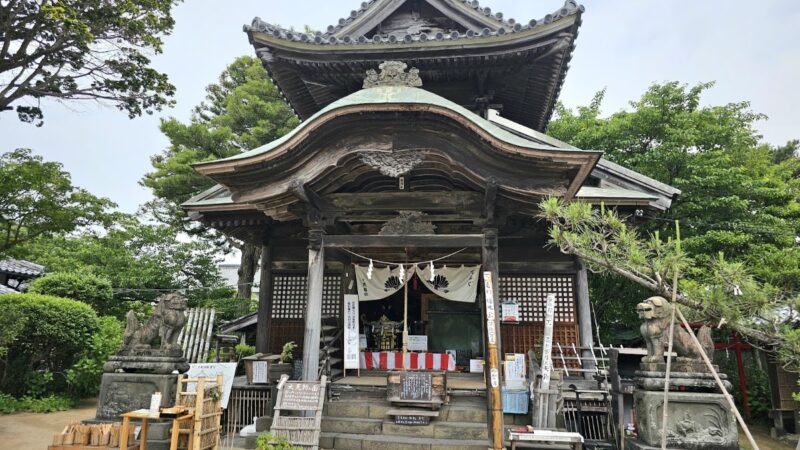
Built in 1750 (Kanei 3), the main hall is a magnificent structure measuring 25.3 meters in length and 18.0 meters in width. It is a single-story, hip-and-gable roofed structure with tiled roofing, and features a corridor on the south side and a formal entrance and corridor on the north side.
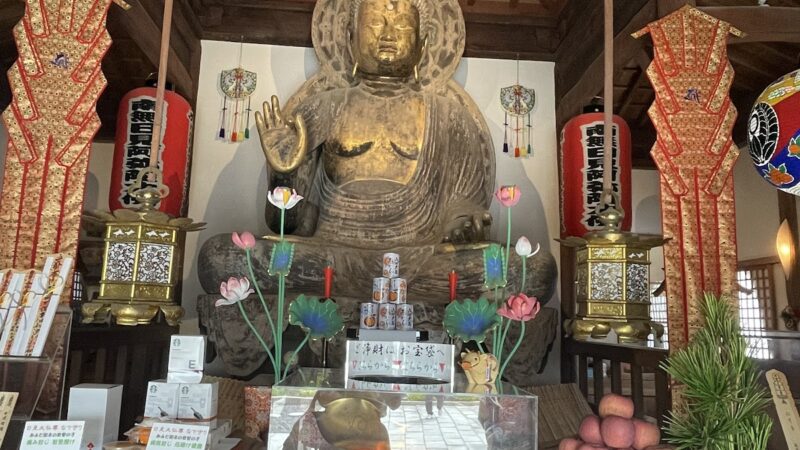
Inside the main hall, the principal image, a statue of Shakyamuni Buddha, is enshrined, and the coffered ceiling and carvings are magnificent. While exhibiting a typical layout for a Rinzai Zen temple, it also possesses the prestige befitting a temple of the Hagi Domain.
Priest’s Quarters
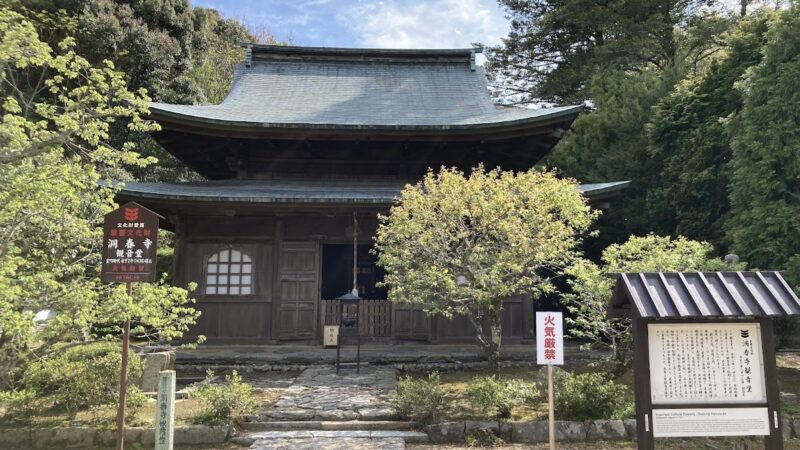
The priest’s quarters, also believed to have been built in 1750 (Kanei 3), served as the temple’s kitchen and living space for the monks. This wooden, single-story building features a hipped roof and tiled roof, combining functionality and beauty.
The interior boasts a spacious earthen floor and wooden-floored area, which has been used as a preparation space for large-scale Buddhist ceremonies. It is a valuable structure that conveys the daily life of a temple during the Edo period.
Shoin (Study Hall)
The Shoin, also built in 1750, was used as a reception space for the feudal lord and his retainers. It is a dignified building incorporating sukiya-style design, showcasing excellent craftsmanship in details such as the sliding screen paintings and transom carvings.
From the Shoin, one can enjoy a view of the beautiful garden, creating a space where the spirituality and aesthetic sensibilities of a Zen Buddhist temple are fused.
Kyozo (Sutra Repository)
Built in 1755, the Kyozo is a building for storing Buddhist scriptures. The building is constructed in the earthen storehouse style, with a square shape measuring 6.2 meters on both the front and sides, a single story, a pyramidal roof, a one-bay portico, and a tiled roof.
Inside, there is an octagonal revolving bookshelf (rinzō), and it is believed that rotating it once grants the same merit as reading the entire Buddhist canon. Projections are attached to the north and west sides, creating a functional and beautiful exterior.
Bell Tower Gate
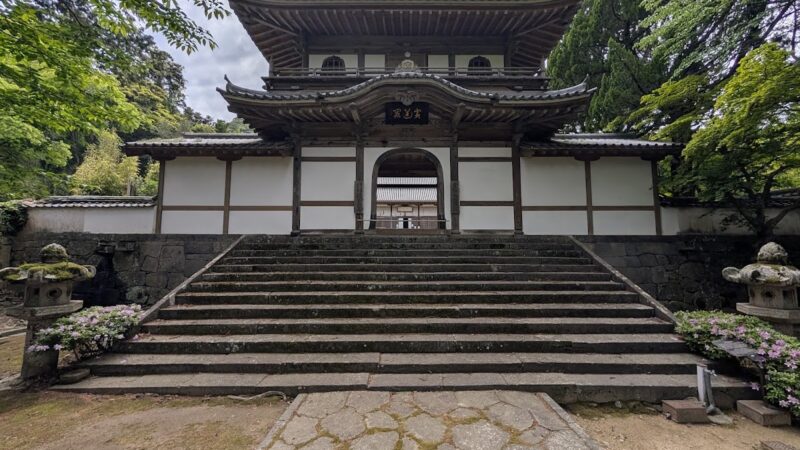
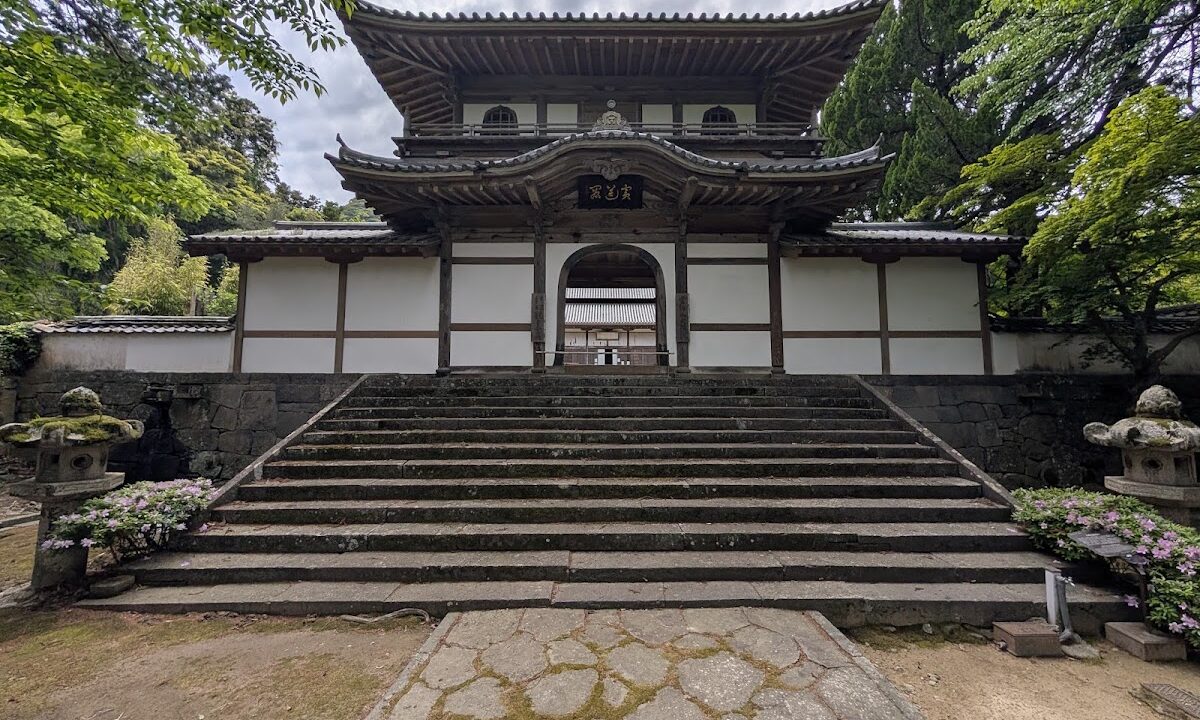
Built in 1750 (Kanei 3), the bell tower gate is a two-story, three-bay, single-entrance gate with a hipped roof and tiled roof. The first floor serves as the gate, and the second floor houses the temple bell, making it a magnificent structure adorning the front of the temple.
The bell in the bell tower gate is still in use today, rung during daily services and ceremonies. Its sound resonates throughout the town of Hagi, telling the time to the local people.
Mori Family Mausoleum (National Historic Site)
One of the main attractions of Daishoin Temple is the Mori Family Mausoleum, a national historic site designated by the government. Located deep within the temple grounds, this mausoleum is the resting place of seven lords of the Hagi Domain, including the first lord, Hidenari, and their wives.
Buried Lords
The following even-numbered lords are buried at Daishoin Temple:
- First Lord, Mori Hidenari (Daishō-kō, 1595-1651): The first lord who laid the foundation for the Hagi Domain
- Second Lord, Mori Tsunahiro (Taigan-kō, 1639-1689): The lord who restored Daishoin Temple
- Fourth Lord, Mori Yoshihiro (Seiun-kō, 1668-1694): A lord who died young
- Sixth Lord, Mori Munehiro (Kanko-kō, 1725-1746): A lord who encouraged learning
- Eighth Lord, Mori Haruchika (Yōtoku-kō, 1725-1789): A lord who stabilized the domain’s administration for a long period
- Tenth Lord, Mori Narihiro (Seitoku-kō, 1782-1842): A lord who worked on domain reforms during the late Edo period
- 12th Lord Mori Narihiro (Lord Subun, 1839-1896): The last lord of the Hagi Domain
Over 600 Stone Lanterns
More than 600 stone lanterns are neatly lined up along the path to the tomb and in front of the grave. These were donated by successive lords, retainers, and lords of branch domains, and their sheer number and beautiful arrangement are breathtaking.
The names of the donors and the year of donation are inscribed on the stone lanterns, making them valuable historical materials for understanding the composition of the Hagi Domain’s retainers during the Edo period and the relationship between the lords and their retainers. Every year on August 13th, during the Mantokai (Lantern Festival), candles are lit in all of these stone lanterns, creating a fantastical scene. This event is a summer tradition in Hagi, beloved by locals and tourists alike.
Structure of the Tomb
The tomb is arranged in a stepped fashion, with the tomb of the first lord, Hidenari, at the top, and the tombs of successive lords lined up below. Each tomb is a stone five-tiered pagoda style structure, surrounded by a stone fence. The entire cemetery is enveloped in a tranquil atmosphere, preserving the typical form of Edo-period daimyo (feudal lord) tombs.
Highlights of the Temple Grounds
Temple Gate
The temple gate, standing at the entrance to Daishoin Temple, is the first structure welcoming visitors. Its simple yet robust construction exudes the dignified style befitting a samurai family temple.
Garden
A beautiful garden unfolds in front of the study hall. Incorporating elements of a pond-centered strolling garden, visitors can enjoy the scenery of each season. It is particularly beautiful during the cherry blossom season in spring, the fresh greenery of early summer, and the autumn foliage season.
Camellias
As indicated by Daishoin Temple’s mountain name, “Reitsubanzan,” many camellias are planted on the temple grounds. The camellia, also the city flower of Hagi City, blooms beautifully from winter to spring, delighting visitors.
The 20th Temple of the 33 Kannon Pilgrimage Sites in China
Daishoin Temple welcomes pilgrims as the 20th temple of the 33 Kannon Pilgrimage Sites in China. Along with the principal image of Shakyamuni Buddha, Kannon Bodhisattva is also enshrined, attracting many worshippers.
Pilgrims can pray at the main hall and receive a temple stamp at the temple office. The previous temple is Kozanji Temple (19th temple), and the next is Kannonin Temple (21st temple).
Annual Events
Mantokai (August 13th)
The most important annual event at Daishoin Temple is the Mantokai, held every year on August 13th. On this day, candles are lit in all of the more than 600 stone lanterns in the cemetery, creating a fantastical scene.
From dusk to night, the gentle light of the stone lanterns illuminates the temple grounds, deeply moving visitors. It is a popular summer event in Hagi, attracting many tourists and locals alike.
Other Events
Various Buddhist events are held throughout the year, including spring and autumn equinox services and year-end/New Year’s memorial services. Many of these events are open to the general public, and the temple plays a central role in local faith.
Visiting Information
Location and Access
Location: 758-0041 Tsubakihigashi Tsubaki, Hagi City, Yamaguchi Prefecture (Former address: 602 Emukai, Hagi City, Yamaguchi Prefecture)
Access:
- Approximately 20 minutes on foot from JR San’in Main Line “Higashi-Hagi Station”
- Approximately 5 minutes on foot from “Daishoin Iriguchi” bus stop on the Hagi Loop Maaru Bus
- Approximately 60 minutes from Chugoku Expressway “Mine-Higashi JCT” via Ogori-Hagi Road
- Parking: Free parking available (approximately 20 regular cars)
Visiting Hours and Admission Fee
Visiting Hours:
- Regular season: 8:30 AM – 5:00 PM (8:30 AM – 4:30 PM from November to February)
- On the day of the Mantokai Festival (August 13th): Nighttime visits are also possible
Admission Fee:
- Adults: 300 yen
- Junior and Senior High School Students: 200 yen
- Elementary school students: 100 yen
- Group discount available (20 or more people)
Closed days: Open all year round
Notes on visiting
- Please visit the temple grounds in silence.
- Photography may be prohibited inside buildings.
- The cemetery is a sacred place; please visit with respect.
- The temple is expected to be crowded on the day of the Mantokai (Lantern Festival), so please allow ample time for your visit.
Nearby tourist spots
Tokoji Temple
This is the family temple of the Mori clan, paired with Daishoin Temple, and is the resting place of odd-numbered generations of feudal lords. It is a temple of the Obaku sect, and you can enjoy a different architectural style from Daishoin Temple. The more than 500 stone lanterns are also magnificent.
Hagi Castle Ruins (Shizuki Park)
This is the site of Hagi Castle, which served as the residence of the Mori clan throughout the Edo period. It is now maintained as Shizuki Park, and the stone walls and moats convey its former appearance.
Hagi Castle Town
This district boasts a well-preserved Edo-period townscape, with samurai residences and merchant houses lining the streets. It is also a component of the World Heritage Site “Sites of Japan’s Meiji Industrial Revolution.”
Shoka Sonjuku
This private school, founded by Yoshida Shoin, is known as the place where the patriots of the Meiji Restoration were nurtured. It is also a component of the World Heritage Site.
Daishoin Temple as a Filming Location
Daishoin Temple, with its historical atmosphere and beautiful scenery, is frequently used as a filming location for movies and dramas. The fantastical scenery with rows of stone lanterns and the imposing buildings provide an ideal environment for filming period dramas.
It is registered in the National Location Database and receives many inquiries from film and television production professionals. Prior application to the temple is required for filming.
Cultural Value
Daishoin Temple possesses a wide range of cultural assets, including buildings, historical sites, and works of art and crafts. These structures are highly valued academically as a valuable legacy that comprehensively conveys the appearance of a daimyo family’s ancestral temple during the Edo period.
In particular, the fact that five buildings—the main hall, the priest’s quarters, the study, the sutra repository, and the bell tower gate—are designated as National Important Cultural Properties indicates their significant position in architectural history as outstanding examples of temple architecture from the mid to late Edo period.
Furthermore, the designation of the Mori family cemetery, the lords of the Hagi domain, as a National Historic Site signifies its recognition as a typical example of a daimyo cemetery from the Edo period and as an important historical site that tells the story of the Hagi domain.
Summary
Daishoin Temple is a representative historical temple of Hagi City, Yamaguchi Prefecture, and has played an important role from the Edo period to the present day as the ancestral temple of the Mori family, the lords of the Hagi domain. It boasts numerous attractions, including a group of buildings designated as National Important Cultural Properties, a cemetery designated as a National Historic Site, and over 600 stone lanterns.
The Mantokai (Lantern Festival) held annually on August 13th is a particularly enchanting event where all the stone lanterns are lit, attracting many visitors. This is a must-visit temple when sightseeing in Hagi, and a valuable place to experience Japanese history and culture.
With its tranquil atmosphere as a Rinzai Zen temple, Daishoin offers a glimpse into the faith and culture of Edo-period daimyo families. It is a temple you should definitely visit to gain a deeper understanding of Hagi’s history.