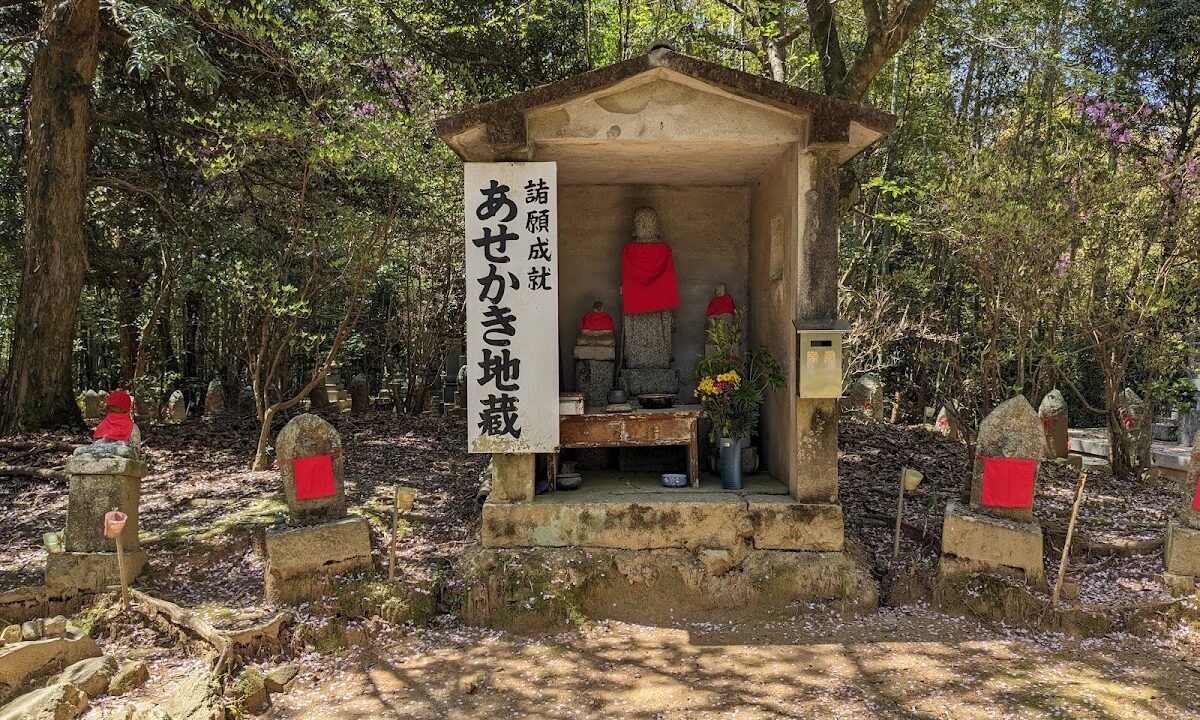
Kannenji Temple (Hikari City, Yamaguchi Prefecture) Complete Guide | Shunan Seven Lucky Gods, Dainichi Market, and Access Information
Kannanji Temple, located in the Iwata district of Hikari City, Yamaguchi Prefecture, is a historic temple that attracts the faith of the local community. It enshrines Hotei, one of the Shunan Seven Lucky Gods, and its Dainichi Market, held several times a year, is bustling with many visitors. This article comprehensively covers everything you need to know before visiting Kannenji Temple, from its history and highlights to annual events and access information.
History and Origin of Kannenji Temple
Establishment as an Ancient Temple
Kannanji Temple is a Shingon Buddhist temple located at 418 Iwata Mizoroi, Hikari City, Yamaguchi Prefecture. While there are various theories regarding its founding, it has a long history as a place of faith deeply rooted in the community. The temple’s name, “Kannen,” is believed to embody the spirit of receiving Buddhist teachings, that is, respecting and revering the teachings of Buddha.
Connection to Gyōki Bodhisattva
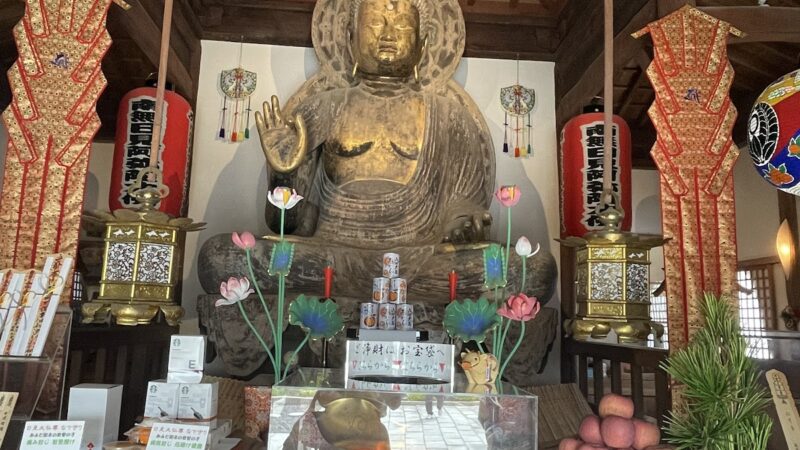
The wooden statue of Dainichi Nyorai, the principal image of Kannenji Temple, is said to have been created by Gyōki Bodhisattva, a high-ranking priest of the Nara period. Gyōki (668-749) is known as a monk who traveled throughout Japan, dedicating himself to temple construction and social work. Several temples in Yamaguchi Prefecture are associated with Gyōki, and Kannenji Temple is considered one of them.
Dainichi Nyorai is the highest-ranking Buddha in Esoteric Buddhism, embodying the very truth of the universe. The wooden statue, said to have been created by Gyōki, continues to watch over worshippers even after many years.
As a Center of Local Faith
In the Hikari City area, including the Iwata district, Buddhist faith has flourished since ancient times. Kannenji Temple has served as a spiritual center for local residents, deeply intertwined with their lives through funerals, memorial services, and annual events. Even today, it remains a beloved temple open not only to locals but also to those visiting on the Shunan Seven Lucky Gods pilgrimage and as tourists.
About the Principal Image, Dainichi Nyorai
What is Dainichi Nyorai?
Dainichi Nyorai, known as Mahavairocana in Sanskrit, means “Great Radiance.” In Esoteric Buddhism, including Shingon Buddhism, it is considered the source of all Buddhas and the highest-ranking Buddha symbolizing the universe itself.
Characteristics of the Dainichi Nyorai Statue at Kannenji Temple
The wooden statue of Dainichi Nyorai enshrined at Kannenji Temple is a precious Buddha statue traditionally attributed to Gyoki. Its warm expression, achieved through wood carving techniques, brings peace to worshippers. Dainichi Nyorai statues typically display a unique hand gesture (mudra) called Chiken-in, which symbolizes the perfection of wisdom.
During regular memorial services and the Dainichi Market, many worshippers clasp their hands together before this main image of Buddha, praying for family safety and the fulfillment of their wishes.
Hotei, one of the Shunan Seven Lucky Gods
What is the Shunan Seven Lucky Gods Pilgrimage?
The Shunan Seven Lucky Gods pilgrimage is a popular route that visits seven temples and shrines scattered throughout the Shunan region of Yamaguchi Prefecture. The belief in the Seven Lucky Gods spread among the common people during the Muromachi period and became established as a popular faith for praying for good fortune and prosperity. Each temple and shrine enshrines a different god of fortune, and it is believed that visiting all of them will bestow seven blessings upon oneself.
The Shunan Seven Lucky Gods consist of the following seven deities:
- Ebisu (Business Prosperity)
- Daikokuten (Abundant Harvest)
- Bishamonten (Long-lasting Military Fortune)
- Benzaiten (Improvement in Performing Arts)
- Fukurokuju (Longevity)
- Jurojin (Longevity)
- Hotei (Family Harmony)
Hotei at Kannenji Temple
Kannanji Temple enshrines Hotei, one of the Shunan Seven Lucky Gods. Hotei is a god of fortune characterized by his large belly and smiling face, and is believed to bring blessings of family harmony, marital harmony, and fertility.
Hotei is said to be modeled after the real-life Chinese Zen monk, Qici, from the Tang Dynasty. He is said to have always had a smile on his face and wandered around various places carrying a large bag. Due to his tolerant and gentle personality, he came to be worshipped as a god of fortune.
Benefits of the Seven Lucky Gods Pilgrimage
The Shunan Seven Lucky Gods pilgrimage is believed to bestow various blessings, such as business prosperity, family safety, and health and longevity, upon visiting each temple and shrine. Many people prepare special paper or stamp books for the pilgrimage, making it a popular religious journey enjoyed like a stamp rally.
The Seven Lucky Gods pilgrimage, including Kannenji Temple, is also a great opportunity to visit tourist spots in the Shunan area of Yamaguchi Prefecture. You can refresh your mind and body while enjoying the history and architecture of each temple and shrine, as well as the surrounding natural scenery.
Dainichi Market
What is the Dainichi Market?
Kannanji Temple holds a festival called the “Dainichi Market” several times a year. The Dainichi Markets in February and April are particularly large in scale, with many stalls lining the temple grounds and surrounding areas, making it a major local event.
History and Significance of the Dainichi Market
The Dainichi Market is a temple fair based on the faith in Dainichi Nyorai, the principal deity of the temple, and has long been a beloved gathering place for local residents. Often held at key points in the agricultural season or at seasonal transitions, it attracts worshippers praying for a bountiful harvest and family safety.
During the fair, stalls selling local specialties, agricultural products, daily necessities, and sweets line the streets, allowing visitors to enjoy the atmosphere of a traditional market. People of all ages, from children to the elderly, visit, making it a place to deepen community bonds.
Dainichi Market in February and April
The Dainichi Market held in February and April is the most grand of Kannenji Temple’s annual events. This period coincides with the busy farming season, providing farmers with an opportunity to pray for a good harvest and express gratitude for their bountiful harvest.
Special prayers are offered for worshippers within the temple grounds, and Buddhist ceremonies such as Goma fire rituals are sometimes performed. The stalls sell local specialties and traditional crafts, allowing visitors to enjoy food and shopping while visiting the temple.
Points to Note When Visiting
The dates of the Dainichi Market may vary from year to year, so it is recommended to check with Kannenji Temple or the Hikari City Tourism Association before visiting. Parking may be crowded, so using public transportation or arriving early is advisable.
Highlights of Kannenji Temple
Atmosphere of the Temple Grounds
The grounds of Kannenji Temple are enveloped in a quiet and peaceful atmosphere. Located in the rich natural environment of Yamaguchi Prefecture, visitors can enjoy the scenery of each season. In spring, cherry blossoms; in summer, fresh greenery; in autumn, colorful leaves; and in winter, the crisp air, all contribute to a peaceful and serene visit.
Main Hall and Buddha Statue
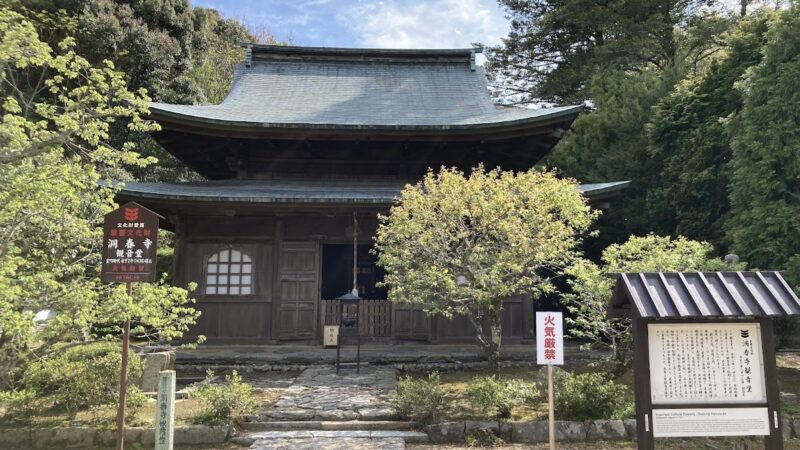
The main hall houses the principal image, a statue of Dainichi Nyorai, and visitors can offer prayers in front of it. The wooden main hall exudes the beauty of traditional temple architecture.
Hotei Statue
A statue of Hotei, one of the Seven Lucky Gods of Shunan, is enshrined on the temple grounds. Hotei, characterized by his plump body and smiling face, soothes the hearts of those who behold him. Many visitors take commemorative photos in front of this Hotei statue and pray for family harmony.
Seasonal Scenery
The area around Kannenji Temple is blessed with nature and displays different scenery with each season. You can enjoy different beauty depending on when you visit, such as the cherry blossoms in spring, the fresh greenery in early summer, and the autumn leaves.
Annual Events and Memorial Services
Kannanji Temple holds various memorial services and events throughout the year.
Regular Memorial Services
Memorial services for ancestors are held on the monthly anniversary of death, during the equinox, and during Obon. Local residents gather to remember the deceased and pray for their peaceful repose.
Dainichi Market (February & April)
As mentioned above, the Dainichi Market in February and April is the most important annual event at Kannenji Temple. Many worshippers visit, filling the temple grounds with energy.
New Year’s Visit & New Year’s Service
At the start of the new year, worshippers visit for their first shrine visit of the year, praying for good health and safety for their families throughout the year. At the New Year’s service, parishioners and local residents gather to pray for peace in the new year.
Other Events
Traditional local events and seasonal services are held periodically. Please contact the temple directly for details.
Access Information
Basic Information
- Address: 418 Iwata Mizoroi, Hikari City, Yamaguchi Prefecture 743-0103
- Phone Number: 0820-48-2381
Access by Train
Approximately 20 minutes on foot from JR Sanyo Main Line “Iwata Station”. Iwata Station is one of the main stations in Hikari City, and local trains on the Sanyo Main Line stop there.
Walking Route from Iwata Station:
Exit the station and head north, following the prefectural road for approximately 1.5 km. The route takes you through residential areas and rural landscapes, offering a peaceful walking experience.
Access by Car
Using the Sanyo Expressway:
- Exit at “Kumage IC” or “Hikari IC” and take National Route 188 for approximately 15-20 minutes.
From Hiroshima:
- Take National Route 2 or the Sanyo Expressway towards Hikari City.
From Shimonoseki:
- Take the Sanyo Expressway or National Route 2 towards Hikari City.
Parking
The temple has parking spaces for visitors, but congestion is expected during events such as the Dainichi Market. Using public transportation is recommended whenever possible.
Nearby Tourist Attractions
When visiting Kannenji Temple, we recommend also visiting other tourist attractions in Hikari City and the Shunan area.
Tourist Attractions in Hikari City:
- Ito Hirobumi Memorial Park
- Nijigahama Beach
- Hikari City Cultural Center
Tourist Attractions in the Shunan Area:
- Shunan City Museum of Art
- Tokuyama Zoo
- Other temples and shrines of the Shunan Seven Lucky Gods
Manners and Precautions for Visiting Temples
Basic Manners for Visiting Temples
When visiting temples, please observe the following basic manners:
- Dress Code: Avoid revealing clothing and aim for clean, understated attire.
- Photography: Photography inside the main hall and of Buddha statues may be prohibited. Please check before taking pictures.
- Quietness: Please remain quiet and refrain from speaking loudly or making noise on the temple grounds.
- Smoking: Smoking is prohibited on the temple grounds.
- Trash: Please take your trash with you.
Etiquette for Visiting a Temple
- Bow at the temple gate before entering the grounds.
- If there is a water basin, cleanse your hands and mouth.
- Join your hands in prayer in front of the main hall and pray quietly.
- When offering money, do so quietly and respectfully.
- After visiting the temple, turn around and bow as you leave the temple gate.
About Goshuin (Temple Seals)
You may be able to receive a Goshuin at Kannenji Temple. When visiting the Shunan Seven Lucky Gods, it is a good idea to bring a special paper or Goshuin notebook. A Goshuin is proof of your visit and has a religious meaning different from a stamp rally. Please ask respectfully.
About Hikari City and the Iwata District
Overview of Hikari City
Hikari City is a city with a population of approximately 50,000 located in the southeastern part of Yamaguchi Prefecture, facing the Seto Inland Sea. Blessed with a mild climate and abundant nature, the area boasts numerous tourist attractions, including beaches and parks. It also has an industrial side, with petrochemical complexes and other industrial facilities located within its boundaries.
Characteristics of the Iwata District
The Iwata district, where Kannenji Temple is located, is situated in the northern part of Hikari City. Centered around JR Iwata Station, it’s a mixed area of residential and agricultural land. Ancient settlements remain, maintaining a traditional community.
Kannenji Temple has served as a center of faith in this region, deeply intertwined with the lives of its residents. Events such as the Dainichi Market play a vital role in passing on the region’s traditional culture to future generations.
History of Hikari City
Hikari City has a long history, flourishing since ancient times as a key point for Seto Inland Sea transportation. During the Middle Ages, it was under the control of the Ouchi clan, and in the early modern period, it became part of the Tokuyama Domain. After the Meiji Restoration, modernization progressed, and the current Hikari City was established as Hikari Town in 1943 and became a city in 1955.
Buddhist Culture of the Shunan Region
Temple Culture of Yamaguchi Prefecture
Yamaguchi Prefecture, where the Ouchi clan actively adopted Kyoto culture during the medieval period, saw the construction of numerous temples and shrines, fostering a rich Buddhist culture. Many temples within the prefecture are designated as National Treasures or Important Cultural Properties, preserving a wealth of historically and culturally valuable Buddhist heritage.
Temples of the Shunan Region
The Shunan region is home to numerous temples, including Kannenji Temple. The Shunan Seven Lucky Gods Pilgrimage is a prime example, demonstrating how local temples collaborate to promote regional development through both religious and tourism initiatives.
Teachings of the Shingon Sect
The Shingon sect, to which Kannenji Temple belongs, is a sect of esoteric Buddhism founded in the early Heian period by Kukai (Kobo Daishi). Its principal deity is Dainichi Nyorai, and it preaches the doctrine of Sokushin Jobutsu (becoming a Buddha in this very body). It is believed that by chanting mantras, forming mudras (hand gestures), and meditating, one can attain the state of Buddhahood.
Visitor Feedback
Visitors to Kannenji Temple have shared the following comments:
- “I was able to pray peacefully in a quiet and tranquil atmosphere.”
- “I enjoyed the lively atmosphere of Dainichi City and felt the warmth of the community.”
- “I visited as part of the Shunan Seven Lucky Gods pilgrimage. I was soothed by the smile of Hotei (the god of happiness and good fortune).”
- “I walked from Iwata Station, and the stroll through the peaceful rural scenery was very pleasant.”
- “It was a warm temple where I could feel the deep faith of the local people.”
Local Cuisine and Souvenirs Around Kannenji Temple
Local Specialty Cuisine of Hikari City
When visiting Hikari City, be sure to try the local specialty cuisine.
Setouchi Seafood:
Hikari City faces the Seto Inland Sea and is rich in fresh seafood. Local restaurants offer dishes using seasonal fish.
Hikari City Sweets:
Local Japanese confectionery shops sell traditional Japanese sweets and seasonal fresh sweets. Why not stop by on your way back from your pilgrimage?
Souvenirs from Yamaguchi Prefecture
Yamaguchi Prefecture offers a wide variety of souvenirs.
- Uiro (a type of Japanese confectionery)
- Fugu (pufferfish) products
- Natsumikan (summer orange) products
- Local sake
- Traditional crafts such as Hagi ware
These can be purchased at roadside stations and souvenir shops in the Shunan area and Hikari City.
Summary
Kannenji Temple is a historic temple located in the Iwata district of Hikari City, Yamaguchi Prefecture. It enshrines a statue of Dainichi Nyorai, said to have been created by Gyoki, and Hotei, one of the Seven Lucky Gods of Shunan, making it a place of worship. The Dainichi Market, held in February and April, is a major local event, attracting many visitors.
It’s easily accessible, about a 20-minute walk from JR Iwata Station, making it an ideal spot to visit as part of a Shunan Seven Lucky Gods pilgrimage or sightseeing in Hikari City. In the tranquil temple grounds, you can find peace of mind by praying to Dainichi Nyorai and Hotei, forgetting the hustle and bustle of everyday life.
When you visit Yamaguchi Prefecture, be sure to stop by Kannenji Temple and experience its history, faith, and the warmth of the local community. Combined with the rich nature, culture, and cuisine of the Shunan area, it’s sure to create wonderful travel memories.