Complete Guide to Saichoji Temple (Suo-Oshima Town, Yamaguchi Prefecture): The Charm of the Largest Amida Buddha Statue in the Prefecture and Pilgrimage
Nishichoji Temple, located in Himi, Suo-Oshima Town, Oshima District, Yamaguchi Prefecture, is an ancient temple of the Omuro branch of Shingon Buddhism, representing Suo-Oshima Island in the Seto Inland Sea. Its mountain name is Nichimitsu Sannozan, and it is known for housing one of the largest wooden seated Amida Buddha statues in the prefecture, along with its principal image, a statue of Fudo Myoo. As the 19th temple of the Suo-Oshima Eighty-Eight Sacred Sites Pilgrimage, it welcomes many worshippers and continues to uphold its religious traditions as a center of faith and culture on the island.
This article comprehensively introduces information you should know before visiting Saichoji Temple, including its historical background, cultural value, highlights for worshippers, and access methods.
History and Origins of Seichoji Temple
Founding and Establishment of the Temple
While historical records are limited regarding the exact founding date of Seichoji Temple, it is believed to have a history heavily influenced by esoteric Buddhist culture from the Heian to Kamakura periods, as a temple belonging to the Omuro branch of the Shingon sect. The temple’s mountain name, “Nichimitsu Sannozan,” suggests a connection to the Three Jewels (Buddha, Dharma, and Sangha) and Myoo (Wisdom King) worship in esoteric Buddhism, suggesting it may have functioned as a place for Shugendo and esoteric Buddhist practice from ancient times.
Suo-Oshima Island flourished as a key point for Seto Inland Sea transportation from ancient times, and was a region where continental and Buddhist cultures were introduced early on. Seichoji Temple also developed within this cultural exchange, attracting the faith of the local people.
Relationship with the Omuro Branch of the Shingon Sect
The Omuro branch of the Shingon sect is a branch of the Shingon sect with Ninna-ji Temple in Kyoto as its head temple. It is known as a highly prestigious sect with deep ties to the Imperial family. The fact that Nishichoji Temple belongs to the Omuro sect indicates that this temple is not merely a local temple, but has developed while maintaining connections with central Buddhist culture.
Based on the teachings of Shingon Esoteric Buddhism, worship is centered around the principal deity, Fudo Myoo, and Goma rituals and various prayers are still performed today.
Connection to the Suo-Oshima Eighty-Eight Sacred Sites
Nishichoji Temple is designated as the 19th temple of the Suo-Oshima Eighty-Eight Sacred Sites. This pilgrimage was established in imitation of the Shikoku Eighty-Eight Sacred Sites, and it is believed that by visiting the temples and sites scattered throughout the island, one can obtain the same merit as the Shikoku pilgrimage.
From the Edo period to the Meiji period, as pilgrimages became popular among common people, “mini-eighty-eight pilgrimages” were established in various places for those who found it difficult to make the pilgrimage to Shikoku, which required traveling by boat. The Suo-Oshima Eighty-Eight Sacred Sites was one of them, and Nishichoji Temple has welcomed many pilgrims as an important temple. Even today, from spring to autumn, pilgrims dressed in white robes can be seen, preserving the region’s religious culture.
Largest Wooden Amida Buddha Seated Statue in the Prefecture
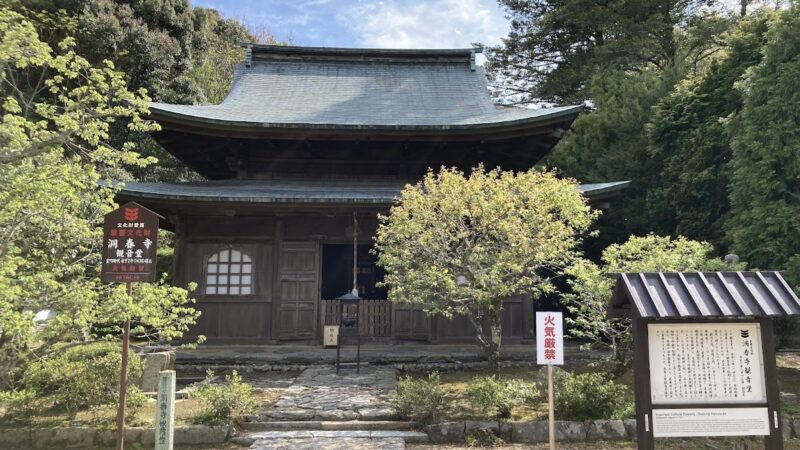
Overview of the Amida Hall and Buddha Statue
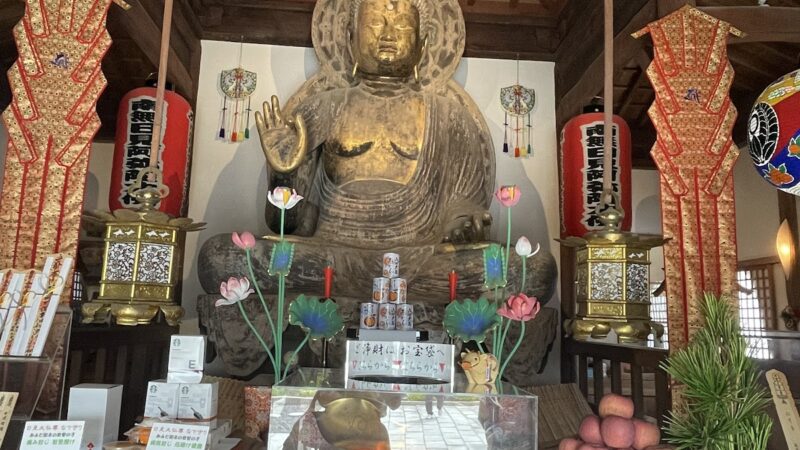
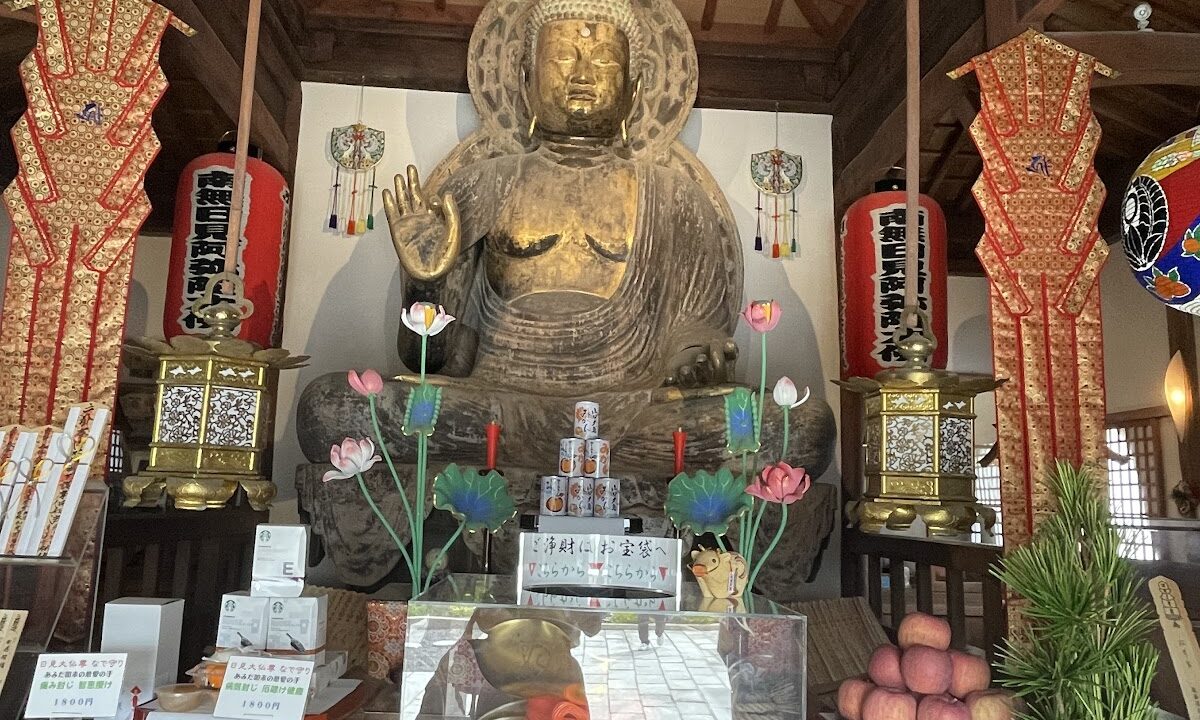
The greatest highlight of Seichoji Temple is the wooden seated Amida Buddha statue enshrined in the Amida Hall on the temple grounds. This statue is estimated to have been created in the late Fujiwara period (late Heian period, around the 12th century) and is designated as a Yamaguchi Prefecture cultural property.
The statue reaches a height of 284 centimeters and is known as one of the largest seated statues in Yamaguchi Prefecture. While most Amida Buddha seated statues are life-size to around 2 meters tall, a statue of this size is extremely rare for a local temple, demonstrating the strength of Seichoji Temple’s influence and the depth of its faith at the time.
Production Technique and Artistic Value
The Buddha statue is made using the yosegi-zukuri (joined wood) technique from cypress wood. The Yosegi-zukuri technique, perfected in the mid-Heian period, involves combining multiple pieces of wood to create a statue. This technique allows for the efficient production of large Buddhist statues and minimizes wood shrinkage and warping.
The surface is covered in lacquer and gold leaf, and adorned with gold leaf. While some of the gold leaf has peeled off over time, this only enhances its aged beauty and conveys a sense of historical weight.
Stylistically characteristic of the late Fujiwara period is the gentle and graceful facial features, the flowing drapery, and the stable seated posture. While influenced by the Jocho style, it incorporates the unique interpretation of a local Buddhist sculptor, making it a valuable example for studying the regional development of Heian Buddhist art.
Significance of Amida Buddha Faith
Amida Buddha is the principal deity of the Western Pure Land, and is believed to guide those who chant “Namu Amida Butsu” to the Pure Land. During the late Heian period, Amida Buddhism flourished alongside the spread of the belief in the decline of the Dharma (Mappō), gaining acceptance among a wide range of people, from aristocrats to commoners.
The seated Amida Buddha statue at Seichōji Temple is thought to have been created within this historical context. The fact that a Shingon Buddhist temple houses an Amida Buddha statue demonstrates a syncretism of Esoteric Buddhism and Pure Land Buddhism, or an attitude of responding to the diverse religious needs of the local people.
Notes on Visiting
Advance contact is recommended for visiting the Amida Hall. While worship is usually conducted from outside, special viewings may be possible. From the perspective of cultural property preservation, please follow the temple’s instructions regarding photography and entering the hall.
Spending time quietly praying and contemplating this Buddha statue with nearly a thousand years of history will be a precious experience away from everyday life.
Seichōji Temple Grounds and Highlights
Main Hall and Fudo Myoo
The principal image of Seichōji Temple is Fudo Myoo. Fudo Myoo is a central deity in Shingon Esoteric Buddhism, considered an incarnation of Dainichi Nyorai, who crushes worldly desires and protects practitioners.
In the main hall, Goma rituals are regularly held, allowing visitors to experience a unique Esoteric Buddhist ceremony where prayers are offered while chanting mantras amidst flames. The Goma ritual performed before Fudo Myoo is revered as a powerful practice that burns away worldly desires and grants wishes.
Stone Buddhas and the Atmosphere of the Temple Grounds
The temple grounds are dotted with stone Buddhas and signposts that convey the atmosphere of the pilgrimage route. Moss-covered Buddhas and weathered stone monuments quietly tell the history of the many pilgrims who have visited over the years.
As the 19th temple on the pilgrimage, you can receive a Goshuin (temple stamp) at the temple office. The carefully written ink inscriptions and red stamps are cherished as mementos of the pilgrimage.
Meditation Experiences and Training Programs
Nishichoji Temple offers meditation experiences, sutra copying, and esoteric Buddhist training programs such as Ajikan (a form of meditation) for the general public. These programs are popular for providing a chance to escape the hustle and bustle of daily life and find inner peace through self-reflection.
These programs require advance reservations; details can be found on the temple’s official website. Even beginners receive careful instruction, making them highly recommended for those interested in esoteric Buddhism.
Surrounding Natural Environment
Nishichoji Temple is located in a quiet village in the Himi district, surrounded by lush green mountains and the calm waters of the Seto Inland Sea. The temple grounds are adorned with the beauty of nature throughout the seasons: cherry blossoms in spring, fresh greenery in early summer, and vibrant autumn leaves.
A stroll around the surrounding area before or after your visit will allow you to experience island life and nature, refreshing both mind and body.
The Charms of Suo-Oshima and the Himi District
Overview of Suo-Oshima
Suo-Oshima is an island located in the southeastern part of Yamaguchi Prefecture, in the Seto Inland Sea. It is the third largest island in the Seto Inland Sea, after Awaji Island and Shodoshima Island. Its official name is Yashirojima, but it is commonly known as Suo-Oshima.
It is connected to Honshu by the Oshima Bridge, making it accessible by car. Known for its mild climate, abundant nature, fresh seafood, and mandarin orange cultivation, it is also called the “Hawaii of the Seto Inland Sea.”
History and Culture of the Himi District
The Himi district, where Seichoji Temple is located, is a historic settlement in the northeastern part of the island. It has developed since ancient times, centered on fishing and agriculture, and maintains a quiet and peaceful atmosphere.
Besides Seichoji Temple, historical buildings and sites are scattered throughout the district, preserving the island’s culture. The locals are warm and welcoming to visitors.
Himi District ### Nearby Tourist Attractions
Here are some nearby spots to visit before or after your visit to Nishichoji Temple:
Tetsuro Hoshino Memorial Museum: A memorial museum showcasing the achievements of Tetsuro Hoshino, a lyricist from Suo-Oshima. You can experience the world of his many famous songs, including “Kyodai-bune” (Brothers’ Ship) and “Otoko wa Tsurai yo” (It’s Tough Being a Man).
Mutsu Memorial Museum: A memorial museum exhibiting artifacts and materials from the battleship Mutsu. You can learn about the history of the battleship that sank in the Seto Inland Sea.
Katazoegahama Beach: A beach with beautiful sandy shores and crystal-clear waters. It’s bustling with beachgoers during the summer.
Southern Seto Towa Roadside Station: A roadside station where you can purchase local specialties and fresh seafood. There are also plenty of restaurants.
Access and Basic Information
Location
973 Himi, Suo-Oshima-cho, Oshima-gun, Yamaguchi Prefecture 742-2716
Access by Public Transportation
By JR:
- Get off at “Ohatake Station” on the JR Sanyo Main Line
- Take the Bocho Kotsu bus bound for “Tachibana Hospital” or “Kuga” (approximately 26 minutes)
- Get off at the “Himi” bus stop and walk for approximately 10 minutes.
Since the number of buses is limited, it is recommended to check the timetable in advance. Please note that the schedule may change, especially on holidays.
Access by Car
If using the Sanyo Expressway:
- Exit the Sanyo Expressway at “Kuga IC”
- Take National Route 437 towards Oshima Ohashi Bridge
- Cross Oshima Ohashi Bridge and take Prefectural Route 60 to the Himi area (approximately 40 minutes from Kuga IC)
From Hiroshima:
- Exit the Sanyo Expressway at “Otake IC” or “Iwakuni IC”
- Take National Route 2 and National Route 437 to Oshima Ohashi Bridge
Parking: There is parking space for visitors on the temple grounds (limited number of spaces). Advance notice is required for visits by large buses.
Visiting Hours and Admission Fee
- Visiting Hours: Free access to the temple grounds (reservations required for viewing the interior of the Amida Hall)
- Admission Fee: Voluntary donation (whatever you feel is appropriate)
- Goshuin (temple stamp) Reception: 9:00 AM – 5:00 PM (advance contact is recommended if you definitely want a Goshuin, as staff may be absent)
- Inquiries: Please check the official website or call
Precautions for Visiting
- The temple is located in a quiet residential area, so please be considerate of the neighbors by avoiding noise and illegal parking.
- Eating, drinking, and smoking are strictly prohibited inside the hall to protect cultural properties.
- Photography is only permitted in designated areas.
- Please dress appropriately for visiting a temple.
Suo-Oshima Eighty-Eight Sacred Sites Pilgrimage
Preceding and Following Temples
For those visiting the Suo-Oshima Eighty-Eight Sacred Sites Pilgrimage, including Nishichoji Temple, we provide information on the preceding and following temples.
Temple No. 18: Another temple on the island is designated as the temple before Nishichoji Temple. Check the pilgrimage route and plan an efficient route.
Temple No. 20: This is the next temple after Nishichoji Temple. Using a map or guidebook will be helpful when traveling around the island.
Pilgrimage Guidelines
A pilgrimage is not merely sightseeing, but a journey of self-reflection and spiritual practice. Please keep the following principles in mind:
- A grateful heart: Offer gratitude to Buddha and your ancestors at each temple.
- A humble attitude: Acknowledge your own desires and weaknesses, and pray for growth.
- Respect for the community: Do not forget to be polite to the temples and local people.
- A reasonable pace: Make your pilgrimage according to your physical strength.
Pilgrimage Supplies and Preparations
If you are undertaking a full pilgrimage, the following items will be useful:
- A pilgrimage stamp book (Goshuincho)
- White robe or comfortable clothing
- A straw hat (sugegasa) and a walking stick (optional)
- Prayer beads
- A sutra book
- Drinking water and light snacks
- A map or guidebook
Buddhist Culture You Can Experience at Nishichoji Temple
Goma Ritual
The Goma ritual, a representative practice of Shingon Esoteric Buddhism, is a ceremony in which a fire is lit in front of Fudo Myoo, and prayer sticks with wishes written on them are thrown into the flames. At Nishichoji Temple, Goma fire rituals are held regularly. Participating allows you to burn away worldly desires and pray for the fulfillment of your wishes.
Quieting your mind amidst the flickering flames and the resounding chanting provides a profound spiritual experience unlike anything found in everyday life.
Ajikan (Aji Meditation)
Ajikan is a meditation technique in Shingon Esoteric Buddhism. It involves contemplating the Sanskrit character “A” (阿) to approach the truth of the universe and the essence of Buddha.
Beginner instruction is available, where you can learn correct posture, breathing techniques, and mindset. Continuous practice is believed to improve concentration and mental stability.
Sutra Copying Experience
Sutra copying, such as the Heart Sutra, is a traditional practice for calming the mind and connecting with Buddhist teachings. Carefully writing each character helps to eliminate distracting thoughts and approach a state of mind free from distractions.
Completed sutra transcriptions can be offered to the temple and are cherished as part of memorial services and prayers.
Annual Events at Nishichoji Temple
Main Ceremonies and Events
Nishichoji Temple holds various ceremonies and events throughout the year:
New Year’s Day (January 1st-3rd): First shrine visit of the year, Shusho-e (New Year’s service). Prayers are offered for good health and safety for the family in the new year.
Spring Equinox (March): Higan-e (Equinox service). A memorial service to honor ancestors and pray for their peaceful rebirth in paradise.
Flower Festival (around April 8th): A memorial service celebrating the birth of Buddha. The Kanbutsu-e (bathing ceremony) is held, where sweet tea is poured over the Buddha’s body.
Obon (August): Urabon-e (Obon festival). An important event to welcome and honor the spirits of ancestors.
Autumn Equinox (September): Higan-e (Equinox service). Similar to spring, ancestral memorial services are held.
New Year’s Eve Bell Ringing (December 31st): On New Year’s Eve, the bell is rung to dispel the 108 worldly desires.
Special Openings and Public Exhibitions of Cultural Properties
Special openings of the seated Amida Buddha statue and public exhibitions of cultural properties may occur at specific times. Please check the temple’s official information or the local tourism association for details.
Visitor Feedback and Reviews
The following are some comments from visitors to Nishichoji Temple:
“I was overwhelmed by the sheer power of the largest seated Amida Buddha statue in the prefecture. I was deeply moved that the beauty of the Fujiwara period still remains.” (Male, 60s)
“I stopped by during my pilgrimage to the 88 temples. I was able to pray peacefully in a quiet and tranquil atmosphere.” (Female, 50s)
“I participated in a meditation experience, and thanks to the head priest’s careful guidance, even a beginner like me could participate with ease. It was a precious time away from everyday life.” (Female, 30s)
“It is located in a wonderful environment surrounded by the nature of Suo-Oshima. After visiting the temple, I toured the island and had a fulfilling day.” (Male, 40s)
Summary: The Significance of Visiting Nishichoji Temple
Nishichoji Temple in Suo-Oshima Town, Yamaguchi Prefecture, is a historic Shingon Buddhist temple that houses one of the largest wooden seated Amida Buddha statues in the prefecture. As the 19th temple on the Suo-Oshima Eighty-Eight Sacred Sites pilgrimage route, and as a training ground that preserves esoteric Buddhist culture, it attracts the faith of many people.
With its elegant Buddhist sculptures from the late Fujiwara period, traditional Shingon esoteric Buddhist training experiences, and the rich natural environment of the Seto Inland Sea, Seichoji Temple encapsulates the peace of mind and spiritual fulfillment that modern people seek.
To experience history and culture and to have time to reflect on yourself, please visit Seichoji Temple. The Buddhist teachings that have been passed down for over a thousand years will surely resonate with your heart.
A trip to Suo-Oshima Island, combined with a visit to Seichoji Temple, will provide an opportunity to experience the depth of Japanese spiritual culture.