Complete Guide to Mitsumine Shrine | One of Kanto’s Leading Power Spots, Situated at an Altitude of 1,100m
Mitsumine Shrine, located in Mitsumine, Chichibu City, Saitama Prefecture, is a mystical shrine situated on a mountaintop at an altitude of approximately 1,100m. Known as one of the three major shrines of Chichibu, along with Chichibu Shrine and Hodosan Shrine, it attracts many visitors as one of Kanto’s leading power spots.
This article comprehensively introduces information you should know before visiting Mitsumine Shrine, including its history, highlights, blessings, and access methods.
History and Origins of Mitsumine Shrine
Legend of its Founding by Yamato Takeru
The founding of Mitsumine Shrine dates back approximately 2,000 years to the time of Emperor Keiko. Yamato Takeru no Mikoto, the son of the 12th Emperor Keiko, became lost in the mountains of Chichibu after crossing the Karisaka Pass during his campaign to pacify the eastern provinces.
Enveloped in a thick fog and losing his way, Prince Yamato Takeru encountered a wolf. Following the wolf, the fog cleared, and he arrived at the mountain where the present-day Mitsumine Shrine stands. Impressed by the beauty of this place, Prince Yamato Takeru is said to have enshrined Izanagi-no-Mikoto and Izanami-no-Mikoto, and founded the shrine.
Origin of the Name Mitsumine
The name “Mitsumine” originates from the beautiful chain of three peaks visible from this area: Kumotori-yama, Shiraiwa-yama, and Myohogatake. Deeply connected to mountain worship, Mitsumine Shrine has flourished as a sacred site for Shugendo (mountain asceticism) since ancient times.
Reverence from Successive Warlords
During the Kamakura period, it attracted the faith of warlords such as Hatakeyama Shigetada and Nitta Yoshioki, and during the Edo period, it received the reverence of the Tokugawa shogunate and the Kishu Tokugawa family. In particular, items donated by the Kishu family are still carefully preserved as shrine treasures.
Deities and Blessings of Mitsumine Shrine
Deities
The deities enshrined at Mitsumine Shrine are Izanagi-no-Mikoto and Izanami-no-Mikoto, the divine couple who created the land and gods of Japan. These two deities are known for their blessings of matchmaking, marital harmony, and family safety.
Main Blessings
Career and Business Success: Mitsumine Shrine is especially known for improving career and business success, and is famous for attracting many business owners and entrepreneurs.
Protection from Evil and Good Fortune: Located high in the mountains, it is believed to possess powerful purifying energy.
Purification of Mind and Body: The pure air and sacred atmosphere cleanse and refresh the mind and body.
Family Safety and Matchmaking: Because the shrine enshrines a married couple of deities, it also offers blessings for family harmony and successful relationships.
Prayers for Success in Exams and Academic Achievement: Many visitors pray for success in their studies and exams, drawing on the wisdom of Yamato Takeru.
The Wolf Worship of Mitsumine Shrine: “O-Inu-sama”
Ōkuchi-no-Magami (Wolf) as a Divine Messenger
The most distinctive feature of Mitsumine Shrine is its unique belief in the wolf as “Ōkuchi-no-Magami,” a divine messenger. From the legend of the wolf that guided Yamato Takeru, wolves have been revered as sacred beings.
Locally, wolves are affectionately called “O-Inu-sama” and worshipped as guardian deities protecting crops from harmful animals, as well as gods of protection against theft and fire.
Wolf Guardian Dogs
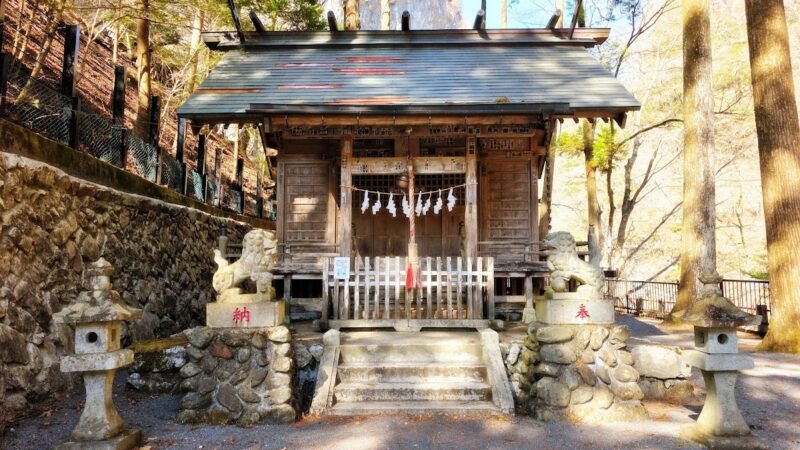
While most shrines have guardian dogs (komainu), Mitsumine Shrine has wolf statues instead. You can see wolf statues throughout the grounds, including in front of the main hall, at the Zuishinmon gate, and along the approach to the shrine, creating a unique landscape characteristic of Mitsumine Shrine.
Borrowing the Divine Messengers
Mitsumine Shrine has a unique belief called “borrowing the divine messengers.” This is the custom of borrowing the spiritual power of wolves, considered messengers of the gods, and taking them home for protection. This belief continues to this day, and only those with special permission can borrow them.
Highlights of Mitsumine Shrine
Zuishinmon Gate
Upon entering the shrine grounds from the parking lot, the first thing that catches your eye is the magnificent Zuishinmon gate. This two-story gate, painted in a vibrant vermilion, has guardian deities (Zuishin) on either side. Passing through this gate, you are immediately enveloped in a sacred atmosphere.
Worship Hall and Main Shrine
The worship hall and main shrine of Mitsumine Shrine were built in 1661 during the Edo period. They are magnificent buildings adorned with vividly colored carvings. The opulent decorations, reminiscent of Nikko Toshogu Shrine, are overwhelming to behold.
The pillars of the worship hall are carved with mythical creatures such as dragons, phoenixes, and kirin, and are vividly colored. These carvings represent the pinnacle of Edo-period craftsmanship and are designated as important cultural properties of Saitama Prefecture.
Sacred Tree
To the left of the worship hall stands a massive sacred tree, said to be approximately 800 years old. This sacred tree is known as a tree of matchmaking, and it is believed that one can receive its power by touching it directly.
Its trunk circumference is approximately 8 meters, and its presence is overwhelming. Many worshippers can be seen placing their hands on the sacred tree and offering prayers.
The Dragon God on the Stone Pavement
On the stone pavement in front of the main hall is the “Dragon God,” where the image of a dragon appears when water is poured over it. It is said to have suddenly appeared in 2012, the Year of the Dragon, and has become a popular power spot.
Kounkaku
Within the shrine grounds is Kounkaku, an accommodation facility. It is a lodging for those visiting Mitsumine Shrine, where you can enjoy vegetarian cuisine and spend a sacred mountain night. Visiting in the refreshing early morning air is a special experience that cannot be enjoyed on a day trip.
Okumiya (Myohogatake)
The Okumiya (inner shrine) of Mitsumine Shrine is located at the summit of Myohogatake (1,329m above sea level). It is about a 1.5-hour hike one way from the main hall, but the view from the summit is spectacular. Those confident in their physical strength should definitely try visiting the inner shrine.
Yohaiden (Worship Hall)
For those who find climbing to the inner shrine difficult, a Yohaiden has been established within the shrine grounds. From here, you can worship the inner shrine on Mt. Myohogatake, and it is also a spectacular spot with a panoramic view of the Chichibu Mountains.
On clear days, a sea of clouds sometimes spreads out, and in recent years it has attracted attention as a spot for viewing the sea of clouds. Visiting early in the morning increases the chances of encountering the mystical sea of clouds.
Items Offered at Mitsumine Shrine
Kimamori (Amulet of Energy)
The most popular amulet at Mitsumine Shrine is the “Ki-mamori” (Amulet of Energy). It comes in four colors: red, pink, green, and blue, each believed to bring good fortune in areas such as work, love, health, and academics.
The Kimamori is an amulet imbued with the energy of the sacred tree of Mitsumine Shrine, and it is believed that wearing it will improve one’s luck.
Regarding the Discontinuation of the White Amulet
The “White Amulet,” which was previously distributed only on the 1st of each month, was discontinued in June 2018 due to its immense popularity and resulting overcrowding. Please note that there are no plans for resumption.
Other Items Offered
Various items are available, including Goshuin (temple/shrine stamps), amulets, charms, and ema (votive tablets). Items featuring wolf designs are particularly popular as unique offerings of Mitsumine Shrine.
Annual Events at Mitsumine Shrine
Main Festivals
Setsubun Festival (February 3rd): Bean-throwing ceremony and prayers for protection against evil.
Spring Grand Festival (April 8th): A festival to praise the enshrined deities and pray for a bountiful harvest.
Annual Grand Festival (October 24th): The most important festival of the year, featuring Kagura (sacred dance) performances.
Monthly Festival (1st of every month): A monthly festival is held on the 1st of every month.
Access and Transportation Information to Mitsumine Shrine
Basic Information
Location: 298-1 Mitsumine, Chichibu City, Saitama Prefecture
Phone Number: 0494-55-0241
Visiting Hours: Grounds are open freely (Shrine office is open from 9:00 to 17:00)
Admission Fee: Free
Access by Train and Bus
Using Seibu Railway:
- Approximately 75 minutes by Seibu Kanko Bus “bound for Mitsumine Shrine” from Seibu Chichibu Station (approximately 55 minutes by express bus)
- Alternatively, travel by train from Seibu Chichibu Station to Mitsumineguchi Station, then approximately 50 minutes by Seibu Kanko Bus “bound for Mitsumine Shrine” from Mitsumineguchi Station (approximately 40 minutes by express bus)
Using JR:
- From JR Hachiko Line/Chichibu Railway “Chichibu Station,” take the Seibu Kanko Bus bound for “Mitsumine Shrine” (approximately 75 minutes).
Since the number of buses is limited, it is recommended to check the timetable in advance. Especially on holidays, it can get crowded, so aiming for an earlier time slot is advisable.
Access by Car
Via Kan-Etsu Expressway:
- Approximately 2 hours from Hanazono IC via National Route 140
- If using the Karisaka Tunnel, take National Route 140 from the Yamanashi direction.
Via Chuo Expressway:
- Approximately 2 hours from Kofu-Showa IC via National Route 140
Parking: Approximately 240 spaces (free)
*Approximately 5 minutes walk from the parking lot to the main shrine.
Notes on Road Conditions
The road to Mitsumine Shrine is a mountain road with many curves, and there is a possibility of ice and snow in winter. Winter tires or chains are necessary. Also, road construction and road closures may occur near Futase Dam, so please check the official website for the latest information before departure. In 2024 (Reiwa 6), there was a road closure between Futase Dam and Mitsumine Shrine, so prior confirmation is important.
Etiquette and Manners for Visiting Mitsumine Shrine
Proper Worship Procedure
- Bow before passing through the Zuishinmon Gate
- Cleanse your hands and mouth at the water basin (temizuya)
- Bow twice, clap twice, and bow once in front of the main hall (haiden)
- Touch the sacred tree with respect
Clothing
Due to the high altitude, the temperature is 5-10 degrees Celsius lower than in the lowlands. It is recommended to bring a jacket or cardigan regardless of the season. Also, the shrine grounds are large, so those planning to hike to the inner shrine should wear comfortable shoes and clothing.
Photography Manners
Photography is generally permitted within the shrine grounds, but photography inside the main hall or during festivals may be prohibited. Please be considerate of other visitors.
Tourist Spots Around Mitsumine Shrine
Chichibu Three Shrines Pilgrimage
If you visit Mitsumine Shrine, we recommend visiting Chichibu Shrine and Hodosan Shrine as well to complete the “Chichibu Three Shrines Pilgrimage.” Each shrine has different characteristics and blessings, allowing you to gain a deeper understanding of Chichibu’s history and culture.
Nakatsu Gorge
Located about 30 minutes by car from Mitsumine Shrine, Nakatsu Gorge boasts some of the most beautiful gorge scenery in Okuchichibu. It’s especially stunning during the autumn foliage season and is a popular driving route.
Misotsuchi Ice Pillars
Only available in winter, these ice pillars are a must-see winter spectacle in Chichibu. Located on the way to Mitsumine Shrine, you can enjoy a fantastical world of ice illuminated at night.
Best Season for Visiting Mitsumine Shrine
Spring (April-May)
The fresh greenery is beautiful, and the weather is pleasant. While it gets crowded during Golden Week, visiting the shrine amidst the fresh greenery is a refreshing experience.
Summer (June-August)
Due to its high altitude, it’s cool and comfortable even in summer. It’s an ideal summer retreat, offering a refreshing escape from the heat of the lowlands.
Autumn (September-November)
The autumn foliage season is the most beautiful time to visit Mitsumine Shrine. The best time to see the leaves is from mid-October to early November, and the sight of the shrine grounds and surrounding mountains ablaze with color is breathtaking. However, it gets extremely crowded during this period.
Winter (December-March)
Mitsumine Shrine in a snowy landscape is mystical, and the tranquil grounds have a special atmosphere. However, caution is needed regarding icy roads and snow, and winter tires are essential.
Frequently Asked Questions about Mitsumine Shrine
Q: How long does it take to visit Mitsumine Shrine? **
A: Visiting the main spots within the shrine grounds takes about 1-2 hours. If you want to stroll around leisurely or include a meal at Kounkaku, it’s best to allow 3-4 hours. If you include the climb to the inner shrine, you’ll need an additional 3 hours round trip.
Q: When will the white amulets be available again?
A: Currently, there are no announced plans for their resumption. This is a measure to alleviate congestion, and the resumption date is undecided. Please check the official website for the latest information.
Q: Can I bring my dog to Mitsumine Shrine?
A: We recommend checking with the shrine in advance regarding pet-friendly visits. Generally, dogs are often restricted within the shrine grounds.
Q: Can I get a Goshuin (shrine stamp)?
A: Yes, you can get a Goshuin at the reception area. Reception hours are approximately 9:00 AM to 5:00 PM. Original Goshuin notebooks are also available for purchase.
Q: Can I have a wedding ceremony at Mitsumine Shrine? **
A: You can have a Shinto wedding ceremony at Mitsumine Shrine. Please contact the shrine directly for details.
Summary
Mitsumine Shrine is a mystical shrine nestled in the mountains at an altitude of approximately 1,100m. It boasts many attractions, including the legend of Yamato Takeru, wolf worship, magnificent shrine buildings, and an 800-year-old sacred tree.
As one of the leading power spots in the Kanto region, it attracts many visitors seeking career success, protection from evil, and purification of mind and body. Surrounded by the rich nature of Chichibu, the shrine grounds showcase beauty in every season, deeply moving visitors.
Access is not easy, but the sense of accomplishment and sacred atmosphere upon arrival are exceptional. When you reach a turning point in your life or wish to renew your spirit, please visit Mitsumine Shrine.
Mitsumine Shrine, located in Mitsumine, Chichibu City, Saitama Prefecture, will purify your heart and soul and give you new vitality.