Issekisan Shrine (Tokyo) Complete Guide | History, Deities, Access, and Relationship with Nippara Limestone Cave – A Thorough Explanation
Issekisan Shrine, nestled deep in the mountains of Okutama-cho, Nishitama-gun, Tokyo, is a shrine with a unique faith that considers the Nippara Limestone Cave as its sacred object. Historically flourishing as a sacred site for mountain asceticism, and with a legend of its founding by En no Gyoja, this shrine remains an important sacred site in Okutama, attracting many hikers and worshippers even today.
Basic Information on Issekisan Shrine
Issekisan Shrine is located at 1052 Nippara, Okutama-cho, Nishitama-gun, Tokyo, at an altitude of approximately 889.8 meters. It belongs to the Association of Shinto Shrines and is characterized by its unique location very close to the Nippara Limestone Cave.
Location: 1052 Hihara, Okutama-machi, Nishitama-gun, Tokyo
Postal Code: 〒198-0211
Coordinates: 35°51′07″N, 139°02′25″E
Reference Elevation: 889.8 meters
Nearest Bus Stop: Stalactite Cave (approx. 7-minute walk)
The shrine does not have a permanently staffed office, and Goshuin (shrine stamps) are not issued. However, amulets and talismans are sold at nearby shops, allowing visitors to obtain souvenirs of their visit.
History and Origins of Isekiyama Shrine
Founding and the Legend of En no Gyoja
Isekiyama Shrine is said to have been founded in the 4th year of Emperor Monmu’s reign (700 AD). There is a legend that it was founded by En no Gyoja (En no Ozunu), known as the founder of Shugendo (mountain asceticism), and it enshrined “Isekiyama Daigongen” as a sacred site for mountain asceticism.
En no Gyoja was a legendary ascetic who was active from the Asuka period to the Nara period, leaving his footprints of training in sacred mountains throughout Japan. The area of Hihara, located deep in the mountains of Okutama, is also believed to have been a place of spiritual training for En no Gyoja due to its sacred nature.
Rise of Kobo Daishi and Jikaku Daishi
After its founding, it is said that Kobo Daishi (Kukai) restored the shrine during the Heian period, and later Jikaku Daishi (Ennin) further restored it. These high-ranking monks helped develop Isekiyama into an important center of mountain Buddhism.
In particular, there was a period when it was managed by Ueno Kan’ei-ji Temple, and it flourished under the influence of the Tendai sect during the Edo period. The fact that the Hihara Limestone Cave itself was under the management of Kan’ei-ji Temple indicates the religious importance of this region.
Meiji Restoration and Separation of Shinto and Buddhism
Due to the anti-Buddhist movement of the Meiji era, the name was changed from the strongly Buddhist “Isekiyama Daigongen” to “Isekiyama Shrine.” This is a typical example of the conversion of Shugendo (mountain asceticism) sacred sites into Shinto shrines, part of the nationwide policy of separating Shinto and Buddhism.
While this transformation eliminated Buddhist elements, the essence of mountain worship has been passed down to the present day.
Deities and Beliefs
Main Deities
Ichiishiyama Shrine enshrines two deities:
Amaterasu Omikami
The supreme deity in Japanese mythology, a goddess who personifies the sun. She is revered as the ancestral deity of the Imperial family and is known as the main deity of Ise Grand Shrine.
Izuno-obashiri-no-mikoto
A deity appearing in Japanese mythology, considered one of the gods associated with the Amano-Iwato myth. This deity is deeply connected to mountain worship and water deity worship.
Faith in the Nippara Limestone Cave as a Sacred Object
The most distinctive feature of Ichiishiyama Shrine is that it considers the Nippara Limestone Cave, located across from it, as its sacred object. Limestone caves have been revered as mystical places since ancient times, and have been objects of worship as entrances to the underworld or dwelling places of gods.
The Nippara Limestone Cave boasts one of the largest scales in the Kanto region, with a total length of approximately 1,270 meters. Various stalactites have formed within the cave, creating a natural beauty. This mystical space itself is considered a sacred area and forms the core of the faith at Ichiishiyama Shrine.
As a Sacred Site for Mountain Asceticism
Ichiishiyama was also a sacred site for mountain asceticism, a place of training for ascetics. The environment—steep mountain paths, deep forests, and the mystical limestone cave—provided ideal conditions for ascetic practice.
It is counted as one of the 88 sacred sites of Okutama and holds an important position as a pilgrimage destination.
Access and Transportation Information
Access by Public Transportation
Using Trains and Buses
- Get off at Okutama Station on the JR Ome Line.
- Take the Nishi-Tokyo Bus bound for Nippara Limestone Cave from Okutama Station (approximately 30 minutes).
- Get off at the final stop, “Limestone Cave” bus stop, and walk for approximately 7 minutes.
Since buses only run a few times a day, it is recommended to check the timetable in advance. Especially during winter, the number of services may be reduced.
Distance from the Nearest Station
It is approximately 15 kilometers from Okutama Station, making walking impractical. Using a bus or private car is essential.
Access by Private Car
From Tokyo
- From the Ken-O Expressway “Ome IC,” take National Route 411 (Ome Kaido) towards Okutama.
- Enter Okutama Town and follow the signs towards Nippara.
- Proceed approximately 10 kilometers along Nippara Kaido.
Parking Information
You can use the Nippara Limestone Cave parking lot. It may be crowded during peak tourist season and on weekends, so early arrival is recommended. The shrine is a few minutes’ walk from the parking lot.
Access via Hiking Routes
Ichiishiyama Shrine is also used as a starting point or stopover point for hiking. Many hikers visit this shrine as part of hiking routes around the Okutama mountains.
Main Hiking Routes
- Hiking route from Nippara to Ichiishiyama (elevation 1,547 meters)
- As part of the Nagasawa Ridge Traverse Route
- Circular route around the Okutama Three Mountains
For hiking, sufficient equipment and planning are necessary. Particular caution is needed regarding snow and ice during the winter months.
Highlights of Ichiishiyama Shrine
Shrine Building and Grounds
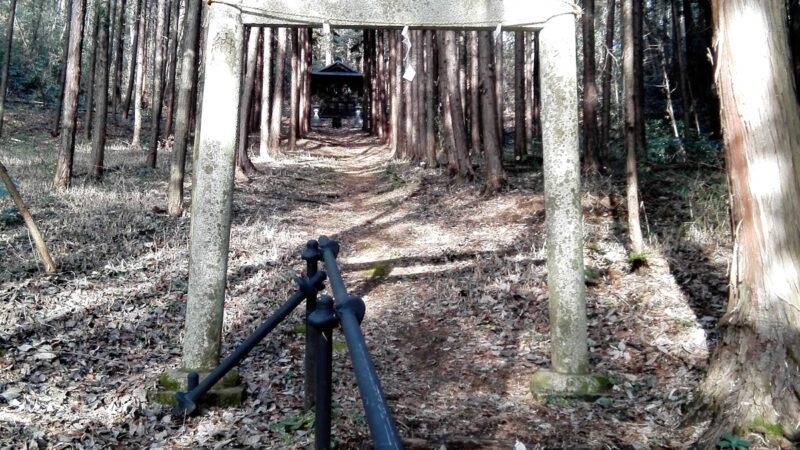
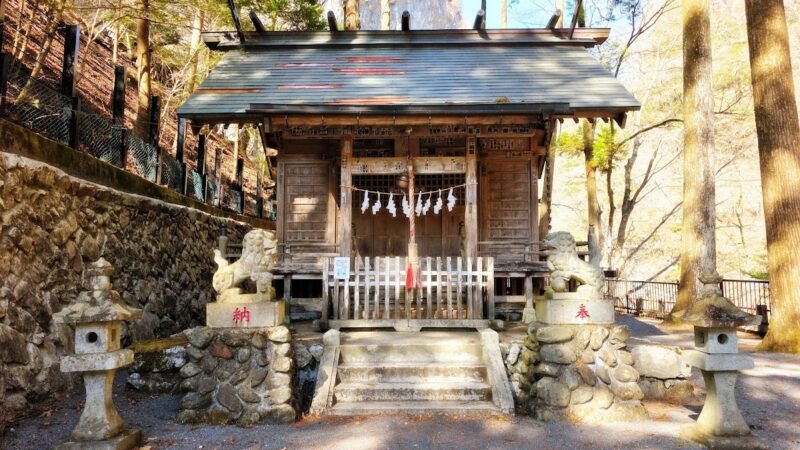
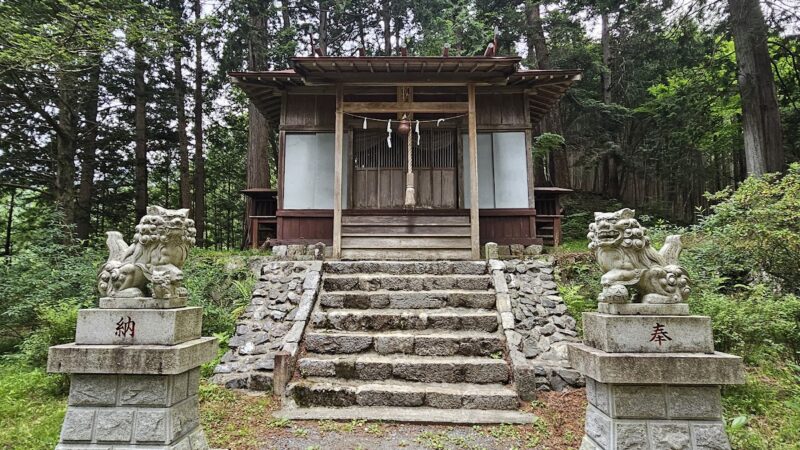
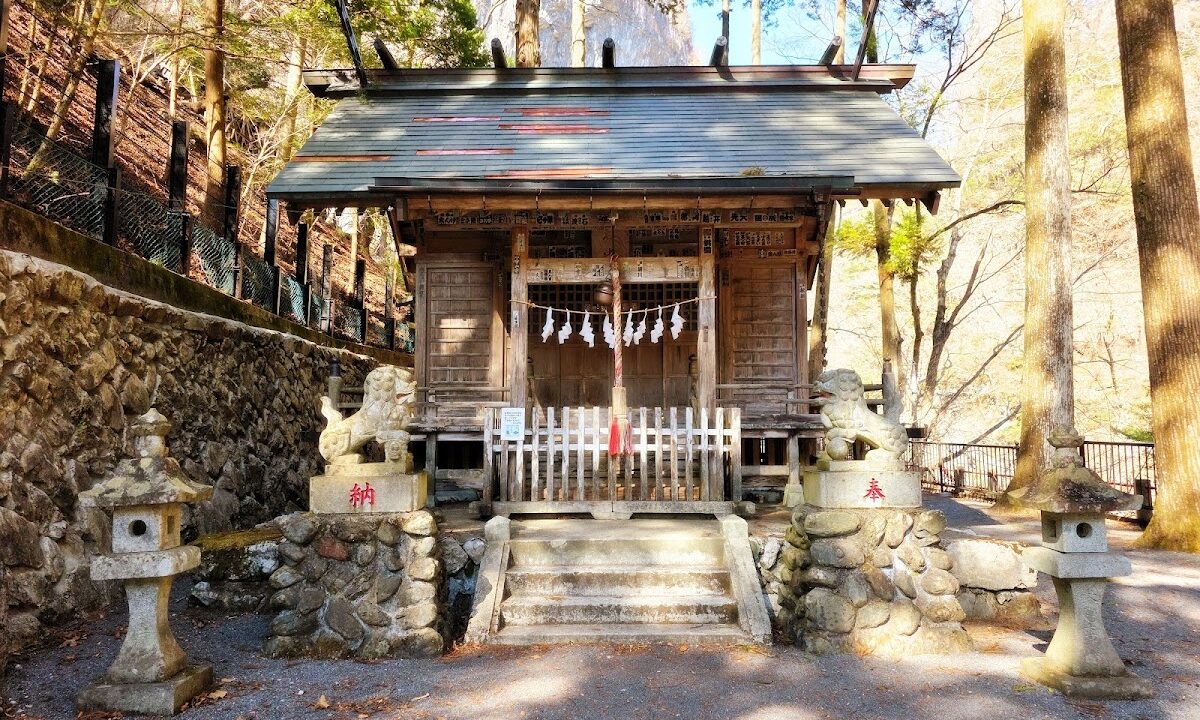
The shrine building of Ichiishiyama Shrine, though simple, strongly retains the atmosphere of a sacred mountain site. Surrounded by deep forests, the tranquil grounds evoke a sense of sacredness in visitors.
The architectural style of the shrine building is typical of mountain shrines, harmonizing with the natural environment.
The Rocky Mountain Behind the Shrine
Behind the shrine lies an impressive rocky mountain. This cliff is composed of limestone and is part of the geological formation that forms the Nippara Limestone Cave. The exposed rock face overwhelms the viewer with its natural beauty, telling the long history of the Earth.
This rocky mountain is thought to be the origin of the name “Ichiishiyama” (meaning “one rocky mountain”) and is one of the objects of worship at the shrine.
Integrated Landscape with Nippara Limestone Cave
When visiting Ichiishiyama Shrine, we highly recommend also visiting Nippara Limestone Cave. The cave entrance is just a few minutes’ walk from the shrine, and the two are closely connected both religiously and geographically.
The cave maintains a temperature of approximately 11 degrees Celsius throughout the year, making it cool in summer and warm in winter. Inside the cave are various stalactite formations, each given a name related to religious beliefs, such as “White-Robed Kannon,” “Toad Rock,” and “Diamond Staff.”
Surrounding Natural Environment and Climate
Climate at an Elevation of 889.8 Meters
Ichiishiyama Shrine is located at an elevation of approximately 890 meters. Compared to central Tokyo, the temperature is lower, and the seasons are distinct.
Spring (March-May)
This is a beautiful season with fresh greenery, and you can also enjoy wildflowers. However, be aware of the chill in the mornings and evenings.
Summer (June-August)
Temperatures are about 5-7 degrees Celsius lower than in the city center, making it ideal for escaping the heat. However, be aware of sudden downpours and thunderstorms.
Autumn (September-November)
This is the season for beautiful autumn foliage, with the best viewing period being from mid-October to early November. Temperatures drop quickly, so warm clothing is necessary.
Winter (December-February)
Snowfall and icy roads occur. The Nippara Road can become impassable in winter, so thorough preparation is necessary for visits.
Surrounding Mountains and Nature
The area around Isekiyama Shrine is surrounded by the rich natural beauty of Okutama.
Major Mountains in the Area
- Isekiyama (Elevation 1,547m): The mountain from which the shrine derives its name.
- Nagasawayama (Elevation 1,424m): A peak on the Nagasawa Ridge.
- Toritaniyama (Elevation 1,718m): A famous peak in Okutama.
Many climbers pray for safety at Isekiyama Shrine before climbing these mountains.
Points and Precautions for Visiting the Shrine
Clothing and Items to Bring When Visiting the Shrine
Visiting Isekiyama Shrine involves going to a mountainous area, so appropriate clothing and items are important.
Recommended Attire
- Comfortable walking shoes (trekking shoes are ideal)
- Comfortable clothing
- Warm clothing and rain gear appropriate for the season
- Hat (for sun protection in summer, and warmth in winter)
Items to Bring
- Drinking water
- Snacks
- Map or smartphone (but be aware of signal strength)
- Flashlight (if visiting the limestone cave)
Manners for Visiting the Shrine
Ichiishiyama Shrine does not have a permanent shrine office, but the manners for visiting are the same as for any other shrine.
- Bow when passing through the torii gate
- Avoid walking in the center of the path
- If there is a water basin, cleanse your hands and mouth
- Bow twice, clap twice, and bow once in front of the main hall
- Visit quietly and respect the natural environment
About Goshuin (Shrine Seals) and Gifts
As mentioned above, Ichiishiyama Shrine does not offer Goshuin. Since there is no permanently staffed shrine office, those wishing to have their goshuin (stamp book) inscribed should take note.
However, amulets and talismans are sold at a nearby shop and can be purchased as souvenirs of your visit. These items are valuable as they allow you to feel the faith of Ichiishiyama Shrine firsthand.
As one of the Okutama Eighty-Eight Pilgrimage Sites
Ichiishiyama Shrine is counted as one of the 88 pilgrimage sites of the Okutama Eighty-Eight Pilgrimage. This is a pilgrimage route modeled after the Shikoku Eighty-Eight Pilgrimage, visiting temples and shrines in the Okutama region.
For pilgrims undertaking the pilgrimage, Ichiishiyama Shrine is an important pilgrimage site. As a pilgrimage site located deep in the mountains, the sense of accomplishment upon completing the pilgrimage is particularly special.
Nearby Tourist Attractions
Nippara Limestone Cave
A must-see tourist spot when visiting Ichiishiyama Shrine. It is one of the largest limestone caves in the Kanto region, and a tour of the cave takes approximately 40 minutes.
Business Information
Opening periods and hours vary depending on the season, so it is recommended to check in advance. The cave may be closed during winter.
Okutama Lake
This artificial lake is located about 30 minutes by car from Ichiishiyama Shrine. It has been selected as one of Japan’s Top 100 Dam Lakes, and offers beautiful scenery throughout the seasons.
Okutama Visitor Center
This facility allows you to learn about the nature and history of Okutama. You can also obtain hiking information, making it a good place to stop when planning a hike around Ichiishiyama Shrine.
The Charm and Value of Visiting Ichiishiyama Shrine
Ichiishiyama Shrine is a precious sacred site where you can experience the atmosphere of a deep mountain valley, despite being within Tokyo. Its unique form of worship, with the Nippara Limestone Cave as its sacred object, its long history dating back to En no Gyoja, and the rich natural environment of Okutama all combine to provide visitors with a special experience.
Located within day-trip distance from central Tokyo, Ichiishiyama Shrine offers a glimpse into the essence of mountain worship, making it a precious spiritual oasis for modern people.
For climbers, it serves as a place to pray for safety; for tourists, it offers a chance to experience the history and nature of Okutama; and for believers, it is a sacred site of worship, making it a shrine with diverse values.
Summary
Ichiishiyama Shrine, located in Okutama Town, Tokyo, is a sacred site of mountain worship, with the Nippara Limestone Cave as its object of deity. Said to have been founded in the 4th year of Emperor Monmu’s reign (700 AD), it boasts a long history as a place associated with high-ranking Buddhist monks such as En no Gyoja, Kobo Daishi, and Jikaku Daishi.
It enshrines Amaterasu Omikami and Iso-o-hashiri no Mikoto, and took its current form after the anti-Buddhist movement of the Meiji era. It is accessible by bus from Okutama Station, and visiting it in conjunction with the Nippara Limestone Cave offers a deeper understanding and experience.
While they don’t offer Goshuin (temple/shrine stamps), the shrine grounds, which retain a strong atmosphere of mountain worship, the impressive rocky hill, and the mysterious limestone cave create a unique landscape that is well worth visiting. Please do come and experience the nature and history of Okutama at Ichiishiyama Shrine.