Complete Guide to Kunozan Toshogu Shrine | All About the National Treasure Shrine Buildings, History, Access, and Visiting Information
What is Kunozan Toshogu Shrine?
Kunozan Toshogu Shrine is a shrine located in Negoya, Suruga Ward, Shizuoka City. It is the founding shrine of all Toshogu shrines nationwide, dedicated to Tokugawa Ieyasu, the founder of the Edo Shogunate. Situated on the southern slope of Mt. Kuno overlooking Suruga Bay, its magnificent shrine buildings, designated as a National Treasure, are highly regarded as a masterpiece showcasing the finest architectural techniques and artistic achievements of the early Edo period.
Tokugawa Ieyasu was born on December 26, 1542, at Okazaki Castle in Mikawa Province (present-day Okazaki City, Aichi Prefecture). He overcame numerous hardships to achieve the unification of Japan and established the Edo Shogunate as Shogun. He put an end to the era of war and laid the foundation for over 260 years of peace during the Edo period, establishing the foundations of learning, industry, and culture, and leaving a great legacy in the development of early modern Japan.
Lord Ieyasu, who spent his later years as the retired shogun in Sunpu (present-day Aoi Ward, Shizuoka City), passed away on April 17, 1616, at the age of 75. Just before his death, Lord Ieyasu entrusted his retainers with the will to bury his remains at Kunōzan. The second shogun, Tokugawa Hidetada, immediately carried this out and issued an order to construct a shrine to enshrine Lord Ieyasu at Kunōzan. This was the beginning of Kunōzan Tōshōgū.
History of Kunōzan
The history of Kunōzan dates back long before Tokugawa Ieyasu. It is said that the name Kunōzan originated during the reign of Empress Suiko, when Kunō Tadahito built Kunōji Temple. During the Heian period, Kunozan flourished as a sacred site for Kannon worship, known as Fudarakusan Kunoji Temple.
With the arrival of the Sengoku period (Warring States period), Kunozan became a strategically important military location. In 1568, Takeda Shingen, who invaded Suruga Province, moved Kunoji Temple to Tesshuji Temple in Shimizu City (present-day Shimizu Ward, Shizuoka City) and built a fortress on Kunozan. After the fall of the Takeda clan, it came under the control of the Tokugawa clan, with Nakamura Kazushi, a senior retainer of Tokugawa Ieyasu, serving as the castle lord.
Ieyasu himself highly valued Kunozan’s topography and views, and it is said that he frequently visited Kunozan during his retirement at Sunpu Castle. The spectacular panoramic view of Suruga Bay and its natural fortifications, surrounded on three sides by the sea and cliffs, are believed to be one of the reasons why Ieyasu chose Kunozan as his burial place.
The Founding of Kunozan Toshogu Shrine and its Relationship to Nikko Toshogu Shrine
Following his last wishes, the remains of Tokugawa Ieyasu, who died at Sunpu Castle on April 17, 1616, were immediately transported to Kunozan and buried on April 19 of the same year. His successor, Tokugawa Hidetada, ordered the construction of a magnificent shrine to enshrine his father, and, using the finest technology and art of the time, completed the shrine in an astonishingly short time of just 1 year and 7 months. It was founded as Toshosha in December 1617 and received the title of Toshogu Shrine in 1645.
Kunozan Toshogu Shrine is the first Toshogu Shrine, built before Nikko Toshogu Shrine. Nikko Toshogu Shrine was founded in 1617, but the magnificent shrine buildings that stand today were extensively rebuilt in 1636 by the third shogun, Tokugawa Iemitsu. Therefore, the shrine buildings of Kunozan Toshogu Shrine were completed approximately 20 years earlier than the existing buildings of Nikko Toshogu Shrine, and are believed to have had a significant influence on the architectural style of Nikko Toshogu Shrine.
It is said that Tokugawa Ieyasu’s will stipulated that “my remains be interred at Kunozan, the funeral be held at Zojoji Temple in Edo, my memorial tablet be placed at Daijuji Temple in Mikawa Province, and after the first anniversary of my death, a small shrine be built on Nikkozan and enshrined there.” Because of this, Kunozan, as the actual burial site of Tokugawa Ieyasu, holds a special sacred significance distinct from Nikkozan.
The Architectural Beauty of the National Treasure Shrine
In December 2010, the main hall, worship hall, and stone chamber of Kunozan Toshogu Shrine were designated as National Treasures. This was the first National Treasure building designation in Shizuoka Prefecture, and as a representative example of early Edo period Gongen-zukuri architecture, it holds an extremely important position in architectural history.
The Gongen-zukuri Style
The shrine buildings of Kunozan Toshogu Shrine are constructed in an architectural style called “Gongen-zukuri.” Gongen-zukuri is a complex shrine style in which the main hall and worship hall are connected by a stone chamber (ai-no-ma). The name originated from the deification of Tokugawa Ieyasu as Toshodai Gongen. The Gongen-zukuri style, in which the main hall, stone chamber, and worship hall are integrated, was perfected by Kunozan Toshogu Shrine and Nikko Toshogu Shrine, and had a significant influence on later shrine architecture.
Splendid and Magnificent Decorations
The entire shrine is adorned with vividly colored carvings, lacquer work, and gold leaf, boasting a beauty truly befitting the term “splendid and magnificent.” Inside the main hall, murals and ceiling paintings by Kano school artists adorn the space, showcasing the pinnacle of early Edo period art.
The carvings employ a variety of motifs, including mythical creatures such as dragons, phoenixes, and kirin, as well as flowers like peonies and chrysanthemums, and figures based on Chinese legends. These carvings are not merely decorative; they symbolically represent the virtues of Tokugawa Ieyasu and express the sacredness of Toshogu Shrine.
Restoration through Major Renovation
From 2002 to 2009, a major renovation, the likes of which only occur once every 50 years, was carried out. This seven-year restoration work revived the shrine’s splendid appearance from its original construction. Through meticulous restoration work using traditional techniques, such as repainting lacquer, reapplying gold leaf, and restoring the coloring of carvings, the skills and aesthetic sensibilities of craftsmen from 400 years ago are being passed down to the present day.
Guide to the Shrine Grounds
The grounds of Kunozan Toshogu Shrine contain numerous important cultural properties and points of interest, including the National Treasure main shrine building.
The 1159 Stone Steps of the Main Approach
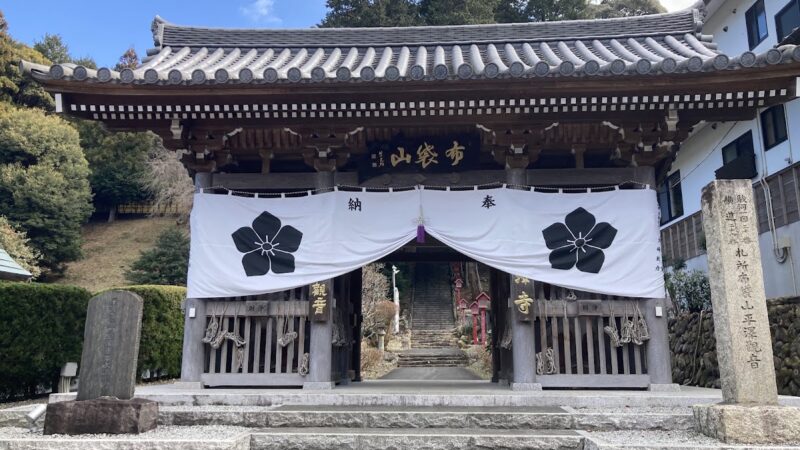
The main approach to Kunozan Toshogu Shrine is known for its 1159 stone steps that lead from the coast. These steps are winding and steep, requiring considerable physical strength to climb, but the view of Suruga Bay from along the way is spectacular. At the top of the steps, the main gate awaits, providing a sense of accomplishment and welcoming the entrance to the sacred area.
The number “1159” is sometimes remembered as a mnemonic for “ichi-ichi gokuro-san” (thank you for your hard work), but in reality, it is believed that this number of steps was the result of being built to conform to the natural terrain.
Tower Gate (Important Cultural Property)
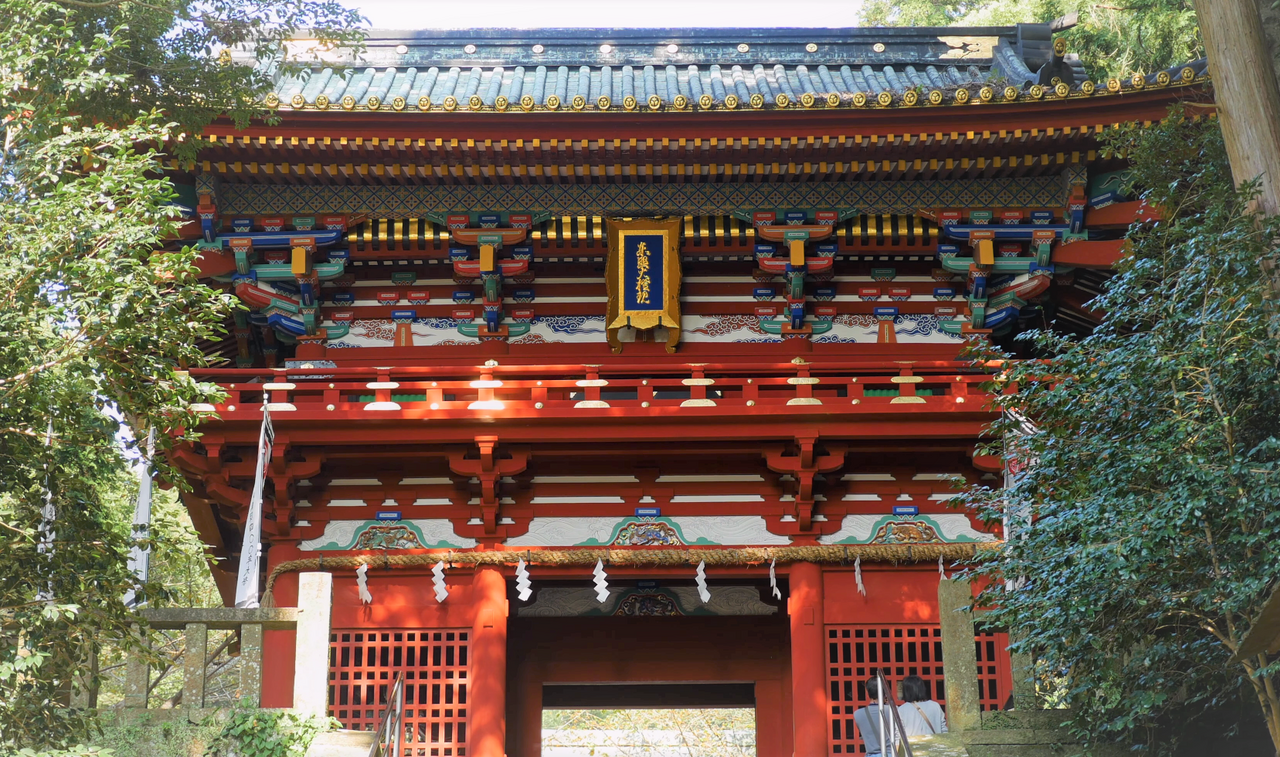
The tower gate, which appears at the top of the Omotesando (main approach), is designated as an Important Cultural Property. It is a vibrant vermilion-painted two-story gate, with guardian statues on either side. Passing through the tower gate marks the beginning of a sacred area, imbued with a solemn atmosphere.
Shrine (Ieyasu’s Mausoleum)
Behind the main hall, near the summit of Mount Kuno, lies the shrine where the remains of Tokugawa Ieyasu are actually buried. Ieyasu rests beneath a stone pagoda, making this the most sacred place within Kunozan Toshogu Shrine. While the shrine is not open to the public, its presence gives Kunozan Toshogu Shrine a special significance, not merely as a shrine, but as the mausoleum of Ieyasu.
Kunozan Toshogu Museum
Within the temple grounds is the Kunozan Toshogu Museum, which houses and displays valuable items related to the Tokugawa family, including relics of Tokugawa Ieyasu, as well as weapons, armor, swords, calligraphy, paintings, and clothing of successive shoguns. In particular, the sword, armor, and everyday items actually used by Ieyasu are invaluable resources for understanding his character.
The museum houses approximately 2,000 items, including national treasures and important cultural properties, and is open to the public with regular rotations of exhibits. A visit to the museum is a must-see when visiting Kunozan Toshogu Shrine.
Other Highlights
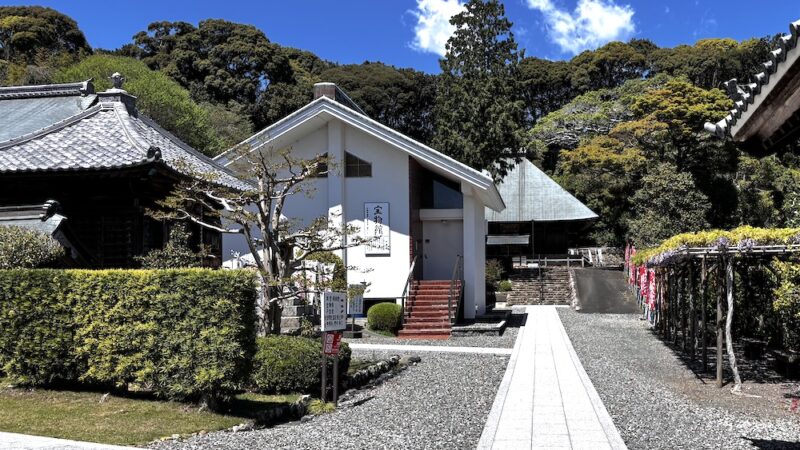
Many buildings within the temple grounds, such as the Kagura-den (sacred dance hall), Shinsen-jo (offering hall), and Shinko (storehouse), are designated as important cultural properties, each showcasing the architectural techniques and aesthetics of the early Edo period. Furthermore, the natural scenery, including views of Suruga Bay and Mount Fuji, is another of Kunozan Toshogu Shrine’s attractions.
Access via Nihondaira Ropeway
There are mainly three ways to access Kunozan Toshogu Shrine, but the most popular is using the Nihondaira Ropeway.
The Charm of the Nihondaira Ropeway
The Nihondaira Ropeway, connecting the summit of Nihondaira Mountain and Kunozan Toshogu Shrine, covers a total length of 1,065 meters and an elevation difference of 179 meters in about 5 minutes. From the gondola, you can enjoy a 360-degree panoramic view of Suruga Bay, Shimizu Port, Mt. Fuji, and the Southern Alps.
Especially on a clear day, the combination of the blue Suruga Bay stretching out below and the majestic Mt. Fuji is truly a spectacular sight. The experience of enjoying an aerial stroll towards Kunozan Toshogu Shrine offers a different charm than climbing the stone steps of the main approach.
Advantages of Using the Ropeway
The biggest advantage of using the Nihondaira Ropeway is that you don’t need to climb the 1,159 stone steps. Even elderly people and families with small children can easily visit Kunozan Toshogu Shrine. Furthermore, there is an observation facility called Nihondaira Yume Terrace at the summit of Nihondaira, which can be enjoyed in conjunction with sightseeing.
The ropeway operates every 15 minutes, making it convenient with minimal waiting time. However, it can get crowded during peak seasons, so it is recommended to visit with plenty of time to spare.
Transportation Access and Visiting Information
How to Access Kunozan Toshogu Shrine
There are mainly three ways to access Kunozan Toshogu Shrine:
1. Using the Nihondaira Ropeway
- Approximately 40 minutes by bus from JR Shizuoka Station, get off at Nihondaira Ropeway Summit Station
- Approximately 5 minutes by ropeway, get off at Kunozan Station, short walk
- Free parking available at Nihondaira Summit if traveling by car
2. Using the Main Approach (Stone Steps)
- Approximately 40 minutes by bus from JR Shizuoka Station, get off at Kunozan-shita bus stop
- Approximately 20-30 minutes climbing the 1159 stone steps
- Paid parking available nearby
3. Using the Back Approach
- Approximately 15 minutes on foot from the Nihondaira side
- Relatively flat path, but generally less used
Admission Fees
- Shrine Admission: Adults 500 yen, Elementary/Junior High School Students 200 yen
- Combined Ticket with Museum: Adults 800 yen, Elementary/Junior High School Students 300 yen
- Ropeway Round Trip Fare: Adults 1,250 yen, Children 630 yen
Visiting Hours
- April to September: 9:00 AM to 5:00 PM
- October to March: 9:00 AM to 4:00 PM
- Open year-round (however, hours may change due to weather, etc.)
Estimated Time Required
- Shrine visit only: Approximately 30 minutes
- Shrine visit + Museum visit: Approximately 60 minutes
- Ropeway use + Shrine visit + Museum visit: Approximately 90 minutes
- Climbing the stone steps + Shrine visit + Museum visit: Approximately 120 minutes
Prayers and Souvenirs
About Prayers
Kunozan Toshogu Shrine accepts various prayers, including those for family safety, business prosperity, traffic safety, academic success, and protection from evil. Prayers do not require reservations and can be requested at the shrine office during reception hours.
Tokugawa Ieyasu is known for establishing the foundations of learning, industry, and culture, and is particularly believed to grant blessings for career advancement and good fortune. Many worshippers visit the shrine to receive prayers at important life milestones and the start of new businesses.
Items Offered
Kunozan Toshogu Shrine offers a variety of items.
- Goshuin (Shrine Seal): A popular souvenir of your visit. Original Kunozan Toshogu Goshuin notebooks are also available.
- Omamori (Amulet): Various amulets are available for different purposes, such as family safety, traffic safety, and academic success.
- Ema (Votive Tablet): You can write your wishes on an ema and offer it.
- Goshinfuda (Shrine Talisman): Shrine talismans for enshrining in your home are also available.
Etiquette for Worship
There are basic etiquette rules for visiting shrines. When visiting Kunozan Toshogu Shrine, please observe the following etiquette and offer your prayers with sincerity.
How to Pass Through a Torii Gate
A torii gate is the entrance to a sacred area. Before passing through the torii gate, bow once. Since the center of the path is considered the path of the gods, walk along the sides.
Proper Ritual for Washing Hands
- Hold the ladle in your right hand and wash your left hand.
- Switch the ladle to your left hand and wash your right hand.
- Switch the ladle back to your right hand, receive water in your left hand, and rinse your mouth.
- Wash your left hand again.
- Hold the ladle upright, let water flow over the handle, and return it to its original position.
Worship at the Main Hall
- Bow slightly before the offering box.
- Gently place your offering in the box.
- If there is a bell, ring it.
- Worship using the two bows, two claps, one bow ritual.
- Finally, bow slightly and leave.
Nearby Tourist Attractions
When visiting Kunozan Toshogu Shrine, you can also enjoy nearby tourist attractions.
Nihondaira Yume Terrace
Located at the summit of Nihondaira, this observation facility offers a 360-degree panoramic view of Mt. Fuji, Suruga Bay, the Southern Alps, and the Izu Peninsula. The beautiful wooden architecture, designed by architect Kengo Kuma, is also a highlight.
Shimizu Port & S-Pulse Dream Plaza
Near Shimizu Port is the S-Pulse Dream Plaza, a commercial complex featuring restaurants serving sushi and seafood, souvenir shops, and the Shimizu Sushi Museum.
Miho no Matsubara
Miho no Matsubara, one of the constituent assets of the World Cultural Heritage site “Mount Fuji – Object of Worship and Source of Artistic Inspiration,” is famous for its spectacular views of Mt. Fuji. It’s approximately a 30-minute drive from Kunozan Toshogu Shrine.
Sunpu Castle Park
This park was developed on the site of Sunpu Castle, where Tokugawa Ieyasu spent his later years. It’s a must-visit spot, along with Kunozan Toshogu Shrine, for those tracing the history of Ieyasu.
Annual Events at Kunozan Toshogu Shrine
Kunozan Toshogu Shrine holds various festivals and events throughout the year.
Main Annual Events
- January 1st: New Year’s Day Festival
- February 17th: Prayer Festival
- April 17th: Annual Festival (The most important festival, held on the anniversary of Tokugawa Ieyasu’s death)
- May 17th: Spring Grand Festival
- September 17th: Autumn Grand Festival
- November 23rd: Hariname-sai (Harvest Festival)
- December 31st: New Year’s Eve Festival
The Annual Festival on April 17th is particularly important, being held on the anniversary of Tokugawa Ieyasu’s death, and attracts many worshippers.
Cultural Assets of Kunozan Toshogu Shrine
Kunozan Toshogu Shrine preserves many valuable cultural assets, including National Treasures and Important Cultural Properties.
National Treasure
- Main Hall, Stone Chamber, Worship Hall (Buildings)
Important Cultural Property
- Tower Gate, Kagura Hall, Offering Hall, Storehouse, etc. (Buildings)
- Swords inscribed “Masatsune,” “Mitsutada,” etc. (Crafts)
- Documents related to Tokugawa Ieyasu (Ancient Documents)
These cultural properties demonstrate the high level of technology and art in the early Edo period and are valuable historical materials that tell the story of Tokugawa Ieyasu and the Tokugawa family.
Summary
Kunozan Toshogu Shrine holds an extremely important position in Japanese history as the founding shrine of all Toshogu shrines nationwide dedicated to Tokugawa Ieyasu. The magnificent shrine buildings, designated as National Treasures, are masterpieces that embody the pinnacle of early Edo period architecture and art, and greatly influenced the architecture of Nikko Toshogu Shrine.
From the breathtaking views of Suruga Bay from Kunozan, to the 1159 stone steps, the aerial stroll on the Nihondaira Ropeway, and the valuable exhibits at the Kunozan Toshogu Museum, there are many things to see and do. It’s a place worth visiting for a variety of reasons, whether you’re a history buff, interested in architecture and art, or simply want to enjoy the natural scenery.
When you visit Shizuoka City, be sure to stop by Kunozan Toshogu Shrine and reflect on the achievements of Tokugawa Ieyasu while enjoying the beauty of the national treasure shrine buildings and the magnificent views of Suruga Bay. Through your visit, you can connect with the spirit of Ieyasu, who built over 260 years of peace during the Edo period.