Complete Guide to Hiroshima Gokoku Shrine (Hiroshima Prefecture) | History, Blessings, New Year’s Visit Information, and Nearby Sightseeing
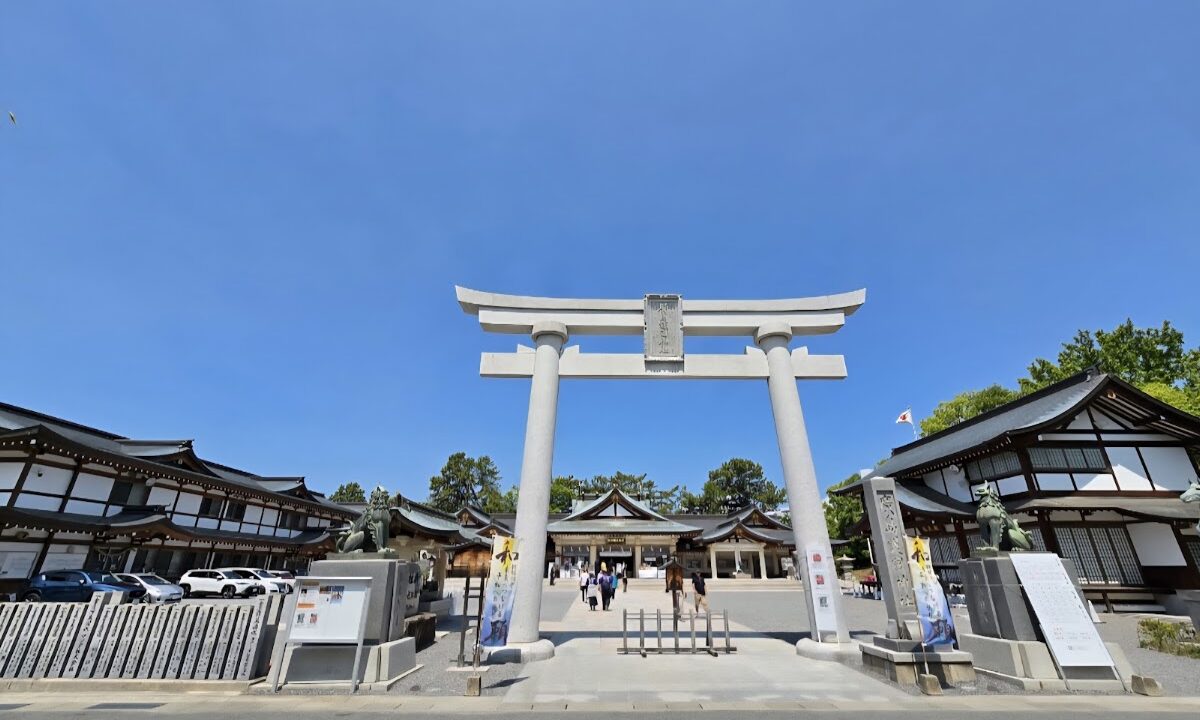
Located within Hiroshima Castle Park in Naka Ward, Hiroshima City, Hiroshima Gokoku Shrine is one of the leading shrines in the prefecture, representing the Chugoku region and attracting many visitors throughout the year. It holds a special place in the hearts of Hiroshima citizens, enshrining approximately 92,000 war dead, including those who perished in the Boshin War and World War II, as well as victims of the atomic bombing.
This article provides detailed information you should know before visiting Hiroshima Gokoku Shrine, including its history, blessings, New Year’s visit information, access methods, and nearby sightseeing spots.
History and Origins of Hiroshima Gokoku Shrine
From Founding to the Present
The history of Hiroshima Gokoku Shrine dates back to the first year of the Meiji era (1868). The shrine’s origins lie in its establishment as “Mikusa Reisha” (Water Weasel Shrine) in Futaba-no-sato, Osuga, Hiroshima, by Asano Nagakuni, the lord of the Geishu Domain, to enshrine the 78 Hiroshima samurai who died in the Boshin War.
Initially, it enshrined 78 Hiroshima samurai, including Takama Shozo, but since then, it has enshrined the spirits of those from western Hiroshima Prefecture (formerly Aki Province) who died in numerous wars and conflicts, from the First Sino-Japanese War, the Russo-Japanese War, World War I, the Manchurian Incident, the Second Sino-Japanese War, and World War II (Greater East Asia War). Currently, it enshrines over 92,000 spirits.
Destruction and Reconstruction due to the Atomic Bomb
On August 6, 1945, the first atomic bomb in human history was dropped on Hiroshima City. This atomic bomb destroyed all of the Hiroshima Gokoku Shrine’s buildings except for the large torii gate. The shrine, located near the current former Hiroshima Municipal Stadium, suffered catastrophic damage. After the war, in 1956 (Showa 31), the shrine was rebuilt on the current site of Hiroshima Castle. Furthermore, in 1993 (Heisei 5), the shrine building was rebuilt, and in 2009 (Heisei 21), other facilities were completely renovated, resulting in its current magnificent appearance.
Deities and Characteristics of the Deities
The approximately 92,000 deities enshrined at Hiroshima Gokoku Shrine include the following:
- War dead from western Hiroshima Prefecture from the Boshin War to World War II
- Students mobilized for labor service who perished in the atomic bombing of Hiroshima
- Women who perished as members of the Women’s Volunteer Corps
- Other heroic spirits who sacrificed their lives for the nation
The inclusion of atomic bomb victims is a significant characteristic of Hiroshima Gokoku Shrine, rarely seen in other Gokoku shrines.
Benefits and Significance of Visiting Hiroshima Gokoku Shrine
Main Benefits
Hiroshima Gokoku Shrine is believed to offer the following benefits:
Prayer for National Security and Peace
As a Gokoku Shrine dedicated to the spirits of those who died in war, it is a place to pray for the peace and security of the nation.
Family Safety and Protection from Misfortune
You can pray for the safety and health of your family and protection from disaster.
Prayer for Victory and Good Fortune
It is famous for the Hiroshima Toyo Carp professional baseball team visiting every year to pray for victory, and many worshippers visit to pray for success in competitions and the achievement of goals.
Prayer for Academic Success and Passing Exams
Since the spirits of mobilized students are also enshrined here, worshippers can be seen praying for academic success.
Deep Connection with the Hiroshima Toyo Carp
Hiroshima Gokoku Shrine is also known for its connection with the Hiroshima Toyo Carp professional baseball team. Every year before the season starts, team officials and players visit the shrine to pray for victory, making it a sacred place for fans. Many Carp fans also visit during the season to pray for victory.
New Year’s Visit Information | Largest Number of Visitors in the Chugoku Region
Number of Visitors and Period for New Year’s Visits
Hiroshima Gokoku Shrine is known as the shrine that attracts the most New Year’s visitors in the Chugoku region every year. During the New Year’s visit period from January 1st to January 7th, over 500,000 visitors come, and approximately 600,000 visit during the first three days of the year alone, making it truly a representative New Year’s visit spot in the Chugoku region.
Crowds and How to Avoid Them During the First Shrine Visit of the New Year
Most Crowded Times
- January 1st, 12:00 AM – 3:00 AM (New Year’s Eve visits)
- January 1st – 3rd, 10:00 AM – 3:00 PM
Relatively Less Crowded Times
- Early Morning (6:00 AM – 8:00 AM)
- Evening (After 4:00 PM)
- Weekdays from January 4th onwards
If you want to avoid crowds, it is recommended to visit after January 4th (avoiding the first three days of the New Year) or aim for early morning or evening hours. Visiting within the first three days of the New Year (until January 7th) is considered sufficient for a New Year’s visit and is believed to bring good fortune.
Special Events During the New Year’s Visit Period
During the New Year’s visit period, the following special items and events will be available:
- New Year’s limited edition Goshuin (temple/shrine stamp)
- Lucky charms such as Hamaya (demon-repelling arrow) and Kumade (rake)
- Fortune slips (Omikuji)
- Various amulets (for traffic safety, academic success, family safety, etc.)
Parking Information and Traffic Restrictions
During the New Year’s visit period, surrounding roads will be extremely congested, and traffic restrictions may be implemented. Since there is limited parking space around the shrine, we strongly recommend using public transportation.
Access and Basic Information
Location
Address
21-2 Motomachi, Naka-ku, Hiroshima City, Hiroshima Prefecture 730-0011 (within Hiroshima Castle Park)
Access by Public Transportation
From Hiroshima Bus Center
Approximately 8 minutes on foot north
From Astramline “Kencho-mae Station”
Approximately 7 minutes on foot north
From JR Hiroshima Station
- Approximately 15 minutes by taxi
- Get off at “Kamiyacho-Higashi” or “Kamiyacho-Nishi” on the streetcar, then approximately 10 minutes on foot
From JR Yokogawa Station
Approximately 10 minutes by taxi
Access by Car and Parking
There are several paid parking lots around Hiroshima Castle, but spaces are limited. They are often full, especially during the New Year’s pilgrimage period and on weekends, so using public transportation is recommended.
Visiting Hours and Prayer Reception Hours
Visiting Hours
The shrine grounds are generally open all day, but the shrine office hours are as follows:
Shrine Office Hours
Normal: 9:00 AM to around 5:00 PM (may vary depending on the season)
New Year’s period: Extended hours
Prayer Reception Hours
9:00 AM to around 4:30 PM (advance confirmation required)
Shrine Grounds Highlights and Facilities
Shrine Building
The current shrine building, rebuilt in 1993, is a magnificent structure built with modern technology while adhering to traditional shrine architectural styles. It forms a beautiful landscape with Hiroshima Castle’s keep as a backdrop.
Torii Gate and Approach
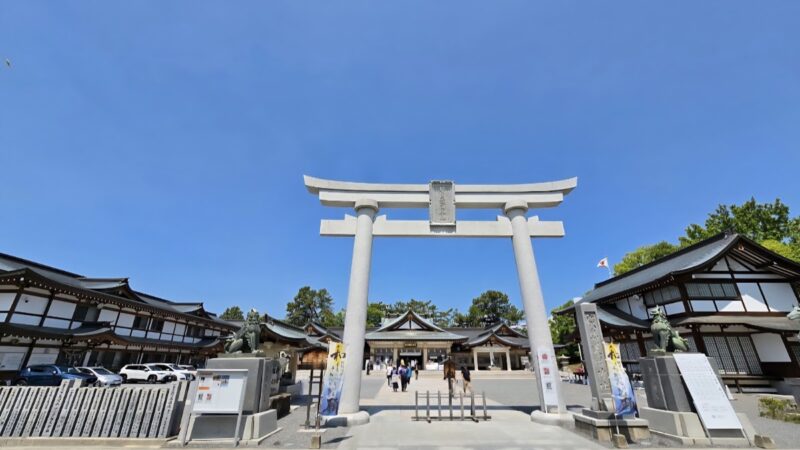
The approach, which continues along the moat of Hiroshima Castle, has a tranquil atmosphere surrounded by trees. Passing through the large torii gate, a sacred space unfolds, making you forget the hustle and bustle of the city.
Water Basin
The water basin, where you purify your body and mind before praying, always has clean water flowing. Please purify your hands and mouth using the correct etiquette before praying.
Reception Area
This is where you can receive amulets, goshuin (temple/shrine stamps), ema (votive tablets), and other items. Original amulets from Hiroshima Gokoku Shrine and victory amulets related to the Hiroshima Carp baseball team are popular.
Ema Hanging Area
Many worshippers dedicate ema (votive tablets) with their wishes. Various wishes are written here, such as prayers for passing exams, prayers for victory, and prayers for family safety.
Annual Events and Festivals
Main Annual Events
January 1st-7th: Hatsumode (First Shrine Visit of the Year)
As one of the largest Hatsumode spots in the Chugoku region, it is bustling with many worshippers.
February (Setsubun): Setsubun Festival
Traditional events such as bean-throwing are held.
Spring and Autumn Grand Festivals
An important festival to commemorate the war dead.
Around August 6th: Memorial Service for Atomic Bomb Victims
A special festival is held to commemorate those who lost their lives in the atomic bombing.
November: Shichi-Go-San Festival
Many families visit to pray for the healthy growth of their children.
Prayer for Hiroshima Toyo Carp Victory
Every year before the season starts, the manager, coaches, and players of the Hiroshima Toyo Carp visit to pray for victory. Many Carp fans also gather at this time to pray for the success of the season.
Recommended Tourist Spots Around Hiroshima Gokoku Shrine
Hiroshima Castle (Carp Castle)
Hiroshima Castle, located within Hiroshima Castle Park where Hiroshima Gokoku Shrine is situated, is a famous castle built in 1589 by Mori Terumoto. Although destroyed by the atomic bomb, the castle’s exterior was restored in 1958, and it now houses a history museum, allowing visitors to tour the interior. From the castle tower, you can enjoy a panoramic view of Hiroshima city, making it an ideal place to visit in conjunction with a visit to the Gokoku Shrine.
Estimated time required: A short walk
Admission fee: Adults 370 yen, High school students and seniors 180 yen, Junior high school students and younger free
Hiroshima Central Park
A vast park surrounding Hiroshima Castle, serving as a place of relaxation for citizens. Enjoy the changing seasons and it’s perfect for a stroll.
Shukkei-en Garden
A Japanese garden built in 1620 by Asano Nagaakira, the lord of the Hiroshima domain, as his villa. A nationally designated scenic spot where you can enjoy beautiful scenery throughout the seasons.
Estimated Time Required: Approximately 15 minutes on foot
Admission Fee: General 260 yen, High school/University students 150 yen, Elementary/Junior high school students 100 yen
Peace Memorial Park and Atomic Bomb Dome
A World Heritage Site that you must visit when you come to Hiroshima. It is accessible by streetcar or on foot from Hiroshima Gokoku Shrine. An important place to learn about the preciousness of peace.
Estimated Time Required: Approximately 20 minutes on foot, or by streetcar
Orizuru Tower
A multi-purpose commercial complex located east of the Atomic Bomb Dome. From the observation deck, you can enjoy a panoramic view of Hiroshima city and the Seto Inland Sea, and at “Orizuru Plaza,” you can throw origami cranes as a prayer for peace.
Recommended Restaurants near Hiroshima Gokoku Shrine
Okonomiyaki
Okonomiyaki is a Hiroshima specialty. There are many okonomiyaki restaurants around Gokoku Shrine.
Batten Hatchobori Branch
A popular okonomiyaki restaurant among locals. It’s popular with tourists for its generous portions.
Micchan Sohonten
A long-established restaurant said to be the originator of Hiroshima-style okonomiyaki. They have branches at Hiroshima Station and Hatchobori.
Hiroshima Oyster Dishes
Oysters, a Hiroshima specialty, are available only during the winter season. There are many oyster specialty restaurants in the area.
Soupless Dan Dan Noodles
Soupless Dan Dan noodles are a popular Hiroshima B-grade gourmet dish. The spiciness and sesame flavor are addictive.
Cafes & Sweets
Rokkan Chocolate
A popular Hiroshima chocolate specialty shop. Perfect for souvenirs.
Hotels & Accommodations near Hiroshima Gokoku Shrine
Hotel Flex
A business hotel located in the heart of Hiroshima city, with good access to Gokoku Shrine. Excellent value for money.
Rihga Royal Hotel Hiroshima
A leading luxury hotel in Hiroshima. Located along Heiwa-dori (Peace Boulevard), it’s ideal as a base for sightseeing.
ANA Crowne Plaza Hotel Hiroshima
Conveniently located near Hiroshima Station, making it ideal for sightseeing in the city. Enjoy a comfortable stay. ### Mitsui Garden Hotel Hiroshima
Conveniently located near Hiroshima Peace Memorial Park, ideal for sightseeing. Equipped with a large public bath.
Manners and Etiquette for Visiting a Shrine
Basic Shrine Etiquette
- Bow before passing through the torii gate: This is a courtesy before entering the sacred area.
- Walk along the edge of the path: The center is considered the path of the gods.
- Purify yourself at the water basin: Purify your left hand, then your right hand, then your mouth.
- Etiquette in front of the main hall: Two bows, two claps, and one bow are the basic rituals.
How to Obtain a Goshuin (Shrine Stamp)
A goshuin is given as proof of your visit. After completing your prayers, leave your goshuin book at the reception area and pay the offering fee (usually 300-500 yen).
Photography Etiquette
Photography is generally permitted on the shrine grounds, but consideration should be given to avoid disturbing prayers or other visitors. Photography may be prohibited inside the shrine, so please follow the signs.
Editor’s Recommendation
Hiroshima Gokoku Shrine is not just a tourist spot, but a sacred place imbued with Hiroshima’s history and prayers for peace. Visiting it in conjunction with Hiroshima Castle will allow you to gain a deeper understanding of Hiroshima’s history.
Especially during the New Year’s season, it is one of the busiest shrines in the Chugoku region, but visiting during quiet weekday hours offers a precious space for peaceful worship despite being in the heart of the city.
It is also a sacred place for Hiroshima Toyo Carp fans, and visiting to pray for victory during the season is a great idea. There are many restaurants in the surrounding area where you can enjoy Hiroshima’s cuisine, so you can enjoy a meal after your visit.
Summary
Hiroshima Gokoku Shrine is a representative shrine of Hiroshima Prefecture, enshrining approximately 92,000 war dead, and is one of the largest New Year’s pilgrimage spots in the Chugoku region. Since its founding in 1868 (Meiji 1), it has been deeply cherished by the citizens of Hiroshima as a place to commemorate the war dead and pray for peace.
After being destroyed by the atomic bomb, the current shrine, rebuilt within Hiroshima Castle Park, is a symbol of Hiroshima’s recovery. It offers various blessings, including national peace, family safety, and victory, and is famous as a place where the Hiroshima Toyo Carp baseball team prays for victory.
Visiting it along with other tourist attractions such as Hiroshima Castle and Peace Memorial Park allows for a deeper experience of Hiroshima’s history and culture. It boasts excellent accessibility, being just an 8-minute walk from Hiroshima Bus Center and a 7-minute walk from Kencho-mae Station on the Astramline, making it an ideal base for sightseeing in the city.
When you visit Hiroshima, why not pay your respects at Hiroshima Gokoku Shrine and offer your prayers for peace and gratitude?