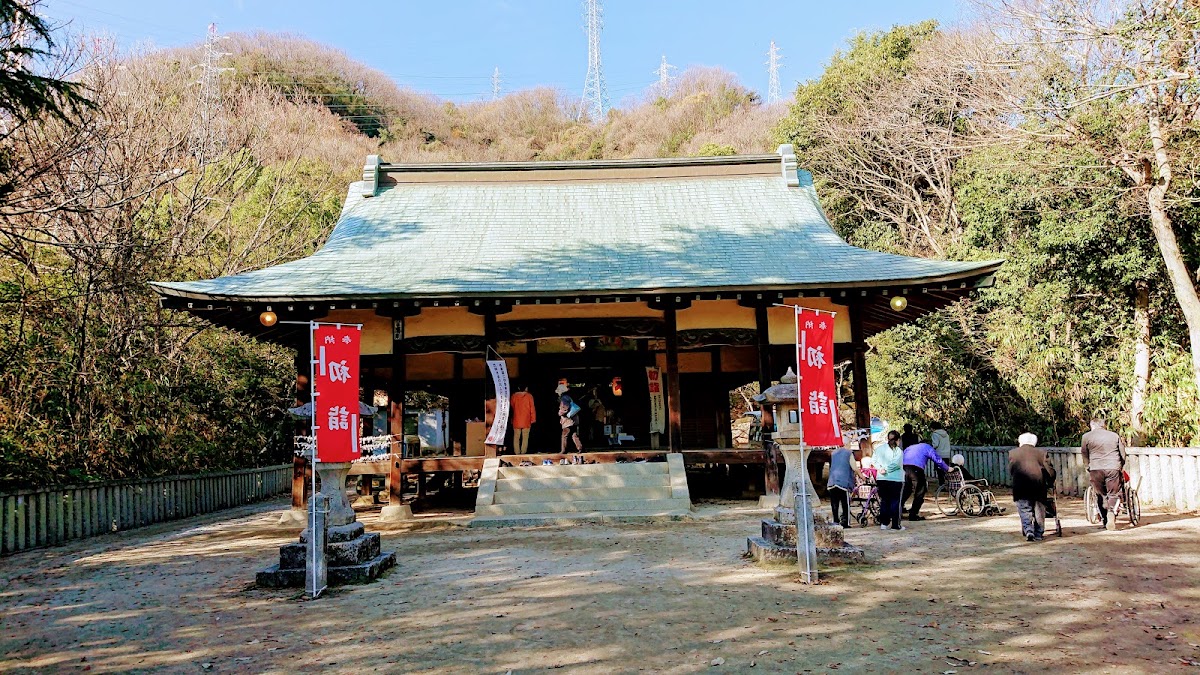
Hatsuzaki Shrine (Kure City, Hiroshima Prefecture) Complete Guide | History, Goshuin (Shrine Seal), Access, and Festival Information
Hatsuzaki Shrine, located in Hirodaihiro, Kure City, Hiroshima Prefecture, is a historic shrine nestled in a quiet residential area along the Kurose River. Since its founding in 1575 (Tensho 3), it has continuously attracted the faith of the local people. This guide provides detailed information about the shrine, including its history, goshuin (shrine seal), access methods, and annual events.
Basic Information about Hatsuzaki Shrine
Hatsuzaki Shrine is located at 1-2-1 Hirodaihiro, Kure City, Hiroshima Prefecture, and is currently a subsidiary shrine of Funatsu Hachiman Shrine in Ryotani. Situated slightly off the road along the Kurose River, it boasts a magnificent torii gate and grounds despite being located in a quiet residential area.
Location: 1-2-1 Hirodaihiro, Kure City, Hiroshima Prefecture 737-0121
Main Deity: Emperor Ōjin (Hachiman Ōkami)
Shrine Rank: Former Village Shrine
Affiliated Shrine: Funatsu Hachiman Shrine (Hiroryōtani, Kure City)
History of Hatsuzaki Shrine
From Founding to the Wakamiya Era
The history of Hatsuzaki Shrine dates back to 1575 (Tenshō 3). It is said that at that time, Fudō Sōkō and Arita Isen, residents of Yokoji, invited the divine spirit from Usa Hachiman Shrine in Kyushu and built a shrine.
Initially, it was called “Wakamiya” and also known as “Hanagasako-no-miya.” This period was the end of the Sengoku period, when the Mōri clan ruled the Chūgoku region. It can be seen that the local people prayed for military success and abundant harvests through Hachiman worship. ### The Great Consolidation of Shrines and the Relocation to Hatsuzakiyama during the Kyoho Era
In 1716 (Kyoho 1), the shrine experienced a major turning point in its history. In this year, several surrounding shrines were consolidated, and the shrine was relocated to its current location on Hatsuzakiyama.
The shrines consolidated were as follows:
- Yokoji Shrine
- Ohira Shrine
- Koshinkai Shrine
- Inari Shrine
- Ohirakami Shrine
This large-scale consolidation established Hatsuzaki Shrine’s position as the center of local faith. The Kyoho era was the time of Tokugawa Yoshimune, the 8th shogun of the Edo shogunate, and a period of nationwide consolidation and reorganization of shrines.
Changes After the Meiji Era
With the arrival of the Meiji era, shrines throughout the country were reorganized due to the Shinto-Buddhist Separation Order. Hatsuzaki Shrine was also designated as a village shrine and officially recognized as the local tutelary deity.
Currently, it is managed as a subsidiary shrine of Funatsu Hachiman Shrine, and the two shrines maintain a close relationship, supporting local faith.
Highlights of the Shrine Grounds
Second Torii Gate (Ryobu Torii)
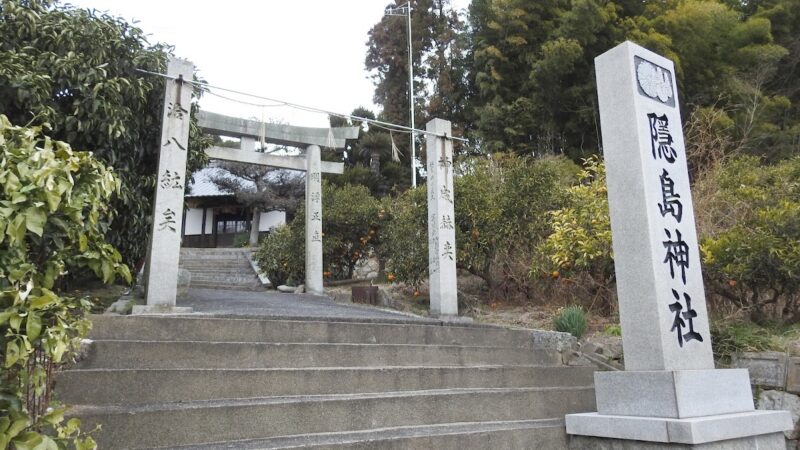
The most impressive feature of Hatsuzaki Shrine’s grounds is the magnificent wooden Ryobu Torii gate. The Ryobu Torii has a unique form with smaller pillars (chigo-bashira) in front of and behind the main pillars, making it a valuable architectural style that preserves the remnants of the syncretism of Shinto and Buddhism.
As you proceed along the approach from the road beside the Kurose River, this imposing Ryobu Torii gate welcomes visitors. Its warm, wooden construction is beloved by the local people.
Approach and Stone Steps
One of the distinctive features of Hatsuzaki Shrine is the long stone steps leading to the shrine building. Local people use the expression “going up to the shrine,” considering the ascent of these steps a part of their daily faith.
The process of climbing the steps is an important time to transition from everyday life to the sacred realm, and a time to compose oneself and prepare for worship.
Main Shrine and Worship Hall
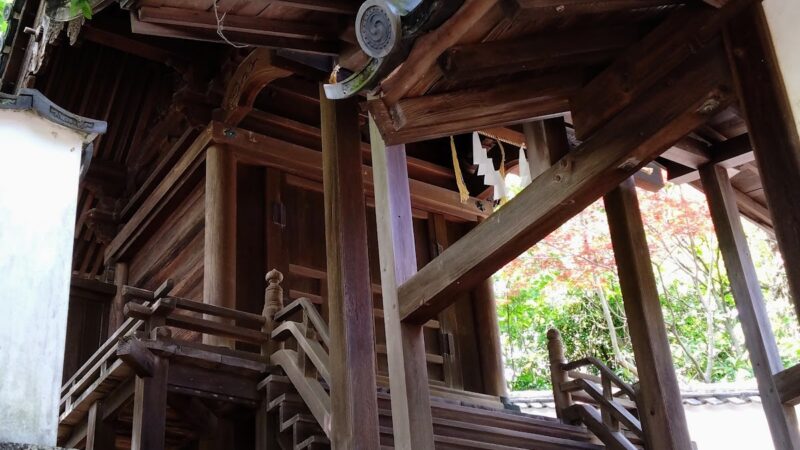
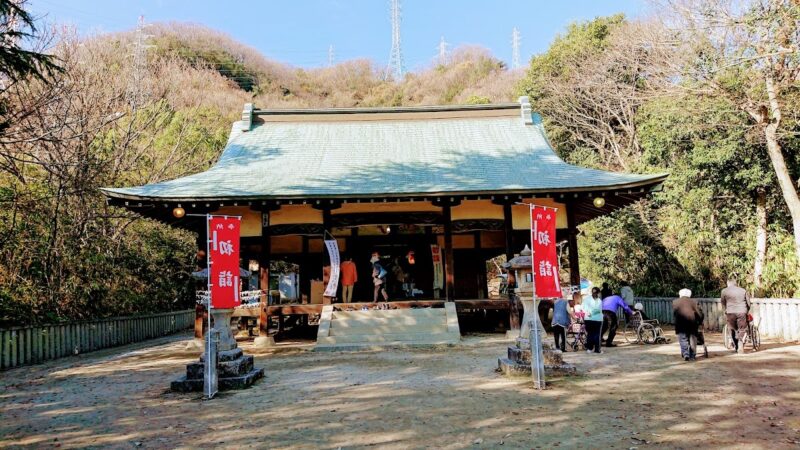
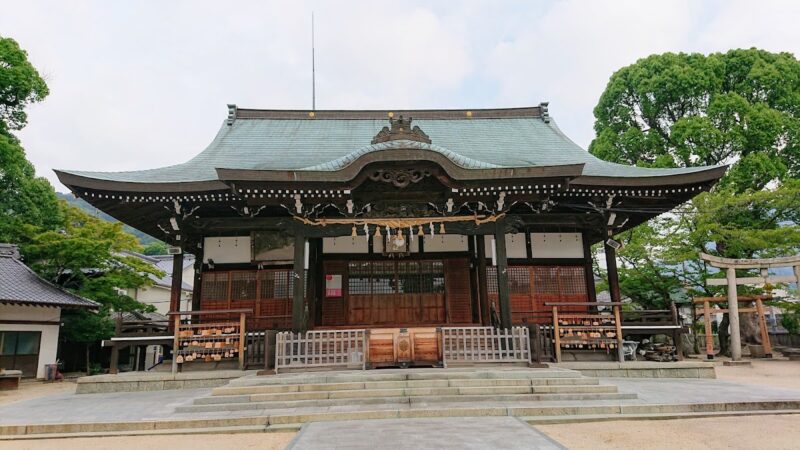
The main shrine and worship hall, built on the slopes of Mt. Hatsuzaki, maintain traditional shrine architectural styles. Surrounded by trees, it offers a tranquil atmosphere for worship.
About Goshuin (Shrine Seals)
The goshuin for Hatsuzaki Shrine are issued at Funatsu Hachiman Shrine, which is also managed by Hatsuzaki Shrine. Those wishing to receive a goshuin should inquire at the Funatsu Hachiman Shrine office.
Goshuin Issuance Location: Funatsu Hachiman Shrine (Hirogyotani, Kure City)
Reception Hours: Normally 9:00 AM to 5:00 PM (may change during festivals, etc.)
In recent years, the number of worshippers enjoying goshuin collecting has increased, and Hatsuzaki Shrine is gaining attention as a target for goshuin collection. Considering its relationship with Funatsu Hachiman Shrine as a jointly managed shrine, visiting both shrines is highly recommended.
Annual Festivals and Events
Autumn Grand Festival (September 22nd & 23rd)
The most important annual event at Hatsuzaki Shrine is the Autumn Grand Festival, held on September 22nd and 23rd.
September 22nd (Eve of the Festival)
On the eve of the festival, a drum performance is held at night. The sound of the drums echoing from the bottom of the stone steps is a familiar sight in the community, announcing the arrival of the autumn festival. The drum performance, carried out after climbing the long stone steps to the front of the shrine, is a traditional art form passed down through generations in the region.
September 23rd (Main Festival)
On the main festival, Shinto rituals are performed, and people from the community gather to offer their gratitude to the gods. This is an important festival where prayers are offered for a bountiful harvest, family safety, and the prosperity of the community.
Other Annual Events
- New Year’s Festival (January 1st): A festival to welcome the New Year
- Spring Festival (Around the Vernal Equinox): A festival to celebrate the arrival of spring
- Summer Purification Ceremony (End of June): A Shinto ritual to purify oneself of the impurities accumulated over the past six months
- Year-End Purification Ceremony (End of December): A Shinto ritual to purify oneself of the impurities accumulated over the past year
Access Information
Access by Train
Nearest Station: JR Kure Line “Shinhiro Station”
It takes approximately 17 minutes (about 1.4 km) to walk from Shinhiro Station to Hatsuzaki Shrine. The most common route is to exit the station, head south, and walk along the Kurose River.
Other Nearest Stations:
- Approximately 24 minutes on foot (approx. 1.9 km) from JR Kure Line “Hiro Station”
- Approximately 26 minutes on foot (approx. 2.1 km) from JR Kure Line “Aki-Aga Station”
Access by Bus
Nearest Bus Stop: “Hatsuzaki Shrine Mae” bus stop
The shrine is approximately 3 minutes on foot (approx. 174 m) from the bus stop. Hiroshima Electric Railway buses operate here, making it convenient to access from central Kure City.
For bus timetables and operating status, we recommend checking the latest information on the Hiroshima Electric Railway official website or transfer guidance app.
Access by Car
From Hiroshima City:
Head south on National Route 31, enter the Hiro area of Kure City, and use the prefectural road for approximately 5 minutes.
From Central Kure City:
Head north on National Route 185 towards the Hiro area for approximately 15 minutes.
Parking: There is some parking space on the shrine grounds, but congestion is expected during festivals. We recommend using public transportation.
Nearby Attractions
Funatsu Hachiman Shrine
Funatsu Hachiman Shrine, a shrine under the jurisdiction of Hatsuzaki Shrine, is located in Hiroryotani, Kure City. We recommend visiting both shrines when you visit Hatsuzaki Shrine. Visiting both shrines will give you a deeper understanding of the history of Hachiman worship in this region.
The Nature of the Kurose River
The Kurose River, which flows near Hatsuzaki Shrine, is one of Hiroshima Prefecture’s rivers rich in nature. You can enjoy the scenery of each season, and the views are particularly beautiful during cherry blossom season and autumn foliage season.
Historical Walk in the Hiro Area
The Hiro area of Kure City was once a thriving naval town, and is dotted with historical buildings and sites. You can enjoy a walk exploring the local history in conjunction with your visit to Hatsuzaki Shrine.
Manners and Points for Visiting a Shrine
Basic Worship Etiquette
- Bow before passing through the torii gate: As a sign of respect before entering the sacred area, bow before the torii gate.
- Walk along the edge of the path: The center of the path is considered the path of the gods.
- Purify yourself at the water basin: Purify your hands and mouth before praying.
- Two bows, two claps, one bow: This is the basic etiquette in front of the main hall.
Points for Visiting Hatsuzaki Shrine
- Climbing and descending the stone steps: There are long stone steps, so we recommend wearing comfortable shoes.
- Quiet environment: As it is adjacent to a residential area, please be mindful of quietness, especially when visiting early in the morning or at night.
- Visiting during festivals: During the Autumn Grand Festival, you can experience the local traditional culture.
Hatsuzaki Shrine and the Local Community
Hatsuzaki Shrine is not merely a religious facility, but plays a central role in the local community. ### A Place to Foster Community Bonds
Through festivals and cleaning activities held throughout the year, the shrine serves as a place for local residents to gather and interact. Especially during the Autumn Grand Festival, traditional local performing arts, such as the dedication of taiko drums, are passed down, fostering intergenerational exchange.
Watching Over Children’s Growth
Many families visit Hatsuzaki Shrine during milestones in their children’s growth, such as Shichi-Go-San (a traditional rite of passage for children) and Omiyamairi (a first shrine visit). It is cherished as a shrine that watches over the healthy growth of local children.
The Charm of Hatsuzaki Shrine
Layers of History
Hatsuzaki Shrine boasts a history of nearly 450 years, from its founding in 1575 (Tensho 3) to the grand merger in 1716 (Kyoho 1), and continuing to the present day. The history of the merger of multiple shrines tells the story of the changing history of this region.
Harmony with Nature
The shrine buildings, situated on the slopes of Mount Hatsuzaki, the flow of the Kurose River, and the surrounding trees—Hatsuzaki Shrine is surrounded by nature, allowing visitors to experience the beauty of the four seasons.
A Faith Rooted in the Community
While not a large-scale tourist shrine, Hatuzaki Shrine’s greatest charm lies in its deep affection for the local people and its role as an object of daily worship. As symbolized by the local expression “to go up to the shrine,” it continues to exist as a shrine deeply integrated into daily life.
Things to Know Before Visiting
About the Shrine Office
Since Hatuzaki Shrine is a subsidiary shrine, there are no permanent priests. If you wish to receive a Goshuin (shrine stamp) or prayers, it is recommended to contact Funatsu Hachiman Shrine in advance.
About Photography
Photography is generally permitted on the shrine grounds, but consideration should be given to avoiding disturbing festivals or other visitors. When posting on social media, please use it with moderation.
Checking for the Latest Information
For information on festival dates and times, and temporary events, please check the official social media accounts of Funatsu Hachiman Shrine (Instagram: @funatu.hatuzaki_jinja). It is recommended to check before visiting.
Summary
Hatsuzaki Shrine is a historic shrine located in Hirodaihiro, Kure City, Hiroshima Prefecture. Since its founding in 1575 (Tensho 3), it has continuously attracted the faith of the local people, and after a major merger in 1716 (Kyoho 1), it took its current form.
The magnificent Ryobu-style torii gate, the long stone staircase, and the tranquil grounds offer peace of mind to visitors. During the autumn festival in September, traditional rituals such as the dedication of drums are performed, preserving the local culture.
With its convenient location within walking distance of Shinhiro Station, it’s a shrine you should definitely visit when you’re in Kure City. Visiting it along with Funatsu Hachiman Shrine will give you a deeper understanding of the history of Hachiman worship in this region.
Although it’s a small, community-based shrine, it boasts nearly 450 years of history and the unwavering faith of the local people. The greatest charm of Hatsuzaki Shrine lies in its simple atmosphere, unspoiled by tourism, where you can experience the essence of traditional Japanese shrine worship.