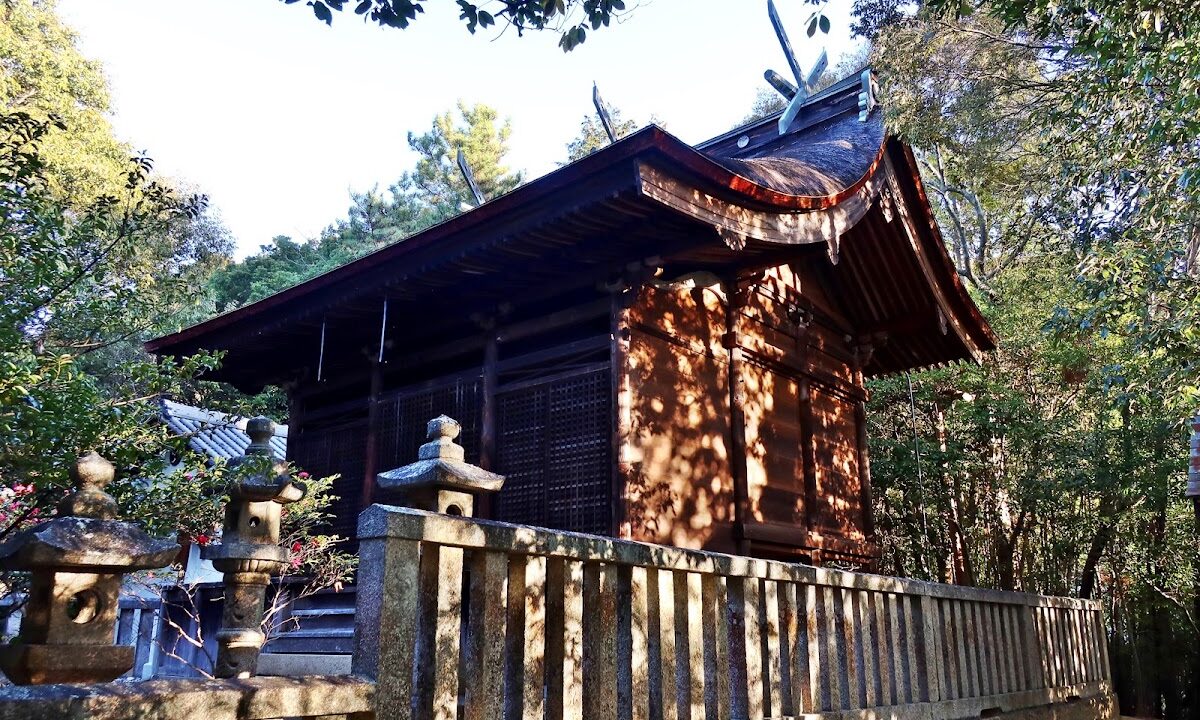
Katsuragahama Shrine (Hiroshima Prefecture) Complete Guide: The National Important Cultural Property Main Hall and the Historic Sea Guardian Deity of Kurahashi Island
Located in Nakamachi, Nomi-cho, Etajima City, Hiroshima Prefecture, Katsuragahama Shrine is a precious shrine that conveys the history and culture of Kurahashi Island in the Seto Inland Sea. From its main hall, designated a National Important Cultural Property, to its history dating back to the Tenpyo period, and its long history as a guardian deity of fishermen, it continues to fascinate visitors.
Basic Information about Katsurahama Shrine
Shrine Information
Location (Shrine Place)
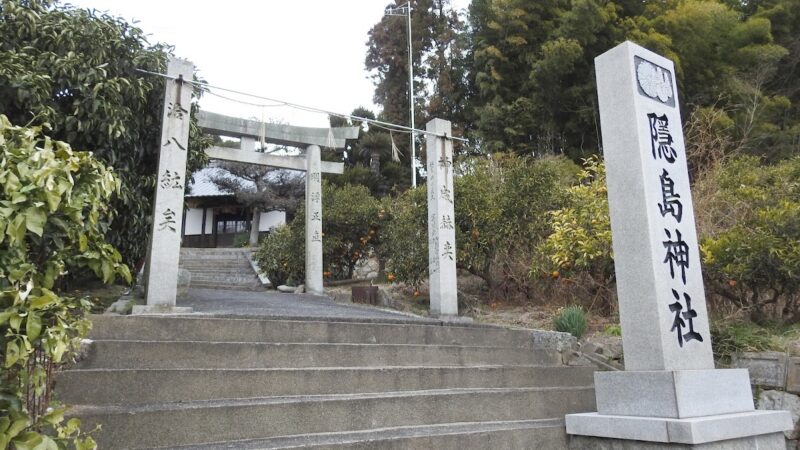
4718 Nakamachi, Nomi-cho, Etajima City, Hiroshima Prefecture 737-2302
Main Deities (Deities Enshrined)
- Emperor Ōjin
- Emperor Chūai
- Empress Jingū
- Munakata Three Goddesses
- Tagorihime no Mikoto
- Ichikishimahime no Mikoto
- Tagitsuhime no Mikoto
Shrine Rank/Designation
- Main Hall: Nationally Designated Important Cultural Property (Designated August 29, 1950)
Former Name
Hachiman-gū (Renamed Katsurahama Shrine in 1871)
Access and Nearest Station Information
Katsurahama Shrine is located on Kurahashi Island, making it accessible by both public transport and car.
Access by Car
- From Hiroshima City: Approximately 1 hour 30 minutes
- From Kure City: Approximately 40 minutes
- Cross to Kurahashi Island via Hayase Bridge
- Parking: Parking space for visitors is available on the shrine grounds.
Access by Public Transportation
There is no concept of a nearest station, but the following routes are available:
- Take a bus from JR Kure Station towards Kurahashi
- Or take a bus from Etajima/Nomi
- It is also possible to take a ferry via Etajima.
Opening Hours/Visiting Hours
- Free entry to the shrine grounds
- Please check the shrine office hours in advance.
Admission Fee
- Free admission
The History and Origins of Katsurahama Shrine
History Dating Back to the Tenpyo Era
The history of Katsurahama Shrine is extremely old, dating back to records of the 8th year of the Tenpyo era (736 AD). In that year, an envoy to Silla stopped at this location on their voyage to the Korean Peninsula. Records show that a member of the delegation was so moved by the beauty of the pine grove within the shrine grounds that he composed a waka poem. This fact indicates that even in the Nara period, this area was considered important as a key point for navigation and as a place of worship.
Faith as a God Protecting Seafarers
Katsurahama Shrine originally enshrined the Munakata Three Goddesses as gods protecting seafarers (people who made a living from the sea). The Munakata Three Goddesses have been widely worshipped since ancient times in the Seto Inland Sea coastal region as gods who preside over the safety of maritime traffic. Given that Kurahashi Island was a key point for maritime traffic since ancient times, and that shipbuilding and fishing were thriving industries, it is easy to imagine that this shrine served as a spiritual anchor for the local people.
Fusion with Hachiman Faith
From the Muromachi period onward, Katsurahama Shrine underwent a significant change. The divine spirits of Usa Hachiman Shrine were invited, and Emperor Ojin, Emperor Chuai, and Empress Jingu were enshrined there. As a result, in addition to its characteristics as a god of the sea, it also acquired characteristics as a god of military fortune and national protection. During the Edo period, it was called “Hachiman-gu” and was revered as the guardian shrine of the region. After the separation of Shinto and Buddhism in 1871 (Meiji 4), the shrine’s name was changed to its current name, “Katsurahama Shrine.”
Main Hall, a National Important Cultural Property: Architectural Value and Characteristics
A Rare Architectural Style: A Three-Bay Nagare-zukuri with a Front Chamber
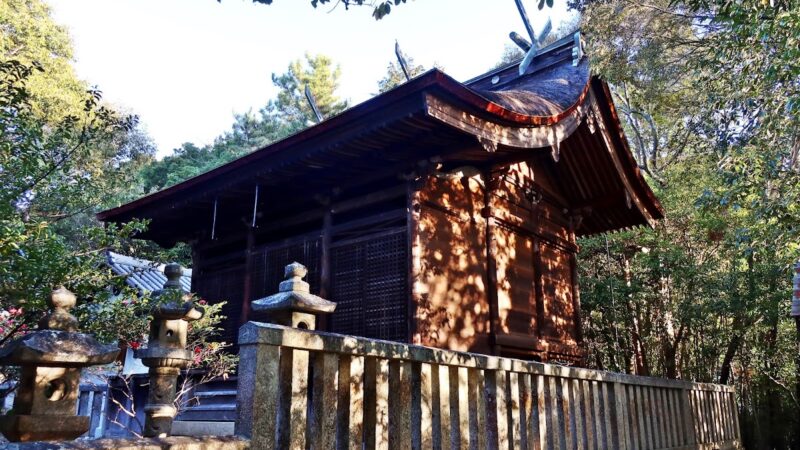
The main reason why the main hall of Katsurahama Shrine was designated a National Important Cultural Property lies in its unique architectural style. The “Three-Bay Nagare-zukuri with a Front Chamber” style is rare even within Hiroshima Prefecture, making it extremely valuable from an architectural history perspective.
A Three-Bay Nagare-zukuri refers to a type of shrine building with three bays (approximately 5.4 meters) between the pillars at the front. The Nagare-zukuri style is one of the most common styles in Japanese shrine architecture, with the front of the roof extending long to cover the portico. However, a distinctive feature of the main hall of Katsurahama Shrine is the presence of a space called a “mae-muro” (front chamber) in front of the main hall.
This mae-muro serves as a buffer space separating worshippers from the sacred area, while also creating a unique architectural beauty. The presence of a mae-muro is a feature found in more formal shrine architecture, indicating that Katsurahama Shrine was an important center of faith in this region.
Persimmon-Stone Roof and Construction Date
The existing main hall has a ridge beam inscription dating back to Bunmei 12 (1480), suggesting it was built around that time. Later, in Meio 8 (1499), a major renovation was carried out, resulting in its current form with a persimmon-stone roof.
Persimmon-stone roofing is a traditional roofing method where thin wooden planks are layered. Thin planks of cypress or cedar are used, and carefully layered to prevent rainwater from seeping in. This construction method is extremely labor-intensive and requires advanced skills, so it was only used for important buildings. The persimmon-bark roof of the main hall of Katsurahama Shrine remains beautiful even after more than 500 years, thanks to proper maintenance.
Ink Inscription from Eisho 8 and Monk Zojun’s Retreat
An ink inscription on the pillar of the main hall indicates that the monk Zojun retreated there in Eisho 8 (1511). This inscription is a valuable historical document illustrating the reality of Shinto-Buddhist syncretism during the Muromachi period. At that time, the boundaries between shrines and temples were ambiguous, and it was not uncommon for monks to retreat to shrines (to pray for a certain period). This inscription indicates that Katsurahama Shrine was also considered important by the Buddhist community.
Architectural Features in Detail
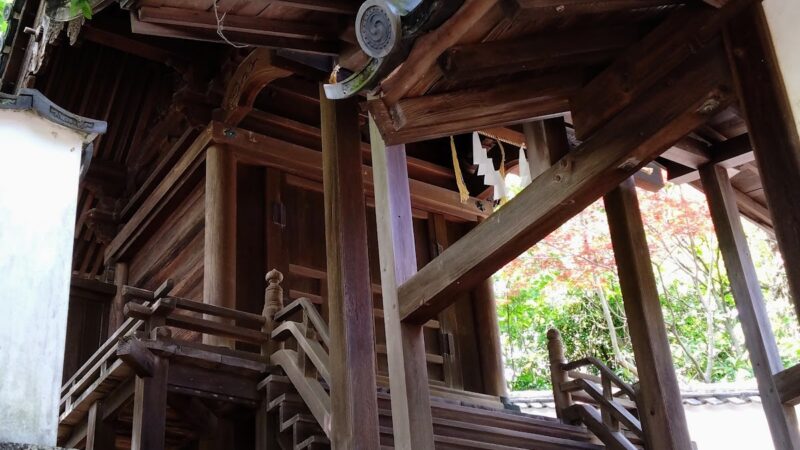
A distinctive architectural feature of the main hall of Katsurahama Shrine is the overall use of thin and delicate timber. This reflects the architectural style of the Muromachi period, giving it an elegant and light impression.
A particularly noteworthy feature is that even the pillars of the eaves are all cylindrical. While shrine architecture typically uses a mix of square and cylindrical pillars, the unified use of cylindrical pillars at Katsurahama Shrine’s main hall achieves visual harmony and elegance.
Furthermore, there is a tradition that ship planks were used for the floorboards. This is a characteristic of shrines in coastal areas, symbolizing a deep connection with the sea. The raised floor is also distinctive, thought to serve purposes such as preventing dampness, ensuring ventilation, or religiously separating the sacred space from the ground.
Cultural Value of the Worship Hall and Votive Ema
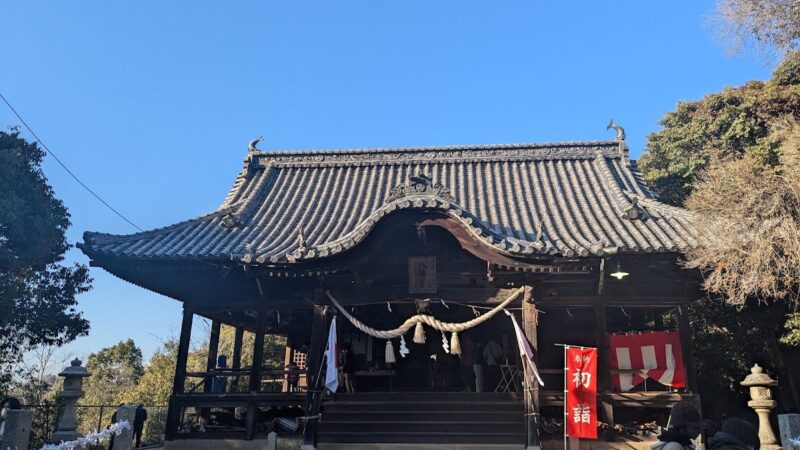
The worship hall of Katsurahama Shrine preserves numerous votive ema (wooden plaques) that have been donated since the Edo period. The oldest dated Enpo 9 (1681), giving it a history of over 340 years.
These votive tablets (ema) were offered by local people with various wishes, such as safe voyages, bountiful catches, and recovery from illness. The designs and inscriptions on the tablets offer insights into the lives, beliefs, and artistic sensibilities of the people of that time, making them valuable resources from a folkloric and art historical perspective. The ship-themed votive tablets, in particular, are attracting attention as important historical materials that convey the history of shipbuilding technology on Kurahashi Island.
Highlights of the Shrine Grounds: The Tenpyo Pine Grove and Natural Environment
Within the grounds of Katsurahama Shrine, a pine grove remains that is said to have been celebrated in a waka poem by an envoy to Silla during the Tenpyo era. While the current pine trees are not the originals, the trees, planted and passed down through generations, form a beautiful landscape that welcomes visitors.
From the shrine grounds, one can see the calm waters of the Seto Inland Sea, a landscape unchanged since ancient times. The experience of visiting the shrine while feeling the sea breeze offers a unique charm not found in urban shrines. The scenery of the sea and pine grove, which changes with the seasons, is also a popular spot for photography.
Nearby Shrines and the Religious Culture of Kurahashi Island
Besides Katsurahama Shrine, Kurahashi Island is dotted with several other historical shrines.
Nagato Shrine
Located in the northern part of Kurahashi Island, it is worshipped as the god of maritime safety. Like Katsurahama Shrine, it has long been revered by fishermen and sailors.
Kamei Shrine
Located in Ondo-cho, Kure City, it is also a short distance from Kurahashi Island. Known as a shrine associated with Taira no Kiyomori, it sits in a scenic spot overlooking the Ondo Strait.
Small Shrines Around Katsurahama Onsen
Throughout Kurahashi Island, small shrines and Jizo statues are enshrined in each settlement, demonstrating the thriving local religious culture.
Visiting these shrines will allow you to gain a deeper understanding of the religious culture and history of Kurahashi Island as a whole.
Annual Events and Festivals at Katsurahama Shrine
Katsurahama Shrine holds various Shinto rituals and festivals throughout the year.
Annual Grand Festival
Held every autumn, the annual grand festival is the largest festival event in the region. It features a procession of portable shrines and dedication of sacred dances, attracting many worshippers from both within and outside the island. As befits a shrine facing the sea, records indicate that a boat procession (funatogyo) was once held.
New Year’s Day Festival
This Shinto ritual, held on New Year’s Day, prays for happiness and peace in the new year. It is bustling with worshippers making their first shrine visit of the year.
Summer Purification Ceremony
Held at the end of June, this ritual purifies the shrine of impurities accumulated over the past six months. A ritual of passing through a ring of reeds (chinowa kuguri) may also be performed.
It is recommended to check the detailed dates and times in advance.
The History of Kurahashi Island and the Role of Katsurahama Shrine
Kurahashi Island has been known as the “Island of Ships” since ancient times, and was a region with excellent shipbuilding technology. It is mentioned in the *Nihon Shoki* (Chronicles of Japan) as a place where ships for the Yamato court were built. This tradition continued to the present day, and shipbuilding was the island’s main industry until the Showa era.
Katsurahama Shrine is located at the heart of this maritime culture and has functioned as a spiritual pillar for sailors and shipbuilders. All kinds of prayers related to the sea—safe voyages, successful shipbuilding, bountiful catches, etc.—have been offered at this shrine.
Currently, Kurahashi Island is attracting attention as a tourist destination, with Katsurahama Beach, selected as one of “Japan’s Top 100 Beaches,” and areas that preserve historical townscapes. Visitors can enjoy the island’s nature and history in conjunction with a visit to Katsurahama Shrine.
Manners and Precautions for Visiting the Shrine
Please keep the following points in mind when visiting Katsurahama Shrine.
Basic Worship Etiquette
- Bow before passing through the torii gate.
- Cleanse your hands and mouth at the water basin.
- Bow twice, clap twice, and bow once in front of the main hall.
- Maintain silence within the shrine grounds.
Photography
Photography is generally permitted within the shrine grounds, but may be restricted inside the main hall or during festivals. Please check in advance if you have any questions.
Attire
There are no specific dress code requirements, but it is desirable to wear clothing that reflects the sacred nature of the place.
Parking
Parking spaces for visitors are limited, so please be considerate of others.
Nearby Tourist Spots and Model Courses
Here are some tourist spots on Kurahashi Island that you might want to visit in conjunction with your visit to Katsurahama Shrine.
Katsurahama Beach
A beautiful beach within walking distance of the shrine. It boasts crystal-clear waters, selected as one of “Japan’s Top 100 Beaches.” It’s perfect for swimming in the summer and for strolling during other seasons.
Kurahashi Historical and Folk Museum
A facility where you can learn about the shipbuilding history and folk culture of Kurahashi Island. There are also exhibits on the history of Katsurahama Shrine.
Nagato Shipbuilding History Museum
A facility that displays restored ships from the Edo period. You can experience the high level of shipbuilding technology on Kurahashi Island.
Recommended Model Course (Half Day)
- Visit Katsurahama Shrine (30 min)
- Stroll around Katsurahama Beach (30 min)
- Visit Kurahashi Historical and Folk Museum (40 min)
- Lunch at a restaurant on the island (Setouchi seafood)
- Visit Nagato Shipbuilding History Museum (40 min)
Feeling the Weight of History Through a Visit to Katsurahama Shrine
Katsurahama Shrine is not just a tourist spot. For nearly 1300 years, since the Tenpyo era, it has been a sacred place that has received the prayers of people in this land. The main hall, designated a National Important Cultural Property, is a precious cultural heritage site that conveys the pinnacle of Muromachi period architectural techniques. Its rare architectural style—a three-bay nagare-zukuri style with an antechamber—is highly regarded by architectural historians.
Standing within the shrine grounds, one can feel the view of the pine forest and sea that the envoys to Silla may have gazed upon, the history of sailors and fishermen praying for safe voyages, and the weight of the faith that the local people have preserved and passed down through generations. Katsurahama Shrine is a place where we, living in the modern age, can truly feel that we are a part of this historical continuity.
When visiting Hiroshima Prefecture, or during a trip through the islands of the Seto Inland Sea, be sure to visit Katsurahama Shrine on Kurahashi Island. Away from the hustle and bustle of the city, the tranquil time embraced by the sea and history will surely be a deeply memorable experience. The beauty of the Important Cultural Property main hall, the sea breeze blowing through the grounds, and the more than a thousand years of faith history will warmly welcome visitors.