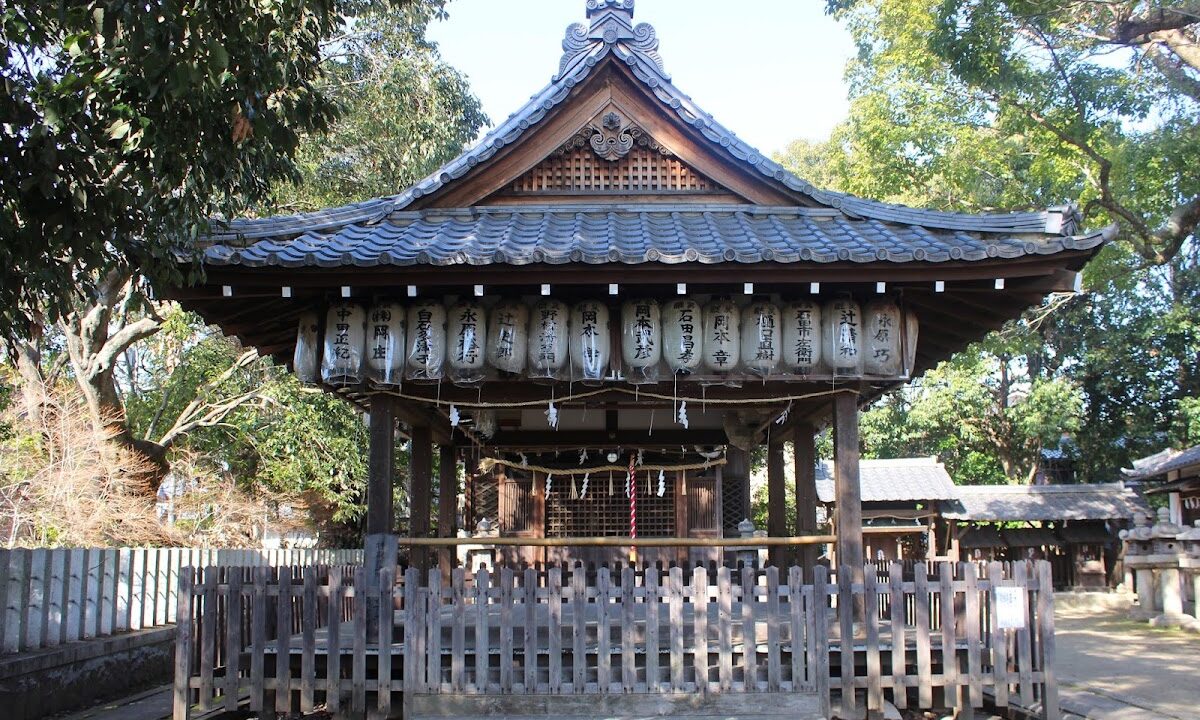
Suminomiya Shrine (Nagaokakyo City, Kyoto Prefecture) Complete Guide | Thorough Explanation of Goshuin, Access, History, and Deities
Suminomiya Shrine, located in Inouchi Minamiuchihata, Nagaokakyo City, Kyoto Prefecture, is a historic shrine that has long been revered by the imperial court as a Myojin Taisha (a major shrine listed in the Engishiki). With the deity of thunder and lightning as its main deity, this shrine, known as a god of rain, is historically significant, with deep connections to Kamo Wakeikazuchi Shrine (Kamigamo Shrine) and Kamo Mioya Shrine (Shimogamo Shrine).
This article comprehensively explains everything you need to know before visiting Suminomiya Shrine, including information on its goshuin (seal), access methods, deities, history, and highlights within the shrine grounds.
Basic Information about Suminomiya Shrine
Official Name: Suminomiya Shrine
Location: 35 Minamiuchihata, Inouchi, Nagaokakyo City, Kyoto Prefecture
Former Shrine Rank: Village Shrine
Shikinaisha: A candidate for Otokuni-ni-imasu Oikazuchi Shrine (Myojin Taisha) in Otokuni District, Yamashiro Province
Main Deity: Honoi-ikazuchi-no-kami
Enshrined Deities: Tamayorihime-no-mikoto, Taketsunumi-no-mikoto, Ikumeirihiko-Isachi-no-mikoto (Emperor Suinin), Kasuga-no-kami
Annual Festival: Second Sunday of October
Visiting Hours: Grounds are freely accessible (24-hour worship available)
Parking: None
Access Method
Access by Train:
- Approximately 20 minutes on foot from Nishimuko Station on the Hankyu Kyoto Line
- Approximately 25 minutes on foot from JR Kyoto Line “Nagaokakyo Station”
Access by Bus:
- Get off at Hankyu Bus “Inouchi” bus stop, approximately 5 minutes on foot
Access by Car:
- Approximately 10 minutes from Kyoto Jukan Expressway “Nagaokakyo IC”
- There is no parking lot, so it is recommended to use nearby coin parking or public transportation.
Located along the Yoshimine Road, this is a quiet shrine nestled in a residential area.
Information on Goshuin (Shrine Seals) at Kakumiya Shrine
Regarding the Issuance of Goshuin
Kakumiya Shrine is generally unmanned except during the New Year period, and there is no permanent shrine office. Therefore, goshuin are not normally issued.
Possibility of Receiving a Goshuin (Shrine Seal):
- During festivals and other religious ceremonies, Shinto priests may be present, and you may be able to receive a Goshuin at that time.
- Inquiring in advance may also result in receiving a Goshuin.
- Due to the recent boom in shrine visits, the system for receiving Goshuin may change, so we recommend checking for the latest information.
About Goshuincho (Shrine Seal Books)
Information regarding the issuance of original Goshuincho has not been confirmed. You will be able to have your Goshuincho, obtained from another shrine in Kyoto Prefecture, stamped.
History and Origins of Kakumiya Shrine
Circumstances of Founding
Regarding the founding of Kakumiya Shrine, it is said that it was established in the 6th year of Emperor Keitai’s reign (512 AD) by imperial decree to appease the god of thunder and lightning. This tradition indicates that this area was a center of thunder god worship since ancient times.
Status as a Shikinaisha (Great Shrine)
The Engishiki Jinmyocho (Register of Shrines in the Engi Era) lists it as “Otokuni-ni-imasu Oikazuchi Shrine, Myojin Taisha, Otokuni District, Yamashiro Province,” indicating its highest rank as a Myojin Taisha. A Myojin Taisha refers to a shrine where nationally important rituals are performed, signifying particularly deep reverence from the imperial court.
However, there are various theories regarding the location of “Otokuni-ni-imasu Oikazuchi Shrine,” and Kakumiya Shrine is considered one of the leading candidates.
As a God of Rain
Kakumiya Shrine has been known since ancient times for its effectiveness in bringing rain and has received deep reverence from the imperial court. The god of thunder, Honoikazuchi, is the god who controls thunder, and thunder, being a source of rain, was an extremely important object of worship in agricultural societies.
Ancient records, such as the surviving fragments of the “Yamashiro no Kuni Fudoki” (Gazetteer of Yamashiro Province), also contain descriptions of thunder god worship in this region, supporting the historical importance of Kakumiya Shrine.
Relationship with the Two Kamo Shrines
The composition of the deities enshrined at Kakunomiya Shrine suggests a deep connection with Kamo Wakeikazuchi Shrine (Kamigamo Shrine) and Kamo Mioya Shrine (Shimogamo Shrine).
- Honoikazuchi-no-kami: Sometimes identified with Kamo Wakeikazuchi-no-Okami, the principal deity of Kamo Wakeikazuchi Shrine.
- Tamayorihime-no-Mikoto: One of the principal deities of Shimogamo Shrine.
- Taketsunumi-no-Mikoto: One of the principal deities of Shimogamo Shrine.
This composition of deities strongly suggests that Kakunomiya Shrine was within the sphere of influence of the Kamo clan and had a very close relationship with both shrines. It has also been suggested that it may have been one of the Kamo clan’s centers of worship in the Otokuni region.
Development in Modern Times
Under the Meiji era’s shrine ranking system, it was ranked as a village shrine. While this is a modest rank compared to its ancient status as a Myojin Taisha (a major shrine), it has been preserved as a center of local faith to this day.
About the Deities of Kakumiya Shrine
Main Deity: Honoi-ikazuchi-no-kami
As the name suggests, Honoi-ikazuchi-no-kami is the god who governs fire and thunder. According to the Kojiki, when Izanami-no-Mikoto gave birth to Kagutsuchi-no-kami, her genitals were burned, and she died. Honoi-ikazuchi-no-kami is said to be one of the eight thunder gods born from her decaying body in the underworld.
Divine Virtues:
- Rainmaking and Abundant Harvests
- Protection from Lightning and Fire
- Protection from Misfortune and Disaster
In an era when agriculture was the main industry, the worship of the thunder god who brought rain was extremely important.
Enshrined Deities
Tamayorihime-no-Mikoto:
One of the main deities of Shimogamo Shrine. She is considered the mother goddess of Kamo-wakeikazuchi-no-Okami and is worshipped as a goddess of water and matchmaking.
Taketsunumi-no-Mikoto:
One of the main deities enshrined at Shimogamo Shrine. Considered the ancestral deity of the Kamo clan, revered as a god of guidance and victory.
Ikumeirihiko-Isachi-no-Mikoto:
Refers to Emperor Suinin, the 11th emperor. Legends related to this emperor’s reign are thought to exist in this area.
Kasuga-no-Kami:
Thought to refer to the deities of Kasuga Taisha Shrine, possibly related to the Fujiwara clan, or worshipped as a collective term for Takemikazuchi-no-Mikoto, Futsunushi-no-Mikoto, Amenokoyane-no-Mikoto, and Himegami.
Highlights of the Shrine Grounds
Atmosphere of the Shrine and Grounds
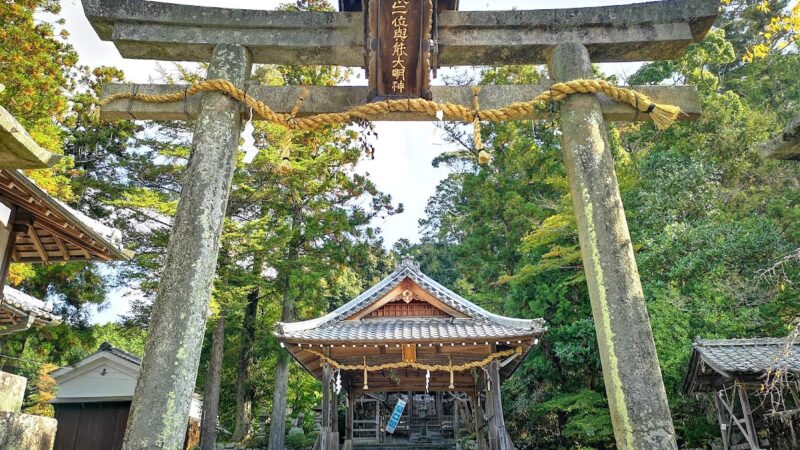
Although Kakumiya Shrine is located in a residential area, stepping onto the grounds envelops you in a tranquil atmosphere. Despite its small size, the carefully maintained grounds reflect the deep faith of the local people.
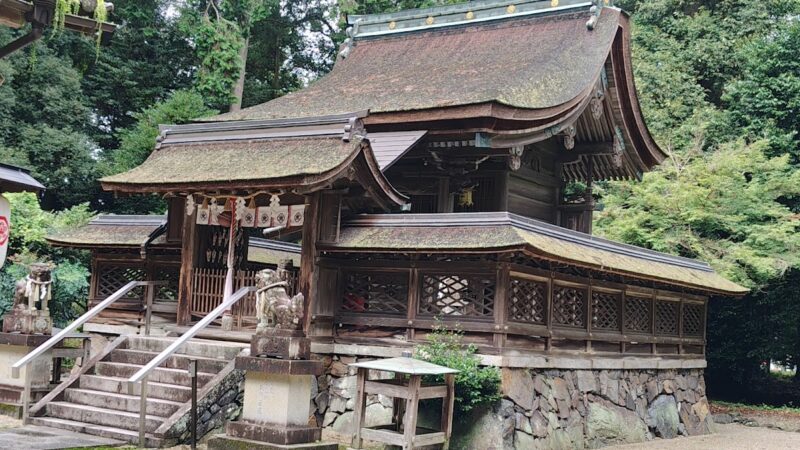
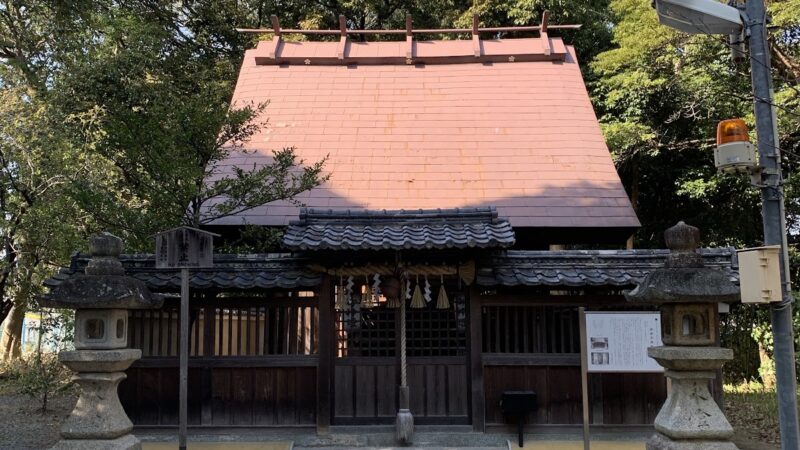
Main Shrine: A simple yet dignified structure.
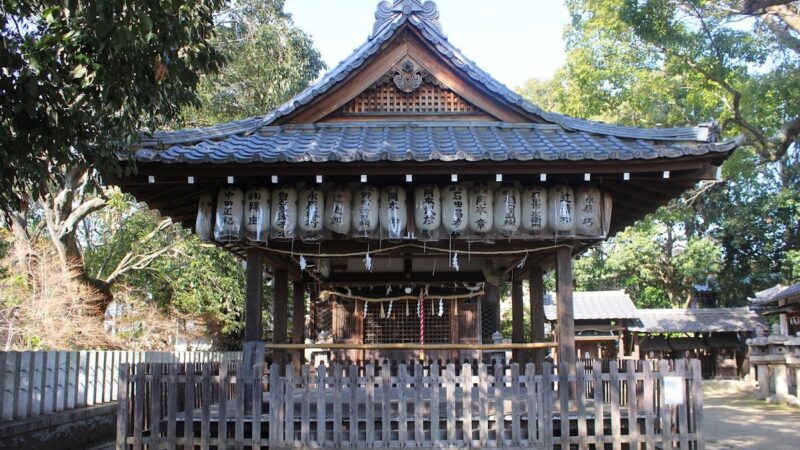
Worship Hall: An open space welcoming visitors.
Stone Monument and Historical Record
Within the shrine grounds is a stone monument detailing the history of Kakumiya Shrine, mentioning its status as a Shikinaisha (a shrine listed in the Engishiki, an ancient Japanese legal text) and its enshrinement of the god of thunder and lightning. Be sure to check it out during your visit.
Nature of the Shrine Grounds
The shrine grounds feature ancient trees and seasonal flowers, offering different scenery throughout the year. Especially during the seasons of fresh greenery and autumn leaves, you can enjoy a quiet yet beautiful landscape.
Photography
The shrine grounds are open 24 hours a day, and photography is permitted. However, please remember that this is a sacred place and observe proper etiquette when taking photos.
Annual Events and Festivals of Kakumiya Shrine
Annual Festival (Second Sunday of October)
This is the most important festival of Kakumiya Shrine, with a ceremony conducted by Shinto priests. On this day, a Shinto priest is stationed at the normally unmanned shrine, and local parishioners and devotees gather.
New Year’s Day Festival
During the New Year, festivals are held to celebrate the new year. The shrine office is open during this time, and it is bustling with worshippers. This is the best time to request a Goshuin (shrine stamp).
Nearby Shrines and Temples
When visiting Kakumiya Shrine, visiting the surrounding shrines and temples will allow you to experience the history and culture of Nagaokakyo City more deeply.
Nagaoka Tenmangu Shrine
Distance: Approximately 2km from Kakumiya Shrine
This shrine, dedicated to Sugawara no Michizane, the god of learning, is a representative shrine of Nagaokakyo City. It is known for its beautiful Hachijo-ga-ike Pond and the Kirishima azaleas along the approach to the shrine.
Otokuni-ji Temple
Distance: Approximately 1.5km from Kakumiya Shrine
This temple belongs to the Buzan branch of the Shingon sect and is famous for its peonies. This is also a place associated with Prince Sawara (Emperor Sudo).
Komyoji Temple
Distance: Approximately 3km from Kakumiya Shrine
This is the head temple of the Seizan Jodo sect and is known as a famous spot for autumn foliage. Its vast grounds and beautiful gardens are its main attractions.
Points to Note When Visiting Kakumiya Shrine
Visiting Manners
- Bow before passing through the torii gate
- Purify your body and mind at the water basin (This can be omitted if there is no water basin)
- Bow twice, clap twice, and bow once in front of the main hall
- Spend time quietly on the temple grounds
- Take your trash with you
Recommended Visiting Time
While the temple grounds are open 24 hours a day, visiting during daylight hours is recommended. Especially in the morning, you can visit in refreshing air.
Estimated Time Required
The temple grounds are compact, so the visit itself takes about 15-20 minutes. Even if you take your time to stroll around the shrine grounds, read about its history, and take photos, 30 minutes should be plenty of time.
Divine Virtues and Blessings of Kakumiya Shrine
The following are the divine virtues and blessings you can expect from visiting Kakumiya Shrine:
Abundant Harvest and Fulfillment of Rain Prayers
As the original divine nature of the Fire and Thunder God, the shrine bestows the divine virtue of agricultural prosperity and the bringing of moderate rain.
Protection from Lightning and Fire
As the god who controls lightning and fire, the shrine offers protection from these disasters.
Protection from Misfortune and Disaster
The powerful Fire and Thunder God is believed to have the power to ward off various misfortunes.
Matchmaking and Family Safety
Thanks to the divine virtues of Tamayorihime-no-Mikoto, who is enshrined alongside the shrine, you can also expect blessings for successful matchmaking and family harmony.
Guidance and Victory
Through the divine virtues of Takezumi-no-Mikoto, you can pray for guidance in life and victory in competitions.
History of Nagaokakyo City and Kakumiya Shrine
The Nagaokakyo Era
Nagaokakyo, the origin of the name of Nagaokakyo City, was the capital to which Emperor Kanmu moved the capital from Heijo-kyo in 784 AD. Although it is sometimes called the “phantom capital” because the capital was moved to Heian-kyo after only 10 years, it demonstrates the historical importance of this region.
The founding of Kakumiya Shrine predates the relocation of the capital to Nagaokakyo, indicating that this area was an important religious center from ancient times.
Beliefs in the Otokuni Region
The Otokuni region (present-day Nagaokakyo City and Mukō City area) was a region where powerful clans such as the Kamo and Hata clans were active from ancient times. The composition of the deities enshrined at Kakumiya Shrine is thought to reflect the complex history of beliefs in this region.
Records and Research on Kakumiya Shrine
Listing in the Engishiki Jinmyocho (Register of Shrines in the Engi Era)
The Engishiki Jinmyocho (Register of Shrines in the Engi Era), compiled in 927, lists Kakumiya Shrine as “Otokuni-ni-imasu O-Ikazuchi Shrine, Myojin-dai (Great Shrine) in Otokuni District, Yamashiro Province.” While it is widely believed that this refers to Kakumiya Shrine, other shrines also exist as candidates.
Traditions in the Yamashiro no Kuni Fudoki (Gazetteer of Yamashiro Province)
The surviving fragments of the Yamashiro no Kuni Fudoki contain descriptions of the thunder god worship in the Otokuni region, making them important resources for considering the history of Kakumiya Shrine.
Recent Research
Research by shrine history researchers and local historians is progressing on the relationship between Kakumiya Shrine and the Kamo Shrines, and the realities of ancient beliefs in the Otokuni region.
Posts and Records: Voices of Visitors to Kakumiya Shrine
Numerous posts and records from visitors to Kakumiya Shrine have been submitted to shrine search websites and social media.
Common Impressions:
- “A quiet shrine located in a residential area”
- “I feel the prestige of a Shikinaisha (a shrine listed in the Engishiki, an ancient Japanese legal text)”
- “Unmanned but carefully maintained”
- “I was interested in its relationship with Kamo Shrine”
- “A place of worship deeply rooted in the community”
By referring to these posts, you can get a sense of what an actual visit to the shrine is like. Many photos have also been posted, so you can check the appearance of the shrine grounds beforehand.
Summary: The Charm of Visiting Kakumiya Shrine
Kakumiya Shrine, though small in scale, is a venerable shrine with the prestige of a Shikinaisha (a shrine listed in the Engishiki, an ancient Japanese legal text) and a long history. It enshrines the god of thunder and lightning, and its history of being revered by the imperial court as a god of rain since ancient times gives a sense of the depth of Japanese religious culture.
Its relationship with Kamo Wakeikazuchi Shrine and Kamo Mioya Shrine is also interesting, making it a valuable shrine where you can experience the profound depth of Kyoto’s shrine faith. The usually unmanned and quiet grounds provide an ideal environment for peaceful worship away from the hustle and bustle.
When you visit Nagaokakyo City, we highly recommend visiting Kakumiya Shrine and reflecting on its long history of faith dating back to ancient times.
Frequently Asked Questions (FAQ)
Q1: Can I get a Goshuin (shrine stamp) at Kakumiya Shrine?
A1: Kakumiya Shrine is generally unattended except during New Year’s, so Goshuin are not usually issued. During festivals such as the annual festival and New Year’s, Shinto priests may be present, and Goshuin may be available at those times. If you definitely want a Goshuin, we recommend contacting them in advance.
Q2: How do I get to Kakumiya Shrine?
A2: The nearest station is Nishimuko Station on the Hankyu Kyoto Line, about a 20-minute walk. It’s about a 25-minute walk from Nagaokakyo Station on the JR Kyoto Line. It’s about a 5-minute walk from the Inouchi bus stop on the Hankyu Bus line. There is no parking available, so we recommend using public transportation.
Q3: What is the main deity enshrined at Kakumiya Shrine?
A3: The main deity is Honoi-ikazuchi-no-kami (the god of fire and thunder). This god, who controls fire and thunder, has been revered since ancient times for his effectiveness in bringing rain and has received deep devotion from the imperial court. The enshrined deities include Tamayorihime-no-mikoto, Taketsunumi-no-mikoto, Ikumeirihiko-isachi-no-mikoto (Emperor Suinin), and the Kasuga deities.
Q4: Can I visit Kakumiya Shrine 24 hours a day?
A4: Yes, the grounds of Kakumiya Shrine are open for worship 24 hours a day. However, for safety reasons, we recommend visiting during daylight hours whenever possible.
Q5: What is the relationship between Kakumiya Shrine and Kamo Shrine?
A5: The deities enshrined at Kakumiya Shrine include the deity of Kamo Wakeikazuchi Shrine (Kamigamo Shrine), who is associated with the main deity of Kamo Wakeikazuchi Shrine, and Tamayorihime-no-Mikoto and Taketsunumi-no-Mikoto, the main deities of Kamo Mioya Shrine (Shimogamo Shrine). This composition of deities suggests that Kakumiya Shrine was within the sphere of influence of the Kamo clan and had a very close relationship with both shrines.
Q6: When is the annual festival at Kakumiya Shrine?
A6: The annual festival at Kakumiya Shrine is held every year on the second Sunday of October. On this day, a ceremony is held by Shinto priests, and priests are stationed at the shrine, which is usually unmanned. This is a valuable opportunity for those who wish to receive a Goshuin (shrine stamp).
Q7: Are there any tourist spots around Kakumiya Shrine?
A7: There are several famous shrines and temples in the vicinity, including Nagaoka Tenmangu Shrine (approx. 2km), Otokuni-dera Temple (approx. 1.5km), and Komyoji Temple (approx. 3km). Visiting these together will allow you to experience the rich history and culture of Nagaokakyo City more deeply. ### Q8: What are the blessings of Kakumiya Shrine?
A8: The main blessings are abundant harvests, successful rain prayers, protection from lightning, protection from fire, protection from evil, and protection from disaster. Furthermore, through the divine virtues of the enshrined deities, you can also expect blessings for matchmaking, family safety, guidance in life, and victory in competitions.