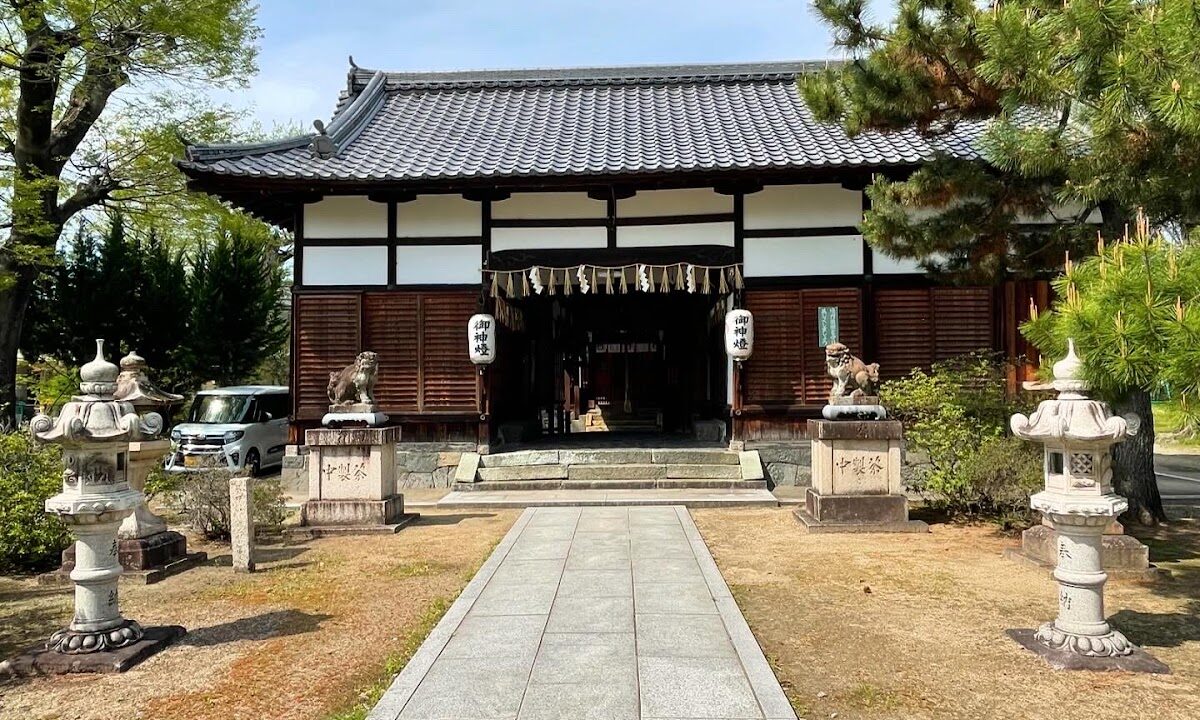
Complete Guide to Ogura Shrine (Kyoto Prefecture): History and Highlights of the Shikinaisha Shrine Standing on the Shores of the Legendary Ogura Pond
Ogura Shrine, located in Ogura-cho, Uji City, Kyoto Prefecture, is a historic shrine situated on the shores of the once-existing, massive “Ogura Pond.” As a Shikinaisha (a minor shrine listed in the Engishiki), it has attracted worshippers since ancient times and remains cherished by the local community today. This article provides a detailed overview of Ogura Shrine, from its history, enshrined deities, and highlights within the grounds to access information and details about its Goshuin (shrine stamp).
History and Origins of Ogura Shrine
Deep Connection with the Ancient Clan, Ogura no Muraji
While several theories exist regarding the founding of Ogura Shrine, the most widely accepted theory suggests it began with the worship of the ancestral deity by the ancient clan, Ogura no Muraji.
According to the *Shinsen Shōjiroku* (New Compilation of Family Names), the Ogura clan is described as “of the same ancestry as the Ogura and Imaki clans of Yamashiro Province, descendants of Amanonishio-no-Mikoto, the fifth-generation descendant of Kamimusubi-no-Mikoto.” As a clan of divine lineage, they traced their ancestry to Amanonishio-no-Mikoto, the fifth-generation descendant of Kamimusubi-no-Mikoto. It is believed that the Ogura clan, who flourished with their base on the shores of Ogura Pond, founded this shrine as a place to enshrine their ancestral deity.
The Theory of Emperor Saga’s Imperial Order and the Influence of the Fujiwara Clan
According to shrine tradition, it is said to have been founded in the early Heian period by imperial order of Emperor Saga. However, it is more reasonable to assume that the founding by the Ogura clan preceded it, and that the shrine’s status was later elevated by imperial order.
Of particular note is that before the Edo period, our shrine was called “Kasuga Shrine.” The fact that the current enshrined deities are the four Kasuga deities (Takemikazuchi-no-kami, Futsunushi-no-kami, Amenokoyane-no-kami, and Hime-no-kami) strongly reflects the influence of the Fujiwara clan. It is presumed that from the mid-Heian period onward, this region became a Fujiwara manor, and under their influence, the Kasuga deities, the tutelary deities of the Fujiwara clan, were invited to be enshrined here.
Status as a Shikinaisha Shrine
Ogura Shrine is a Shikinaisha (a minor shrine listed in the Engishiki Jinmyocho), and was a historically significant shrine already recognized by the imperial court during the Heian period. While its former rank was a village shrine, its historical value is extremely high, and it has played an important role as a center of local faith.
Enshrined Deities and Benefits
Main Deities: The Four Kasuga Deities
The following four deities are currently enshrined at Ogura Shrine:
Takemikazuchi-no-kami
Known as the god of thunder and swords, he is worshipped as a god of military fortune and protection against misfortune.
Futsunushi-no-kami
A god of war who, together with Takemikazuchi-no-kami, accomplished the transfer of the land, and is believed to bring good fortune and victory.
Amenokoyane-no-kami
Known as the god of prayers and learning, he is also the ancestral god of the Fujiwara clan.
Himegami
Like Himegami of Kasuga Taisha Shrine, she is worshipped as a guardian deity of women.
These deities share the same composition as those of Kasuga Taisha Shrine in Nara, indicating a deep connection with the Fujiwara clan.
Expected Benefits
Benefits that can be expected from visiting Ogura Shrine include protection against misfortune, military fortune, good fortune, academic success, and matchmaking. Especially because it enshrines the four deities of Kasuga, it is believed to offer comprehensive good fortune.
Subsidiary Shrine: The Special Presence of Komori Shrine
Subsidiary Shrine Dedicated to the Guardian Deity of Children
Within the grounds of Ogura Shrine stands the important subsidiary shrine, Komori Shrine. This shrine enshrines Ame-no-Iwakusufune-no-Kami, and is deeply revered by local people as the guardian deity of children.
Ame-no-Iwakusufune-no-Kami is a deified being of the ship that carries the gods in Japanese mythology and is also known as a god of safe voyages. Here, however, it is particularly revered as a god that protects the growth and safety of children.
Benefits of Komori Shrine
Komori Shrine is believed to offer benefits such as fertility, safe childbirth, healthy growth of children, and protection for child-rearing. It is particularly popular with families with young children and couples hoping to conceive.
The Relationship with the Legendary Giant Lake “Oguraike”
A Giant Lake That Once Existed
When discussing Ogura Shrine, it is essential to mention the existence of “Oguraike,” which once stretched to the west of the shrine. Oguraike was a vast body of water spanning Fushimi Ward in Kyoto City, Uji City, and Kumiyama Town, and its scale was more befitting of a “lake” than a “pond.”
Formed at the confluence of the Uji River, Kizu River, and Katsura River, all originating from Lake Biwa, Oguraike was a vast lake with a circumference of approximately 16 kilometers and an area of approximately 800 hectares. From ancient times to the Middle Ages, it played an important role as a key point for water transportation and as a place with abundant fishing resources.
Land Reclamation Project in the Early Showa Era
Ogura Pond disappeared due to land reclamation projects carried out from 1933 (Showa 8) to 1941 (Showa 16). As part of a national policy aimed at increasing food production, the vast lake was transformed into rice paddies. Currently, the area where Ogura Pond once stood is fertile farmland, with almost no trace of its former appearance remaining.
The Deep Connection Between Ogura Shrine and Ogura Pond
Ogura Shrine was located right on the shores of Ogura Pond. It is believed that the Ogura clan lived off the bounty of the pond, and this shrine was the place where they enshrined their ancestral deity. Even now, after the pond has been reclaimed, the shrine continues to maintain its historical location, serving as a valuable reminder of the former Ogura Pond.
Highlights of the Shrine Grounds
Giant Trees Over 800 Years Old
The most impressive feature of the grounds of Ogura Shrine are the gigantic hackberry and Chinese hackberry trees, said to be no less than 700 to 800 years old. These giant trees, living witnesses to the long history of the shrine, overwhelm visitors.
The giant hackberry trees, in particular, are magnificent with their thick trunks and spreading branches, further enhancing the sacred atmosphere of the shrine. These ancient trees have watched over this land since the time when Ogura Pond existed, evoking a sense of historical romance.
Main Hall and Worship Hall
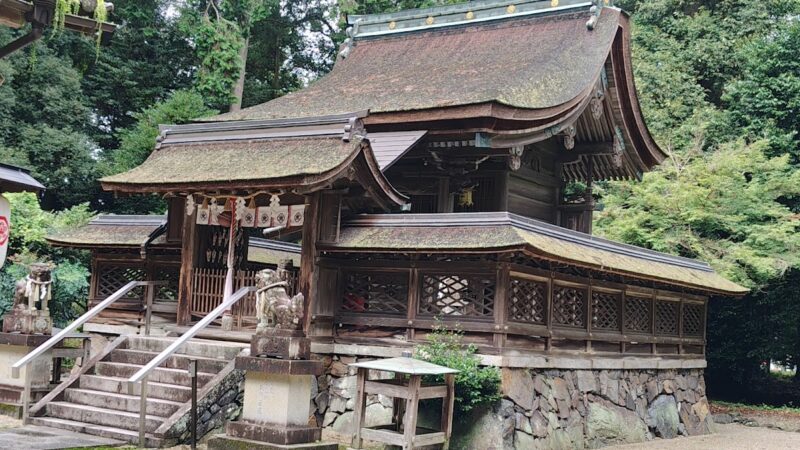
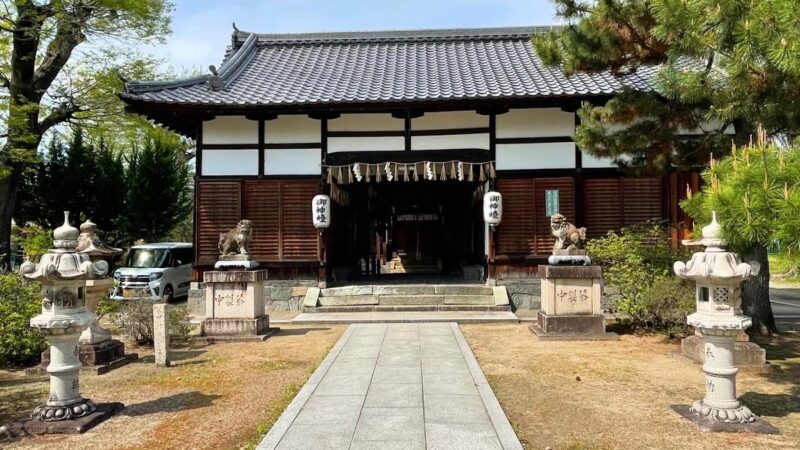
The shrine buildings of Ogura Shrine maintain the typical style of shrine architecture. The arrangement from the worship hall to the main hall invites worshippers into a sacred space. The main hall’s structure is influenced by the Kasuga style, reflecting its characteristics as a shrine dedicated to the Kasuga deity.
A Tranquil Atmosphere in the Shrine Grounds
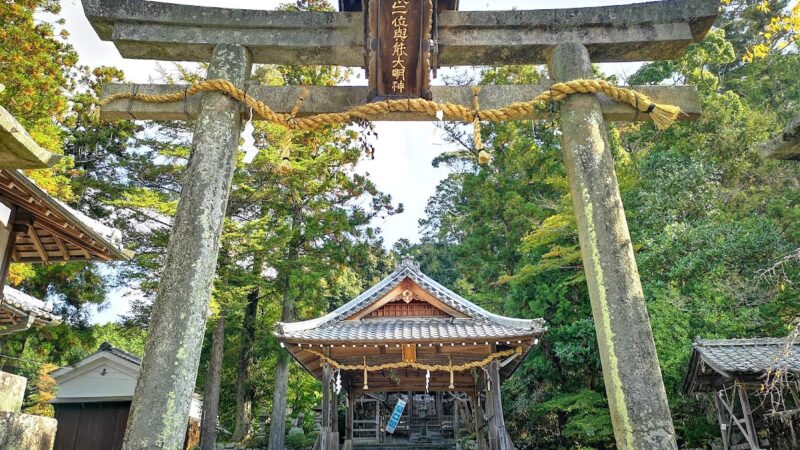
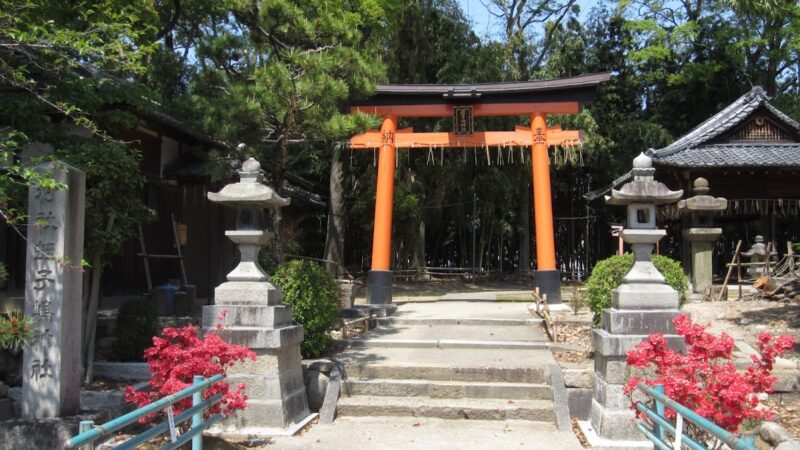
Despite being located in a residential area, the shrine grounds are enveloped in a tranquil atmosphere. The shade cast by large trees and the well-maintained grounds create a healing space that allows you to forget the hustle and bustle of the city.
Goshuin (Shrine Seal) Information
Goshuin of Ogura Shrine and Komori Shrine
At Ogura Shrine, you can receive both the main shrine’s goshuin and the goshuin of Komori Shrine, a subsidiary shrine within the grounds. The goshuin can be obtained at the priest’s residence behind the shrine building.
Points to Note When Receiving a Goshuin (Temple/Shrine Stamp)
When receiving a Goshuin, please note the following:
- Since you will be visiting the priest’s home, please be respectful.
- The priest may be absent, so if you want to be sure to receive one, it is recommended to call ahead to confirm.
- Don’t forget to bring your Goshuincho (stamp book).
- Prepare the offering fee (generally around 300-500 yen).
Access Information
Access by Train
From Kintetsu Kyoto Line “Ogura Station”
- Approximately 8-9 minutes on foot from the East Exit (approximately 600 meters)
- This is the closest station and convenient for access.
From JR Nara Line “Ogura Station”
- Approximately 12 minutes on foot (approximately 930 meters)
- It is a little further than Kintetsu Ogura Station, but still within walking distance.
Access by Car
Approximately 10 minutes from the Keiji Bypass “Uji Higashi IC” or “Uji Nishi IC”. However, since parking at the shrine is limited, we recommend using public transportation.
Address and Contact Information
Address: 31 Terauchi, Ogura-cho, Uji City, Kyoto Prefecture 611-0042
Phone Number: 0774-21-2709
Etiquette and Manners for Visiting the Shrine
Basic Etiquette for Visiting the Shrine
- Bow before passing through the torii gate.
- Cleanse your hands and mouth at the water basin.
- At the main hall, perform the ritual of two bows, two claps, and one bow.
- If visiting the Komori Shrine, follow the same ritual.
Mindset During Visit
Ogura Shrine is a shrine deeply rooted in the community and a place of worship for local residents. Please visit quietly and respect the pure atmosphere of the shrine grounds. Photography is permitted, but please be considerate of other visitors.
Nearby Tourist Attractions
Famous Places in the Uji Area
Ogura-cho in Uji City, where Ogura Shrine is located, is close to the center of Uji, where the World Heritage sites Byodo-in Temple and Ujigami Shrine are located, making it a convenient stop for Kyoto sightseeing.
Byodo-in Temple (approx. 10 minutes by car)
A World Heritage site known for its design on the 10-yen coin. The beauty of the Phoenix Hall is a must-see.
Ujigami Shrine (approx. 10 minutes by car)
Registered as a World Heritage site as the oldest shrine architecture in Japan.
Around the Uji River
Known as a place associated with The Tale of Genji, and also a famous production area for Uji tea.
Landscape of the Ogura Pond Reclamation Area
The flat farmland stretching west from the shrine is the former site of Ogura Pond. Currently used as rice paddies, its vastness allows one to imagine the scale of Ogura Pond in its heyday.
Annual Events and Festivals
Ogura Shrine holds various Shinto rituals throughout the year. As the local guardian shrine, it holds seasonal festivals such as the spring Kinensai (harvest festival) and the autumn Reitaisai (grand festival). Especially during the Reitaisai, local people gather for traditional Shinto rituals.
For detailed information on the annual event schedule, we recommend contacting the shrine directly.
The Significance of Visiting Ogura Shrine
A Place to Feel Historical Romance
Ogura Shrine is a place where layers of history intersect: the beliefs of ancient clans, the influence of the Fujiwara clan, and the legendary Ogura Pond. Although now located in a quiet residential area, it once stood on the shores of a vast lake, watching over a vital point for water transportation.
A Shrine that Conveys Local Memories
Ogura Shrine plays an important role as one of the few places that preserves the memory of Ogura Pond, which disappeared due to land reclamation. The giant trees within the shrine grounds have stood here unchanged since the time when the pond existed, watching over the passage of time.
A Shrine Friendly to Families with Children
The Komori Shrine, a subsidiary shrine within the grounds, is a comforting presence for families with children. It’s a place that embraces the wishes of parents praying for their children’s healthy growth, attracting worshippers from beyond the local area.
Summary: The Charm of Ogura Shrine
Located in Uji City, Kyoto Prefecture, Ogura Shrine is a historically fascinating shrine, woven from three elements: the history of the ancient Ogura clan, the influence of the Fujiwara clan, and the legendary Ogura Pond. While possessing the prestige of a Shikinaisha (a shrine listed in the Engishiki), its charm lies in its warm, community-rooted atmosphere.
The giant trees over 800 years old, the presence of the Komori Shrine, and the memory of the reclaimed Ogura Pond—all of these provide visitors with deep emotion and a sense of historical romance. When sightseeing in Uji, be sure to extend your trip a little and visit this historic shrine. Spending time in the tranquil temple grounds, contemplating its long and rich history, will surely be a memorable experience.