--1360x720.png)
Complete Guide to Sada Shrine (Hirakata City, Osaka Prefecture) | A Tenmangu Shrine Where the Tragic Story of Sugawara no Michizane and His Daughter is Told
Sada Shrine, located in Minami-Nakafuri, Hirakata City, Osaka Prefecture, is a historic shrine dedicated to Sugawara no Michizane, known as the god of learning. Despite its convenient location, just a 7-minute walk from Kōzenji Station on the Keihan Main Line, the shrine maintains a tranquil atmosphere, where the moving story of Michizane and his daughter, Kariyahime, is still passed down.
This article comprehensively introduces everything you need to know before visiting Sada Shrine, including its history, enshrined deities, highlights within the grounds, information on Goshuin (shrine stamps), and access methods.
Basic Information on Sada Shrine
Official Name: Sada Shrine
Alternative Name: Sadayama Tenmangu Shrine
Location: 1-7-18 Minami-Nakafuri, Hirakata City, Osaka Prefecture
Deity Enshrined: Sugawara no Michizane
Former Shrine Rank: Gosha (Village Shrine)
Founded: Tenryaku 5 (951)
Nearest Station: Approximately 7 minutes on foot from Kōzenji Station on the Keihan Main Line
Sada Shrine has long been cherished by local residents as the tutelary deity of the Nakafuri area of Hirakata City. Several facilities bearing the name “Sada,” such as Sada Elementary School and Sada Community Center, are scattered around the area, demonstrating the shrine’s deep roots in the community.
History | The Story of Sugawara no Michizane and Kariya-hime
Farewell in the First Year of the Engi Era (901 AD)
The history of Sada Shrine dates back to the first year of the Engi era (901 AD) in the Heian period. Sugawara no Michizane, who had risen to the position of Minister of the Right, was ordered to be demoted and exiled from Kyoto to Dazaifu in Kyushu as the Provisional Governor of Dazaifu, at the behest of Fujiwara no Tokihira.
On his way to Dazaifu, Michizane rested on the mountain where the present-day Sada Shrine stands. It is said that he gazed towards the capital in the distance, lamenting his departure for his beloved family and the capital.
The “Sada” of His Daughter, Kariya-hime
Kariya-hime, who longed for her father, desperately followed him to this place to see him off. However, she was just a few minutes behind; her father had already departed.
It is said that Princess Kariya, overwhelmed with grief at not being able to see her father, wailed and stomped her feet. The word for this “stomping” is “sada,” which became the origin of the place name. The kanji for “sada” means “to stumble” or “to fail,” reflecting the daughter’s heartbreaking sorrow.
A Divine Statue Created by Michizane
Upon learning of his daughter’s sorrow, Michizane took pity on Princess Kariya and is said to have carved a wooden statue measuring three feet two inches (approximately 97 cm) himself, sending it to her. This statue is a likeness of Michizane himself and is still carefully preserved as the sacred object of worship at Sada Shrine.
There is an interesting anecdote about this wooden statue. It is said that Sugawara no Michizane used glass beads for the statue’s eyes, and for this reason, despite its national treasure-level value, it was not designated a national treasure under the standards of the time—a story passed down in the region. However, these “glass eyes” can also be seen as an expression of Michizane’s deep love for his daughter and his desire to breathe life into the statue.
Construction of the Shrine in 951
After Michizane’s death, in 951, a shrine was built on this site to house the wooden statue bestowed upon the shrine by Michizane. This marked the beginning of Sada Shrine. Since then, it has attracted the faith of many people as the local tutelary deity and the god of learning.
History of War and Reconstruction
Throughout its long history, Sada Shrine has faced numerous trials. In particular, it is recorded that it was affected by the fires of the Winter Siege of Osaka (1614). However, each time it was restored thanks to the fervent faith of the local people, and it continues to thrive to this day.
During the Edo period, it was located within the cultural sphere of Hirakata-juku and attracted the faith of travelers passing through the highway and local residents. Under the Meiji era’s shrine ranking system, it was designated a Gosha (village shrine), establishing its position as an important shrine in the region.
Deity Enshrined | About Sugawara no Michizane
The deity enshrined at Sada Shrine is Sugawara no Michizane, known nationwide as the god of learning.
Life of Sugawara no Michizane
Sugawara no Michizane (845-903) was a scholar and politician of the Heian period. He excelled in learning from a young age, becoming a Doctor of Literature and gaining the trust of Emperor Uda, rising to the position of Minister of the Right. However, due to slander by Fujiwara no Tokihira, he was exiled to Dazaifu in 901 and died there two years later.
After the death of Sugawara no Michizane, Kyoto was struck by a series of disasters, including lightning strikes and epidemics. Fearing that these were the curses of Michizane’s vengeful spirit, the imperial court enshrined him as “Tenman Daijizai Tenjin.” This is the origin of all Tenmangu shrines throughout Japan.
Faith as the God of Learning
Sugawara no Michizane is widely revered as the “God of Learning” due to his outstanding scholarship. During exam season, many students and their parents visit Sada Shrine to pray for success. Furthermore, people constantly visit not only for academic achievement but also to pray for improvement in writing and performing arts.
Highlights of the Shrine Grounds and Cultural Properties
Sada Shrine Approach and First Torii Gate
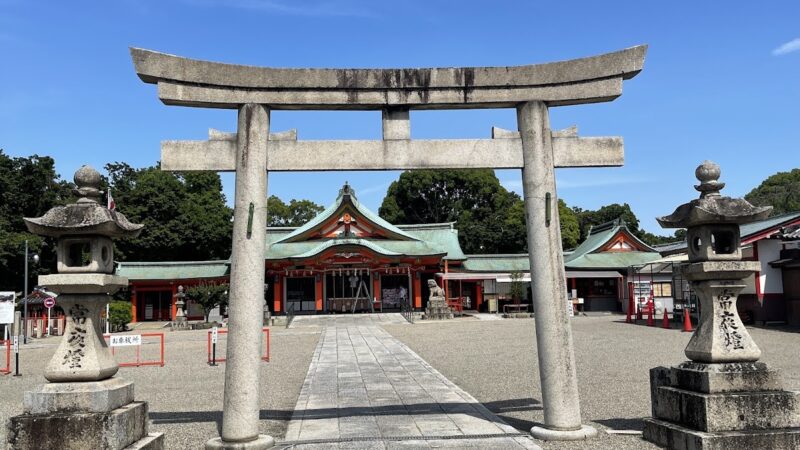
The approach to Sada Shrine begins along the street in front of Kōzenji Station. A magnificent first torii gate stands at the entrance to the approach, welcoming visitors. This torii gate is a local landmark and is affectionately known as “Sada Sando” (Sada Approach) by the locals.
Passing through the torii gate, a gently sloping approach continues. Despite being located in a residential area, as you enter the approach, you gradually feel the tranquility of a sacred place.
Stone Steps and the Path to the Shrine Grounds
As you proceed along the approach, you will eventually come to stone steps leading to the shrine. Climbing these steps one by one gives you a sense of leaving the hustle and bustle of everyday life behind, and your mind feels cleansed.
Upon reaching the top of the steps, the view suddenly opens up, revealing the solemn atmosphere of the shrine grounds. It’s a space that feels like another world, making you forget you’re in a residential area.
Main Shrine
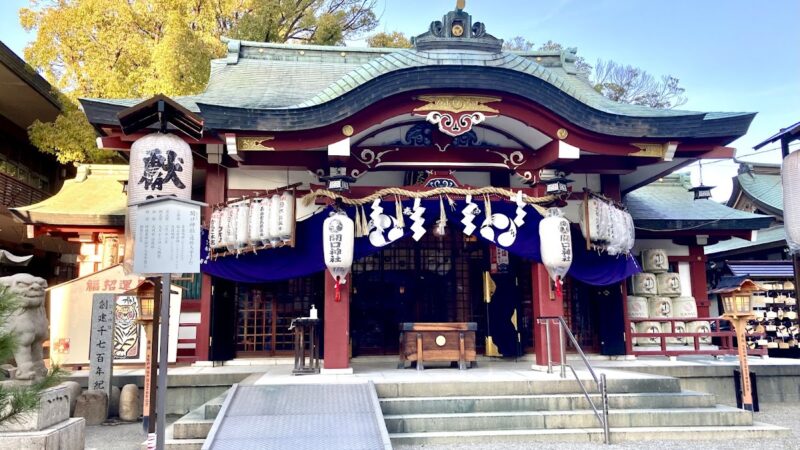
The main shrine, situated in the center of the grounds, enshrines a wooden statue said to have been made by Sugawara no Michizane himself. The architectural style of the main shrine conveys the beauty of traditional shrine architecture.
In front of the main shrine, many worshippers can be seen praying with their hands clasped together, offering wishes for academic success, passing exams, and family safety.
Shrine Office and Goshuin (Shrine Seals)
There is a shrine office on the grounds where you can receive goshuin (shrine seals) and amulets. Since the office’s operating hours may vary depending on the day, it is recommended to check in advance if you definitely want to receive a goshuin.
Large Ema (Votive Tablets)
A distinctive cultural feature of Sada Shrine is the large ema (votive tablets) that are dedicated every year. These ema are painted by students from the art club of the nearby Hirakata Municipal High School (commonly known as Ichiritsu High School), symbolizing the connection between the community, the school, and the shrine.
Ema with designs related to the Chinese zodiac are created each year, and the works, showcasing the youthful sensibilities and skills of the high school students, delight the eyes of worshippers.
Atmosphere of the Shrine Grounds
The grounds of Sada Shrine are not particularly vast, but they are a well-maintained and clean space. The tranquil atmosphere surrounded by trees offers a sense of peace despite its urban location.
Especially in the early morning and at dusk, the shrine grounds are enveloped in an even more sacred atmosphere, making it ideal for a leisurely visit.
Goshuin (Shrine Seal) and Goshuincho (Shrine Seal Book) Information
About Goshuin
At Sada Shrine, you can receive a goshuin as proof of your visit. The goshuin will bear the calligraphy of “Sada Shrine” or “Sadayama Tenmangu” and the shrine’s red seal.
Offering Fee: Usually around 300-500 yen (subject to change, please confirm on the day)
Reception Location: Shrine Office
Reception Hours: 9:00 AM – 5:00 PM (The office may be closed, so if you wish to receive a goshuin, we recommend contacting them in advance)
Goshuincho (Shrine Stamp Book)
Please check with the shrine office upon arrival to see if they have the original Goshuincho of Sada Shrine. Many people visit as part of the “Hirakata City Shrine Pilgrimage,” which includes visiting nearby shrines, expanding the enjoyment of collecting goshuin.
Points to Note When Visiting
The shrine office may be closed, so if you wish to receive a goshuin, we recommend calling in advance. Also, since the goshuin is proof of your visit, please be sure to complete your prayers before receiving it.
Access and Parking Information
Access by Train
Nearest Station: Keihan Main Line “Kōzenji Station”
Travel Time: Approximately 7 minutes on foot
After exiting Kōzenji Station, proceed along the street in front of the station and you will see the first torii gate of the Sada-sando approach. Pass through the torii gate and follow the path to reach the shrine. The route is relatively easy to follow, and even first-time visitors should be able to find their way without getting lost.
From Kyoto: Take the Keihan Main Line, pass through Hirakata-shi Station, and get off at Kōzenji Station.
From Osaka: Take the Keihan Main Line from Yodoyabashi Station or Kyobashi Station and get off at Kōzenji Station.
Access by Car
Second Keihan Expressway: Approximately 15 minutes from “Neyagawa-Minami IC” or “Kadoma IC”.
National Route 1: Approximately 10 minutes from Hirakata-shi Station.
Parking
There is no dedicated parking lot at Sada Shrine. If you are visiting by car, we recommend using nearby coin-operated parking lots or public transportation. There are several coin-operated parking lots around Kōzenji Station, which you may find useful.
During busy periods such as New Year’s visits or festivals, finding parking may be difficult, so we recommend accessing the shrine by train whenever possible.
Annual Events and Festivals
First Shrine Visit of the New Year
Many worshippers visit shrines for their first shrine visit of the year. Students and their parents are particularly noticeable, praying to Sugawara no Michizane, the god of learning, for academic success and passing exams.
Tenjin Festival
Shrines dedicated to Sugawara no Michizane often hold festivals commemorating his death anniversary. Sada Shrine also holds Tenjin Festival-related rituals. Please contact the shrine for specific dates and details.
Annual Grand Festival
The annual grand festival may include a portable shrine procession and Kagura (sacred dance) performances. Local parishioners gather to preserve the shrine’s history and traditions.
Nearby Attractions and Recommended Spots
Around Hirakata-shi Station
Hirakata-shi Station, just one stop from Kōzenji Station, boasts commercial facilities such as Hirakata T-SITE (Tsutaya Bookstore) and Kuzuha Mall, allowing you to enjoy shopping and dining after your visit to the shrine.
Kudara-ji Temple Ruins
Hirakata City is home to the ruins of the ancient temple, Kudara-ji, recommended for history buffs.
Yodogawa Riverside Park
For those who want to enjoy nature, the riverside park along the Yodogawa River is recommended. Enjoy strolling and cycling.
Nearby Shrines and Temples
Hirakata City also has numerous historical shrines, including Okami Shrine, Katano Shrine, and Kudara-ō Shrine. Enjoy a shrine tour.
Benefits of Sada Shrine
Academic Success and Passing Exams
As it enshrines Sugawara no Michizane, its most famous benefit is academic success and passing exams. During exam season, many students visit to pray for success in their entrance exams.
Improvement in Writing and Performing Arts
Since Sugawara no Michizane was also an excellent writer, it is believed that he grants blessings for improvement in writing and performing arts.
Protection from Misfortune and Family Safety
Tenjin-sama also has an aspect as a thunder god and is believed to have the power to ward off disasters. Many people visit to pray for protection from misfortune and family safety.
Manners and Points for Visiting a Shrine
Basic Worship Etiquette
- Bow Before Passing Through the Torii Gate: Before entering the sacred area, bow before the torii gate.
- Walk Along the Edge of the Path: The center of the path is considered the path of the gods, so walk along the edge.
- Purify at the Water Basin: If there is a water basin, purify your hands and mouth.
- Two Bows, Two Claps, One Bow: In front of the main shrine, bow twice, clap twice, and finally bow once.
- Bow When Leaving the Torii Gate: When leaving the sacred area, turn around and bow once.
Regarding Photography
Photography is generally permitted within the shrine grounds, but please refrain from taking pictures inside the main shrine or during religious ceremonies. Also, please be considerate of other worshippers.
Respect
Shrines are sacred places. Avoid speaking loudly or making noise, and worship quietly.
Summary | The Charm of Sada Shrine
Sada Shrine is a historical and heartwarming shrine where the poignant story of Sugawara no Michizane and his daughter, Kariyahime, still lives on. Despite being located in the urban area of Hirakata City, Osaka Prefecture, stepping onto the shrine grounds feels like entering a different world where time seems to slow down.
As a shrine dedicated to the god of learning, it is a strong ally for students taking exams, and as a local guardian deity, it has long been a part of the lives of the residents. Its convenient location, within walking distance of Kōzenji Station, is also a major draw.
When visiting Hirakata City, be sure to visit Sada Shrine and spend some time in its tranquil grounds, reflecting on the story of Sugawara no Michizane and Kariyahime. It’s a heartwarming shrine that is worth visiting not only for students taking exams, but also at important milestones in life.
Summary of Basic Information about Sada Shrine
- Address: 1-7-18 Minami-Nakafuri, Hirakata City, Osaka Prefecture
- Access: Approximately 7 minutes on foot from Kōzenji Station on the Keihan Main Line
- Deity Enshrined: Sugawara no Michizane
- Benefits: Academic success, passing exams, improvement in writing skills, protection from evil
- Shrine Office Hours: Approximately 9:00 AM to 5:00 PM (May be unattended)
- Parking: None (Use nearby coin parking)
- Official Website: Refer to the Osaka Prefectural Shrine Association website
May your visit to Sada Shrine be a fruitful experience.