Complete Guide to Sukunagawata Shrine (Kashiwara City, Osaka Prefecture) | History, Deities, and Access Information
Sukunakawata Shrine, located in Kashiwara City, Osaka Prefecture, is a shrine with a long history dating back to ancient times, listed in the Engishiki Jinmyocho (a list of shrines compiled in the Heian period). Locally, it is affectionately known as “Shirasaka Shrine,” and this name is still used on maps and information boards. This article provides detailed information useful for visitors, including the history of Sukunagawata Shrine, its enshrined deities, highlights of the grounds, and access methods.
Basic Information on Sukunagawata Shrine
Sukunakawata Shrine is located at 661 Takaida, Kashiwara City, Osaka Prefecture, and holds the status of a Shikinaisha (a shrine listed in the Engishiki Jinmyocho). Its former shrine rank was Village Shrine, belonging to Oagata District, Kawachi Province.
Official Name: Sukunakawata Shrine
Common Name: Shirasaka Shrine
Location: 661 Takaida, Kashiwara City, Osaka Prefecture
Former Shrine Rank: Village Shrine
Shikinaisha (Shrine listed in the Engishiki): Sukunakawata Shrine, Oagata District, Kawachi Province
It is called “Shirasaka-san” by local residents and has been revered as the guardian deity of the region since ancient times.
About the Deities Enshrined
Three deities are enshrined at Sukunakawata Shrine.
Main Deity
Sukunahikone-no-Mikoto
Sukunahikone-no-Mikoto is a deity identified with Sukunahikona-no-Mikoto and is worshipped as the god of medicine, hot springs, incantations, grain, knowledge, sake brewing, and stones. This is a god of nation-building appearing in the Kojiki and Nihon Shoki, and is an important deity said to have pioneered the land of Japan alongside Ōkuninushi-no-Mikoto.
Takamimusubi-no-Mikoto: One of the three creation gods who appeared at the time of the creation of heaven and earth, this god presides over the generative power that gives birth to all things. He also holds an important position as the ancestral deity of the Imperial family.
Shinatobe-no-Mikoto: A god worshipped as the god of wind and navigation, revered for preventing disasters and bringing favorable winds.
The combination of these enshrined deities suggests that in ancient times, our shrine functioned as a shrine with diverse divine virtues related to land development, agriculture, medicine, and navigation.
History and Origins of Sukunagawada Shrine
Founding and Ancient History
The exact founding date of Sukunagawada Shrine is unknown, but it is listed in the Engishiki Jinmyocho (compiled in 927) as “Sukunagawada Shrine, Oagata District, Kawachi Province,” confirming its existence at least by the early Heian period. Some theories suggest its actual founding is even older, making it one of the oldest shrines in Japan.
Relationship with the Tottori Clan
In Takaida, this area, there is also the “Ame-no-Yukawada Shrine,” also a Shikinaisha (shrine listed in the Engishiki). Sukunagawada Shrine and Ame-no-Yukawada Shrine are considered a pair, and it is presumed that both were built by the ancient Tottori clan to enshrine their ancestral deities.
The Tottori clan was an ancient clan that served the Yamato court and was based in the Oagata District of Kawachi Province. The existence of both shrines indicates that this region was an important political and cultural center in ancient times. ### Origin of the Common Name “Shirasaka Shrine”
There are several theories as to why the shrine is currently called “Shirasaka Shrine” locally, but it is believed to originate from the topography and characteristics of the land around the shrine. It is possible that there was white soil or a white slope, or that the place name “Shirasaka,” meaning a sacred slope, preceded it.
Maps and signs often use the name “Shirasaka Shrine,” indicating that it is a deeply rooted and established name in the region.
Changes in the Early Modern and Modern Periods
Throughout the Edo period, it was revered as the local tutelary deity, and in the Meiji era, it was ranked as a village shrine under the shrine ranking system. Even after the post-war reforms to the shrine system, it has been preserved as the center of faith for the local residents to this day.
Highlights of the Shrine Grounds
Shrine Buildings
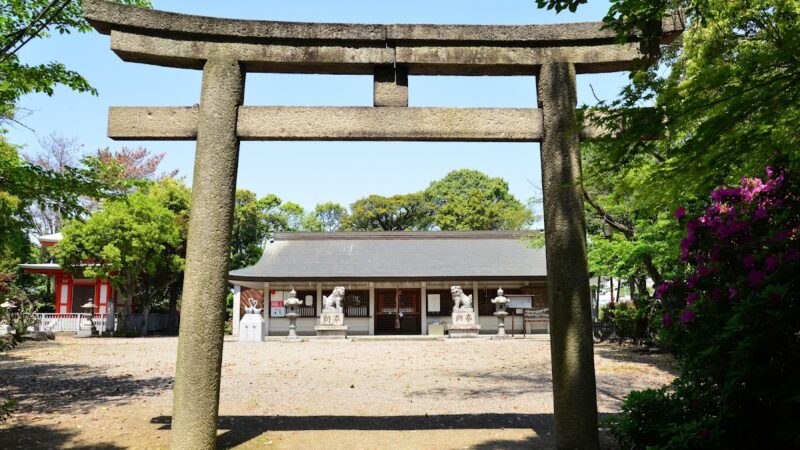
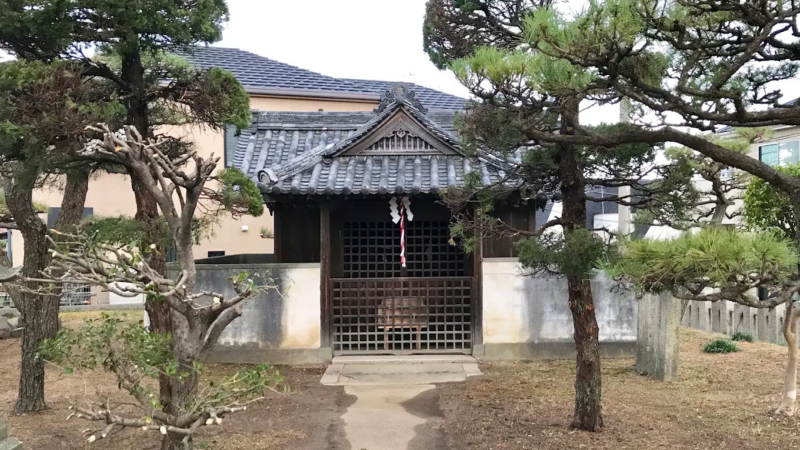
The shrine buildings of Sukunagawada Shrine are carefully maintained by the local people while preserving their ancient style. Although the main hall is small, its construction conveys the dignity of a shrine listed in the Engishiki (ancient Japanese legal code).
Atmosphere of the Shrine Grounds
Despite being located in a residential area, the shrine grounds exude a tranquil atmosphere, maintaining its sacred sanctuary even in today’s urbanized world. The grounds, lush with ancient trees, offer a peaceful space for visitors.
Stone Monuments and Sculptures
The shrine grounds contain numerous stone monuments and sculptures that evoke a sense of history, demonstrating how the local people have cherished the shrine throughout its long history.
Annual Events and Festivals
Shukuna Kawada Shrine holds various Shinto rituals throughout the year. The festivals, supported by local parishioners, preserve ancient traditions.
Major annual events include the New Year’s Day Festival, Spring Festival, and Autumn Festival. The Autumn Festival, in particular, attracts many local residents and sometimes features a portable shrine procession.
Regarding Goshuin (Shrine Seals) and Souvenirs
Shukuna Kawada Shrine is a small shrine, and there may not be a resident priest. It is recommended to check in advance regarding Goshuin and souvenirs. Due to its historical value as a Shikinaisha (a shrine listed in the Engishiki, an ancient Japanese legal code), it attracts many visitors who enjoy visiting shrines as a hobby.
Access
Access by Train
Nearest Station: JR West Yamatoji Line “Takaida Station”
Travel Time: Approximately 2 minutes on foot
The shrine is very close to Takaida Station, located right outside the station, making it extremely convenient to access by train. It’s also directly accessible from Osaka city via the Yamatoji Line, making it easily accessible for a visit.
Access by Car
Nearest Interchange: Approximately 15 minutes from Nishimeihan Expressway “Fujiidera IC”
Parking: Prior confirmation is required regarding dedicated parking.
As it is located in a residential area, caution is advised regarding surrounding road conditions if visiting by car.
Access from Major Stations in the Surrounding Area
- From JR Tennoji Station: Approximately 20 minutes on the Yamatoji Line, alight at Takaida Station.
- From Kintetsu Osaka Abenobashi Station: Take the Kintetsu Minami-Osaka Line to Domyoji Station, then transfer to JR Kashiwara Station (or go directly to JR Takaida Station).
Nearby Tourist Attractions
Tenyukawada Shrine
This is a Shikinaisha (shrine listed in the Engishiki) located in the same Takaida area, and is a counterpart to Sukunagawada Shrine. Visiting both shrines together allows you to gain a deeper understanding of the history of ancient Kawachi Province.
Kashiwara City Historical Museum
This facility allows you to learn about the history of Kashiwara City, exhibiting local historical materials from ancient to modern times. It is helpful for understanding the historical background of Sukunagawada Shrine.
Yamato River
Kashiwara City is located at a key point where the Yamato River flows into the Osaka Plain. The riverside walking path is a spot where you can enjoy nature while feeling the history.
Manners and Points for Visiting a Shrine
Proper Worship Etiquette
- Bow before passing through the torii gate: As a sign of respect before entering the sacred area.
- Purify yourself at the water basin: Purify your left hand, right hand, and mouth in that order.
- Two bows, two claps, one bow: Follow the general etiquette for visiting a shrine.
Points to Note During Worship
- As it is located in a residential area, please be considerate of the surrounding residents.
- Worship quietly and respect the atmosphere of the sacred area.
- Take photographs within reasonable limits.
Value as a Shikinaisha Shrine
Sukuna Kawada Shrine holds high historical and cultural value as a Shikinaisha shrine listed in the Engishiki Jinmyocho (a list of shrines compiled in the Heian period). As one of approximately 3,000 Shikinaisha shrines nationwide, it is an important site for studying ancient Japanese beliefs and social structures.
Several Shikinaisha shrines exist in Oagata District, Kawachi Province, indicating that this area was an important region in ancient times. Among them, Sukunagawada Shrine is a valuable shrine that is thought to have connections to the Tottori clan, an ancient powerful family.
Positioning in Kashiwara City’s Shrine Culture
While Kashiwara City has many shrines, Sukunagawada Shrine, with its status as a Shikinaisha (a shrine listed in the Engishiki), holds a special place. Along with Tenyukawada Shrine, it is an important element in forming the historical identity of the Takaida district.
It also plays a central role in the local community, serving as a place to deepen the bonds among residents through festivals. Even in modern times of increasing urbanization, the cultural and social functions of such local shrines have not been lost.
Summary
Sukunagawada Shrine (Shirasaka Shrine) is a Shikinaisha located in Takaida, Kashiwara City, Osaka Prefecture, with a long history dating back to ancient times. It enshrines Sukunahikone-no-Mikoto, Takamimusubi-no-Mikoto, and Shinatobe-no-Mikoto, and possesses diverse divine virtues related to nation-building, medicine, agriculture, and navigation.
Located just a two-minute walk from JR Takaida Station, this ancient shrine maintains a tranquil atmosphere, making it a valuable and easily accessible place of worship. As a counterpart to Tenyukawada Shrine, it is believed to have connections to the ancient Tottori clan, making it an important site for understanding the ancient history of Kawachi Province.
Combining the prestige of a Shikinaisha (a shrine listed in the Engishiki, an ancient Japanese legal code) with the familiar and approachable nickname “Shirasaka Shrine,” Sukunagawada Shrine remains a cherished place of worship for both history enthusiasts and local residents alike, and has been preserved to this day.
When visiting Kashiwara City, be sure to stop by this historic shrine and experience the ancient Japanese faith and culture.