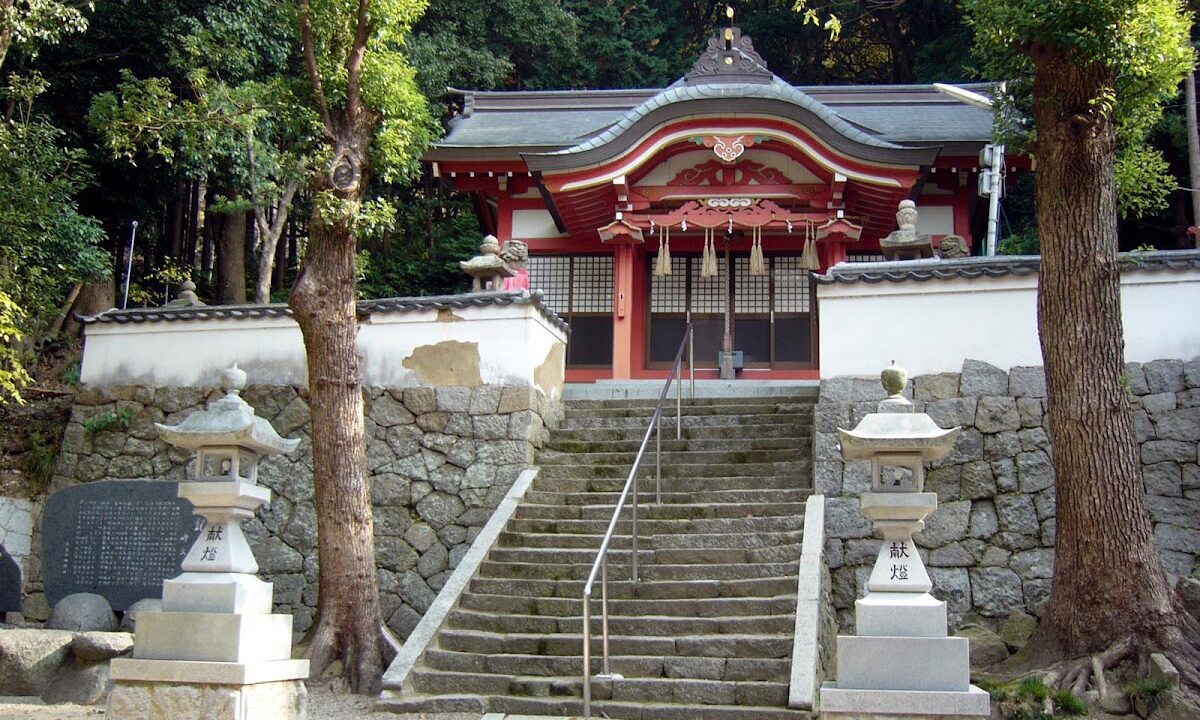
Sumiyoshi Hirata Shrine (Shijonawate City, Osaka Prefecture) Complete Guide | History, Deities, Access, and Goshuin Information
Sumiyoshi Hirata Shrine, located in Minamino, Shijonawate City, Osaka Prefecture, is a historical shrine with a history dating back to the Kanpyō and Engi periods (880-901). Situated in a quiet environment at the foot of Mt. Iimori, it is a shrine with a unique history, enshrining the three Sumiyoshi deities and Hirata Ōkami, and is beloved by the local people. This article provides a detailed explanation of Sumiyoshi Hirata Shrine’s history, enshrined deities, highlights of the grounds, access methods, and goshuin information.
Basic Information on Sumiyoshi Hirata Shrine
Sumiyoshi Hirata Shrine is located at 2-18-26 Minamino, Shijonawate City, Osaka Prefecture. It is within walking distance of Shijonawate Station on the JR Gakken Toshi Line and is located near the approach to Shijonawate Shrine.
Location: 2-18-26 Minamino, Shijonawate City, Osaka Prefecture
Nearest Station: JR Gakken Toshi Line, Shijonawate Station
Shrine Rank: Former Village Shrine
Deities Enshrined: Sumiyoshi Three Gods (Sokotsutsuo-no-Mikoto, Nakatsutsuo-no-Mikoto, Omotsutsuo-no-Mikoto), Hirata-no-Okami
Belonging to the Third Branch of the Osaka Prefectural Shrine Association, it has long been revered as the local guardian deity.
History and Origins of Sumiyoshi Hirata Shrine
Founding and Ancient Placement
Although many aspects of the founding of Sumiyoshi Hirata Shrine remain unclear, it is said that the shrine originated from a place located at the foot of Mt. Iimori during the Kanpyo and Engi periods (880-901). This dates to the early to mid-Heian period, indicating that it is an ancient shrine with a history of over 1100 years.
It is believed that initially, it was a Sumiyoshi Shrine, enshrining the Sumiyoshi Three Gods, known as the gods of the sea and navigation. The fact that Sumiyoshi Shrine is enshrined in an inland area is thought to be related to the transportation routes and the spread of faith at the time.
Merger with Hirata Shrine
In the Maedo area on the slopes of Iimoriyama, there was a Hirata Shrine dedicated to the Hirata clan. This Hirata clan is said to have been a family that served as a pastor (an official position managing pastures) to Emperor Go-Daigo and was known as an influential figure in the region.
In the early 19th century, during the Bunka era (1804-1818), when the Mimaki clan became the Shinto priests, the Sumiyoshi Shrine and Hirata Shrine, which had previously existed separately, were merged. It is said that this is how the current shrine name, “Sumiyoshi Hirata Shrine,” came into being. There is also a theory that the merger occurred during the Kan’en era (1748-1751), and historical sources differ in their descriptions of the exact date.
Developments since the Modern Era
In 1872 (Meiji 5), with the establishment of the modern shrine ranking system, it was ranked as a village shrine. This signifies official recognition as the local guardian deity.
In 1990 (Heisei 2), the shrine building was renovated, resulting in its current form. Despite its long history, proper maintenance has ensured that the faith has been passed down to the present day.
About the Deities
Sumiyoshi Three Gods (Sokotsutsuo-no-Mikoto, Nakatsutsuo-no-Mikoto, Uwatsutsuo-no-Mikoto)
The Sumiyoshi Three Gods are sea gods born in Japanese mythology when Izanagi-no-Mikoto performed a purification ritual. The three deities, Sokotsutsuo-no-Mikoto, Nakatsutsuo-no-Mikoto, and Uwatsutsuo-no-Mikoto, are collectively known as the Sumiyoshi Three Gods.
They have long been worshipped as guardians of safe voyages and maritime traffic, and Sumiyoshi worship spread throughout Japan with Sumiyoshi Taisha in Osaka as its head shrine. Furthermore, because they were born from a purification ritual, they are also revered as gods who purify and cleanse away impurities.
Hirata-no-Okami
Hirata-no-Okami is a deified deity of the Hirata clan, who served as priests during the reign of Emperor Go-Daigo. As a family that contributed to regional development and industry, they have been revered by the local people.
While many details about the Hirata clan remain unclear, they are believed to have been influential figures involved in the development of the area around Iimoriyama and livestock farming. As a guardian deity of the region, enshrined alongside the three Sumiyoshi deities, this shrine offers the divine blessings of both the sea god and the land god.
Highlights of the Shrine Grounds
Shrine Building
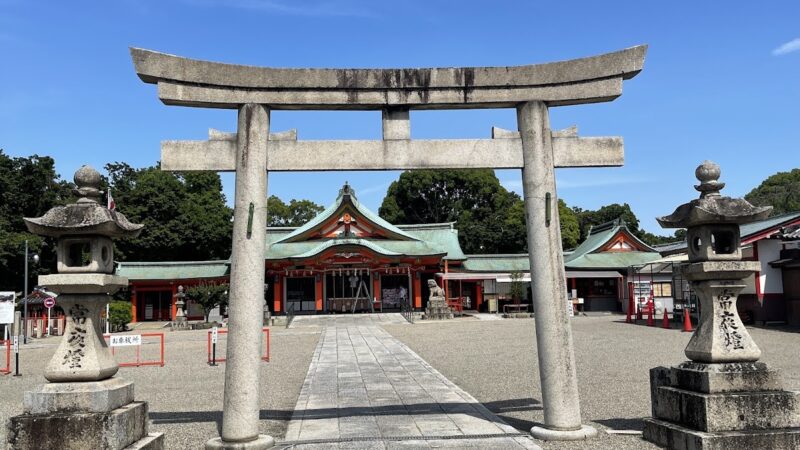
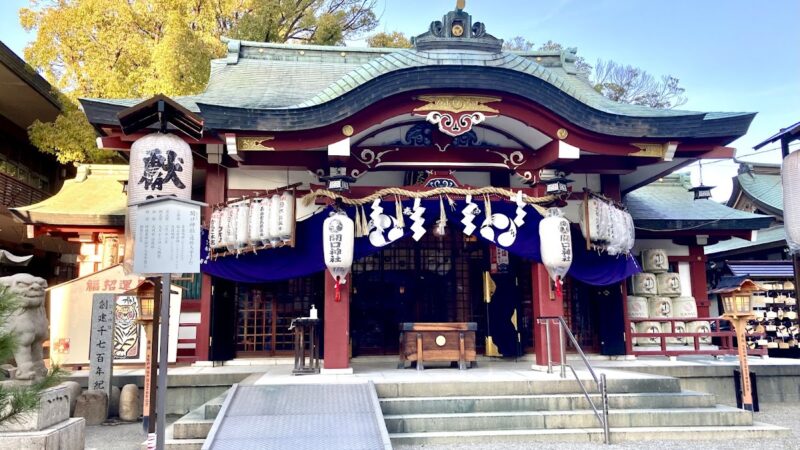
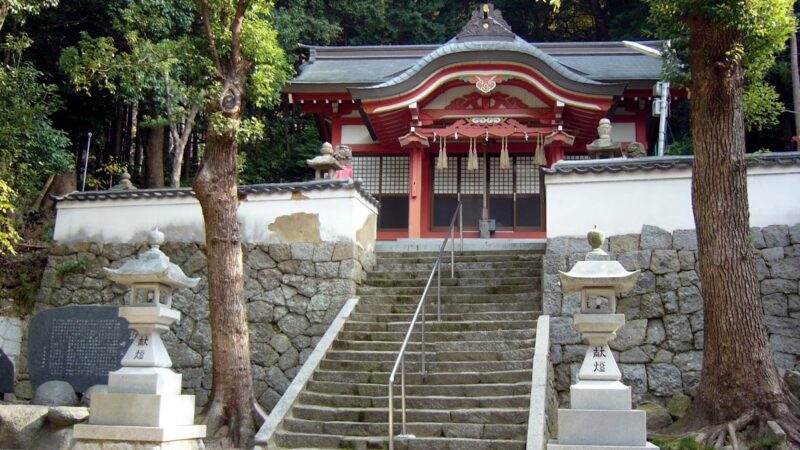
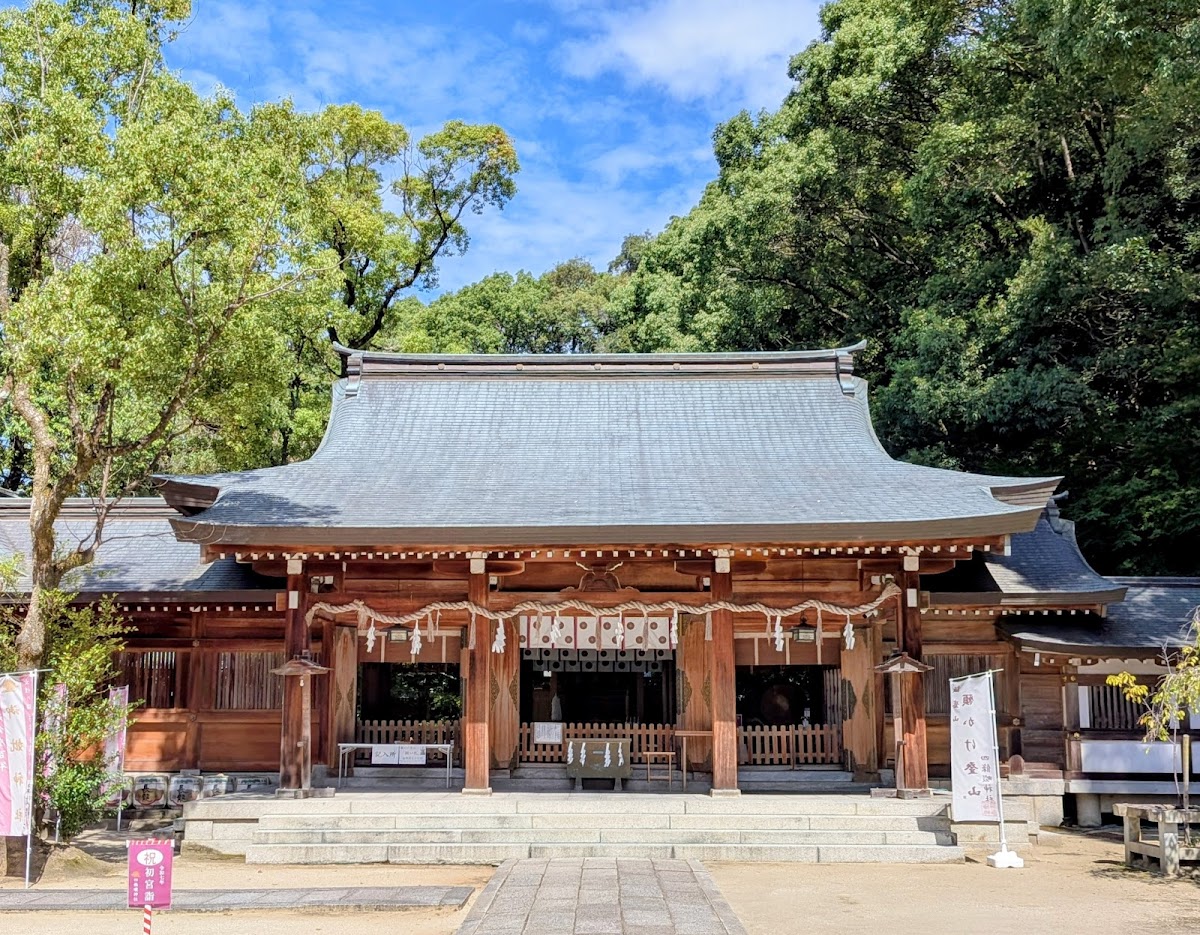
The shrine building, rebuilt in 1990, maintains the traditional style of shrine architecture while exhibiting a clean and beautiful appearance. Although not particularly large, it is meticulously maintained and has a warm atmosphere welcoming visitors.
The Oldest Stone Lantern in Shijonawate City
Within the shrine grounds stands a stone lantern donated in 1672 (Kanbun 12). This is the oldest stone structure in Shijonawate City and a valuable cultural asset. It is an important historical site that conveys the state of religious belief in the early Edo period.
The fact that this approximately 350-year-old stone lantern is preserved in such good condition is proof that the local people have carefully protected the shrine for many years. It is a point to pay attention to when visiting the shrine.
Atmosphere of the Shrine Grounds
Located at the foot of Mt. Iimori, Sumiyoshi Hirata Shrine is enveloped in a quiet and peaceful atmosphere. Away from the hustle and bustle of the city, it provides an environment where you can worship at your leisure.
Signboards are also installed on the grounds, allowing you to learn about the history and origins of the shrine. It is a space where you can feel the warmth unique to a shrine deeply rooted in the community.
Access Methods
Access by Train
Nearest Station: JR Gakken Toshi Line (Katacho Line), Shijonawate Station
Travel Time from Station: Approximately 15-20 minutes on foot
After alighting at Shijonawate Station, pass through the large white torii gate on the road and walk straight up the slope towards the mountain. Walking north for about 5 minutes from the foot of the stairs leading to Shijonawate Shrine will bring you to Sumiyoshi Hirata Shrine.
Many people visit both shrines together, and it’s a popular walking course that includes both.
Access by Car
Dai-ni Keihan Expressway: Approximately 15 minutes from Neyagawa Kita Interchange
National Route 163: Accessible from Osaka and Nara areas
It is recommended to check in advance whether there is a dedicated parking lot on the shrine grounds. There are coin-operated parking lots nearby, but their number is limited, so using public transportation is more convenient.
Major Shrines and Temples in the Surrounding Area
- Shijonawate Shrine: Approximately 5 minutes on foot (Shrine dedicated to Kusunoki Masayuki)
- Hakusan Shrine: Located in Shijonawate City (Offers Goshuin stamps)
- Hoshida Myoken-gu Shrine: Located in Katano City (Approximately 15 minutes by car)
- Jokou Enmanji Temple: Located in Shijonawate City
Goshuin Information
Regarding the Issuance of Goshuin Stamps
Sumiyoshi Hirata Shrine does not have a resident priest, therefore, Goshuin stamps are not issued directly at the shrine. Those wishing to receive a Goshuin stamp should contact Hakusan Shrine (Tel: 06-6961-0481).
Hakusan Shrine handles the issuance of Goshuin stamps for Sumiyoshi Hirata Shrine, and contacting them in advance will ensure a smoother process.
Points to Note When Receiving a Goshuin (Temple/Shrine Stamp)
- It is recommended to confirm by phone in advance.
- Bring your Goshuincho (stamp book).
- Prepare the offering fee (generally 300-500 yen).
- It is customary to receive the Goshuin after praying.
Benefits of Worship
Divine Virtues of the Three Sumiyoshi Gods
- Safety at Sea and Traffic: Protection as gods of the sea
- Exorcism and Purification: Purifying power as gods of purification and exorcism
- Business Prosperity: Aspect as guardian deities of maritime trade
- Improvement in Waka Poetry and Literature: Cultural aspects transmitted through Sumiyoshi faith
Divine Virtues of Hirata Okami
- Protection of the Region: Development and prosperity of the local area
- Industrial Promotion: Protection of industries such as livestock farming
- Family Safety: Protection as the local tutelary deity
Annual Events and Festivals
At Sumiyoshi Hirata Shrine, various festivals are held as the local guardian shrine. For detailed schedules, please contact the Osaka Prefectural Shrine Association Third Branch or Hakusan Shrine.
The following are some of the main annual events at typical shrines:
- New Year’s Day Festival: January 1st
- Spring Grand Festival: Spring
- Summer Purification Ceremony: June 30th
- Autumn Grand Festival: Autumn
- Year-End Purification Ceremony: December 31st
History of Shijonawate City and Sumiyoshi Hirata Shrine
History of Iimoriyama and the Kusunoki Clan
Shijonawate City is known as a place associated with Kusunoki Masatsura, a samurai from the Nanboku-cho period. Iimoriyama was one of the Kusunoki clan’s strongholds and a historically important site, the stage of the Battle of Shijonawate.
The foot of Mt. Iimori, where Sumiyoshi Hirata Shrine is located, is an area with a rich historical background and has flourished as a place of life for people since ancient times. The history of the shrine is deeply intertwined with the history of this region itself.
As a Center of Local Faith
Since being designated a village shrine in 1872 (Meiji 5), Sumiyoshi Hirata Shrine has been the tutelary deity of the Minamino district, attracting the faith of the local people. Through festivals and annual events, it also plays a role in strengthening community ties.
Even today, it continues to be an important presence as a guardian deity of the region and a place that conveys history.
Manners and Etiquette for Visiting a Shrine
Basic Worship Etiquette
- Bow before passing through the torii gate: A courtesy before entering the sacred area
- Walk along the edge of the path: The center is the path for the gods
- Purify yourself at the water basin: Left hand → Right hand → Mouth → Left hand with ladle
- Etiquette in front of the main hall: Two bows, two claps, one bow
Regarding Photography
Photography is generally permitted on the shrine grounds, but please note the following:
- Refrain from taking photos inside the main hall
- Be considerate of other worshippers
- Use flash photography sparingly
- When posting on social media, include location information and show respect.
Nearby Tourist Attractions
Shijonawate Shrine
Shijonawate Shrine, located about a 5-minute walk from Sumiyoshi Hirata Shrine, is a special government-supported shrine that enshrines Kusunoki Masayuki as its main deity. Although a relatively new shrine, founded in 1890 (Meiji 23), it attracts many visitors due to its connection to the Kusunoki clan.
From the shrine building at the top of a long stone staircase, a spectacular panoramic view of the Osaka Plain unfolds.
Hiking on Mt. Iimori
Mt. Iimori is a 314-meter-high mountain and is popular as a hiking course suitable even for beginners. From the summit, you can enjoy views of Osaka city and the Ikoma mountain range.
Many people combine a visit to Sumiyoshi Hirata Shrine with a hike up Mt. Iimori.
Hoshida Myoken-gu Shrine
Hoshida Myoken-gu Shrine, located in Katano City, is a rare shrine that enshrines the North Star and the Big Dipper. Known as a place associated with Kobo Daishi Kukai, it is also popular as a power spot. It is approximately a 15-minute drive from Sumiyoshi Hirata Shrine.
Summary: The Charm of Sumiyoshi Hirata Shrine
Sumiyoshi Hirata Shrine is an ancient shrine with a history of over 1100 years, dating back to the Kanpyō and Engi eras. It has a unique history, enshrining deities from different lineages—the three Sumiyoshi gods and Hirata Ōkami—and is cherished as the local guardian deity.
With cultural assets including the oldest stone lantern in Shijōnawate City, a tranquil environment at the foot of Mt. Iimori, and a place of worship deeply intertwined with the region’s history, it is a shrine well worth visiting.
Visiting it in conjunction with a visit to Shijōnawate Shrine will allow you to more fully appreciate the history and depth of faith in this region. As a hidden gem in Osaka Prefecture, please do visit it at least once.
If you wish to receive a Goshuin (shrine stamp), please remember to contact Hakusan Shrine in advance. Enjoy a peaceful time of worship in the tranquil grounds.